
BIOFLEX Laser Therapy System Review 2026: Does It Actually Work?
An honest, in-depth look at BIOFLEX laser therapy — the science behind it, who it’s built for, and whether it’s worth the investment.
Owner's Take
"I've met BIOFLEX's leadership personally — both the previous CEO and the current one. I prefer dealing with top leadership directly, because that's where you get real information instead of sales jargon. I'm adding the BIOFLEX P-180 to my own setup this year." — Justin Webster, Owner, Your Health Sanctuary
What Is BIOFLEX Laser Therapy?
BIOFLEX is a Canadian-engineered photobiomodulation (PBM) therapy system that has been used in clinical settings for over three decades. Unlike handheld consumer laser devices, BIOFLEX systems deliver therapeutic laser and LED energy through precisely calibrated arrays designed for tissue penetration, cellular repair, and pain reduction.
The flagship BIOFLEX MultiPort System is the gold standard in the BIOFLEX lineup — a professional-grade platform used by physical therapists, chiropractors, sports medicine clinics, and serious recovery-focused athletes who need clinical results without the clinical price tag of ongoing appointments.
How BIOFLEX Laser Therapy Works
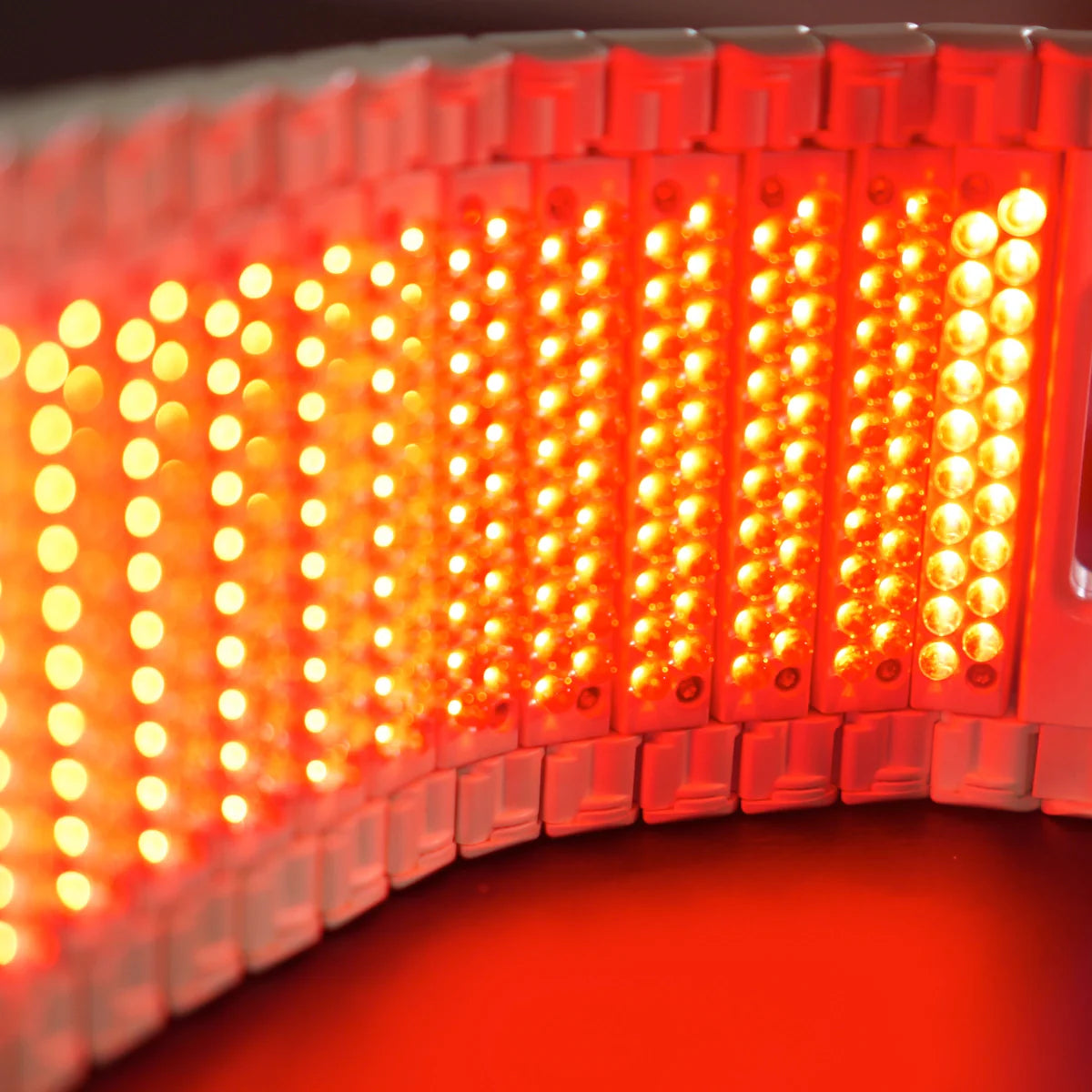
BIOFLEX uses photobiomodulation — the application of specific wavelengths of light (typically 660nm red and 830–840nm near-infrared) to stimulate cellular function. When photons from the laser or LED arrays penetrate tissue, they interact with mitochondria to increase ATP production, reduce inflammation, stimulate collagen synthesis, modulate nerve conduction, and improve microcirculation.
The BIOFLEX Two-Phase Protocol
- Phase 1 — Pulsed LED Array: Lower-intensity, pulsed red light (660nm) stimulates surface tissue, increases blood flow, and prepares the target area for deeper treatment.
- Phase 2 — Continuous Laser Probe: The practitioner applies the handheld laser probe to specific anatomical points, delivering concentrated near-infrared energy (830nm) to joints, tendons, nerves, and deep muscle tissue.
Why Wavelength Selection Matters
660nm (red) penetrates 2–3mm — effective for skin, superficial wounds, and surface inflammation. 830nm (near-infrared) penetrates 5–7cm — reaching joints, tendons, nerves, and deep muscle tissue. BIOFLEX uses both, which is why it outperforms single-wavelength handheld devices for most therapeutic applications.
BIOFLEX MultiPort System: What You Get
The BIOFLEX MultiPort System is the professional centerpiece of the BIOFLEX lineup. Key features: multiple treatment ports, software-controlled dosimetry, dual-wavelength arrays (660nm LED pads + 830nm laser probes), timer and auto-shutoff, durable clinical build, and BIOFLEX training protocol access.
Conditions BIOFLEX Is Clinically Used For
- Osteoarthritis (knee, hip, shoulder)
- Chronic lower back pain and disc injuries
- Rotator cuff injuries and tendinopathies
- Post-surgical recovery and scar tissue remodeling
- Peripheral neuropathy and nerve pain
- Sports injuries — sprains, strains, muscle tears
- Wound healing and tissue regeneration
- Fibromyalgia and chronic pain syndromes
BIOFLEX vs. Other Laser Therapy Systems
| Feature | BIOFLEX MultiPort | Handheld Consumer Laser | K-Laser Cube | Cold Laser Wand (Generic) |
|---|---|---|---|---|
| Wavelengths | 660nm + 830nm | 650nm only | 660nm + 800nm + 970nm | 650nm only |
| Tissue Penetration | Up to 5–7cm | 1–2cm surface only | Up to 4–6cm | 1–2cm surface only |
| Two-Phase Protocol | ✓ Yes | ✗ No | ✓ Yes | ✗ No |
| Dosimetry Control | ✓ Software-controlled | ✗ Manual only | ✓ Software-controlled | ✗ Manual only |
| Multi-Port Simultaneous Treatment | ✓ Yes | ✗ No | ✗ No | ✗ No |
| Clinical Track Record | ✓ 30+ years | ✗ Limited | ✓ 15+ years | ✗ Minimal |
| FDA Cleared | ✓ Yes | Varies | ✓ Yes | Varies |
| Best For | Clinics, serious home users | Casual surface pain | Veterinary + clinical | Entry-level experimentation |
Who Should Consider BIOFLEX Laser Therapy?
It’s an Excellent Fit For:
- Chiropractors and physical therapists who want to add PBM to their clinical toolkit
- Sports medicine clinics treating high-volume athlete populations
- Serious athletes and biohackers investing in home recovery infrastructure
- Chronic pain patients who’ve exhausted conventional treatment
- Post-surgical recovery — especially rotator cuff, knee, and spinal procedures
When BIOFLEX May Not Be the Right Fit:
- You need primarily surface-level red light therapy (a full-body panel like the HealthLight system may be more practical)
- Your budget is below the professional system range and you’re not using it for clinical volume
- You’re looking for passive, hands-off treatment — BIOFLEX’s probe-based protocol requires active positioning
What Results Can You Realistically Expect?
| Condition | Typical Response Timeline | Evidence Level |
|---|---|---|
| Acute muscle strain / sprain | 3–6 sessions, 1–2 weeks | Strong — multiple RCTs |
| Knee osteoarthritis | 8–12 sessions, 3–4 weeks | Strong — systematic reviews |
| Shoulder tendinopathy | 6–10 sessions, 2–3 weeks | Moderate–Strong |
| Chronic low back pain | 10–15 sessions, 4–6 weeks | Moderate — mixed evidence |
| Peripheral neuropathy | 12–20 sessions, 6–8 weeks | Moderate — emerging research |
| Post-surgical tissue repair | Ongoing — complements standard rehab | Strong for wound healing |
Shop Professional Laser & Light Therapy
Explore the BIOFLEX MultiPort System and our full HealthLight therapeutic light lineup — available now at Your Health Sanctuary.
Questions? Call our recovery experts: (612) 360-2490
Sources & Clinical References
- 1. Chow RT, et al. "Efficacy of low-level laser therapy in the management of neck pain." The Lancet. 2009;374(9705):1897-1908.
- 2. Bjordal JM, et al. "A systematic review of low level laser therapy with location-specific doses for pain from chronic joint disorders." Australian Journal of Physiotherapy. 2003;49(2):107-116.
Continue Your Research
- HealthLight vs Bioflex: Which Red Light System Is Right? →
- Infrared Light Therapy for Joint Pain: How It Works →
- BIOFLEX vs K-Laser: Which Professional Laser System Is Right for Your Clinic? →
- BIOFLEX vs Theralase: Which Professional Laser System Wins in 2026? →
- Cold Laser Therapy for Clinic: Complete 2026 Buyer's Guide →
BIOFLEX Laser Therapy: Frequently Asked Questions
Is BIOFLEX laser therapy FDA cleared?
Yes. BIOFLEX laser therapy systems are FDA cleared for therapeutic use in the United States. BIOFLEX systems also carry Health Canada approval and CE marking for international clinical use.
How does BIOFLEX compare to K-Laser?
Both are professional-grade photobiomodulation systems with strong clinical track records. K-Laser uses a higher-powered Class IV laser with up to four wavelengths, which allows faster treatment times. BIOFLEX uses Class IIIb laser + LED arrays with its two-phase protocol, which some clinicians prefer for its more controlled, tissue-specific dosimetry approach. We cover this in depth in our BIOFLEX vs. K-Laser comparison guide.
Can BIOFLEX laser therapy be used at home?
Yes, though BIOFLEX systems are primarily designed for clinical or supervised professional use. Serious home users — athletes, biohackers, chronic pain patients — do purchase BIOFLEX systems for home use. Call our team at (612) 360-2490 to walk you through the right configuration for your goals.
How many sessions does BIOFLEX laser therapy require?
Acute injuries typically respond in 3–8 sessions. Chronic conditions typically require 10–20 sessions before substantial improvement, with many patients using BIOFLEX on an ongoing maintenance schedule.
Is BIOFLEX safe? Are there side effects?
BIOFLEX is considered very safe when used according to protocol. Photobiomodulation at BIOFLEX power levels is non-ionizing, non-thermal, and non-invasive. BIOFLEX is contraindicated directly over active cancer sites, thyroid glands, pregnant uterus, and eyes.
Final Verdict: Is BIOFLEX Worth It?
If you’re a clinician looking for a reliable, evidence-backed PBM system with a proven protocol framework — yes. BIOFLEX has the clinical research, the dosimetry controls, and the 30-year track record to justify its place in a therapeutic practice.
If you’re a serious athlete or chronic pain patient who wants clinical-grade laser therapy at home and is willing to invest in learning the protocol — yes, BIOFLEX delivers results that consumer-grade devices simply can’t match.
Ready to Add Professional Laser Therapy?
The BIOFLEX MultiPort System and HealthLight Ultimate Body Kit are both available now at Your Health Sanctuary — with expert guidance included.
Speak with a recovery specialist: (612) 360-2490
Written by Justin Webster
Founder, Your Health Sanctuary
Justin Webster, owner of Your Health Sanctuary, has spent his career helping build over 20 niche medical clinics across the USA and has written 2 books on the subject. Working alongside dozens of MDs, he saw firsthand what actually works for weight loss, recovery, and anti-aging, and what doesn’t. He even published a weight loss book centered on Apple Cider Vinegar. When he realized it wasn’t at the level it needed to be, he had the humility to pull it entirely and start over. That willingness to hold himself to a higher standard, even when it costs him, is what drives how Your Health Sanctuary operates. Life and business experience in the medical field led to everything this store is built on. Justin has personally lost 55 lbs. and made anti-aging his obsession. He didn’t start this store to push products. He started it because he knew the tools clinicians trust, the ones that deliver real results, were out of reach for most people. Your Health Sanctuary exists to change that.
Frequently Asked Questions
Does the BIOFLEX laser therapy system actually work?
Yes — the BIOFLEX system has one of the most extensive peer-reviewed evidence bases of any photobiomodulation system. Independent systematic reviews confirm that superluminous diode (SLD) photobiomodulation at BIOFLEX’s calibrated wavelengths produces clinically significant pain reduction and tissue healing outcomes.
What makes BIOFLEX laser therapy different from other systems?
BIOFLEX uses a superluminous diode array rather than a single coherent laser beam, delivering light across a larger tissue area simultaneously. The system uses precisely calibrated 660nm and 840nm wavelengths shown to be optimal for ATP production and anti-inflammatory response. BIOFLEX’s software-guided dosing protocols — developed through decades of clinical use — ensure reproducible, research-matched outcomes.
What conditions can BIOFLEX laser therapy treat?
BIOFLEX is particularly effective for: peripheral neuropathy, wound healing, osteoarthritis, tendinopathy, musculoskeletal pain, post-surgical recovery, and sports injuries. Its low-power protocol is uniquely well-suited to neurological conditions where precision dosing is critical.
How long does a BIOFLEX laser therapy session take?
BIOFLEX sessions typically run 20–45 minutes depending on the condition and body area being treated. Most clinical protocols recommend daily or every-other-day sessions for the first 2–3 weeks, tapering to twice weekly as symptoms improve.