
Cold Laser Therapy for Clinic: The Complete 2026 Buyer's Guide for Medical Professionals
Last Updated: April 26, 2026 | By Justin Webster, Your Health Sanctuary
If you're a chiropractor, physical therapist, pain specialist, sports medicine physician, or clinic owner evaluating cold laser therapy for clinic use, you've arrived at the right place. This guide cuts through the marketing fog and lays out exactly what working practitioners need to know before investing in a clinical cold laser system — wavelengths, power classes, FDA clearance, billing realities, ROI math, and the specific systems that actually deliver clinical outcomes.
Cold laser therapy (also called Low-Level Laser Therapy, or LLLT) has moved from fringe modality to standard-of-care adjunct across musculoskeletal, neurological, and post-surgical rehabilitation workflows. The 2025 and early-2026 research base is substantially stronger than even three years ago, and clinics that have integrated properly-specced systems are reporting measurable shifts in patient outcomes, return visits, and revenue per treatment room.
What Cold Laser Therapy Actually Does in Clinical Settings
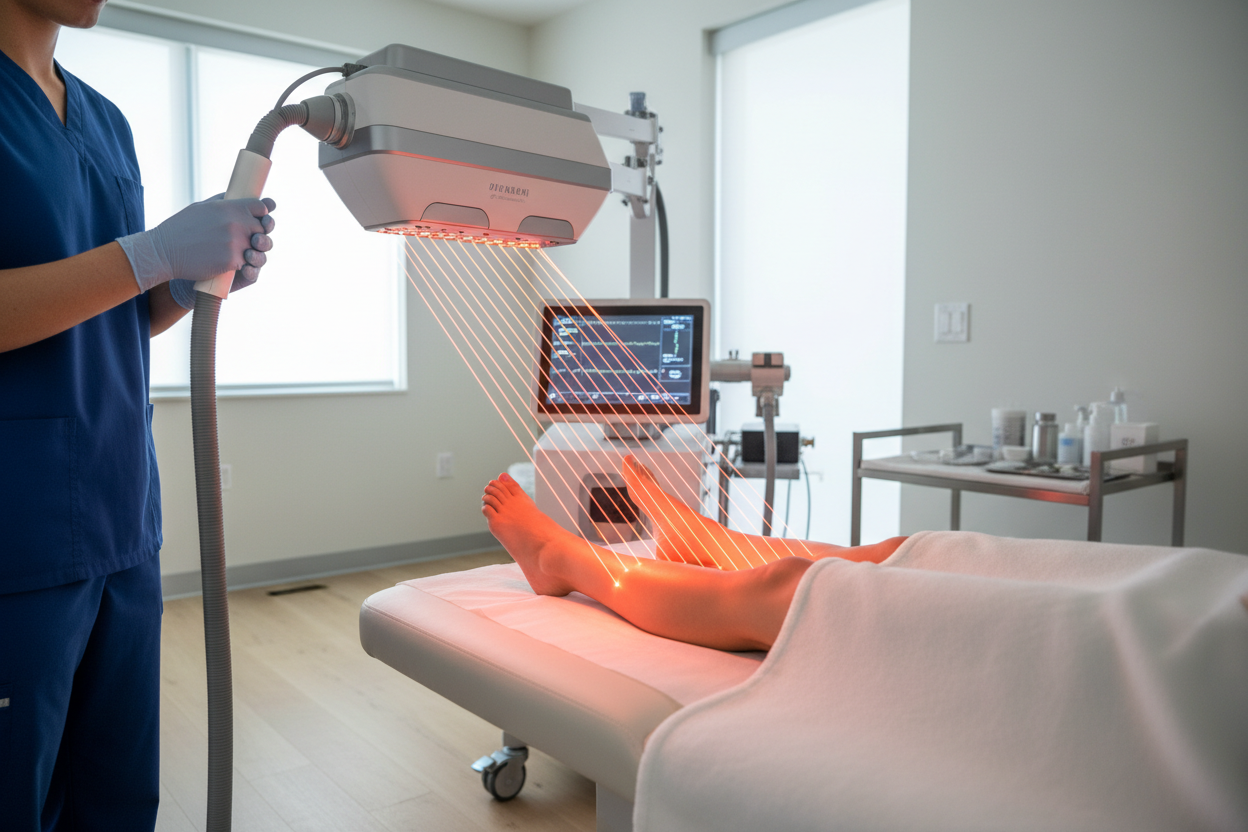
Cold laser therapy uses specific wavelengths of red and near-infrared light (typically 600–1100 nm) delivered at power levels that do not produce thermal tissue damage — hence "cold" or "low-level." The mechanism is photobiomodulation: light photons are absorbed by cytochrome c oxidase in the mitochondrial electron transport chain, upregulating ATP synthesis, modulating reactive oxygen species, and releasing nitric oxide from its protein binding sites. The downstream clinical effects practitioners care about are reduced inflammation, faster cellular repair, pain modulation via altered nerve conduction, and improved microcirculation in the treatment field.
For a deeper clinical evidence review on the mechanism side — particularly for nerve-related conditions — see our companion guide, Photobiomodulation for Neuropathy Treatment: The Complete Clinical Evidence Guide. The underlying biology is the same; the clinical targets differ.
Wavelengths: Why 633 nm, 808 nm, and 904 nm Matter for Clinics
Practitioners evaluating cold laser therapy for clinic use frequently get misled by spec sheets that list a single wavelength. In real clinical practice, tissue depth drives wavelength selection:
- 633 nm (red): Superficial penetration (3–5 mm). Best for dermal wound healing, scar remodeling, and mucosal inflammation.
- 808 nm (near-infrared): Mid-depth penetration (~30–40 mm). The workhorse for musculoskeletal tendinopathy, joint pain, and deeper soft tissue.
- 904 nm (super-pulsed near-infrared): Deepest effective penetration (~50+ mm with pulsed delivery). Critical for hip, spine, and deep myofascial targets.
Clinic-grade systems deliver multiple wavelengths, ideally in configurable array probes. Consumer single-wavelength wands do not meet the clinical performance threshold required for reimbursable outcomes.
Class IV vs Class 3B: What Regulators and Insurers Actually Care About
The FDA classifies therapeutic lasers by output power. Class 3B devices top out at 500 mW; Class IV devices exceed it. Higher class does not automatically mean better clinical results — it means shorter treatment times and deeper penetration within a single session, which matters for throughput. What regulators and payers care about is FDA 510(k) clearance for the specific indication you are coding, along with proper eye-safety protocols and documented informed consent.
For a head-to-head comparison of two of the most discussed clinical systems — including throughput and reimbursement considerations — see BIOFLEX vs K-Laser: Which Professional Laser Therapy System Is Right for Your Clinic, and our complete clinic buyer's analysis at Professional Laser Therapy System Review 2026: Clinic Buyer's Guide.
Clinical Indications Where Cold Laser Therapy Produces Measurable Outcomes
The 2026 evidence base supports cold laser therapy for clinic use across the following indications, each with multiple peer-reviewed trials:
- Chronic and acute low back pain
- Rotator cuff tendinopathy and subacromial impingement
- Lateral and medial epicondylitis
- Plantar fasciitis
- Knee osteoarthritis (adjunct to conventional care)
- Carpal tunnel syndrome (mild to moderate)
- Peripheral neuropathy — particularly diabetic and chemotherapy-induced
- Post-surgical pain control and wound healing acceleration
- Myofascial trigger point treatment
- Sports soft-tissue injury rehabilitation
ROI for Adding Cold Laser Therapy to Your Clinic
A well-specced clinical cold laser system runs between $8,000 and $35,000 depending on class, wavelength count, and probe architecture. The ROI calculation that actually matters for clinic owners is revenue-per-treatment-room-hour. A 10-minute cold laser treatment priced at $50–$90 cash (insurance variable) integrated into an existing 45-minute PT or chiropractic visit generates incremental revenue without displacing the primary visit. Clinics consistently report payback windows of 9–18 months on properly-positioned systems.
Critical caveat: cold laser CPT coding (97026, S8948, 97799, 97039) is inconsistently reimbursed. Run a payer-mix audit before making equipment decisions. Cash-pay wellness models and cash-adjunct programs tend to outperform insurance-dependent models for this modality in 2026.
Clinic-Grade Systems YHS Stocks for Professionals
Two systems dominate the serious clinical conversation at Your Health Sanctuary:
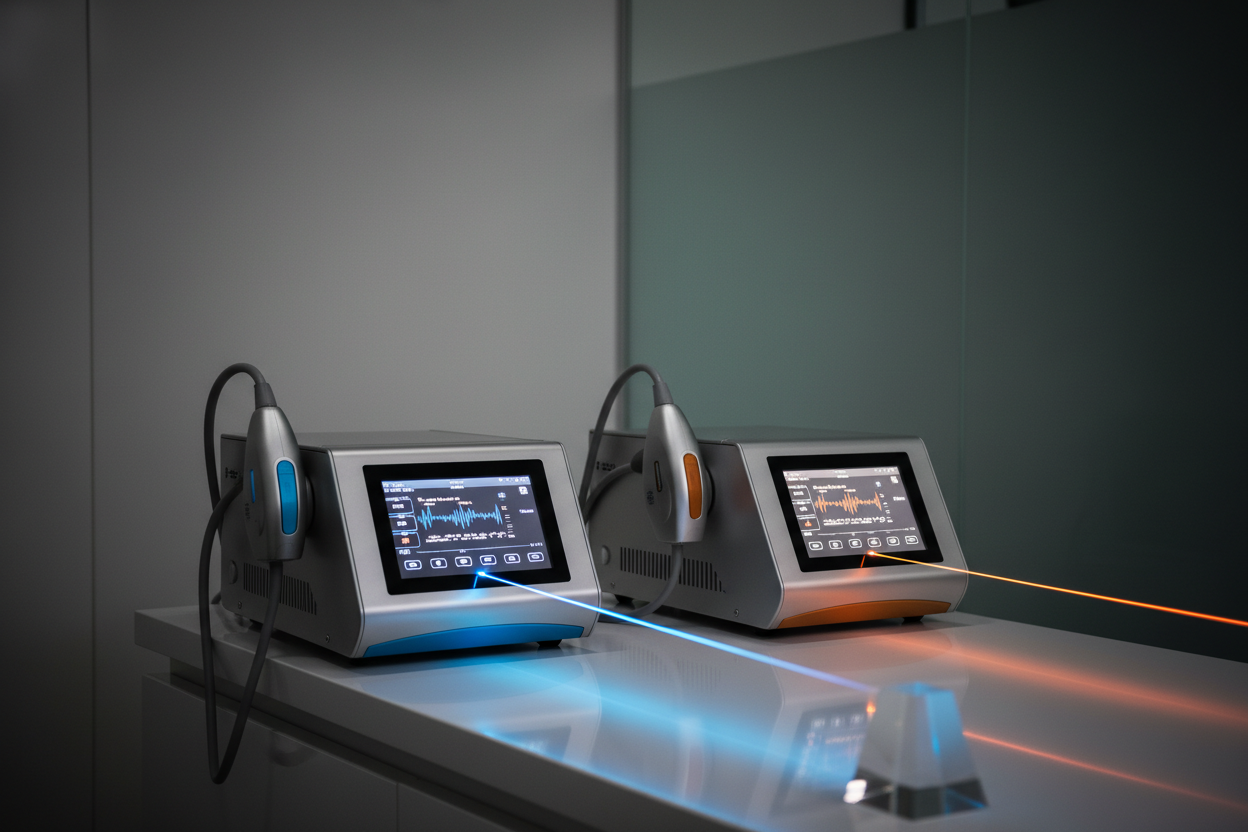
The BIOFLEX MultiPort System is our top recommendation for multi-practitioner clinics that need simultaneous multi-site treatment capability. The MultiPort architecture allows three treatment probes running independent protocols from a single console, which materially changes treatment room throughput math. FDA 510(k) cleared, used in hospital systems globally, and backed by a research base that predates most competitors by 15+ years.
For clinics integrating photobiomodulation across broader protocols — neuropathy, dermal, and systemic wellness applications — the HealthLight Ultimate Body Kit provides full-body LED-based photobiomodulation panels that complement (not replace) a Class 3B or IV laser. Many clinics deploy both: laser for targeted acute and sub-acute musculoskeletal work, LED panels for chronic neuropathy and wellness protocols.
Implementation: Training, Safety, and Protocol Standardization
The failure mode for clinics adopting cold laser therapy is not the equipment — it is under-training. Every clinical staff member who will operate the system needs documented training on wavelength selection, dosage in joules per cm², treatment frequency per indication, eye-safety protocols (practitioner and patient eyewear), and contraindications (active malignancy in the treatment field, pregnancy over gravid uterus, photosensitizing medications, direct thyroid exposure for iodine-deficient patients).
Protocol standardization across practitioners is what separates clinics that see consistent outcomes from those that see practitioner-dependent variability. Document protocols by indication, dose in joules, probe positioning, and session count. Review outcomes quarterly.
Frequently Asked Questions About Cold Laser Therapy for Clinic Use
Is cold laser therapy FDA-approved for clinical use?
Yes. The FDA has granted 510(k) clearance to numerous cold laser devices for specific indications including temporary relief of minor muscle and joint pain, stiffness, muscle spasm, minor arthritis pain, and promotion of local blood circulation. Always verify the specific 510(k) clearance of any device against the indication you plan to bill.
What is the difference between cold laser therapy and high-power laser therapy?
Cold laser (LLLT) operates below thermal-damage thresholds, typically under 500 mW continuous wave equivalent. Class IV high-power laser exceeds that threshold and generates deliberate thermal effect as part of its mechanism. Both have legitimate clinical roles; high-power therapy offers shorter session times for deep tissue, while cold laser is often preferred for superficial, neurological, and sensitive-tissue applications.
How many cold laser sessions does a typical patient need?
Evidence-based protocols typically call for 6 to 12 sessions delivered 2 to 3 times per week, with reassessment at session 6. Acute injuries may resolve in 4 to 6 sessions; chronic conditions like peripheral neuropathy may require 18 to 24 sessions before full clinical improvement plateaus.
Does insurance cover cold laser therapy at clinics?
Coverage is inconsistent in 2026. Some commercial plans reimburse under 97026 (infrared) or 97799 (unlisted modality), but many classify it as experimental and non-covered. Worker's comp and personal injury cases cover it more reliably than commercial insurance. Cash-pay and subscription wellness models are the predominant financially-sustainable approaches.
Can cold laser therapy be combined with other modalities?
Yes. Cold laser integrates well with manual therapy, therapeutic exercise, compression therapy, and other photobiomodulation modalities. Many clinics sequence cold laser immediately before manual therapy or exercise to reduce pain and improve tissue compliance for the subsequent intervention.
What wavelengths should a clinic-grade cold laser include?
A properly-specced clinic system should include at minimum two wavelengths — one red (630–660 nm) for superficial work and one near-infrared (800–910 nm) for deep tissue. Three-wavelength systems with 633 nm, 808 nm, and 904 nm cover the full clinical spectrum.
Are there contraindications for cold laser therapy?
Yes. Direct application over active malignancy, over the gravid uterus in pregnancy, over the thyroid gland, directly into the eyes, and over hemorrhaging tissue are standard contraindications. Patients on photosensitizing medications require dose reduction and close monitoring.
How long before patients notice results from cold laser therapy?
Acute inflammatory pain often responds within 1 to 3 sessions. Chronic tendinopathy and neuropathic conditions typically require 4 to 8 sessions before patient-reported improvement becomes consistent. Objective measures like range of motion and strength may lag subjective pain reports by several sessions.
Getting Started with Cold Laser Therapy in Your Clinic
If you're ready to evaluate cold laser therapy for your clinic, the single most valuable conversation you can have is a direct consultation with practitioners already running these systems in environments similar to yours. Your Health Sanctuary stocks and supports the BIOFLEX MultiPort System for targeted clinical laser applications and the HealthLight Ultimate Body Kit for broader photobiomodulation protocols. Both ship with practitioner training resources, protocol libraries, and clinical support.
Call Your Health Sanctuary at (612) 360-2490 to schedule a clinic consultation, request demo unit pricing, or discuss which system architecture fits your practice mix. We work with chiropractic, physical therapy, sports medicine, pain management, and integrated wellness clinics — and we do not recommend equipment we wouldn't put in our own treatment rooms.
Ready to Upgrade Your Recovery?
The equipment referenced in this guide, in stock and ready to ship. Many products qualify for HSA/FSA — call us to confirm eligibility for your situation.
Questions? Talk to our recovery specialists: (612) 360-2490