
BIOFLEX Laser Dosing Protocols: What Clinicians Need to Know (2026)
Getting BIOFLEX laser dosing protocols right is less about a single magic number and more about matching treatment time, coverage area, and frequency to the condition and the system you're running. BIOFLEX's programmed protocols do a lot of that work for you, but understanding the logic behind them helps a clinic get consistent results and helps a new buyer pick the right system for their caseload. This guide walks through how BIOFLEX approaches dosing across its product line, without pretending there's one dosing number that fits every patient.
A quick disclosure: Your Health Sanctuary sells clinician-grade equipment to chiropractors and medical professionals, not consumer gadgets. We carry the BIOFLEX line directly and are describing how the system's protocols generally work in practice, not providing individualized medical dosing advice — always follow BIOFLEX's official protocol documentation and your own clinical training.

What "dosing" means for a low-level laser system
In low-level laser therapy, dosing generally comes down to how much light energy reaches the target tissue, which is a function of the system's output, how long the pad or probe stays in place, and how large an area is being covered. BIOFLEX builds this logic into pre-set, programmable protocols on the system itself, so the clinician selects a treatment area and condition category and the unit runs a consistent, repeatable session rather than requiring the operator to calculate exposure by hand every time. That consistency is one of the main reasons clinics like a programmed system over a fully manual handheld unit — it removes operator-to-operator variability from the equation.
How dosing logic differs across the BIOFLEX line
| System | Coverage approach | Typical use case | Workflow | YHS price |
|---|---|---|---|---|
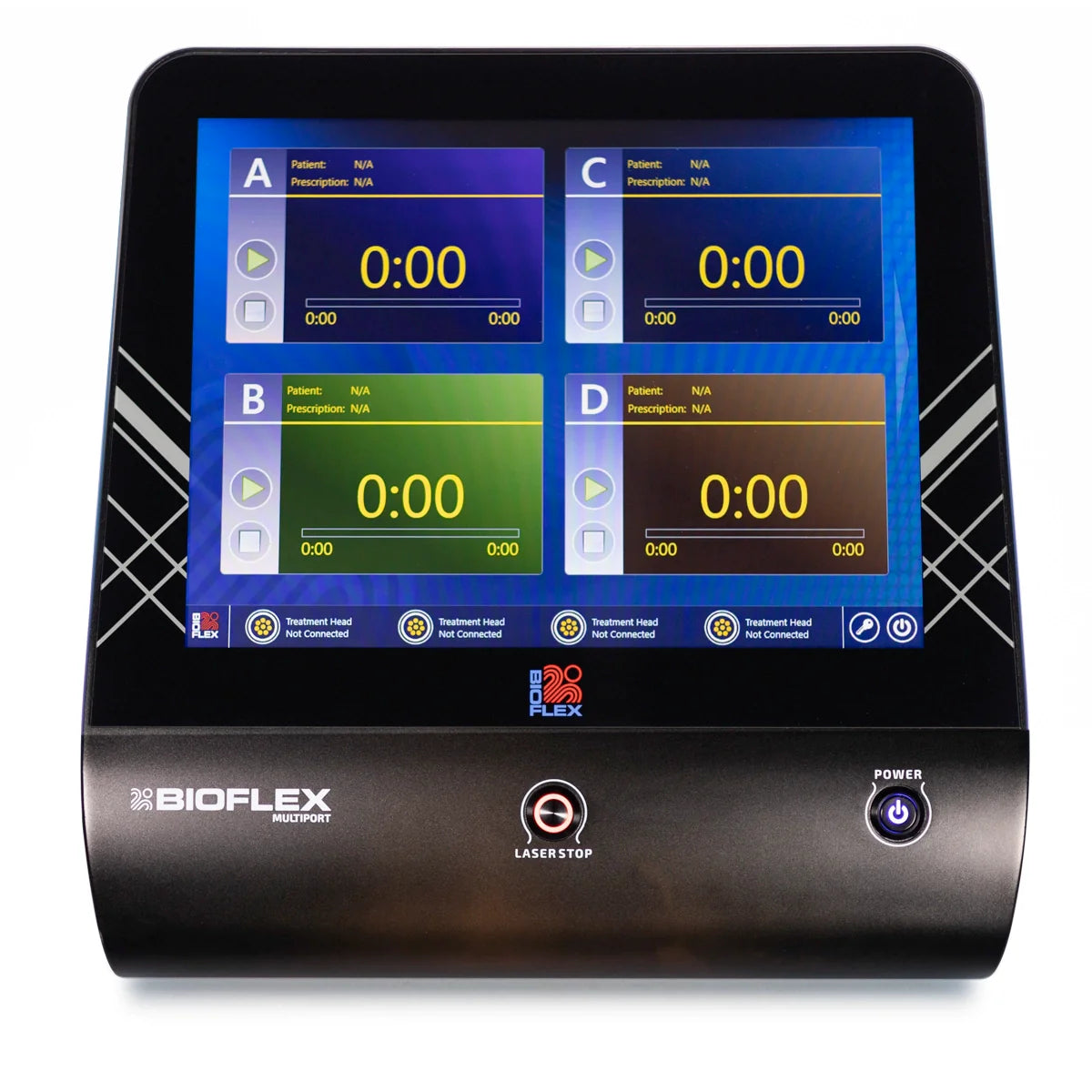
| BIOFLEX MultiPort System | Multiple simultaneous pad zones, largest coverage | High-volume clinics treating several areas or patients per session | Programmed, hands-free across multiple zones at once | $34,240 |
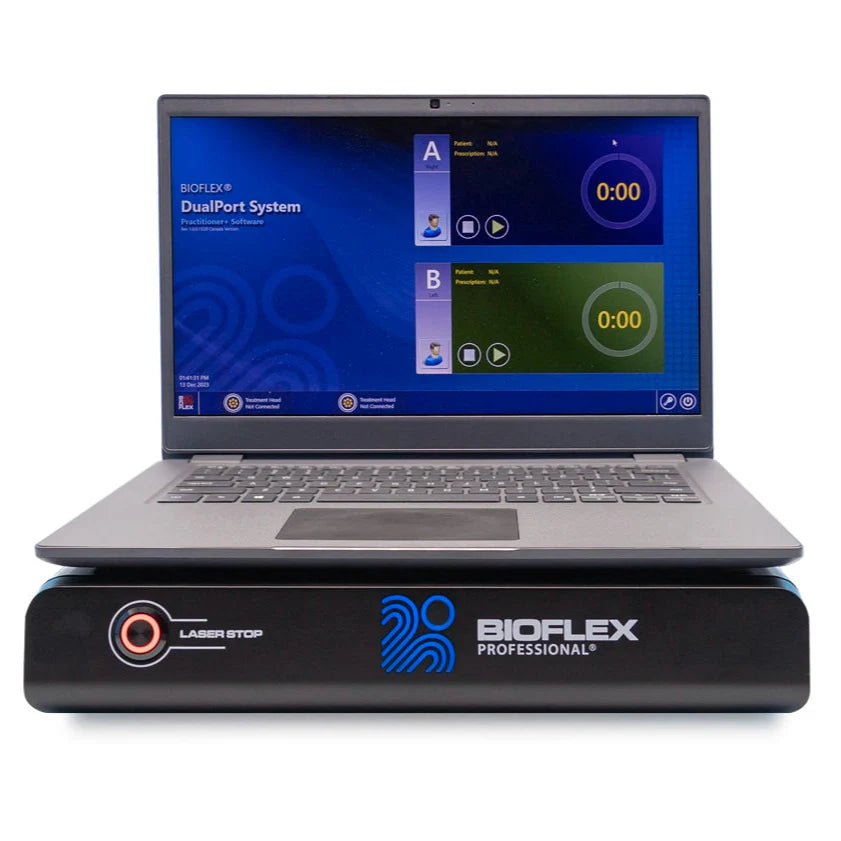
| BIOFLEX Dualport System | Two simultaneous zones | Two patients, or two areas on one patient, per session | Programmed, hands-free across two zones | $27,879 |
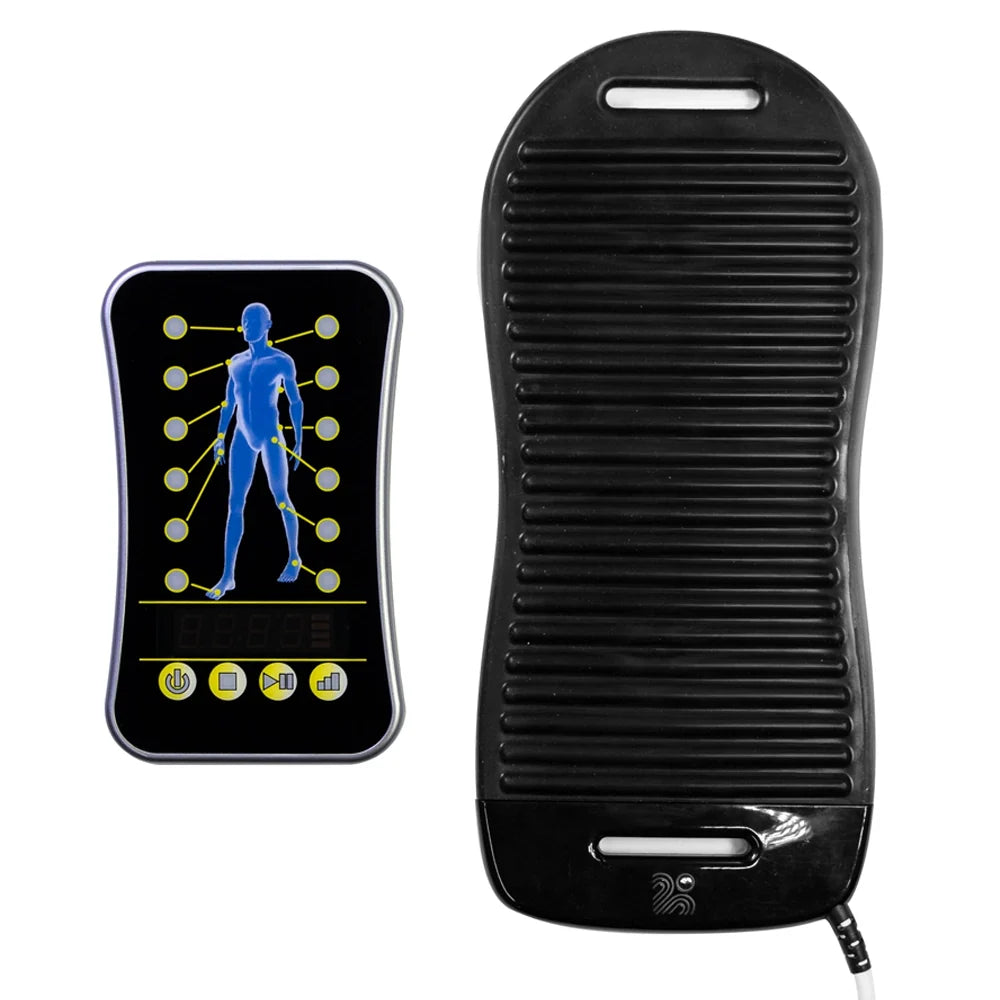
| BIOFLEX MiniPort Professional | Single zone plus focal probe | Solo practice or lower-volume focal treatment | Programmed, hands-free single zone, probe for pinpoint work | $18,200 |
| BIOFLEX P180 Personal System | Single zone, smaller footprint | Home use between clinic visits, or light personal use | Programmed, simplified protocol set | $5,395 |
Coverage and workflow descriptions are general; always run BIOFLEX's official protocol settings for a given condition rather than treating this table as a dosing chart. Prices reflect current Your Health Sanctuary listings and can change — confirm the latest pricing on each product page.
Why protocol-driven dosing matters for consistency
A clinic running several staff members across a shift benefits from a system where the dosing decision isn't left to whoever happens to be running the machine that day. Because BIOFLEX's protocols are programmed into the unit, the coverage and treatment time for, say, a shoulder versus a knee versus a lower-back protocol stay consistent no matter which staff member starts the session. That matters most in busier clinics and multi-provider practices, where dosing consistency across different operators is often the difference between a treatment plan that reliably works and one with results all over the map.
Matching a system to your clinic's dosing needs
A solo practitioner adding laser to a service menu for a handful of patients a week has very different dosing throughput needs than a multi-provider clinic running laser across a full patient list every day. The MiniPort Professional's single zone plus focal probe covers most solo-practice caseloads without the cost of a multi-zone system sitting idle. Once volume grows to the point where patients are waiting on a single unit, the Dualport or MultiPort's simultaneous-zone coverage starts to pay for itself in staff time, not just clinical outcome.
The buyer mistake we see most often
The number one mistake we see clinics make isn't picking the wrong dosing protocol — BIOFLEX's programmed settings largely handle that — it's under-buying on coverage capacity to save money upfront, then finding the unit becomes a bottleneck once patient volume grows. Weighing the short- and long-term picture matters here: a MiniPort that's perfect for year one but forces patients to wait or reschedule by year two costs more in lost chair-time than the price difference to the Dualport or MultiPort up front. Do the research on your actual and projected patient volume before deciding, and buy the system that fits where your practice is headed, not just where it is today.
What the evidence says about dosing (in plain language)
The broader low-level laser therapy literature consistently points to consistency and adequate exposure mattering more than any single "ideal" number — getting a sufficient, repeatable amount of light energy into the target tissue over a real course of treatment, rather than a single session at a specific setting. We're intentionally not citing specific study numbers or dosing figures here, since the right exposure varies by tissue depth, condition, and body region enough that a single citation risks creating false precision. The honest summary: follow BIOFLEX's built-in, condition-specific protocols, deliver treatment consistently over the recommended course, and let the programmed system do the calculation work it's designed to do.
HSA/FSA eligibility
BIOFLEX systems are generally HSA- and FSA-eligible when used to treat a diagnosed condition, typically with a provider recommendation or Letter of Medical Necessity. For a clinic, the system is a business asset regardless of which model you choose; for an individual considering a personal BIOFLEX P180, the HSA/FSA route can meaningfully offset the cost. See our full breakdown in HSA/FSA eligible cold laser therapy.
Our take
Justin has dealt directly with BIOFLEX's leadership — both the previous CEO and the current one — specifically because that's where you get real information about how the protocols and hardware actually perform in a clinic, instead of sales jargon. Your Health Sanctuary stands behind every BIOFLEX warranty 100%, which matters for a system your practice will be running programmed protocols on daily for years. If you're deciding between systems, tell us your current and projected weekly patient volume and treatment areas — that's the actual variable that should drive the choice, not the sticker price alone.
Recommended BIOFLEX systems by clinic volume
- BIOFLEX MultiPort System — highest-volume clinics running protocols across multiple zones or patients simultaneously.
- BIOFLEX MiniPort Professional — solo and lower-volume practices adding programmed laser protocols without multi-zone cost.
Not Sure Which System Matches Your Patient Volume?
Talk to a therapy specialist about your current and projected caseload before you buy. Call (612) 360-2490.
Shop BIOFLEX MultiPort System Shop BIOFLEX MiniPort ProfessionalAbout the author
Justin Webster — Business Consultant & Founder, Your Health Sanctuary. Justin Webster is the owner of Your Health Sanctuary. Before founding his consulting company, he served as COO of a chain of 13 medical clinics, then spent his career helping build more than 20 additional niche medical clinics across the United States. Working alongside MDs, chiropractors and physical therapists introduced him to the clinical-grade equipment that practitioners actually prescribe. That background, combined with direct relationships with manufacturers including HealthLight and BIOFLEX, shapes how Your Health Sanctuary evaluates and recommends recovery technology. Justin personally owns and uses the HealthLight General Pain Relief Kit. Your Health Sanctuary sells primarily to medical professionals and clinicians, not consumer gadget buyers.
Related reading
For more on outfitting a practice with laser therapy equipment, see our guide to laser therapy equipment for chiropractors, and for how BIOFLEX compares to another leading professional system, see BIOFLEX vs Summus Medical Laser.
Frequently asked questions
How does BIOFLEX decide the right laser dose for a patient?
BIOFLEX uses pre-programmed, condition-specific protocols built into the unit, so the clinician selects the treatment area and condition category and the system runs a consistent session rather than requiring manual dosing calculations each time.
Do all BIOFLEX systems use the same dosing protocols?
The underlying protocol logic is consistent across the line, but coverage differs by system — the MultiPort and Dualport can run protocols across multiple zones simultaneously, while the MiniPort Professional and P180 focus on a single zone or focal area at a time.
Can dosing protocols vary between clinic staff members?
Because BIOFLEX's dosing is programmed into the unit rather than set manually by the operator, protocols stay consistent regardless of which staff member runs the session — one of the main advantages of a programmed system over a fully manual handheld laser.
Is more powerful always better for BIOFLEX dosing?
No. The right system depends on your clinic's patient volume and treatment areas, not on maximizing output. A solo practice may get everything it needs from a MiniPort Professional, while a higher-volume clinic benefits from the Dualport or MultiPort's simultaneous-zone coverage.
Are BIOFLEX laser protocols HSA/FSA eligible?
The BIOFLEX systems used to run these protocols are generally HSA- and FSA-eligible when used to treat a diagnosed condition, with documentation such as a provider recommendation or Letter of Medical Necessity.
Where can I find BIOFLEX's official dosing protocol documentation?
BIOFLEX provides official protocol documentation and training with each system purchase. Always follow that documentation and your own clinical training rather than relying on general descriptions like this guide for specific treatment settings.