
What to Look for in an Ice Compression Device
The most common call I get is from a spouse or adult child three days after knee, shoulder, or ACL surgery. The surgeon sent them home with swelling instructions, the pain medicine makes the patient groggy, and the family is trying to decide whether a basic ice machine is enough or if they need a true ice compression device.
If you only take one thing from this guide, take this: the best ice compression device is not the one that gets the coldest. It is the one that delivers controlled cold, adjustable compression, the right anatomical wrap, and enough safety support that you can use it consistently without guessing.
I’m Justin Webster, owner of Your Health Sanctuary. I’ve spent my career helping build over 20 niche medical clinics across the USA, worked alongside dozens of MDs, and written two books in this space. In clinics, I saw the same pattern over and over: patients did better with recovery tools they could actually set up, tolerate, and use correctly. Fancy specs do not matter if the wrap does not fit your joint or the caregiver cannot drain the unit at midnight.
Quick answer: what should you look for in an ice compression device?
For most post-surgery patients, athletes, and clinics, the buying criteria come down to six things:
- Controlled cooling that maintains a therapeutic temperature without constantly reheating or overcooling
- Active, adjustable compression rather than simple elastic pressure
- Anatomical wraps that match the knee, shoulder, hip, ankle, back, or other treatment area
- Safety controls such as timers, clear temperature guidance, and reliable barriers between skin and cold
- FDA clearance or strong clinical documentation appropriate for the device category and intended use
- Reliable support from an authorized seller who can help you choose the right wrap, troubleshoot setup, and understand maintenance
The clinical evidence around cryotherapy is strongest for pain and swelling support in certain acute and post-operative situations, but it is not magic. A 2012 Cochrane review on cryotherapy after total knee replacement found potential benefits for early pain and blood loss, while also noting variability in study quality and outcomes. That is exactly how I explain these devices to customers: they can be a useful recovery tool, especially when combined with your surgeon’s rehab plan, but they should not be sold as a cure-all.
What is an ice compression device?
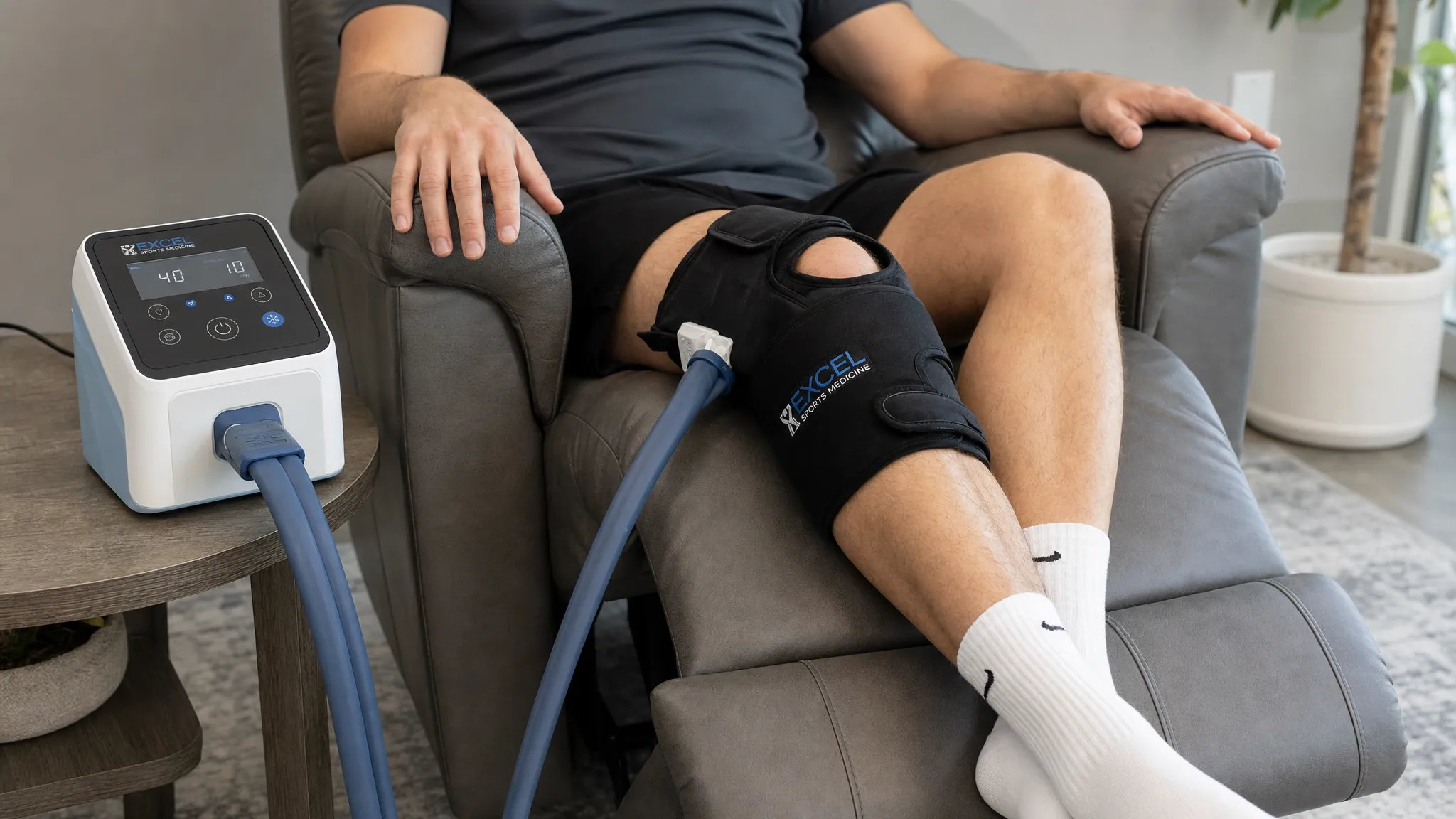
An ice compression device combines cold therapy with compression around an injured or post-surgical body part. The cold component may come from circulating ice water, a chilled reservoir, or a cold wrap. The compression component may be static, like a snug wrap, or dynamic, using air pressure that inflates and deflates around the joint.
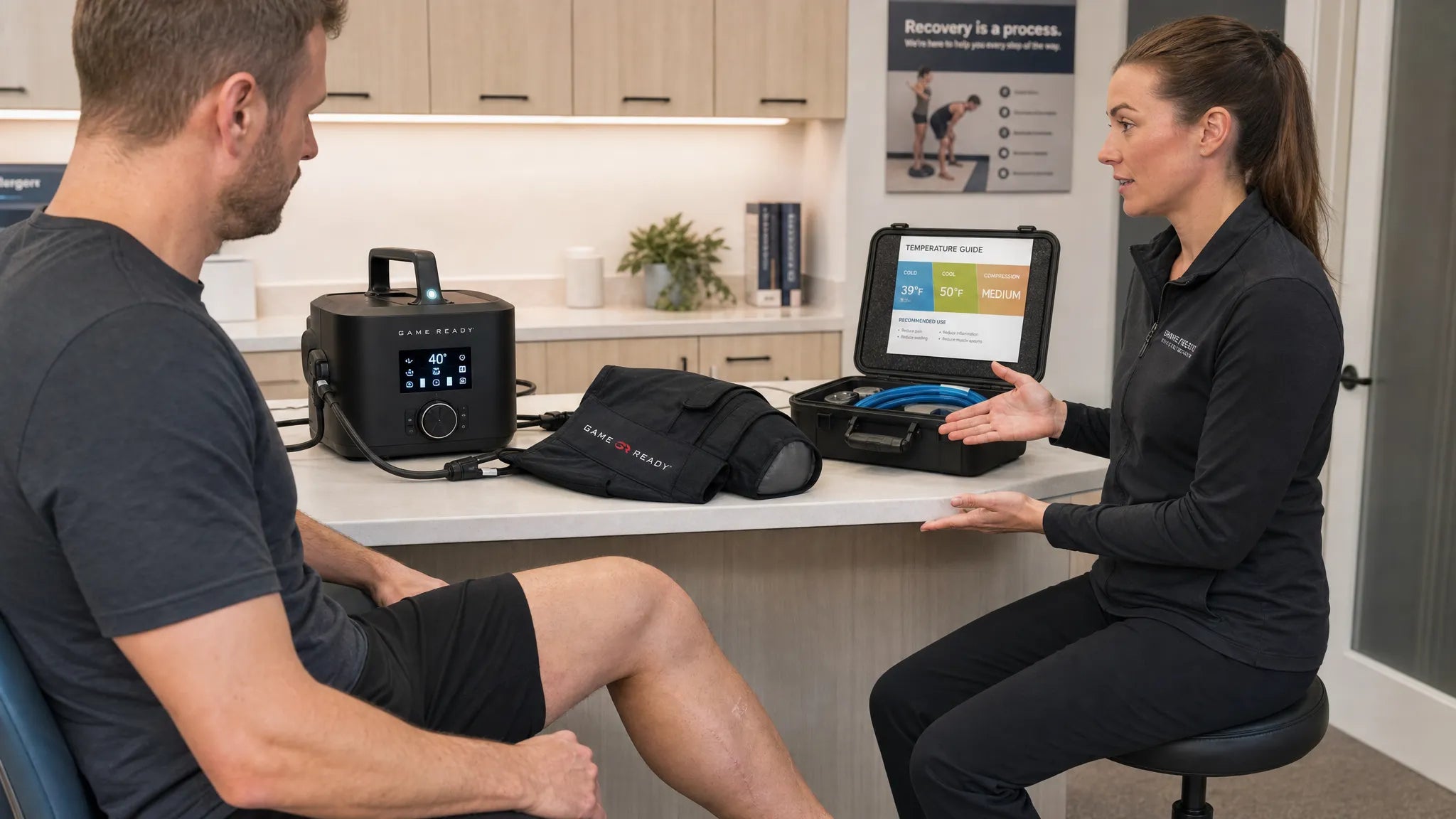
That second version, cold plus active pneumatic compression, is what most people mean when they ask me about medical-grade cold compression systems. Devices such as Game Ready-style systems are designed to circulate cold while applying intermittent compression through a shaped wrap. Simpler ice machines usually circulate cold water but do not provide true pneumatic compression.
Cold therapy can reduce tissue temperature and may help with pain control after injury or surgery. The evidence is mixed depending on the condition, protocol, and outcome measured, but systematic reviews have found cryotherapy can be helpful for some acute soft-tissue injuries when used properly. Compression is commonly used in medical and rehab settings to help manage swelling and fluid movement, especially when applied safely and at appropriate pressures.
Ice pack vs ice machine vs ice compression device
This is where many buyers get confused. An ice compression device is not the same thing as a gel pack from the freezer, and it is not always the same as a basic circulating ice machine.
| Option | What it does | Best for | Main limitation |
|---|---|---|---|
| Ice pack or gel pack | Applies passive cold to one area | Minor soreness, short sessions, low-cost use | Warms quickly, uneven contact, no controlled compression |
| Basic cold therapy machine | Circulates cold water through a pad | Post-op patients who need longer cold sessions than an ice pack | Usually no active pneumatic compression |
| Ice compression device | Combines cold therapy with adjustable compression | Post-surgery swelling, acute sports injuries, higher-level rehab, clinic use | Higher cost, more setup, wrap selection matters |
| Pneumatic compression device without cold | Uses air pressure to assist circulation and fluid movement | Leg recovery, lymphedema management, edema support when cold is not needed | Does not provide cryotherapy |
For a mild ankle tweak, an ice pack may be enough. For a swollen knee after ACL reconstruction or total knee replacement, a controlled cold compression unit may be worth considering, especially if your surgeon or physical therapist already recommends cold therapy.
If you are trying to understand the broader category first, our guide to what cold compression therapy is breaks down the basic physiology and common use cases.
Look for controlled cooling, not just “maximum cold”
One of the biggest mistakes I see is assuming colder is better. It is not.
A good ice compression device should deliver consistent, manageable cold over the treatment session. Skin and superficial tissues can be injured by excessive cold exposure, especially when a person has reduced sensation, nerve issues, diabetes-related neuropathy, or poor circulation. That is why the device’s manual, wrap barrier, session length, and temperature guidance matter.
For post-surgery recovery, consistency usually beats intensity. A device that keeps the treatment area in a tolerable cold range for the prescribed session is more useful than one that feels brutally cold for five minutes and then becomes uncomfortable. Patients are more likely to follow the protocol when the treatment is predictable.
When comparing models, check:
- Whether the device circulates cold water or relies on a pre-frozen insert
- Whether temperature is adjustable or controlled by ice-water concentration
- Whether the manual gives clear session duration and skin-check instructions
- Whether the wrap uses a safe barrier between the cold source and skin
- Whether the unit can maintain cold for your expected session length
If you are recovering from surgery, ask your care team what temperature range and session schedule they prefer. The device should fit that plan, not force you into a one-size-fits-all routine.
Compression should be adjustable and purposeful
Compression is where medical-grade systems separate themselves from basic cold wraps.
A simple Velcro wrap can squeeze the joint, but it does not create the same pattern as an active pneumatic system. With a true ice compression device, air chambers inflate and deflate to apply intermittent pressure. The goal is not to crush the tissue. The goal is controlled pressure that helps manage swelling while the cold therapy helps with pain and inflammation-related symptoms.
Research on cold therapy after orthopedic surgery suggests benefits vary by procedure and protocol, but clinical use remains common because pain and swelling control are practical barriers to early rehab. For example, the Cochrane knee replacement review reported some early improvements with cryotherapy, while also emphasizing that the evidence was not uniform across all outcomes.
The compression settings should be easy to understand. If a patient is in pain, on medication, or recovering at home with a caregiver, the control panel needs to be simple. A device with five confusing pressure modes and poor instructions is not better than a device with fewer, clearer options.
Wrap fit matters more than most buyers think
In clinics, the wrap was often the difference between a device patients loved and a device that sat unused.
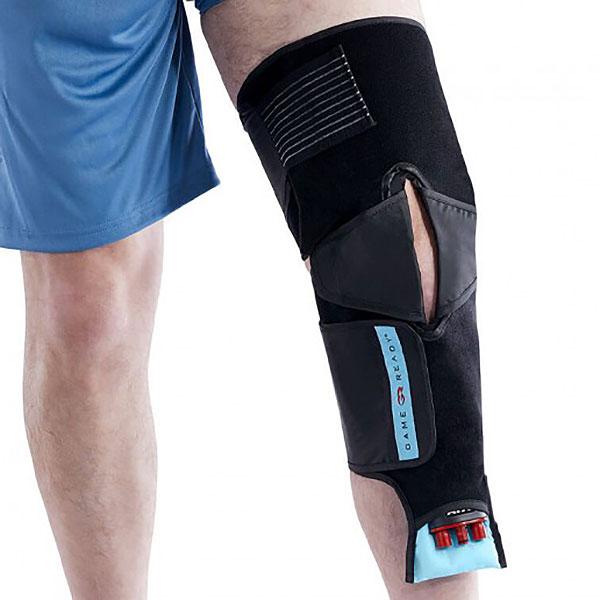
The wrap needs to match the body part. A knee wrap should cover the joint without bunching behind the knee. A shoulder wrap should sit securely without forcing the arm into a painful position. A hip or back wrap should maintain contact across the target area without sliding off every time the patient shifts.
For post-op recovery, anatomical fit is not just about comfort. It affects cold transfer, compression distribution, and ease of use. A poorly fitted wrap can create pressure points, leave the actual surgical area under-treated, or make the patient dread each session.
Before buying, confirm:
- The exact body part you need treated
- Whether the wrap is included or sold separately
- Whether left/right sizing matters
- Whether the wrap fits your body size or limb circumference
- Whether replacement wraps are available
- Whether the same control unit can support future wraps for other injuries
This is one reason I tell customers to avoid buying a unit based only on the control box. The wrap is the part touching the patient. It deserves equal attention.
Check FDA status carefully
Health devices are full of vague language. “FDA registered” does not mean the same thing as “FDA cleared.” Registration can simply mean a company or facility is listed with the FDA. Clearance, often through the 510(k) pathway, means the manufacturer demonstrated that the device is substantially equivalent to a legally marketed predicate device for a specific intended use.
The FDA explains the 510(k) process on its official medical device pages, and buyers can also search the FDA 510(k) database when a company provides a clearance number. If a brand claims FDA clearance but will not identify the clearance or intended use, that is a red flag.
You do not need to become a regulatory expert, but for an ice compression device used after surgery, I would look for one of these:
- Clear FDA clearance language for the device category and intended use
- Manufacturer documentation that explains indications, contraindications, and setup
- A professional or clinical track record with orthopedic, sports medicine, or rehab use
- An authorized dealer who can provide product specs and support instead of vague wellness claims
At Your Health Sanctuary, this is why we focus on clinic-trusted recovery equipment rather than novelty gadgets. The right documentation does not guarantee a device is right for every patient, but it gives you a better foundation than marketing slogans.
Do not let polished marketing replace proof
A nice website, big athlete photos, and words like “elite recovery” are not enough. A good recovery purchase has to be evaluated differently than a software launch or growth campaign. Agencies like User Story are built to help companies grow through marketing and innovation, which is useful in its lane, but when you are choosing a device for a swollen knee after surgery, marketing polish should never outrank clinical documentation, fit, safety, and support.
Here is the plain-English filter I use when customers ask me whether a device is legitimate:
| Claim you see | What to ask before trusting it |
|---|---|
| “Used by pros” | Which teams, clinics, or providers use it, and for what purpose? |
| “Medical grade” | Is there FDA clearance, clinical documentation, or professional distribution? |
| “Reduces swelling fast” | What protocol, what condition, and what evidence supports the claim? |
| “Fits all joints” | Are there anatomical wraps for your specific surgery or injury? |
| “No ice needed” | Is it a true iceless cooling system, or just compression with a cold insert? |
| “Doctor recommended” | Is there actual clinical adoption, or only a testimonial? |
Good brands can answer basic questions without hiding behind buzzwords.
Choose based on your recovery scenario
The right ice compression device depends on who is using it and why. A clinic treating multiple athletes every day has different needs than a caregiver helping one parent after knee replacement.
| Recovery situation | What to prioritize | What I would avoid |
|---|---|---|
| Knee replacement or ACL surgery | Reliable cold delivery, knee-specific wrap, easy drainage, clear timer guidance | Tiny pads, vague temperature control, hard-to-clean tubing |
| Rotator cuff or shoulder surgery | Shoulder wrap fit, gentle compression options, easy one-handed setup with caregiver help | Flat universal pads that slide off the shoulder |
| Acute sports injury | Fast setup, durable wraps, adjustable compression, portability | Devices with weak wrap contact or no pressure control |
| Clinic or athletic training room | Multi-wrap compatibility, durable control unit, repeatable protocols, service support | Consumer-only devices with limited warranty or unclear replacement parts |
| Home user with neuropathy or reduced sensation | Extra safety guidance, conservative cold use, clinician approval | Aggressive cold settings or long unsupervised sessions |
If you are buying after surgery, do not wait until discharge day if you can avoid it. The first week is when setup stress is highest. Confirm the body-part wrap, shipping timeline, and instructions before the procedure whenever possible.
Safety features are not optional
Cold compression is generally well tolerated when used correctly, but the people most likely to need it after surgery are often the same people who need caution: patients with swelling, altered sensation, medications, or mobility limitations.
Avoid using cold compression over areas where you cannot feel temperature normally unless your clinician specifically clears it. Be cautious with diabetes-related neuropathy, peripheral vascular disease, Raynaud’s phenomenon, fragile skin, open wounds, active infection, or any condition where cold exposure or compression may create risk.
Also, do not use compression over a suspected blood clot. Deep vein thrombosis can present with leg swelling, pain, warmth, or redness, and it requires medical evaluation. MedlinePlus, a service of the National Library of Medicine, lists leg swelling and pain among common DVT symptoms. If the swelling seems unusual, one-sided, hot, or worsening, stop guessing and get medical guidance.
A good device should make safe use easier through clear manuals, timers, pressure settings, skin-check instructions, and customer support. If the instructions feel vague before you buy, they will not feel clearer when the patient is uncomfortable.
Practical setup details that matter at home
This is the part many product pages skip.
If you are a caregiver, ask yourself how the device will work at 2 a.m., not just how it looks in a product photo. Can you fill it without spilling? Can you drain it without lifting something too heavy? Does the hose connect securely? Can the patient get the wrap on without twisting the surgical joint?
For home use, I like to see:
- A control unit that is stable on the floor or table
- Tubing that is long enough for a recliner or bed setup
- Simple buttons that can be used by a tired caregiver
- A wrap that can be positioned without forcing painful movement
- Easy cleaning and drying instructions
- Replacement parts or wraps available from a reputable seller
These are not glamorous features, but they determine whether the device becomes part of recovery or becomes an expensive closet item.
When is a medical-grade ice compression device worth the cost?
A medical-grade system is usually worth considering when swelling control, pain management, and consistent cold therapy are central to the recovery plan. That often includes orthopedic surgery, higher-grade sports injuries, and clinics that need repeatable protocols for many patients.
It may not be necessary for mild soreness, occasional icing, or a small strain that responds well to rest and basic care. In those cases, a quality ice pack or basic cold therapy machine may be enough.
For patients comparing options, I usually frame the decision this way: if the device helps you follow your recovery protocol more consistently and comfortably, it may provide real value. If it is too complex, poorly fitted, or not matched to your condition, the price tag does not matter because you will not use it properly.
For more surgery-specific guidance, you can read our article on the best cold therapy machine after surgery, which compares device categories and use cases in more depth.
How ice compression fits with other recovery tools
Cold compression is usually an early-stage tool. It is most often used when pain, swelling, and inflammation-related symptoms are limiting comfort and movement. As recovery progresses, other modalities may become more relevant.
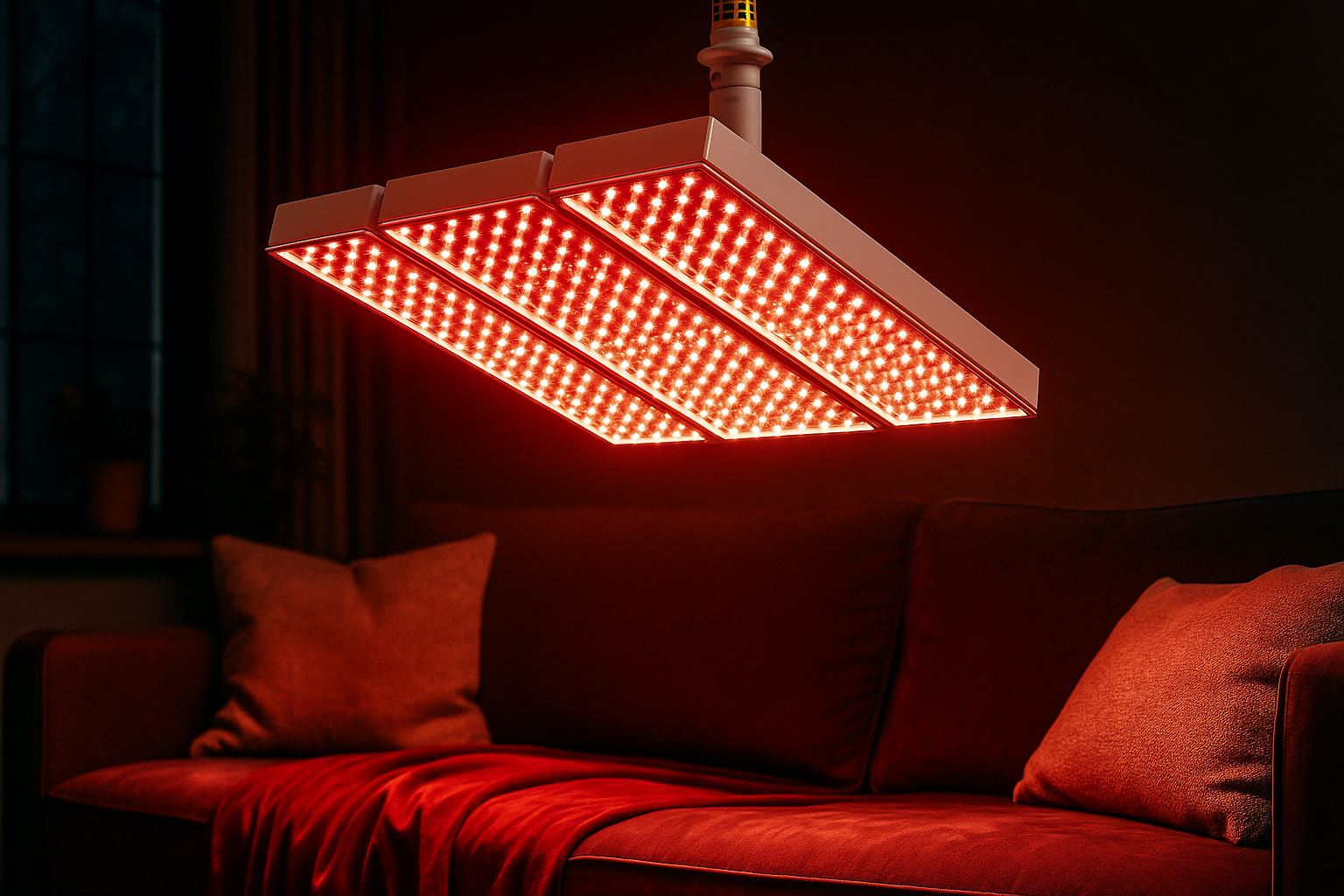
For example, pneumatic compression boots may help with leg circulation and recovery when cold is not needed. Percussive massage tools may support muscle relaxation later in rehab, but they are usually not appropriate directly over a fresh surgical site. Red light therapy and cold laser therapy may be considered for certain pain or tissue-recovery goals, depending on the condition and device, but they are not substitutes for surgical follow-up or physical therapy.
At Your Health Sanctuary, we carry professional-grade recovery and wellness equipment across categories like cold compression, pneumatic compression, red light therapy, cold laser therapy, percussion massage, and whole-body vibration. The goal is not to sell every customer every device. The goal is to match the tool to the recovery stage, body part, and clinical need.
Common red flags when buying an ice compression device
If you see any of these, slow down before buying:
- No clear explanation of whether the unit provides active compression or only cold
- No body-part-specific wrap information
- No accessible manual before purchase
- No FDA language beyond vague “registered facility” claims
- No pressure or temperature guidance
- No replacement wraps or parts
- No real customer support
- Claims that the device “heals” injuries without rehab, rest, or medical care
The strongest recovery products are usually not the loudest. They are the ones with clear specs, clear use cases, and clear limitations.
FAQ: ice compression device buying questions
What is the best ice compression device after knee surgery? The best device after knee surgery is one with consistent cold delivery, adjustable pneumatic compression, and a knee-specific wrap that fits securely without bunching. For higher-level post-op recovery, many patients and clinics look at medical-grade cold compression systems rather than basic ice packs, but your surgeon’s protocol should guide timing and frequency.
Is an ice compression device better than an ice machine? It depends on the device. A basic ice machine circulates cold water, while an ice compression device adds active compression. If swelling control is a major concern, cold plus adjustable compression may be more useful. If you only need longer cold sessions and minimal swelling support, a basic ice machine may be enough.
How long should you use an ice compression device? Many post-op protocols use short sessions, often around 15 to 30 minutes, but the right duration depends on the surgery, device, temperature, wrap, skin condition, and clinician instructions. Always follow the device manual and check the skin regularly. Longer is not automatically better.
Can you sleep with an ice compression device on? I generally do not recommend sleeping through active cold compression unless your surgeon and device instructions specifically allow it. Sleeping reduces your ability to monitor skin temperature, pressure, numbness, or discomfort. Timed sessions while awake are safer for most home users.
Does cold compression reduce swelling? Cold therapy may help with pain and acute inflammatory symptoms, while compression is commonly used to manage swelling and fluid movement. Clinical outcomes vary by procedure and protocol, so it is best viewed as a supportive tool, not a standalone treatment.
Who should not use an ice compression device? People with poor circulation, reduced sensation, certain nerve problems, Raynaud’s phenomenon, fragile skin, active infection, suspected blood clot, or open wounds near the treatment area need medical guidance before use. If you cannot feel cold normally, be especially cautious.
Is FDA clearance required for an ice compression device? Not every cold product is marketed the same way, but for post-surgical or clinical use, FDA clearance or clear regulatory documentation is worth checking. FDA clearance does not mean a device is perfect for every patient, but it is a stronger signal than vague “medical grade” wording.
Can I use cold compression with compression boots or percussion therapy? Sometimes, but timing matters. Cold compression is often used early for a specific injured or surgical area. Compression boots may be used for broader leg recovery when appropriate, and percussion therapy is usually delayed until tissues are ready and you are cleared to use it away from the surgical site.
Need help choosing the right setup?
If you are buying an ice compression device for surgery, a sports injury, or a clinic, do not start with the brand name. Start with the body part, swelling level, recovery stage, safety risks, and who will operate the device at home.
Your Health Sanctuary curates professional-grade recovery devices used by clinics and athletes, including cold compression systems, pneumatic compression equipment, red light therapy, cold laser therapy, and percussion tools. We include detailed specs, free shipping, price match support, flexible financing options, and real help choosing the right equipment.
If you are unsure whether you need a basic cold therapy machine, a true cold compression system, or a different recovery tool entirely, reach out to Your Health Sanctuary before you buy. A five-minute fit and use-case conversation can save you from ordering the wrong wrap, the wrong category, or more device than you actually need.
Ready to Upgrade Your Recovery?
The equipment referenced in this guide, in stock and ready to ship. Many products qualify for HSA/FSA — call us to confirm eligibility for your situation.
Questions? Talk to our recovery specialists: (612) 360-2490