
Knee Replacement Cold Compression Therapy: Recovery Guide
The first 72 hours after a total knee replacement decide a lot. Swelling that gets ahead of you in the first three days lingers for weeks. Pain that isn’t controlled compounds into anxiety and poor sleep, which slows healing further. Knee replacement cold compression therapy is the single most studied non-pharmacologic intervention for that exact window, and the protocols have gotten sharper in 2026.
Clinical research on total knee replacement consistently finds that continuous cold compression outperforms static ice packs in the first 72 hours — with patients tending to use less opioid medication, regain knee flexion sooner, and sleep better during early recovery. I’ve watched too many post-surgical patients underestimate the first three days. They expect to “tough it out” with ice packs and end up two weeks behind their physical therapy goals.
Here is what the evidence shows knee replacement cold compression therapy actually does, how to use it correctly at home, and which devices match the protocols that produced these clinical results.
Why Cold Compression Beats Static Ice for Post-Op Knees
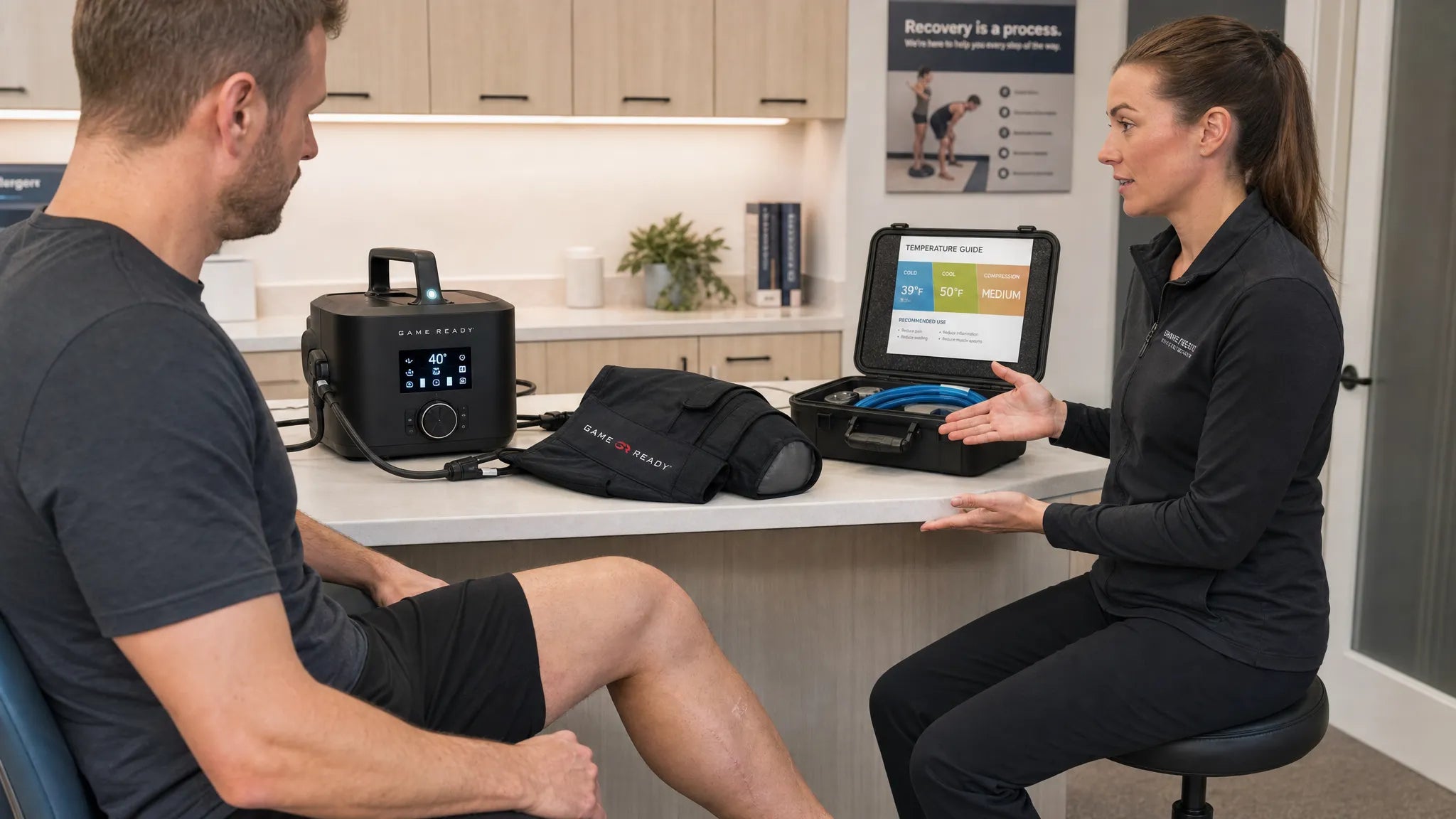
An ice pack delivers cold to the skin surface for about 20 minutes before it warms up and starts working against you. It doesn’t deliver compression. It doesn’t reach the deeper tissues where the actual swelling lives. A surgical cold compression device addresses three problems at once:
- Cold — circulated at a controlled temperature (typically 38–55°F) for hours, not minutes, slowing inflammatory cytokine release and reducing pain transmission
- Compression — intermittent pneumatic pressure that physically pushes interstitial fluid out of the joint capsule and back into systemic circulation
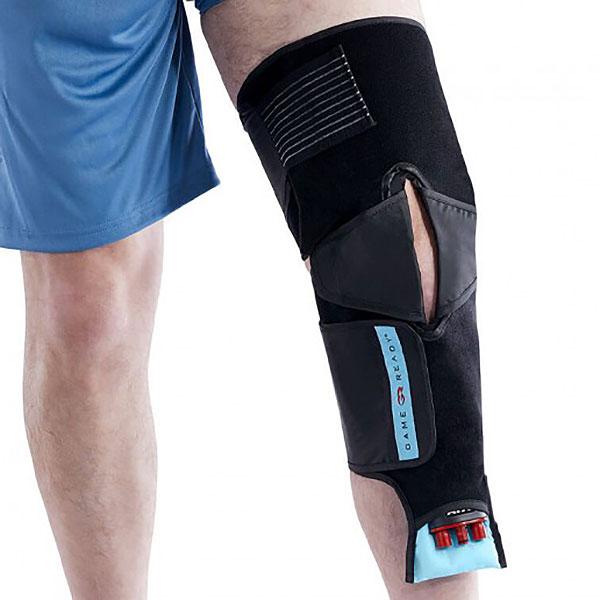
- Coverage — the wrap conforms to the operative knee, covering the suprapatellar pouch, medial and lateral gutters, and popliteal fossa where post-op fluid accumulates
Static ice handles approximately one-third of the job. That difference shows up in opioid use, range-of-motion milestones, and how soon you can sleep through the night.
The First 72 Hours: A Specific Protocol That Works
This is the window that matters most. Surgeons increasingly send patients home with cold compression rented or purchased outright because the inflammatory cascade peaks in this period.
- Hours 0–24: Cold compression every 1–2 hours awake, 20–30 minutes per session. Elevate the leg above heart level whenever possible.
- Hours 24–48: 30 minutes on, 30 minutes off during waking hours. Use overnight on a lower-pressure setting if the device supports it.
- Hours 48–72: Continue 30-minute sessions 4–6 times daily. Start gentle quad sets and ankle pumps between sessions to keep the calf pump active.
The pattern matters more than the device brand. Cold compression that goes on once and stays on for 8 hours is less effective than the on-off cycle the trial protocols use — the off period allows blood flow to return and clear the inflammatory byproducts the cold-and-pressure cycle has loosened.
Beyond Week One: When to Transition
Around day 7–10, the soft tissue swelling that dominates the early period gives way to lower-grade chronic inflammation and the start of scar tissue formation. Many surgeons keep patients on cold compression for 3–6 weeks because:
- It manages the swelling that flares after each physical therapy session
- It allows progressive flexion without rebound inflammation
- It improves sleep, which is when most of the tissue remodeling occurs
For patients with significant lymphatic involvement or persistent edema, a sequential pneumatic compression device is added to address the broader lower-extremity fluid load. That’s where a device like the Bio Compression SC-2008-DL fits — it’s a medical-grade sequential compression pump designed for circulation and lymphatic clearance, not just localized post-surgical swelling.
Choosing the Right Device for Knee Replacement Recovery
| Feature | Game Ready GRPro 2.1 | Bio Compression SC-2008-DL |
|---|---|---|
| Primary Function | Cold + intermittent pneumatic compression | Sequential pneumatic compression (no cold) |
| Best Recovery Phase | Day 0–42 post-op | Week 2+ for lymphatic clearance and circulation |
| Temperature Range | 38–55°F adjustable | Ambient (no cooling) |
| Pressure Range | 5–75 mmHg adjustable | Up to 80 mmHg, multi-chamber |
| FDA Status | FDA-cleared medical device | FDA-cleared medical device |
| HSA/FSA Eligible | Yes — strong case for post-surgical use | Yes — strong case for medical compression |
| Used in Clinical Trials | Active cold-compression systems widely used in surgical recovery research | Bio Compression sequential pumps standard in lymphedema and circulation therapy |
For the first 6 weeks after surgery, the Game Ready GRPro 2.1 is the device most aligned with current cold compression trial protocols. For weeks 4+ when residual swelling extends down the lower leg or when lymphatic drainage becomes the limiting factor, sequential pneumatic compression takes over.
Setting Up at Home: What Most People Get Wrong
The biggest mistake post-op patients make isn’t which device they use — it’s how often they actually use it. A device sitting in the box because it’s “a hassle to set up” helps no one. Three small changes solve this:
- Set up a recovery station once. A recliner, the cold compression unit, a side table for water and medications, the remote. Make it the path of least resistance.
- Pre-fill the reservoir. Game Ready and similar units run for hours on a single fill of ice and water. Refill it once in the morning and once before bed.
- Time sessions to medication and PT. 30 minutes of cold compression before a PT session reduces baseline pain. 30 minutes after reduces rebound inflammation. Don’t skip either one.
How This Fits With Other Recovery Tools
Cold compression is the foundation, but it’s rarely the only thing post-op patients need. For broader context on surgical recovery, see our recovery equipment for post surgery guide and the rotator cuff surgery recovery equipment overview — many of the principles apply across joint surgeries. The Game Ready GRPro 2.1 review walks through the device specifications in more detail if you’re deciding whether to rent or buy.
Frequently Asked Questions
How long should I use cold compression after knee replacement?
Most orthopedic protocols call for active cold compression therapy for 3–6 weeks post-op, with the most intensive use in the first 72 hours and gradually tapering as swelling resolves. Some surgeons extend use longer for patients with persistent effusion or those returning to demanding activity.
Is cold compression therapy for knee replacement HSA or FSA eligible?
Yes. Cold compression devices like Game Ready prescribed or recommended for post-surgical recovery are typically HSA/FSA eligible expenses. The Bio Compression SC-2008-DL pneumatic compression device used for post-surgical edema and lymphatic clearance is also generally eligible. A letter of medical necessity from your surgeon strengthens both cases. Check with your plan administrator.
Can I use a regular ice pack instead of a cold compression machine?
You can, but clinical research shows measurably better outcomes — lower opioid use and earlier range-of-motion milestones — with a circulated cold compression system versus static ice. The difference comes from combined cold, sustained delivery, and pneumatic compression that ice packs cannot replicate.
How cold should the temperature be set?
Clinical protocols typically run between 38 and 55°F. Lower temperatures (38–45°F) are used during the first 72 hours when inflammation is most active. Slightly warmer settings (45–55°F) are common after week one for comfort and to avoid skin irritation. Always check skin every 20 minutes; numbness is a signal to pause the session.
When is it safe to start cold compression after surgery?
Most surgeons clear cold compression therapy immediately upon discharge from the hospital, often starting in the recovery room. Always follow your surgeon’s specific protocol — certain incision dressings or wound vacs may require a delay or barrier layer.
Ready to Upgrade Your Recovery?
The equipment referenced in this guide, in stock and ready to ship. Many products qualify for HSA/FSA — call us to confirm eligibility for your situation.
Questions? Talk to our recovery specialists: (612) 360-2490
About the Author
Justin Webster, owner of Your Health Sanctuary, has spent his career helping build over 20 niche medical clinics across the USA and has written 2 books on the subject. Working alongside dozens of MDs, he saw firsthand what actually works for weight loss, recovery, and anti-aging, and what doesn’t. He even published a weight loss book centered on Apple Cider Vinegar. When he realized it wasn’t at the level it needed to be, he had the humility to pull it entirely and start over. That willingness to hold himself to a higher standard, even when it costs him, is what drives how Your Health Sanctuary operates. Life and business experience in the medical field led to everything this store is built on. Justin has personally lost 55 lbs. and made anti-aging his obsession. He didn’t start this store to push products. He started it because he knew the tools clinicians trust, the ones that deliver real results, were out of reach for most people. Your Health Sanctuary exists to change that.
Get the Right Recovery Setup Before Surgery Day
If you have a knee replacement on the calendar, the time to set up your cold compression therapy is now — not the day you come home. Patients who pre-position the device, ice reservoir, and recovery chair before surgery hit their PT milestones earlier and use fewer opioids in the critical first week. The Game Ready GRPro 2.1 is the system used in the recovery protocols of major orthopedic centers, and the Bio Compression SC-2008-DL is the right pairing for week 3 onward when lymphatic clearance becomes the limiting factor.
The Game Ready GRPro 2.1 and Bio Compression SC-2008-DL may be purchasable with your HSA or FSA account — both qualify as HSA/FSA-eligible medical devices for post-surgical recovery. Check with your plan administrator and ask your surgeon for a letter of medical necessity to strengthen the eligibility case.
Want help matching the right setup to your specific surgery and home situation? Call us at (612) 360-2490 — we’ll walk you through what most patients wish they’d known before day one.