

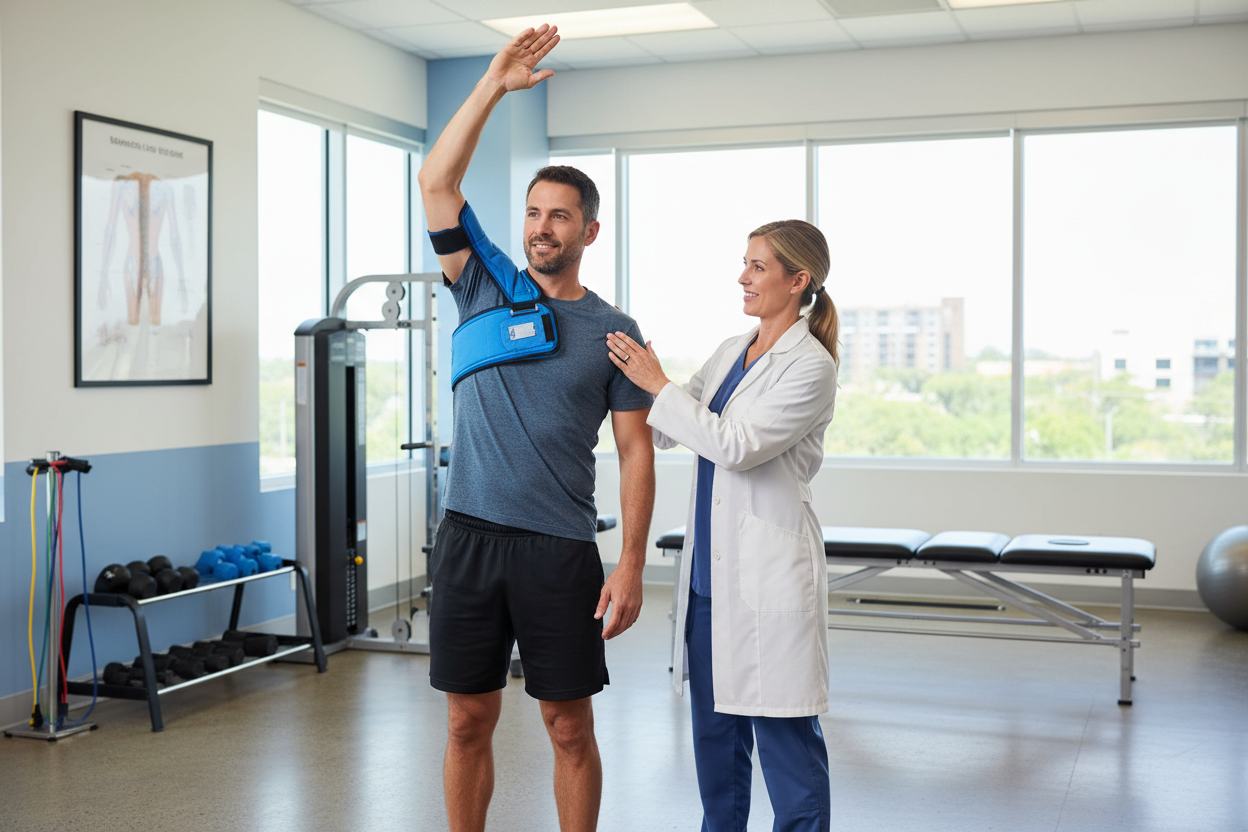
Best Cold Therapy Machine After Surgery (2026): Game Ready vs. Every Major Alternative
The best cold therapy machine after surgery is the Game Ready GRPro 2.1 for anyone who wants the same clinical-grade system used by orthopedic surgery centers, physical therapists, and professional sports teams. It pairs active cold with intermittent compression — the only combination proven in clinical settings to reduce post-surgical edema faster than cold alone. If budget is the primary constraint, the Breg Polar Care Kodiak is the best cold-only alternative. Everything else in between comes with meaningful tradeoffs.
After surgery, your body's inflammatory response is working hard: blood vessels dilate, fluid pours into the tissue, and the result is the swelling, pain, and stiffness that slows your recovery. Cold therapy is one of the oldest and most evidence-backed interventions in orthopedic rehabilitation — but the type of cold therapy you use makes an enormous difference in outcomes.
The difference between a clinical-grade cold therapy machine and a bag of frozen peas is not marketing spin. It is the difference between achieving sustained 38-45°F tissue cooling for a full 45-minute session versus 5-8 minutes of effective cold before a generic ice pack warms to room temperature. And when you add active compression to cold, you get something no ice pack or basic ice machine can replicate: active lymphatic drainage that physically moves edema out of the surgical site.
This guide compares every major cold therapy machine on the market — what the technology actually does, who each device is right for, and which surgeries demand the most from your cold therapy system.
Cold Therapy Machine Comparison: Full Breakdown
| Device | Type | Compression | Temp Control | FDA Status | Price | Best For |
|---|---|---|---|---|---|---|
| Game Ready GRPro 2.1 YHS Pick | Active cold + compression | ✅ Active intermittent | Precise digital (38–45°F) | ✅ 510(k) cleared | $2,495+ | Post-surgical, clinical-grade, serious orthopedic recovery |
| Breg Polar Care Kodiak | Circulating cold only | ❌ | Ice-based (varies) | ✅ Cleared | $299–$399 | Budget cold-only, short-term use |
| Ossur Cold Rush | Circulating cold only | ❌ | Ice-based (varies) | ✅ Cleared | $189–$299 | Basic cold therapy, low-demand recovery |
| DonJoy IceMan Classic3 | Circulating cold only | ❌ | Ice-based (varies) | ✅ Cleared | $219–$349 | Standard cold therapy, mid-tier |
| Vive Health Ice Machine | Circulating cold only | ❌ | Ice-based | Limited | $79–$149 | Very light use, not recommended post-surgery |
| Standard ice packs / cryo cuffs | Passive cold | ❌ | None | N/A | $15–$80 | Backup only — not suitable as primary post-surgical therapy |
Why Cold Therapy Matters So Much After Surgery
When a surgeon cuts through tissue, the body treats it identically to a traumatic injury. The inflammatory cascade activates: histamine and prostaglandins flood the area, capillary permeability increases, and protein-rich fluid leaks into the interstitial space. The result is edema — the puffiness you see around any surgical site — and with edema comes pain, reduced range of motion, and increased pressure on nerves.
Cold therapy combats this through two mechanisms:
- Vasoconstriction. Cold causes blood vessels to constrict, slowing the flow of inflammatory mediators into the tissue and limiting new edema formation.
- Nerve conduction slowing. At tissue temperatures below 50°F, pain signal transmission in peripheral nerves slows measurably — this is why cold therapy reduces the subjective experience of post-surgical pain even when inflammation is still present.
When you add active compression to the cold, a third mechanism engages: the mechanical pumping action of intermittent pneumatic compression helps move excess interstitial fluid back into the lymphatic capillaries, actively clearing the edema that has already formed. This is the mechanism that separates cold compression therapy from cold-only therapy — and it is why physical therapists and orthopedic surgeons at top surgery centers do not reach for a bag of ice when they have access to a Game Ready.
Game Ready GRPro 2.1: The Clinical Gold Standard
The Game Ready GRPro 2.1 is the device that changed post-surgical cold therapy from a passive afterthought to an active rehabilitation tool. It was developed with input from the U.S. military to accelerate recovery of injured soldiers in the field, and it carries FDA 510(k) clearance as a Class II medical device. Today it is the standard of care in NFL, NBA, NHL, and MLB training rooms — and in orthopedic surgery centers that prioritize clinical outcomes over equipment cost.
What Makes It Different: C3 Technology
Game Ready's patented Circumferential Cold and Compression (C3) technology delivers two simultaneous therapies through anatomical wraps designed for specific body parts — knee, shoulder, hip, ankle, elbow, back, and more. The GRPro 2.1 control unit:
- Circulates water continuously through the wrap, maintaining a precise therapeutic temperature throughout the session (unlike ice-based systems that start cold and warm up)
- Delivers intermittent pneumatic compression in programmable cycles — typically 30-60 seconds of compression followed by a release phase — mimicking the muscle pump mechanism of natural lymphatic drainage
- Allows independent temperature and compression controls, so the protocol can be adjusted as recovery progresses
- Offers sessions up to 60 continuous minutes without the temperature drop that affects ice-based systems at the 15-20 minute mark
For a surgeon sending a patient home after knee replacement or ACL reconstruction, this is not a luxury upgrade. It is the difference between a patient who is significantly swollen at the Day 3 PT appointment and one who is already making range-of-motion gains.
Game Ready GRPro 2.1 — Clinical-Grade Cold + Compression
FDA-cleared cold and compression therapy system used by orthopedic surgery centers and professional sports teams. Available through Your Health Sanctuary with full manufacturer support.
View Game Ready GRPro 2.1 Call (612) 360-2490The Cold-Only Alternatives: Breg, Ossur, DonJoy
If the Game Ready GRPro 2.1 is outside your budget or not available, the three most commonly prescribed cold-only systems are the Breg Polar Care Kodiak, the Ossur Cold Rush, and the DonJoy IceMan Classic3. All three work on the same basic principle: a reservoir filled with ice and water connects to a wrap via a hose, and a small pump (or gravity) circulates the chilled water through the wrap.
Breg Polar Care Kodiak
The Kodiak is the most widely hospital-issued circulating cold machine in the U.S. Its 10.5-liter insulated cooler holds ice well, extending session time before refilling is needed. The Kodiak does not offer active compression — it delivers cold only — but it is a significant step up from passive ice packs because it maintains consistent cold contact with the joint surface throughout the session. For low-demand post-surgical situations (minor knee scope, ligament sprains, shoulder arthroscopy with minimal swelling), the Kodiak is a reasonable choice. It is not appropriate as the primary recovery device for high-edema surgeries like total knee replacement or ACL reconstruction where controlling swelling aggressively determines whether rehabilitation stays on schedule.
Ossur Cold Rush
The Cold Rush is lightweight, quiet, and well-suited for upper extremity recoveries like wrist or elbow procedures where the anatomy is smaller and weight matters. It is widely available through DME suppliers. Like the Kodiak, it offers cold only — no compression — and its smaller reservoir means more frequent refills. It is a solid entry-level option for patients who primarily need cold for pain management rather than aggressive edema control.
DonJoy IceMan Classic3
The IceMan is similar in performance to the Kodiak, with a slightly different wrap system and reservoir design. Both are acceptable mid-tier options. The choice between the IceMan and Kodiak often comes down to whatever is available through your DME provider or hospital. Neither has a meaningful clinical advantage over the other for standard post-surgical use.
Surgery-Specific Recommendations
The right cold therapy device depends significantly on the type of surgery and the degree of post-operative edema you are managing. Here is how to think about it by procedure:
ACL Reconstruction
High-demand edema case. The entire knee joint is involved, fluid accumulation is significant, and early edema control directly affects quad activation — the first milestone of ACL rehab.
- Recommended: Game Ready GRPro 2.1 with knee wrap
- Protocol: 45 min sessions, 4-5x/day for first 2 weeks
- Compression is critical here, not optional
Total Knee Replacement
The highest post-surgical edema volume in elective orthopedics. Cold + compression is standard of care at most hospital systems.
- Recommended: Game Ready GRPro 2.1 with knee wrap
- Protocol: 60 min sessions, 4-6x/day first week
- Cold-only systems are insufficient for TKR volume
Rotator Cuff Repair
Shoulder anatomy is complex and edema is harder to control than knee because gravity does not assist drainage. Anatomical shoulder wrap coverage matters.
- Recommended: Game Ready GRPro 2.1 with shoulder wrap
- Alt: Breg Polar Care Kodiak (shoulder model)
- Protocol: 30-45 min sessions, 4x/day
Hip Replacement
Deep joint — requires full hip wrap coverage. Cold reaches less effectively than at superficial joints; compression is especially valuable here.
- Recommended: Game Ready GRPro 2.1 with hip wrap
- Protocol: 45-60 min sessions, 3-4x/day
- Positioning assistance may be needed
Ankle Surgery (ATFL, Achilles)
Ankle is highly prone to gravity-dependent edema. Cold + compression plus elevation is the standard approach.
- Recommended: Game Ready with foot/ankle wrap, or Jetboot Pro Plus
- Elevate limb during all sessions
- Protocol: 20-30 min sessions, 5-6x/day first week
Knee Arthroscopy (Minor)
Lower edema volume than ACL or TKR. Cold-only is often sufficient for diagnostic scopes or minor meniscus trims.
- Recommended: Breg Polar Care Kodiak or Game Ready
- Protocol: 20-30 min sessions, 3-4x/day for 1 week
- Ice packs acceptable for very minor procedures
Ankle and Lower Limb Recovery: Consider the Jetboot Pro Plus
For ankle surgeries, Achilles repairs, or any post-surgical recovery involving the foot and lower leg, the Jetboot Pro Plus FDA Cleared is worth serious consideration as a complement to or replacement for a standard cold therapy machine. The Jetboot is designed specifically for the lower extremity — it delivers graduated compression throughout the foot and calf, which is the primary zone of gravity-dependent post-surgical edema in ankle and foot procedures.
Cold therapy + the Jetboot Pro Plus addresses two separate elements of the edema problem: the cold manages acute inflammation at the surgical site, while the Jetboot manages the lymphatic stasis and venous pooling that occurs in the entire limb distal to the surgery. For patients recovering from ankle reconstruction, calcaneal procedures, or Achilles repair, this combination is more comprehensive than cold therapy alone.
Post-Surgical Cold Therapy Protocol: Week-by-Week Guide
Hours 0–24: Acute Phase (In Hospital / Day of Discharge)
Begin cold therapy in the recovery room or immediately upon returning home. This is the most critical window. Sessions every 2-3 hours while awake, 45-60 minutes each with the Game Ready or 20-30 minutes with cold-only devices. Elevate the limb above heart level during all sessions. Do not skip sessions in this phase — early intervention directly reduces peak edema volume.
Days 2–3: Peak Inflammation
Swelling typically peaks at 48-72 hours post-surgery. Maintain 4-6 sessions daily. If swelling continues to increase significantly, contact your surgeon. The goal is controlled, not absent, swelling — some inflammation is a necessary part of healing, but excessive edema delays rehabilitation milestones.
Days 4–14: Subacute Phase
Taper to 3-4 sessions daily as swelling starts to reduce. Continue cold therapy before and after any physical therapy sessions, as PT-initiated movement will temporarily increase local inflammation. This is the phase where a clinical-grade device pays for itself — consistent temperature control means each session is therapeutically productive, not just comfortable.
Weeks 3–6: Recovery Phase
Transition to 2 sessions daily or on-demand use after exercise. Many patients maintain cold therapy through the full 6-week initial recovery period. For major reconstructions like TKR or ACL, cold therapy use often continues well beyond 6 weeks whenever significant exercise-induced inflammation occurs.
Months 2–6: Strength and Return to Activity
Cold therapy becomes reactive rather than scheduled — use after demanding PT sessions or when post-exercise swelling flares. The Game Ready remains useful throughout this phase; its versatility across multiple wrap types also means it can support ongoing joint management for any new injuries or procedures.
Game Ready vs. Ice Packs: The Case in Numbers
The clinical evidence base for cold and compression over cold alone is substantial. Research published in orthopedic and sports medicine literature consistently shows that patients using combined cold and compression therapy after ACL reconstruction and total knee replacement demonstrate lower pain scores, reduced need for opioid pain medication in the acute post-surgical phase, and earlier achievement of the range-of-motion benchmarks that govern rehabilitation progression.
The mechanism is straightforward: ice packs cannot maintain a therapeutic tissue temperature below 50°F for more than 10-15 minutes of a standard 20-minute session as they warm at the skin interface. A circulating cold machine maintains continuous therapeutic temperature but adds no compression. The Game Ready GRPro 2.1 maintains precise temperature for the full session length while simultaneously reducing edema through its compression cycle — each compression pulse actively moves fluid that would otherwise accumulate and harden into the fibrous adhesions that limit rehabilitation progress.
HSA, FSA, and Insurance Coverage for Cold Therapy Machines
Understanding how to pay for a post-surgical cold therapy machine can significantly reduce the out-of-pocket cost:
HSA/FSA Eligible
FDA-cleared medical devices purchased for treatment of a medical condition — including post-surgical recovery — are generally HSA and FSA eligible. The Game Ready GRPro 2.1 qualifies under this category. Keep your post-surgical diagnosis documentation and your purchase receipt. Your HSA/FSA administrator may require a Letter of Medical Necessity from your surgeon; most orthopedic offices provide these routinely for post-surgical equipment purchases. Using HSA/FSA funds effectively reduces the cost of the GRPro by your marginal tax rate — typically 22-37% for patients in the income range that elects these accounts.
Insurance and DME Coverage
Major medical insurance typically does not cover the outright purchase of cold therapy machines for home use, but many DME (Durable Medical Equipment) suppliers offer rental programs for devices like the Game Ready through insurance. Some surgical practices own GRPro units and include their cost in the surgical fee. Check with your DME supplier and your surgeon's office about rental options before purchasing, particularly for short-duration recoveries under 6 weeks.
Rental vs. Purchase
For a single procedure, renting a Game Ready can be cost-effective if rental rates are in the $150-250/month range and your intensive use period is under 6 weeks. For patients who anticipate multiple procedures, have household members who will use the device, or who want to continue using it for ongoing athletic recovery, ownership at $2,495 becomes more economical than multiple rental cycles.
What to Look for When Choosing a Cold Therapy Machine
Beyond the Game Ready vs. alternatives decision, here are the evaluation criteria that matter most when selecting a cold therapy machine for post-surgical use:
1. Does it include compression?
This is the single most important question. Cold-only systems are a significant step up from ice packs, but if budget allows for a cold compression system, the clinical outcomes data strongly supports the upgrade. For high-edema surgeries (TKR, ACL, hip replacement), cold + compression is not a luxury — it is the evidence-based standard of care.
2. Does it have anatomical wraps for your surgery site?
A generic cold therapy wrap over a knee replacement provides significantly less coverage and contact than an anatomically designed knee wrap. Verify that the device you select has a wrap designed for your specific surgery. The Game Ready system covers knee, shoulder, hip, ankle, elbow, back, and hand/wrist with specific anatomical designs. Most cold-only systems have knee and shoulder options at minimum, but back and hip wraps are less common.
3. What is the effective session duration?
An ice-based system starts cold and warms to ineffectiveness within 15-25 minutes, depending on ice-to-water ratio and ambient temperature. A circulating system maintains therapeutic temperature for the duration of the session — typically 30-60 minutes. Longer effective sessions mean fewer refills, less caregiver burden, and more consistent therapeutic benefit throughout the post-surgical period.
4. Is it FDA cleared?
For any device used post-surgically, FDA 510(k) clearance is the baseline threshold. The Game Ready GRPro 2.1, Breg Polar Care Kodiak, Ossur Cold Rush, and DonJoy IceMan all carry FDA clearance. Generic units from less-established brands may not. Do not purchase an unclearanced device for post-surgical use.
5. What is the total cost of ownership?
Wraps are consumables for most cold therapy systems. Factor in the cost of the anatomical wrap for your surgery when calculating total cost. The Game Ready GRPro 2.1 wraps are sold separately and range from $125-$350 per wrap depending on body part. Cold-only system wraps are generally lower cost.
Ready to Order? Talk to Our Recovery Specialists.
Your Health Sanctuary serves medical professionals and post-surgical patients who want clinical-grade equipment. We can help you identify the right cold therapy system for your specific surgery and answer questions about wrap compatibility, HSA/FSA eligibility, and protocol guidance.
View Game Ready GRPro 2.1 Shop Bio Compression SystemsFrequently Asked Questions
What is the best cold therapy machine after surgery?
The Game Ready GRPro 2.1 is the best cold therapy machine after surgery for patients who want clinical-grade outcomes. It delivers active cold and intermittent compression simultaneously through anatomically designed wraps — the same system used by orthopedic surgery centers and professional sports teams. For budget-constrained patients who need cold only, the Breg Polar Care Kodiak is the most widely trusted alternative. Ice packs are not an adequate substitute for dedicated post-surgical cold therapy.
How long should you use cold therapy after surgery?
Most orthopedic surgeons recommend 20-minute to 60-minute sessions 4-6 times per day for the first 2-4 weeks. Frequency is highest in the first 72 hours when acute inflammation peaks. After the initial phase, taper to 2-3 times daily and use on-demand after physical therapy sessions. Follow your surgeon's specific protocol — it will be calibrated to your procedure, your level of swelling, and your rehabilitation milestones.
Is the Game Ready GRPro better than a regular ice pack?
Yes, significantly. An ice pack provides passive cold that warms to ineffectiveness within 15 minutes. The Game Ready GRPro 2.1 circulates precisely temperature-controlled water throughout the session while simultaneously applying intermittent compression. The combination reduces edema more effectively than cold alone, provides longer effective session duration, and delivers uniform coverage that flat ice packs cannot achieve on curved joints like knees and shoulders.
Can you use cold therapy too much after surgery?
Yes. The standard protocol is 20 minutes on, at least 40 minutes off. Extended continuous application without breaks can damage skin and superficial nerve tissue. Never apply cold directly to bare skin — use a cloth barrier or the device's insulated wrap. Patients with diabetes, peripheral vascular disease, or reduced sensation should consult their surgeon before using any cold therapy device.
Does insurance or HSA/FSA cover cold therapy machines?
Most health insurance does not cover direct purchase of home cold therapy machines, but HSA and FSA funds can typically be used for FDA-cleared devices like the Game Ready GRPro 2.1. Rental through a DME supplier may be covered by insurance for short-duration post-surgical use. Request a Letter of Medical Necessity from your surgeon and confirm eligibility with your HSA/FSA administrator before purchasing.
What is the difference between cold therapy and cold compression therapy?
Cold therapy uses temperature alone to control inflammation through vasoconstriction. Cold compression therapy adds intermittent pneumatic compression to actively pump excess interstitial fluid back into the lymphatic system. The combination is more effective for post-surgical edema management — compression addresses fluid already in the tissue; cold limits new edema formation. The Game Ready GRPro 2.1 delivers cold compression therapy. The Breg Kodiak, Ossur Cold Rush, and DonJoy IceMan deliver cold therapy only.
How soon after surgery can I start using a cold therapy machine?
Cold therapy can often begin in the recovery room, before you are even discharged. Many orthopedic surgeons apply cold therapy wraps at the end of the surgical procedure. Home use typically starts the day of discharge, as directed by your surgical team. Starting in the first 24 hours — when inflammation is escalating — is when cold therapy has its greatest impact on recovery trajectory.
Ready to Upgrade Your Recovery?
The equipment referenced in this guide, in stock and ready to ship. Many products qualify for HSA/FSA — call us to confirm eligibility for your situation.
Questions? Talk to our recovery specialists: (612) 360-2490
About the Author — Justin Webster
Justin Webster is the owner of Your Health Sanctuary. Before founding his consulting company, he served as COO of a chain of 13 medical clinics, then spent his career helping build more than 20 additional niche medical clinics across the United States. Working alongside MDs, chiropractors and physical therapists introduced him to the clinical-grade equipment that practitioners actually prescribe. That background, combined with direct relationships with manufacturers including HealthLight and BIOFLEX, shapes how Your Health Sanctuary evaluates and recommends recovery technology. Justin personally owns and uses the HealthLight General Pain Relief Kit. Your Health Sanctuary sells primarily to medical professionals and clinicians, not consumer gadget buyers.
:%20JetBoots%20Pro%20Plus%20has%20been%20discontinued%20at%20Your%20Health%20Sanctuary.%20For%20a%20current%20option,%20see%20our%20Bio%20Compression%20systems,%20or%20talk%20to%20Justin's%20team%20at%20(612)%20360-2490.%0A%0A%0A%0A%0A%0A%0A%0A%0A...)