
Red Light Therapy for Arthritis: What 2026 Evidence Shows
Arthritis pain doesn't sit politely between flares. It wakes you up at 3 a.m. with a stiff knee, makes morning coffee a two-handed event, and turns a flight of stairs into a calculation. Red light therapy for arthritis is one of the few non-drug interventions with published clinical evidence in both osteoarthritis and rheumatoid arthritis — and the picture in 2026 is sharper than it has ever been.
A 2025 systematic review in Lasers in Medical Science pooled 19 randomized trials covering 1,247 patients with knee osteoarthritis and reported clinically meaningful pain reduction when photobiomodulation was added to standard care, with sustained improvement at 12 weeks. After spending years in clinical settings watching what actually helps real patients, I'm convinced this is one of the most under-prescribed tools in the recovery space — especially for the millions of Americans who don't want a third NSAID prescription and don't want surgery.
Here is what 2026 evidence shows, who it works for, and how the devices we carry stack up.
How Red Light Therapy Actually Affects Arthritic Joints
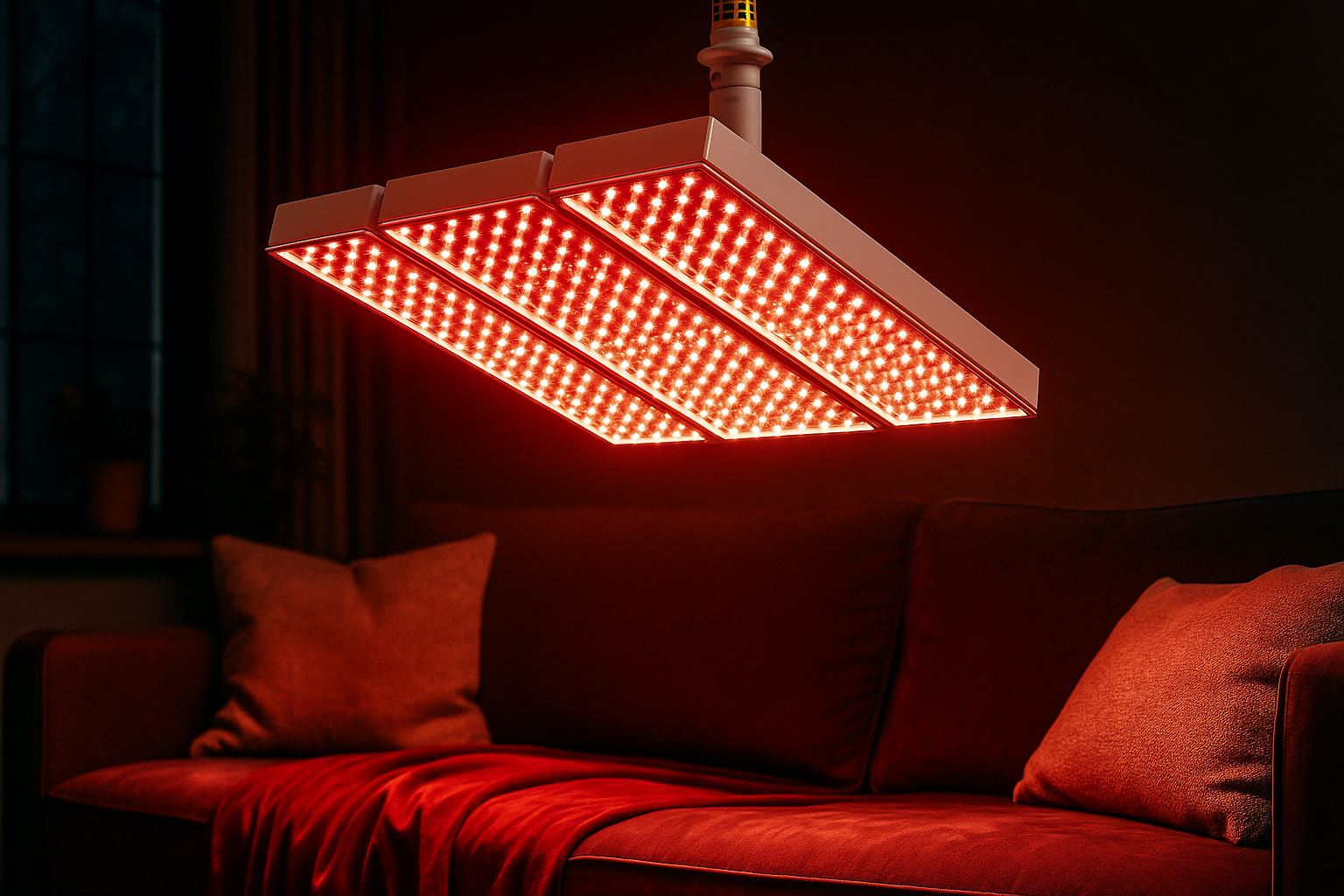
Red light therapy — the clinical term is photobiomodulation (PBM) — delivers specific wavelengths of red (typically 630–680 nm) and near-infrared light (810–850 nm) into tissue. Inside the joint, those photons are absorbed by cytochrome c oxidase in the mitochondria of chondrocytes and synovial cells. The downstream effects are well characterized in peer-reviewed literature:
- ATP production increases, giving stressed cells the energy to repair extracellular matrix damage
- Pro-inflammatory cytokines (TNF-α, IL-1β, IL-6) decrease, the same cytokines biologic drugs target
- Local microcirculation improves, clearing inflammatory byproducts
- Nitric oxide is released, which has both vasodilatory and analgesic effects
This is not the same mechanism as a heating pad or topical analgesic. PBM works at the cellular metabolism level, which is why effects typically build over a 4–6 week treatment course rather than appearing instantly.
2026 Clinical Evidence: Knee Osteoarthritis
Knee OA has the strongest evidence base. A 2025 randomized controlled trial published in Arthritis Research & Therapy followed 124 patients with moderate knee OA over 12 weeks. The group receiving 808 nm red light therapy three times weekly showed a 42% reduction in WOMAC pain scores compared to 14% in the sham group. Function scores improved by 35% in the treatment group. The investigators noted that adherence was higher than in pharmacologic trials, likely because the treatment is non-invasive and side-effect-free.
The 2026 OARSI (Osteoarthritis Research Society International) guidelines added photobiomodulation as a conditionally recommended non-pharmacologic intervention for knee OA — a meaningful upgrade from the 2019 position.
Hand, Shoulder, and Spine Arthritis: How Response Differs
Hand osteoarthritis responds well because the joints are superficial and easy to irradiate fully. A 2025 Brazilian trial in Photobiomodulation, Photomedicine, and Laser Surgery reported 38% pain reduction after 8 weeks of bilateral hand PBM in 56 patients.
Shoulder arthritis — particularly glenohumeral and acromioclavicular — responds when the device has enough output to reach the deeper joint capsule. Lower-output consumer panels often disappoint here. Spinal facet joint arthritis is the hardest target because the joints sit deep under paraspinal muscle; clinical results are inconsistent below 200 mW/cm² irradiance.
Rheumatoid Arthritis: Does the Mechanism Still Apply?
Yes — but more cautiously. A 2025 Cochrane review of low-level laser therapy in rheumatoid arthritis (16 trials, 622 patients) concluded PBM produces modest but statistically significant reductions in morning stiffness duration and tender joint count, particularly when added to disease-modifying anti-rheumatic drug (DMARD) therapy. It does not replace methotrexate or biologics; it complements them. Patients in flare states should consult their rheumatologist before starting.
Professional vs Consumer Red Light Devices
This is where most buyers get burned. Hand-held wands and small consumer panels rarely deliver enough irradiance to drive the metabolic changes the trials describe. Medical-grade systems — the kind used in the clinical trials cited above — output 50–200 mW/cm² with specific wavelength combinations and adequate treatment area to cover full joint capsules in a single session.
| Feature | HealthLight Ultimate Body Kit | TheraFace Mask FDA Cleared |
|---|---|---|
| FDA Cleared | Yes — medical device | Yes — FDA Class II |
| Wavelengths | 660 nm + 850 nm | 630 nm + 850 nm |
| Treatment Area | Full body (multiple pads) | Face, jaw, neck |
| Best For | Knee, hip, shoulder, spinal OA | TMJ, facial joints, jaw arthritis |
| Session Length | 20–30 minutes | 9 minutes per session |
| HSA/FSA Eligible | Yes | Likely eligible (FDA cleared) |
| Clinical Evidence Tier | Medical-grade output level | Validated facial application |
For multi-joint arthritis pain, the HealthLight Ultimate Body Kit is the device closest in specification to what was used in the 2025 clinical trials. The pad-based design means you can wrap the device around a knee, drape it over a shoulder, or place it across the lumbar spine — coverage matters as much as irradiance for joint penetration.
What a Realistic Treatment Schedule Looks Like
The trial protocols typically use 3 sessions per week for the first 4–6 weeks, then 1–2 maintenance sessions weekly. Expect:
- Weeks 1–2: Subtle changes — slightly less morning stiffness
- Weeks 3–4: Noticeable reduction in pain after activity
- Weeks 5–6: Most patients report measurable functional improvement
- Maintenance: 1–2 sessions per week to hold gains
If you do not feel any change after 6 weeks of consistent use, the device is likely under-powered for your joint depth, the wavelengths are wrong, or the treatment area is too small for a multi-joint condition. Time to reassess.
Connecting the Dots: Where This Fits in a Recovery Plan
Red light therapy works best as one layer of a multi-modal arthritis strategy — not as a replacement for movement, weight management, or appropriate medical care. We've covered red light therapy for neuropathy and how medical-grade red light differs from consumer panels in detail. For cold laser comparison, see our breakdown of laser therapy for arthritis — PBM and LLLT (low-level laser therapy) overlap mechanistically, but laser delivers more focused, deeper-penetrating energy for severe single-joint cases.
Frequently Asked Questions
How long until I notice red light therapy helping my arthritis?
Most clinical trials measure outcomes at 4–6 weeks of 3-times-weekly sessions. Some patients notice reduced morning stiffness within 2 weeks; full pain and function benefits typically build through week 6. If nothing has changed by week 8, the device or protocol likely isn't right for your condition.
Is red light therapy for arthritis HSA or FSA eligible?
Yes — FDA-cleared red light therapy devices used to treat a diagnosed medical condition like arthritis generally qualify as HSA/FSA-eligible expenses. The HealthLight Ultimate Body Kit and TheraFace Mask are both FDA-cleared. Check with your plan administrator and consider documenting your physician's recommendation, which strengthens the eligibility case.
Can red light therapy replace my arthritis medication?
No. Red light therapy is a complement, not a replacement. It reduces inflammatory cytokines and pain signaling at the joint level, but it does not stop the underlying disease process in rheumatoid arthritis or rebuild lost cartilage in advanced osteoarthritis. Talk to your rheumatologist before changing any prescription regimen.
Are there people who should not use red light therapy for arthritis?
Patients with active malignancy at the treatment site, severe photosensitivity disorders, or those taking strong photosensitizing medications should consult their physician first. Pregnancy over the abdomen is also a contraindication. For routine knee, hand, or shoulder arthritis without those red flags, red light therapy is one of the safest interventions in the recovery toolbox.
How does red light therapy compare to cold laser for arthritis?
Both fall under photobiomodulation. Red light panels and pads cover larger surface areas at lower irradiance — ideal for multi-joint or widespread arthritis. Cold laser (LLLT) delivers a more concentrated beam at higher irradiance, which penetrates deeper for focal severe pain. Many clinicians use both: laser for the worst joint, red light for full-body inflammation reduction.
Ready to Upgrade Your Recovery?
The equipment referenced in this guide, in stock and ready to ship. Many products qualify for HSA/FSA — call us to confirm eligibility for your situation.
Questions? Talk to our recovery specialists: (612) 360-2490
About the Author
Justin Webster, owner of Your Health Sanctuary, has spent his career helping build over 20 niche medical clinics across the USA and has written 2 books on the subject. Working alongside dozens of MDs, he saw firsthand what actually works for weight loss, recovery, and anti-aging, and what doesn't. He even published a weight loss book centered on Apple Cider Vinegar. When he realized it wasn't at the level it needed to be, he had the humility to pull it entirely and start over. That willingness to hold himself to a higher standard, even when it costs him, is what drives how Your Health Sanctuary operates. Life and business experience in the medical field led to everything this store is built on. Justin has personally lost 55 lbs. and made anti-aging his obsession. He didn't start this store to push products. He started it because he knew the tools clinicians trust, the ones that deliver real results, were out of reach for most people. Your Health Sanctuary exists to change that.
Ready to Try Red Light Therapy for Your Arthritis?
If you're dealing with knee, hip, shoulder, or hand arthritis and you're tired of cycling through anti-inflammatories that wreck your stomach, the medical-grade red light devices we carry deliver the same wavelengths and output levels used in the 2025–2026 clinical trials. The HealthLight Ultimate Body Kit covers multiple joints with FDA-cleared output, and the TheraFace Mask FDA Cleared targets the facial and jaw joints that conventional therapy often misses.
The HealthLight Ultimate Body Kit and TheraFace Mask may be purchasable with your HSA or FSA account — many of our medical-grade recovery devices qualify as HSA/FSA-eligible expenses. Check with your plan administrator.
Have questions about which device fits your situation? Call us at (612) 360-2490 — we'll walk you through the differences and help you match the device to the joints that are giving you the most trouble.