
Portable Cold Compression Device: Complete Buyer's Guide
Professional-grade cold compression therapy no longer requires a clinic. Here's everything you need to know about portable devices that travel with you.
Recovery doesn't stop when you leave home. Whether you're an athlete traveling to competitions, a post-surgical patient returning to daily life, or someone managing a chronic injury while staying active — a portable cold compression device lets you maintain your recovery protocol wherever you are. But not all portable devices deliver the same results. Here's what actually matters.

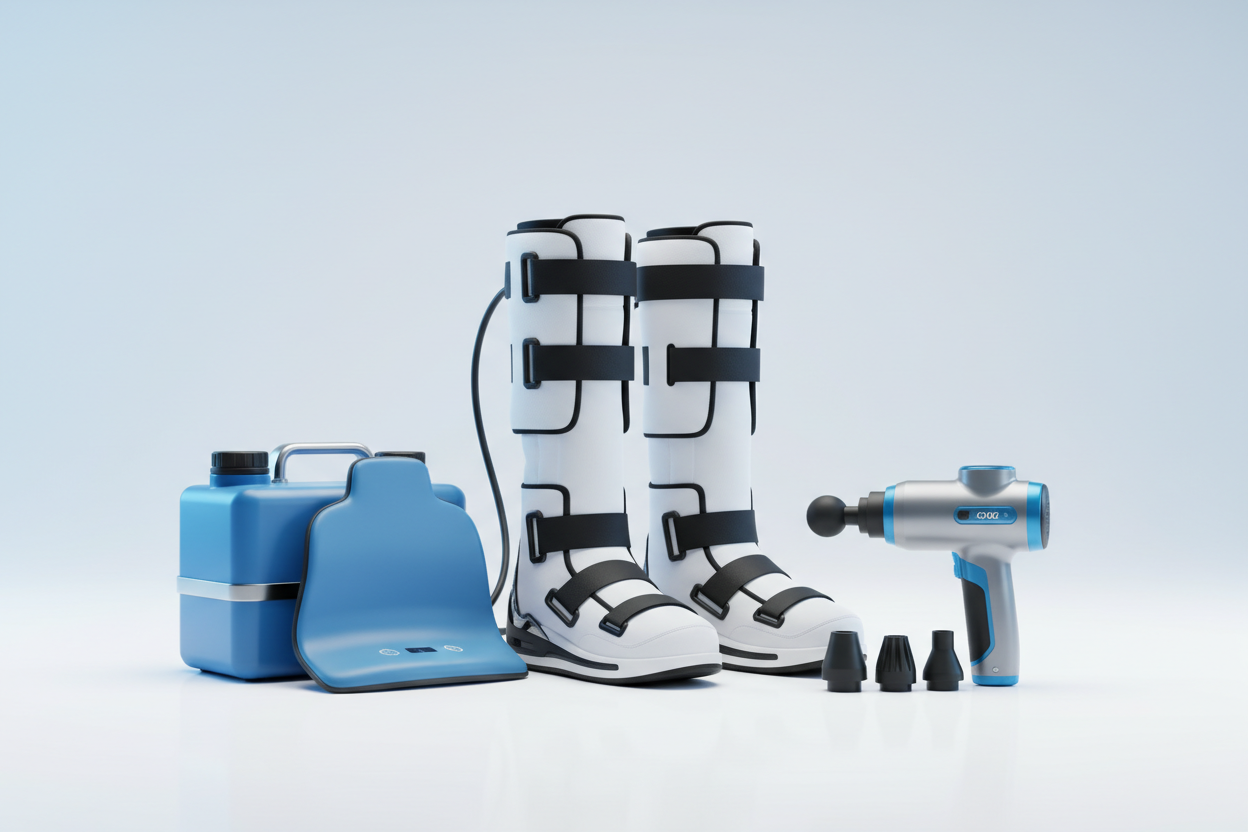
Portable cold compression devices bring clinic-quality therapy wherever your recovery takes you — home, hotel, gym, or training facility.
Who Needs a Portable Cold Compression Device?
Traveling Athletes
Competitions, away games, and training camps mean recovery can't be left at home. Portable devices maintain your protocol on the road.
Post-Surgical Patients
Returning to daily activities after surgery while maintaining consistent cold therapy is far easier with a compact, easy-to-use device.
Active Injury Management
Managing a chronic joint injury while staying active means needing cold compression at the gym, office, or anywhere else.
Frequent Travelers
Business travelers managing joint pain or post-surgical recovery need compact, travel-friendly devices that fit in a bag.
Small Space Living
Compact portable devices deliver full therapy without taking over your living space — no dedicated recovery corner required.
Multi-User Households
A portable device can move between family members and rooms rather than being fixed in one location — ideal for active families.
💡 Key insight: The biggest barrier to consistent cold therapy isn't motivation — it's convenience. Patients with easy, immediate access to their device use it significantly more often. Portability directly improves treatment compliance, which directly improves outcomes.
What to Look for in a Portable Cold Compression Device
Battery vs. Corded Operation
True portability means battery-powered operation — no outlet required. Look for at least 45–60 minutes of battery life per charge to complete a full session. Premium devices offer both corded and battery modes.
Weight and Pack Size
A device you'll actually travel with needs to fit in a gym bag or carry-on. Look for units under 5 lbs with wraps that compress flat for packing.
Cold Duration Per Fill
Portable ice reservoirs are smaller — meaning more frequent refills. Look for at least 45 minutes of effective cold therapy per fill. Some devices use pre-freezable gel packs to extend cold duration without needing ice.
Combined Cold + Compression
The best portable devices combine cold AND compression — not just cold. Adjustable compression pressure lets you tune therapy intensity for acute vs. maintenance recovery.
Wrap Compatibility
Make sure the device has anatomically designed wraps for your specific injury site — knee, shoulder, ankle, elbow, back. Anatomical wraps fit and perform far better than universal ones.
Ease of Setup
If setup takes more than 2–3 minutes, you'll use it less. The best portable devices are designed for intuitive, single-handed operation — important for post-surgical patients with limited mobility.

The best portable cold compression devices balance clinical performance with a compact form factor — so you never skip a recovery session.
Portable vs. Standard Cold Compression Systems
| Feature | Portable Devices | Clinic-Style Units |
|---|---|---|
| Power Source | Battery or dual-power | Corded only |
| Size | Compact, travel-friendly | Larger, fixed location |
| Setup Time | Under 2 minutes | More setup involved |
| Use Location | Anywhere — gym, office, travel | Dedicated recovery space |
| Best For | Active daily use | Intensive post-surgical recovery |
| Reservoir | Smaller (more refills) | Larger — longer sessions |
| Price Point | Lower typically | Higher performance ceiling |
For most athletes managing ongoing injuries, a portable device is the better everyday choice — with a clinic-style unit reserved for intensive post-surgical recovery. Many serious athletes own both.
Sources & Clinical References
- 1. Bleakley C, McDonough S, MacAuley D. "The use of ice in the treatment of acute soft-tissue injury: a systematic review." American Journal of Sports Medicine. 2004;32(1):251-261.
- 2. Knobloch K, et al. "Cold compression therapy after anterior cruciate ligament reconstruction." Knee Surgery, Sports Traumatology, Arthroscopy. 2006;14(2):159-165.
- 3. Hubbard TJ, Denegar CR. "Does cryotherapy improve outcomes with soft tissue injury?" Journal of Athletic Training. 2004;39(3):278-279.
All product recommendations are informed by published clinical research. Your Health Sanctuary is committed to evidence-based recovery guidance.
Continue Your Research
Frequently Asked Questions
Can I use a portable cold compression device while traveling by plane?
Battery-powered cold compression devices are generally permitted as carry-on items — verify the battery watt-hour rating against TSA guidelines (typically under 100Wh). The wraps and tubing present no issues. Ice isn't permitted through security, but you can fill the reservoir at your gate or destination. Pre-freezable gel packs can be frozen before travel.
How effective are portable devices compared to clinic-style systems?
Quality portable devices deliver clinically effective cold compression therapy — the key variables are temperature consistency and compression pressure, both of which good portable units achieve. The main tradeoff is session duration per ice fill. For daily maintenance and active injury management, portable devices are highly effective. For intensive post-surgical recovery in the first 72 hours, a larger unit with a bigger reservoir may be preferable.
How long does the cold last per fill?
Most quality portable units maintain effective cold therapy for 45–90 minutes per ice fill. Devices using pre-freezable gel inserts rather than loose ice tend to maintain consistent temperature longer. Plan for more frequent refills in warm environments or after intense exercise.
Is a portable device worth it if I already have ice packs?
Yes — for consistent, effective therapy. Standard ice packs warm up in 15–20 minutes, don't conform to joint anatomy, and provide no compression. A portable cold compression device maintains consistent temperature, delivers anatomical coverage, and adds compression to directly address swelling — producing meaningfully better outcomes than ice packs alone.
How do I clean and maintain a portable cold compression device?
After each use, drain the reservoir and wipe down wraps with a damp cloth and mild soap. Allow all components to air dry completely before storing. Most wraps are not machine washable — hand cleaning preserves the compression bladders. Store the device in a cool, dry location with wraps laid flat or loosely rolled to avoid creasing the compression channels. Follow the manufacturer's maintenance schedule for any motorized components.
Shop Portable Cold Compression Devices
Your Health Sanctuary carries professional-grade portable cold compression systems with anatomical wraps for every major joint.
Shop Cold Compression Devices View Game Ready Complete Unit Questions? Call us: (612) 360-2490Written by Justin Webster
Founder, Your Health Sanctuary
Justin Webster is the founder of Your Health Sanctuary, a recovery equipment resource dedicated to helping athletes, post-surgical patients, and chronic pain sufferers find evidence-based recovery solutions. With hands-on experience testing professional-grade devices from brands like Therabody, Game Ready, Bioflex, and HealthLight, Justin combines product expertise with clinical research to provide actionable recovery guidance. All recommendations are based on published clinical evidence and real-world testing.