
Laser Therapy for Back Pain: What the Clinical Evidence Actually Shows in 2026
Laser Therapy for Back Pain: What the Clinical Evidence Actually Shows in 2026
619 million people worldwide live with lower back pain — here's the honest breakdown of what photobiomodulation can and can't do for spinal pain and disc-related conditions
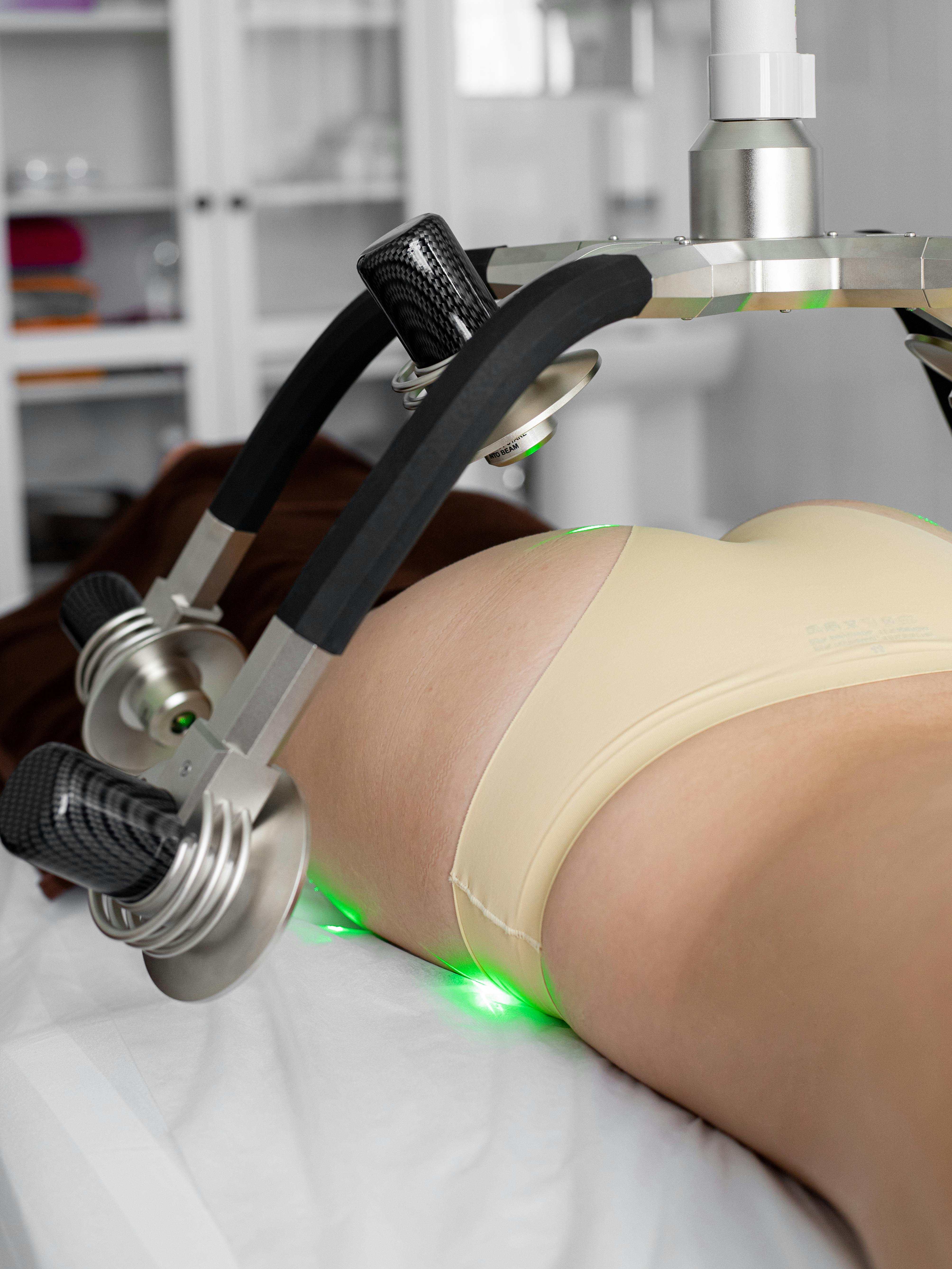
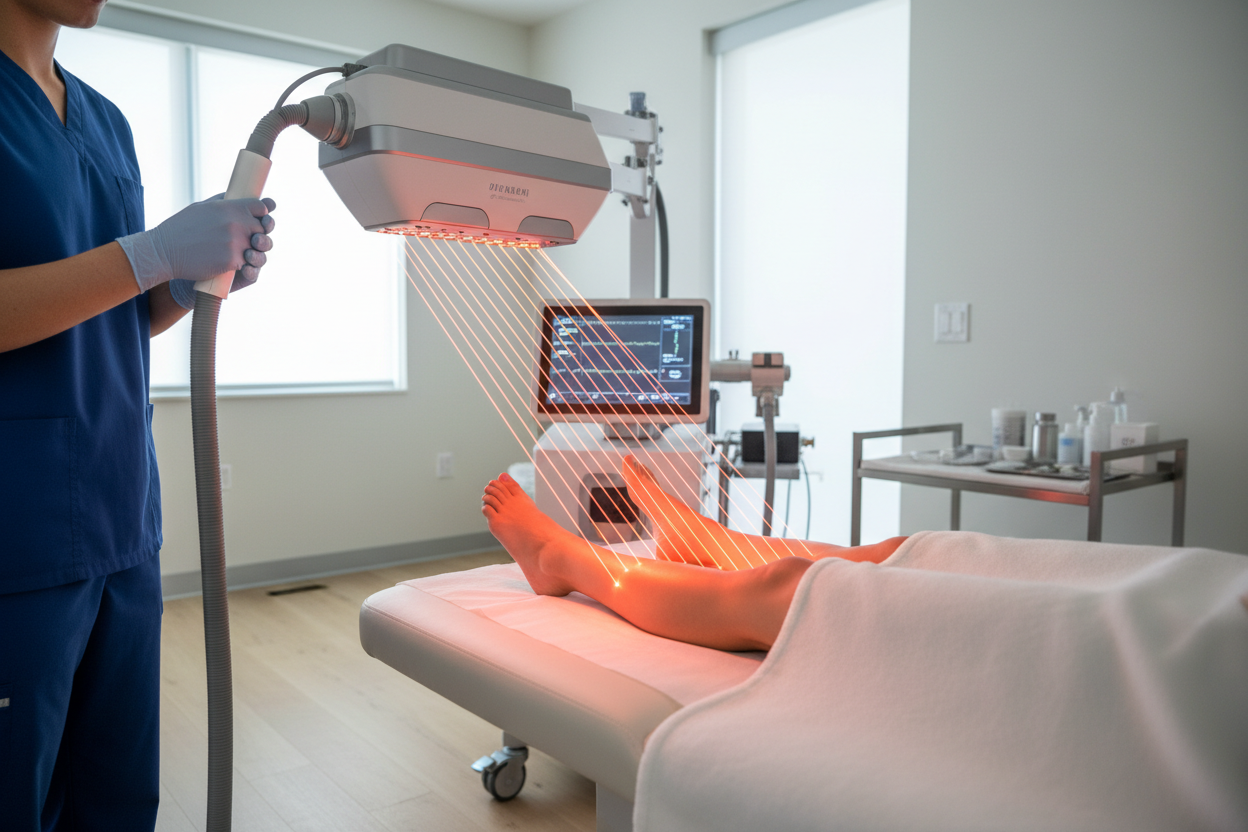
Laser therapy for back pain has accumulated a substantial clinical evidence base over the past two decades — one that separates it clearly from the wave of consumer wellness devices that use the word "laser" loosely. For the 619 million people globally affected by lower back pain, the distinction matters: what the research actually supports is low-level laser therapy delivered at specific wavelengths and tissue doses, not broad-spectrum red light panels or low-powered handheld devices.
The mechanism is well understood. The clinical trials are accumulating. And the results — across both acute and chronic back pain presentations — are consistent enough that a 2021 Cochrane systematic review, the gold standard in evidence-based medicine, concluded that LLLT produces significant reductions in pain intensity and disability compared to sham treatment. What the evidence cannot support is the claim that any laser device achieves this. Device parameters, treatment depth, and protocol design are what separate clinical results from placebo-equivalent outcomes.
Why Back Pain Is the Hardest Chronic Pain to Treat
Lower back pain is not a diagnosis — it is a symptom with more than a dozen distinct underlying causes, each with different tissue targets and treatment requirements. The core problem with conventional back pain management is that most interventions are non-specific: NSAIDs and muscle relaxants reduce the inflammatory signal without addressing the underlying tissue damage; epidural steroid injections provide transient relief but carry cumulative risks with repeated use; surgical intervention is appropriate for only a small subset of structural cases and introduces its own recovery burden.
The result is a population of chronic back pain patients cycling through treatments that partially work, for a time, until they stop working — while the underlying tissue pathology progresses. This is precisely the gap that targeted photobiomodulation therapy is positioned to fill: not as a replacement for all conventional treatment, but as a mechanistically distinct intervention that addresses cellular-level tissue dysfunction rather than masking pain signals.
For disc-related pain — the most common structural back pain presentation — the biology is particularly well-suited to laser intervention. Degenerating discs exist in a low-oxygen, low-nutrient environment that impairs normal cellular repair. PBM's ability to enhance mitochondrial ATP production and reduce oxidative stress in precisely this kind of metabolically compromised tissue environment is one of the strongest mechanistic arguments for its application in spinal conditions.
How Photobiomodulation Works on Spinal Tissue
The back presents a specific penetration challenge that distinguishes it from surface-level pain conditions like knee OA or hand arthritis. Paraspinal tissue is deep — the disc itself at lumbar levels sits 5–8 cm from the skin surface, surrounded by layers of fascia, paraspinal musculature, and adipose tissue. This is why device selection matters so profoundly for back pain: consumer-grade red light panels with power outputs of 20–50 mW cannot meaningfully deliver therapeutic dose to lumbar disc structures. Clinical systems using 905nm laser probes with output powers above 200 mW can.
Once photons reach the target tissue, the cascade relevant to back pain involves several overlapping mechanisms:
- Reduced inflammatory cytokines in paraspinal muscle — particularly IL-1β, TNF-α, and COX-2, which are elevated in both acute muscle injury and chronic degenerative disc environments. Multiple RCTs have documented direct reduction in these biomarkers following LLLT at 830nm.
- Enhanced ATP synthesis in disc cells — nucleus pulposus cells in degenerating discs show abnormally low mitochondrial activity. PBM has been shown in cell culture studies to restore metabolic activity in these cells, potentially slowing degenerative progression.
- Reduced substance P and neurogenic inflammation — the primary mediators of radicular pain in disc herniation. Their reduction explains why BIOFLEX protocols often produce relief that outlasts the treatment session by weeks or months.
- Improved microcirculation in paraspinal tissue — through nitric oxide release and vasodilation, enhancing nutrient delivery to the avascular disc and removing inflammatory waste products from the treatment zone.
- Reduced muscle spasm and trigger point activity — through direct action on hyperirritable muscle spindle tissue, relevant in the majority of acute and subacute LBP presentations where muscle guarding is a primary pain driver.
The Clinical Evidence: What the Research Shows in 2026
The BIOFLEX Advantage for Back Pain: Why Penetration Depth Changes Everything
For back pain specifically, the clinical advantage of BIOFLEX MultiPort System over single-probe devices comes down to two factors: the 905nm laser probe's superior tissue penetration at therapeutic power, and the multi-array design that allows simultaneous treatment of the entire lumbar region — not just a single point.
The standard BIOFLEX lumbar protocol uses the large-surface SLD array pads to treat the full paraspinal musculature bilaterally — addressing the muscle spasm, inflammation, and trigger point activity that generate the majority of acute LBP — before applying the 905nm laser probe at specific segmental levels where disc or facet pathology has been identified. This sequential approach treats both the symptom (muscle guarding, surface-level inflammatory pain) and the deeper structural source (disc, nerve root, facet joint) in a single 45–60 minute session.
For patients with multilevel disc disease — increasingly common in patients over 50 — the MultiPort system's ability to run four separate arrays simultaneously allows L3-4, L4-5, and L5-S1 segments to be addressed in one protocol. Sequential single-probe treatment of the same segments would require a session three times as long, with diminishing therapeutic window for each subsequent application.
For cervical-lumbar combined presentations, a common pattern in patients who have compensated for chronic lower back pain with abnormal posture, the MultiPort system allows simultaneous cervical and lumbar treatment — a clinical capability no single-probe system can match.
Which Back Pain Types Respond Best to Laser Therapy
| Back Pain Type | Evidence Level | Expected Response | Key Consideration |
|---|---|---|---|
| Acute Non-Specific LBP | Strong (Level I) | Excellent — rapid pain and spasm reduction | 2–4 sessions often sufficient for acute resolution |
| Chronic Non-Specific LBP | Strong (Level I) | Very good — significant disability reduction | 8–12 sessions; 905nm probe essential for depth |
| Lumbar Disc Herniation | Moderate-Strong (Level I–II) | Good — radicular pain responds well | Best in mild-moderate herniation; combine with nerve mobilization |
| Lumbar Facet Syndrome | Moderate (Level II) | Good — joint inflammation responds | Targeted probe application to affected segmental levels |
| Spinal Stenosis | Moderate (Level II) | Moderate — soft tissue component responds | Structural narrowing not reversed; inflammatory component manageable |
| Post-Surgical LBP | Limited (Level III) | Variable — scar tissue and nerve recovery aided | Coordinate with surgeon; avoid direct treatment over fusion hardware |
What Laser Therapy Cannot Do for Back Pain
The distinction between what LLLT can and cannot achieve matters for setting honest patient expectations. Laser therapy does not decompress a herniated disc — if a disc fragment is mechanically compressing a nerve root, photobiomodulation can reduce the inflammatory response around that compression and ease neurogenic pain, but it cannot physically move the disc material. For patients with significant structural neural compromise, laser therapy is an adjunct to a management plan that may eventually include surgical decompression — not an alternative to it.
For spinal stenosis, the structural narrowing of the spinal canal is not reversed by any non-surgical intervention. What LLLT addresses is the secondary inflammatory burden: the facet joint arthropathy, the ligamentous hypertrophy, the paraspinal muscle tension that amplify the symptom burden of structural stenosis. Patients with stenosis who undergo BIOFLEX protocols often report meaningful quality-of-life improvements even though the structural anatomy is unchanged — because the inflammatory overlay is what they actually feel on a day-to-day basis.
The patients who see the most consistent and dramatic results from BIOFLEX back pain protocols are those with primary muscular and disc-level pathology rather than advanced structural deformity — active inflammation present, disc integrity partially maintained, and a clear tissue target for the therapy to work on.
Managing Acute Back Pain Flares: BIOFLEX and Supportive Approaches
Clinical BIOFLEX sessions address the underlying tissue pathology, but acute back pain flares — particularly those triggered by activity in patients with chronic disc disease — benefit from targeted cold compression in the 24–48 hours following aggravation. The Game Ready GRPro 2.1 provides precisely this: circumferential cold and active compression to the lumbar region that reduces post-flare inflammatory cascade and limits the muscle guarding response before it becomes self-perpetuating.
The combination is clinically logical: BIOFLEX sessions (2–3x weekly) address the ongoing tissue repair and pain modulation work; Game Ready is used between sessions for acute inflammation control after any activity that provocates symptoms. These are complementary mechanisms — one addresses cellular repair and chronic inflammation, the other manages acute inflammatory spikes.
BIOFLEX MultiPort System — Lumbar Back Pain Protocols
Sequential 660nm / 830nm / 905nm protocols with dedicated lumbar, disc herniation, and spinal stenosis programs. FDA cleared. 150+ condition-specific protocols. The clinical standard for back pain laser therapy — now available for home and professional use.
View BIOFLEX MultiPort System → Speak with Justin's Team: (612) 360-2490The BIOFLEX MultiPort System is HSA/FSA eligible with a Letter of Medical Necessity from your physician — for documented back pain or musculoskeletal recovery, LMN approval is routine and the pre-tax purchase converts to roughly 26–40% in real tax savings depending on your tax bracket.
For deeper context on the BIOFLEX system's clinical capabilities across conditions, read our BIOFLEX Laser Therapy System Review and our Laser Therapy for Arthritis Clinical Guide — both cover the same photobiomodulation mechanisms with condition-specific depth and evidence.
Frequently Asked Questions
Yes — the evidence is strong. A 2021 Cochrane systematic review of 22 RCTs found statistically significant reductions in pain intensity and functional disability in both acute and chronic LBP patients treated with LLLT at 780–860nm. The Cochrane review represents the gold standard of evidence-based medicine.
Acute back pain often improves within 2–4 sessions. Chronic LBP typically requires 8–12 sessions over 4–6 weeks. The standard BIOFLEX protocol is 3 sessions per week for 4 weeks, followed by reassessment. Long-standing disc disease requires more sessions and ongoing maintenance.
Yes — for the pain and inflammation, including radicular leg pain. A 2022 RCT found 61% reduction in leg pain in disc herniation patients using BIOFLEX-range parameters. LLLT reduces the neurogenic inflammation and substance P that drive radicular symptoms, without mechanically reducing the herniation.
Yes. The 2021 Cochrane review reports no serious adverse events across thousands of patients. Contraindications are limited to direct treatment over active malignancy, pregnancy, and directly over spinal fusion hardware.
The evidence identifies 780–860nm near-infrared as the primary range, with 905nm laser probe work essential for reaching disc and deep paraspinal structures. Systems that combine SLD arrays (broad coverage) with a high-output 905nm probe (deep structural targets) — like BIOFLEX — are the most evidence-aligned for spinal conditions.
Yes. The BIOFLEX MultiPort System is HSA/FSA-eligible as a medical device when prescribed for a documented back pain condition like lumbar strain, sciatica, facet joint syndrome, herniated disc-related pain, or post-surgical spinal recovery. A Letter of Medical Necessity from your physician or chiropractor is typically required. For patients in the 22–32% federal tax bracket this converts to roughly 26–40% in real tax savings on the device purchase.
Ready to Upgrade Your Recovery?
The equipment referenced in this guide, in stock and ready to ship. Many products qualify for HSA/FSA — call us to confirm eligibility for your situation.
Questions? Talk to our recovery specialists: (612) 360-2490