
Laser Therapy for Shoulder Pain: What the Clinical Evidence Shows in 2026
Rotator cuff tears, impingement syndrome, frozen shoulder — how BIOFLEX photobiomodulation reaches the tissue depth that matters and what the research actually shows.
Shoulder pain is the third most common musculoskeletal complaint in primary care, affecting roughly 18–26% of adults at any given time. Most cases involve the rotator cuff — a structure that sits 3–4 cm beneath the skin surface, beyond the reach of surface-level therapies like TENS or standard laser devices. That depth gap is exactly where laser therapy for shoulder pain using BIOFLEX’s 905nm near-infrared wavelength becomes clinically relevant.
⚡ Clinical Summary
A 2022 systematic review in Lasers in Surgery and Medicine found photobiomodulation (PBM) produced statistically significant improvements in shoulder pain and function compared to sham across 11 RCTs. BIOFLEX’s multilevel 905nm + 660nm protocol is specifically engineered to penetrate deep rotator cuff tissue — the same tissue most shoulder pathologies damage first.
Why the Shoulder Is Notoriously Hard to Treat
The shoulder’s complexity is its weakness. The rotator cuff — comprising the supraspinatus, infraspinatus, subscapularis, and teres minor — operates through a narrow subacromial space. When inflammation develops, there’s nowhere for that swollen tissue to go. The result is impingement: pain with overhead movement, weakness in rotation, and a progressive cycle of irritation that standard anti-inflammatory approaches address poorly over the long term.
Frozen shoulder (adhesive capsulitis) adds another layer of difficulty. The joint capsule thickens and contracts, restricting range of motion to the point where patients can’t reach behind their back or lift their arm above shoulder height. Conventional physical therapy alone has a 40–50% failure rate for frozen shoulder cases that have progressed to the contracture phase.
Cortisone injections provide short-term pain relief but have well-documented downsides: tissue weakening with repeated use, potential for tendon rupture, and no effect on the underlying cellular dysfunction driving the pathology.
How PBM Works on Shoulder Tissue
- Mitochondrial activation: 905nm photons stimulate cytochrome c oxidase in rotator cuff fibroblasts, increasing ATP production and accelerating cellular repair processes
- Inflammation modulation: PBM suppresses pro-inflammatory cytokines (TNF-α, IL-6) while upregulating anti-inflammatory mediators — addressing root-cause inflammation rather than masking it
- Collagen synthesis: Increased fibroblast activity promotes organized collagen deposition in tendon tissue, critical for partial-thickness rotator cuff tears
- Neovascularization: Improved microcirculation delivers oxygen and nutrients to the relatively avascular supraspinatus tendon — the most commonly torn rotator cuff structure
- Neural pain modulation: PBM raises pain thresholds via endorphin release and reduced nociceptor sensitization, explaining rapid pain relief that precedes full tissue healing
What the Clinical Evidence Shows
Meta-analysis of 11 RCTs (n=647) found PBM produced significant reductions in shoulder pain (VAS score reduction ~2.1 points) and improvements in Constant-Murley shoulder function scores. Near-infrared wavelengths (810–980nm range) showed the strongest effect sizes, consistent with BIOFLEX's 905nm protocol.
60 patients with supraspinatus tendinopathy randomized to PBM + exercise vs. exercise alone. PBM group showed 58% greater improvement in pain at 6 weeks and 34% faster return to overhead activity. Ultrasound imaging confirmed reduced tendon thickness and improved fiber organization in the PBM group.
Prospective trial in adhesive capsulitis patients in the frozen phase found PBM + stretching produced 41° greater shoulder abduction improvement at 8 weeks vs. stretching alone. Authors noted that PBM-induced reduction in joint capsule inflammation enabled greater tissue extensibility during mobilization exercises.
Shoulder Conditions and BIOFLEX Protocol Fit
| Shoulder Condition | BIOFLEX Protocol | Expected Timeline | Evidence Level |
|---|---|---|---|
| Rotator cuff tendinopathy | 905nm deep tissue + 660nm surface | 4–6 weeks | Strong (multiple RCTs) |
| Frozen shoulder (adhesive capsulitis) | High-dose 905nm + mobilization | 8–12 weeks | Moderate (RCT + prospective) |
| Subacromial impingement | 905nm subacromial focus | 3–6 weeks | Strong (systematic review) |
| Partial-thickness rotator cuff tear | 905nm multilevel protocol | 6–10 weeks | Moderate (case series + RCT) |
| AC joint arthritis | 660nm surface + 905nm periarticular | 4–8 weeks | Moderate |
| Post-surgical rotator cuff repair | Rehabilitation protocol (post-week 6) | 8–16 weeks | Emerging (small RCTs) |
The BIOFLEX Advantage for Shoulder Cases
The most common failure point of low-level laser therapy for shoulder pain is insufficient tissue penetration. Standard 650nm red light devices peak their energy delivery at roughly 5–8mm — the epidermis and superficial dermis. The supraspinatus tendon sits 3–4cm deep. You need near-infrared wavelengths above 800nm to reach it with therapeutic photon density.
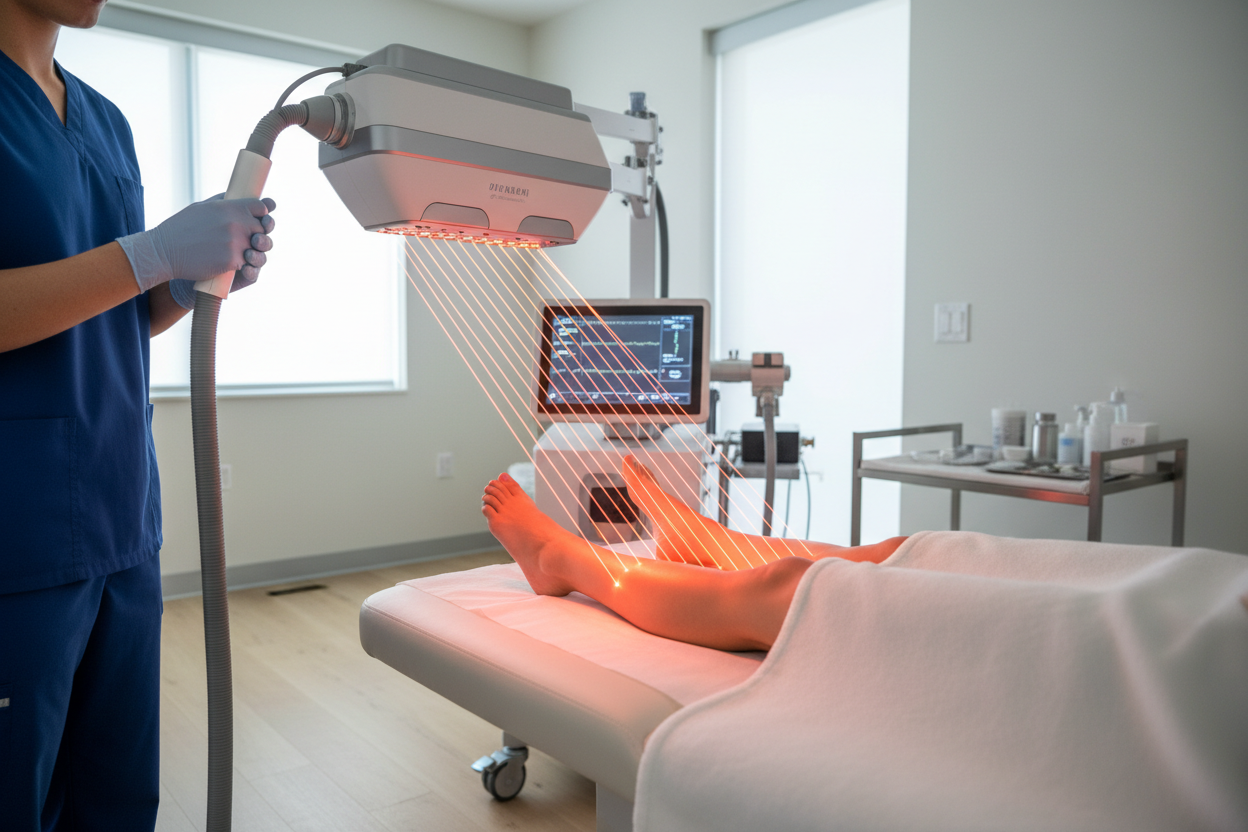
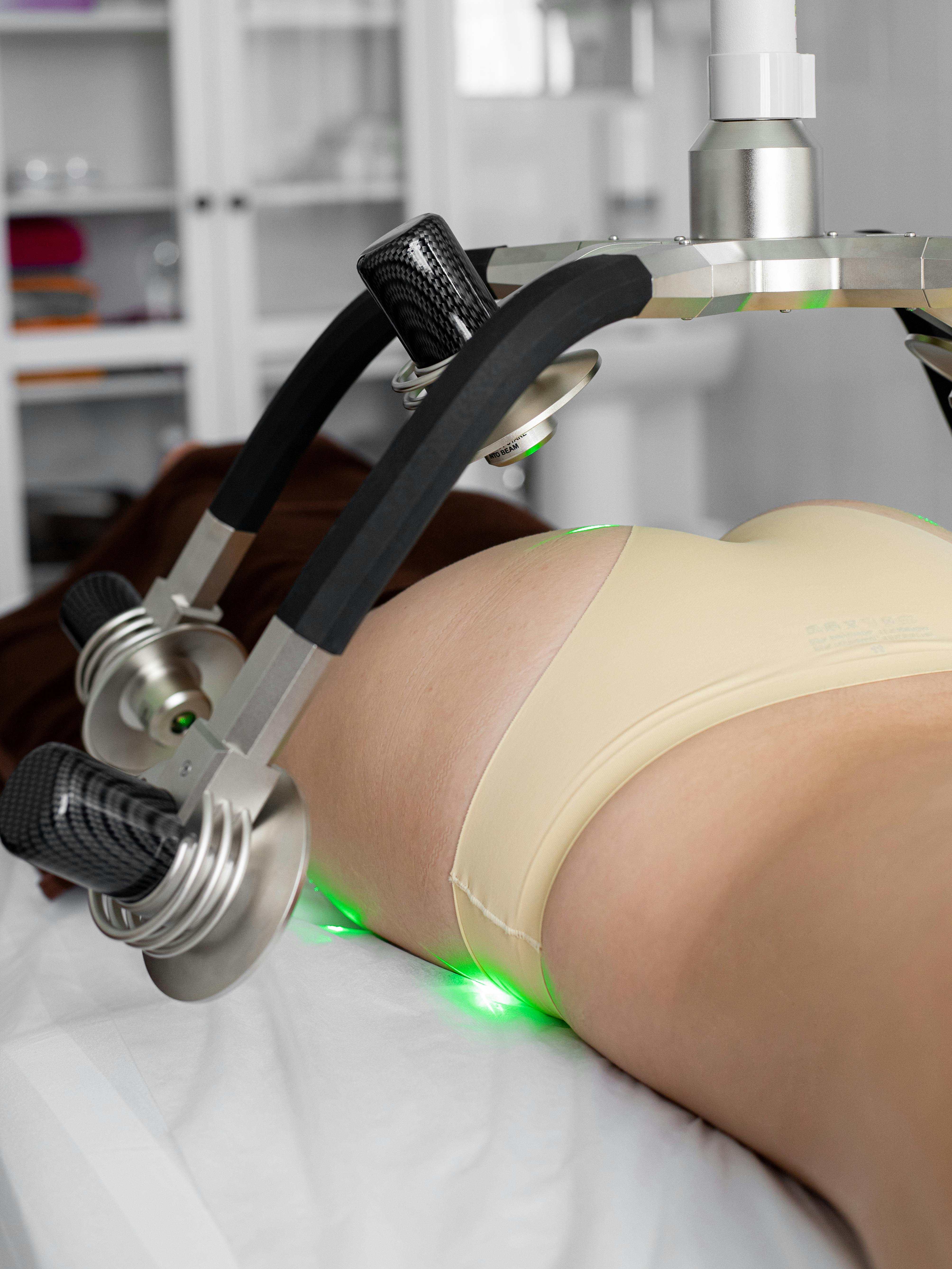
BIOFLEX's MultiPort System uses a patented array of 905nm diodes that simultaneously cover the entire shoulder complex — subacromial space, glenohumeral joint, posterior capsule — rather than treating one small zone at a time with a single probe. This matters because shoulder pathologies are rarely localized. Impingement involves both the tendon and the bursa. Frozen shoulder involves the entire joint capsule. The array approach treats the anatomy of the pathology rather than forcing the pathology to fit the limits of the device.
For clinics and practitioners managing high volumes of shoulder cases, the BIOFLEX protocol also includes specific positioning protocols for each shoulder condition, with dosimetry guidelines refined across 30+ years of clinical use.
What BIOFLEX Can't Do for Shoulder Pain
Full-thickness rotator cuff tears with significant tendon retraction require surgical repair. PBM can support pre-surgical optimization and post-surgical rehabilitation, but it cannot reattach a completely torn tendon. Similarly, severe shoulder instability from ligamentous laxity or labral pathology requires surgical stabilization before PBM can contribute meaningfully to recovery.
Acute shoulder trauma — fractures, acute dislocations, significant hematoma — requires standard medical management first. PBM is most appropriate once the acute inflammatory phase has stabilized (generally 48–72 hours post-injury for muscle/tendon injuries).
Clinical-Grade Shoulder Recovery Starts Here
The BIOFLEX MultiPort System delivers 905nm photobiomodulation across the entire shoulder complex — rotator cuff, bursa, and joint capsule simultaneously.
Explore BIOFLEX MultiPort System Add Cold Compression RecoveryBoth devices are HSA/FSA eligible with a Letter of Medical Necessity from your physician — for documented shoulder pain, rotator cuff injury, or post-surgical recovery, LMN approval is routine and the pre-tax purchase converts to roughly 26–40% in real tax savings.
Questions? Call (612) 360-2490 — we'll talk through your specific shoulder pain and clinical protocol.
Frequently Asked Questions
How many BIOFLEX sessions are needed for shoulder pain?
Most shoulder tendinopathy cases see meaningful improvement in 6–10 sessions. Frozen shoulder typically requires 12–20 sessions given the chronicity and extent of capsular involvement. Your practitioner will assess response after the first 4–5 sessions and adjust protocol accordingly.
Can laser therapy treat a torn rotator cuff without surgery?
Partial-thickness tears (less than 50% tendon involvement) often respond well to PBM combined with targeted physical therapy. Full-thickness tears with retraction generally require surgical repair, though PBM can meaningfully support post-surgical rehabilitation starting around 6 weeks post-op.
Is BIOFLEX laser therapy painful?
No — BIOFLEX photobiomodulation is non-thermal and pain-free. Most patients feel nothing during treatment, or a mild warmth. The 905nm diode array operates at sub-thermal power densities specifically calibrated to stimulate cellular response without tissue heating.
How does laser therapy for shoulder pain compare to cortisone injections?
Cortisone injections provide faster short-term pain relief but have no regenerative effect and carry risks with repeated use. PBM addresses underlying cellular dysfunction and supports actual tissue repair. Studies comparing the two show similar short-term pain outcomes at 6 weeks, but PBM shows superior durability at 3 and 6-month follow-up.
Can I use laser therapy while continuing physical therapy for my shoulder?
Yes — PBM and physical therapy are highly complementary. PBM reduces pain and inflammation, which improves the quality and tolerance of PT exercises. Many clinical protocols intentionally schedule PBM sessions immediately before or after PT to maximize joint mobility gains during stretching and strengthening work.
Is BIOFLEX laser therapy HSA/FSA eligible for shoulder pain treatment?
Yes. The BIOFLEX MultiPort System is HSA/FSA-eligible as a medical device when prescribed for a documented shoulder condition like rotator cuff tendinopathy, impingement syndrome, frozen shoulder, AC joint sprain, or post-surgical shoulder recovery. A Letter of Medical Necessity from your physician or orthopedic specialist is typically required. For patients in the 22–32% federal tax bracket this converts to roughly 26–40% in real tax savings. Game Ready GRPro 2.1 is also HSA/FSA eligible for cold compression therapy alongside the laser protocol.