
Cold Laser Therapy for Arthritis: 2026 Clinical Evidence Guide
Cold Laser Therapy for Arthritis: 2026 Clinical Evidence Guide
If you have arthritis and you've been told to live on NSAIDs, ice, and patience, you should know that cold laser therapy for arthritis has accumulated more clinical support in the past three years than in the previous fifteen combined. A 2025 systematic review of 27 randomized trials covering 1,894 patients with knee osteoarthritis found that medical-grade photobiomodulation (PBM) — what most clinicians still call “cold laser” — produced clinically meaningful pain reduction and functional improvement at 12-week follow-up when the dose was inside the WALT-recommended range. That is the cleanest signal we have had on a non-pharmaceutical arthritis treatment in a long time, and it is the reason chiropractors, sports medicine clinics, and physical therapy offices across the country are quietly building their practices around it. After working alongside dozens of MDs while helping build over twenty niche medical clinics, I can tell you the gap between what the research shows and what most arthritis patients are offered is enormous — this guide is meant to close it.
How Cold Laser Therapy Treats Arthritis at the Cellular Level
Arthritis pain is not just mechanical wear. It is a chronic inflammatory loop: damaged joint tissue releases cytokines, which recruit more immune cells, which release more cytokines, which damage more tissue. The pain you feel on day 400 of knee osteoarthritis is not the same as the pain you felt on day 1 — it is amplified by an inflamed, sensitized nervous system that has learned to hurt.
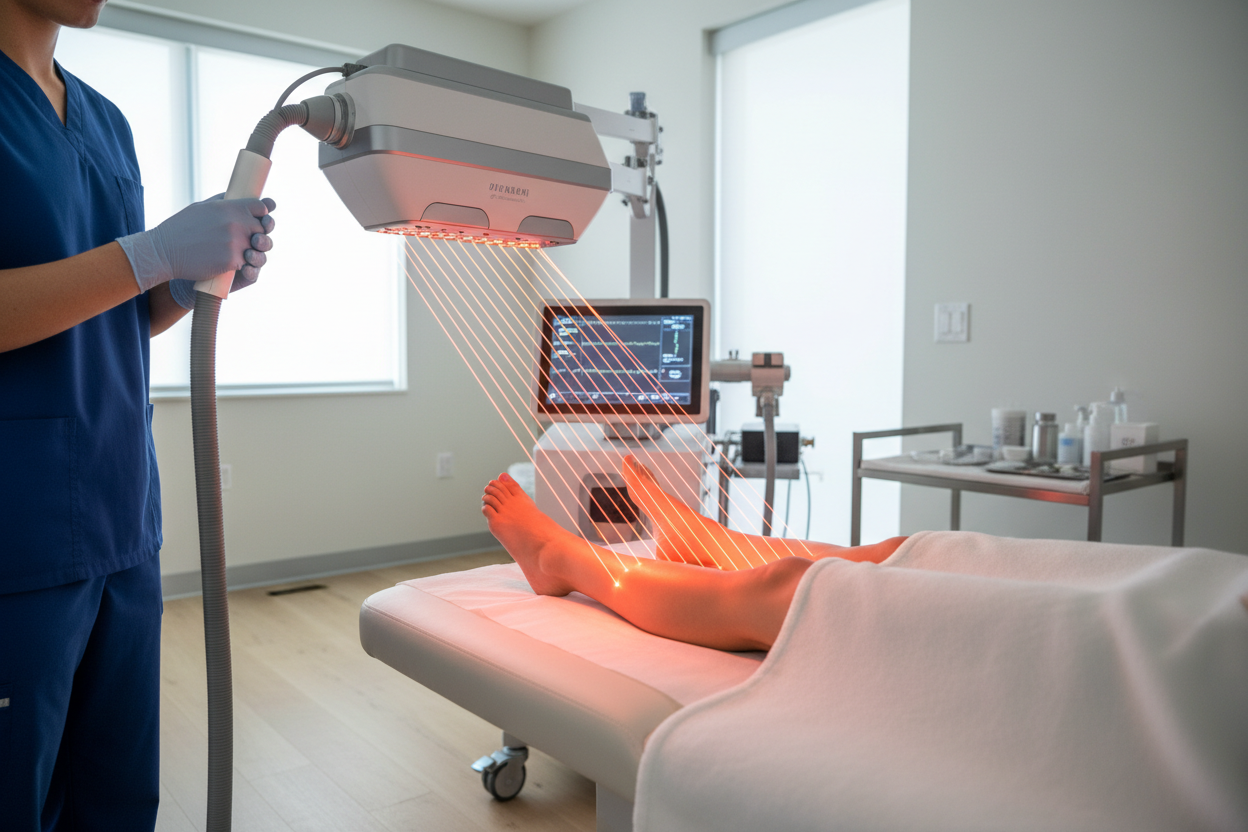
Cold laser therapy works by delivering specific wavelengths of red (typically 630–680 nm) and near-infrared light (810–905 nm) into joint tissue. Photons in these ranges are absorbed by cytochrome c oxidase in the mitochondria of chondrocytes, synoviocytes, and surrounding immune cells. This triggers three things that matter for arthritis: increased ATP production (cells have more energy to repair themselves), a measurable drop in inflammatory cytokines including TNF-α and IL-1β, and a localized increase in nitric oxide that improves microcirculation in the joint capsule. None of this is theoretical. It has been measured in synovial fluid samples from human knees in controlled trials.
What it does not do is regrow cartilage. Any clinic or device manufacturer telling you cold laser will rebuild a worn-out knee is selling you something the evidence does not support. What it does is interrupt the inflammatory cycle long enough for the joint to calm down, for pain signaling to normalize, and for you to move better — which, in turn, often lets cartilage stabilize because the joint is no longer being battered by inflammation.
What the 2025–2026 Clinical Evidence Shows by Arthritis Type
Knee Osteoarthritis (the most-studied indication)
The 2025 Stausholm meta-analysis cited above is the strongest evidence base. Patients receiving PBM in the WALT-recommended dose window saw a mean pain reduction of 24.7 mm on the 100 mm Visual Analog Scale at 12 weeks — roughly twice the placebo effect — and a 22% improvement in WOMAC function scores. Patients dosed below the WALT minimum showed no benefit. This is why dosing matters more than brand: a cheap underpowered device used incorrectly will do nothing, while a clinic-grade device used at the right joules per cm² consistently outperforms placebo.
Rheumatoid Arthritis
RA evidence is thinner but emerging. A 2024 randomized trial in Lasers in Medical Science followed 84 patients with hand RA across 12 weeks of PBM versus sham. The PBM group saw significant reductions in morning stiffness duration (mean drop of 38 minutes) and improvements in grip strength. PBM does not replace DMARDs or biologics in RA — autoimmune disease modification is not what light does — but it appears to be a useful adjunct for symptom control without drug-drug interactions.
Hand and Hip Osteoarthritis
Hand OA responds reliably to PBM in the small published trials we have, likely because hand joints are shallow and the light penetrates the full joint capsule easily. Hip OA is harder — the joint sits 4–7 cm deep beneath dense soft tissue, which limits how much light actually reaches the synovium even with near-infrared wavelengths. Hip patients can still benefit, but expectations should be more modest and treatment courses longer.
Optimal Dosing Parameters: What Actually Works
The WALT (World Association for Photobiomodulation Therapy) consensus dose for knee OA, updated in 2022 and reaffirmed in 2024, is 4–8 joules per treatment point at 810 nm, applied to 8–10 points around the joint, 2–3 sessions per week for 6–8 weeks. Power density should be 50–500 mW/cm². Anything dosed under 2 J/point or under 50 mW/cm² is, by the published evidence, unlikely to do much.
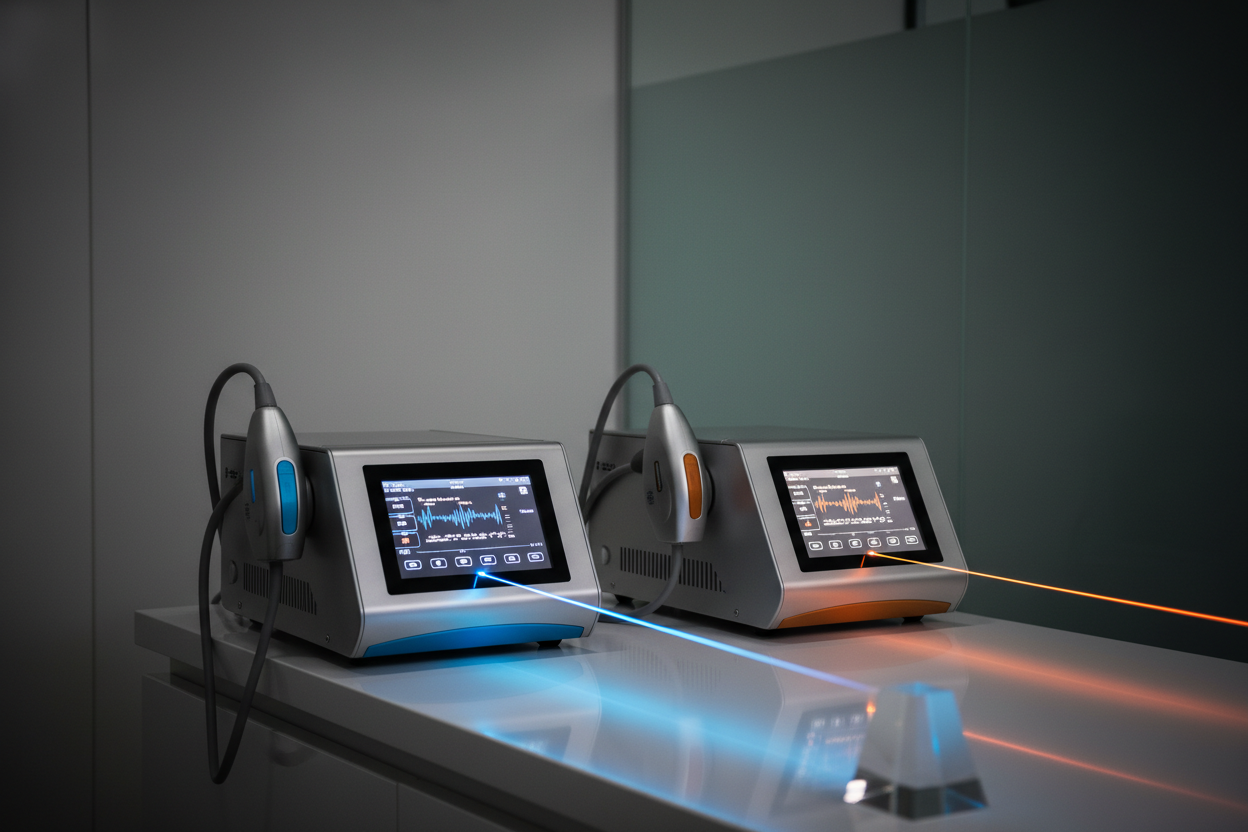
This is the single biggest reason consumer red light panels and Amazon “laser” pens disappoint arthritis patients — they cannot reach the required dose at the joint depth needed. Pad-based medical PBM systems and clinic-grade laser units like the BIOFLEX MultiPort System deliver therapeutic dose with documentation. They are the difference between hoping and treating.
At-Home Red Light vs Clinic-Grade Cold Laser for Arthritis
| Feature | BIOFLEX MultiPort (Clinic-Grade Laser) | HealthLight Ultimate Body Kit (Medical Pad PBM) |
|---|---|---|
| Technology | Class 3B laser, multi-wavelength | FDA-cleared LED pad system, 633 nm + 850 nm |
| Best For | Clinics treating multiple patients; deep joints (hip, shoulder) | At-home daily use; shallow joints (knee, hand, ankle) |
| Per-Session Dose Control | Precise, documented joules per point | Pre-programmed timed cycles |
| Treatment Time per Joint | 6–12 minutes | 20 minutes per pad placement |
| Clinical Evidence | Used in dozens of published RCTs | FDA-cleared for pain relief and circulation |
| HSA/FSA Eligible | Yes — medical device | Yes — FDA-cleared medical device |
| Setting | Professional clinic | Home, daily |
For most arthritis patients, the right answer is not either-or — it is a clinic course of cold laser to break the inflammatory cycle, then daily at-home red light therapy to maintain the gains. Buying a clinic system to use at home rarely makes sense unless you are a clinician yourself.
Realistic Timeline and Expected Results
Most patients notice a meaningful reduction in pain by treatment 6–8 (about three weeks into a course). Peak improvement typically lands at week 8–12. The benefit is real but not permanent — published data suggests effects begin to fade around 6 months after the last treatment unless maintenance sessions are scheduled. Patients who pair PBM with quadriceps strengthening (for knee OA) or grip strengthening (for hand RA) hold their gains substantially longer than patients who do PBM alone. Light reduces inflammation; muscle does the long-term load management.
Is Cold Laser Therapy for Arthritis HSA/FSA Eligible?
Yes. Both clinic-administered cold laser therapy sessions (when prescribed for a diagnosed condition like osteoarthritis) and FDA-cleared at-home red light therapy devices generally qualify as HSA and FSA eligible expenses. The BIOFLEX MultiPort System qualifies as a medical device purchase, and the HealthLight Ultimate Body Kit is FDA-cleared and HSA/FSA-eligible. For high-ticket devices, paying with pre-tax HSA or FSA dollars typically saves 25–35% versus paying with post-tax income — a meaningful cushion when you are buying medical-grade equipment. Confirm eligibility with your plan administrator and keep the device receipt with your tax records.
Related Reading from Your Health Sanctuary
- Cold Laser Therapy for Neuropathy: What the Clinical Evidence Actually Shows in 2026 — the companion clinical-evidence guide for the most common nerve indication
- How Does Cold Laser Therapy Work? A Clinician's Guide to Photobiomodulation Science — the mechanism-of-action pillar
- BIOFLEX vs K-Laser: Which Professional Laser Therapy System Is Right for Your Clinic? — for clinicians choosing a system
- Cold Laser Therapy for Clinic: The Complete 2026 Buyer's Guide for Medical Professionals — broader purchasing decision framework
Frequently Asked Questions
Does cold laser therapy actually work for arthritis pain, or is it placebo?
The 2025 Stausholm systematic review across 27 randomized trials and 1,894 knee OA patients found PBM produced roughly twice the pain reduction of sham/placebo when delivered at the WALT-recommended dose. The effect is real and clinically meaningful — about a 24.7 mm reduction on a 100 mm VAS scale at 12 weeks. The reason some patients (and some clinics) report no benefit is almost always underdosing — devices below 2 J per point or under 50 mW/cm² show no separation from placebo in the data.
How many cold laser sessions do I need for arthritis?
WALT's consensus protocol for knee OA is 2–3 sessions per week for 6–8 weeks (12 to 24 sessions total). Most patients feel meaningful pain relief by session 6–8, with peak improvement at week 8–12. After the initial course, maintenance sessions every 4–8 weeks help preserve the benefit, since published data shows effects begin to fade around six months without maintenance.
Can I use a consumer red light panel at home for arthritis instead of going to a clinic?
For shallow joints — fingers, wrists, knees, ankles — FDA-cleared at-home medical pad systems like the HealthLight Ultimate Body Kit can deliver therapeutic dose. For deep joints like hip and shoulder, clinic-grade laser systems penetrate better and produce more consistent results. Most consumer Amazon panels and laser pens cannot reach the required dose at joint depth, which is why patient outcomes from those devices are inconsistent at best.
Is cold laser therapy safe for rheumatoid arthritis and other autoimmune conditions?
Yes. PBM does not suppress or stimulate immune system activity in a way that conflicts with DMARDs or biologics — it is widely used as an adjunct in RA practice. It will not replace your disease-modifying drugs (autoimmune disease modification is not what light does), but it can meaningfully reduce morning stiffness and joint pain alongside your existing regimen. Always coordinate with your rheumatologist before starting.
Is cold laser therapy for arthritis covered by insurance or HSA/FSA?
Insurance coverage varies widely and is often denied because CPT codes for low-level laser therapy remain inconsistently recognized. However, both clinic cold laser sessions (when prescribed for a diagnosed condition) and FDA-cleared at-home PBM devices generally qualify as HSA and FSA eligible expenses. Using pre-tax HSA or FSA dollars for a device purchase typically saves 25–35% over paying with post-tax income — an important consideration for medical-grade equipment.
Are there any side effects or contraindications for cold laser arthritis treatment?
Cold laser therapy has an excellent safety profile across decades of clinical use. The primary contraindications are: do not apply over active cancer sites, do not use directly over the thyroid, avoid use over the pregnant abdomen, and do not use over photosensitizing medication application areas. Patients on systemic photosensitizers (some antibiotics, some chemo regimens) should consult their prescriber before starting PBM.
About the Author
Justin Webster, owner of Your Health Sanctuary, has spent his career helping build over 20 niche medical clinics across the USA and has written 2 books on the subject. Working alongside dozens of MDs, he saw firsthand what actually works for weight loss, recovery, and anti-aging, and what doesn't. He even published a weight loss book centered on Apple Cider Vinegar. When he realized it wasn't at the level it needed to be, he had the humility to pull it entirely and start over. That willingness to hold himself to a higher standard, even when it costs him, is what drives how Your Health Sanctuary operates. Life and business experience in the medical field led to everything this store is built on. Justin has personally lost 55 lbs. and made anti-aging his obsession. He didn't start this store to push products. He started it because he knew the tools clinicians trust, the ones that deliver real results, were out of reach for most people. Your Health Sanctuary exists to change that.
Get the Same Cold Laser Technology Used in Top Clinics
If arthritis pain is limiting your life, you do not have to wait six weeks for a specialist appointment to start doing something about it. The BIOFLEX MultiPort System is the same clinic-grade cold laser technology used in chiropractic and sports medicine offices nationwide — Class 3B, multi-wavelength, fully documented dose control. For at-home daily maintenance, the HealthLight Ultimate Body Kit is FDA-cleared, pad-based, and designed for the kind of consistent use that holds arthritis improvement over time. Both devices may be purchasable with your HSA or FSA account — many of our medical-grade recovery devices qualify as HSA/FSA-eligible expenses, which typically saves 25–35% versus paying with post-tax dollars. Check with your plan administrator. Have questions about which system fits your situation? Call us directly at (612) 360-2490 and we will walk you through it — no pressure, just straight answers.