
BIOFLEX vs Aspen Laser: Which Laser Therapy System Is Right for Your Clinic? (2026)
If you're weighing BIOFLEX vs Aspen Laser for your clinic, you're really choosing between two different laser therapy philosophies. BIOFLEX builds large, flexible low-level laser arrays designed for hands-free, protocol-driven treatment, while Aspen Laser is a Class IV therapeutic laser line popular in chiropractic and sports-medicine settings, built around a hand-held applicator the clinician moves across the tissue. Both can reduce pain and support tissue healing — they just get there differently, and the right pick depends on your patient mix, your staffing model, and your budget.
A quick disclosure: Your Health Sanctuary sells clinician-grade equipment to chiropractors and medical professionals, not consumer gadgets. We carry the BIOFLEX line and do not sell Aspen Laser, so we've kept this comparison honest about where each system genuinely wins.

The core difference: low-level laser arrays vs a Class IV handheld
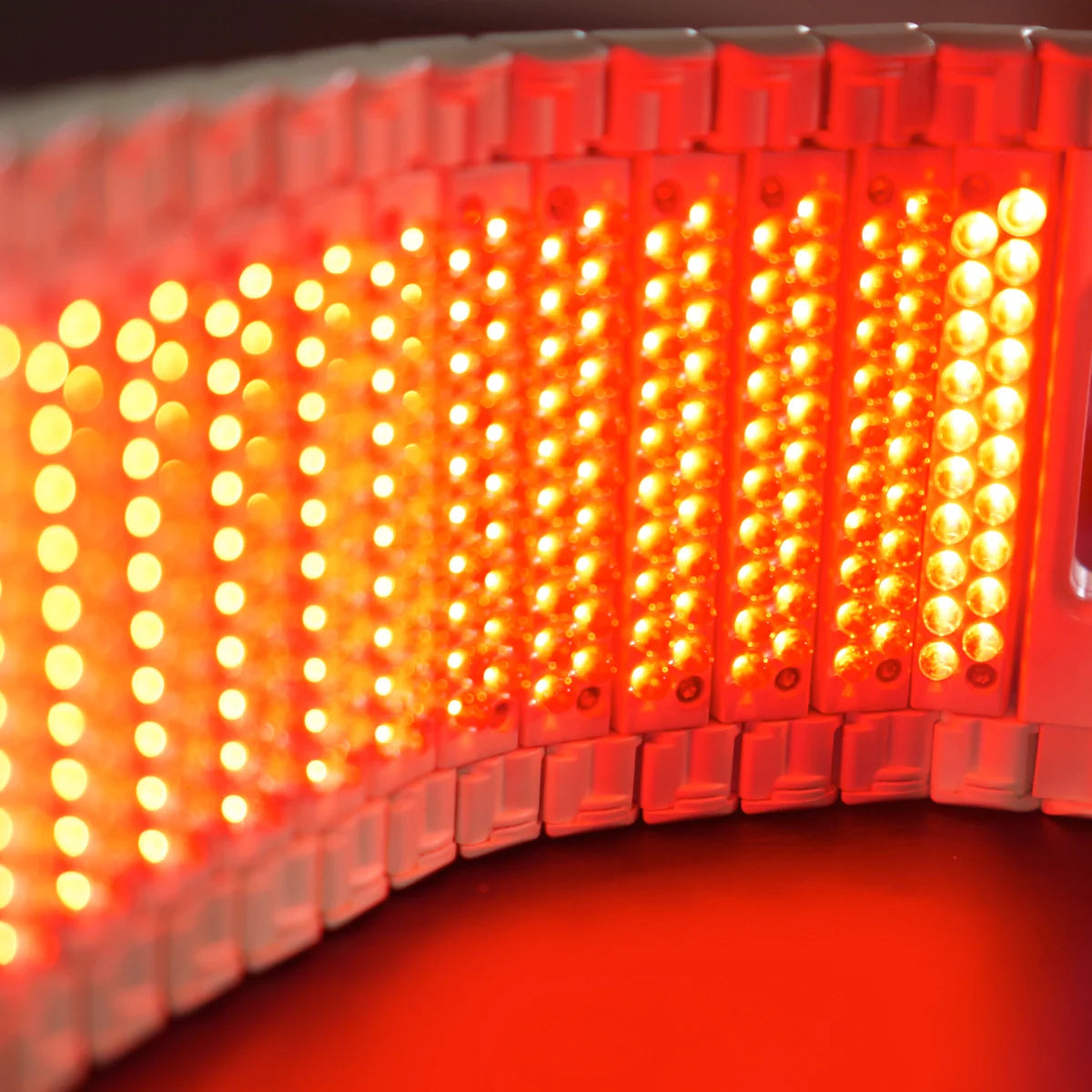
BIOFLEX is a low-intensity laser therapy (LLLT) system. Flexible pads packed with red and infrared laser and LED diodes are placed on the patient and run a programmed protocol, largely hands-free, with a focal probe available for pinpoint work. Because the energy is spread across a large surface at lower power, the dominant effect is photochemical, with very little heat generated in the tissue.
Aspen Laser takes the opposite approach. It's a Class IV therapeutic laser: higher power concentrated into a hand-held applicator that the clinician sweeps continuously over the treatment area. That concentrated power produces a noticeable warming, photothermal effect on top of the photochemical one, which is why Class IV sessions tend to be short and hands-on for the therapist. Aspen markets heavily to chiropractic practices, and its systems are generally built around touchscreen software and pre-loaded treatment protocols aimed at speeding up in-clinic workflow.
Neither approach is universally better. Higher power buys you speed and depth per session; a large low-level array buys you comfort, repeatable dosing, and a clinician's freed-up hands. That trade-off is the real decision.
BIOFLEX vs Aspen Laser comparison table
| Factor | BIOFLEX (low-level laser) | Aspen Laser (Class IV) |
|---|---|---|
| Laser approach | Low-level multi-diode arrays (LLLT) | High-power Class IV handheld laser |
| Primary mechanism | Mostly photochemical, minimal heat | Photothermal (warming) + photochemical |
| Delivery | Hands-free flexible pads + focal probe | Hand-held applicator, therapist moves it continuously |
| Treatment feel | Gentle, comfortable, longer programmed sessions | Warm, fast, hands-on sessions |
| Best for | Protocol-driven, large-area, chronic and sensitive cases; patient comfort | Fast, high-volume chiropractic and sports-injury visits |
| YHS price range | P180 personal $5,395; MiniPort Professional $18,200; Dualport $27,879; MultiPort $34,240 | Not sold by YHS; Class IV chiropractic systems are typically a mid four- to low five-figure purchase |
| Path to home use | Yes — the BIOFLEX P180 brings the same technology family home | Clinic-only; not intended for unsupervised home use |
| HSA/FSA eligible | Yes, with provider recommendation / Letter of Medical Necessity | Generally yes as a medical device with documentation |
| Who picks it | Chiropractors and rehab clinics wanting repeatable, hands-free dosing across a shift | Chiropractic and sports-medicine clinics wanting fast, active, hands-on sessions |
Prices reflect current Your Health Sanctuary listings and can change — confirm the latest pricing on each product page.
Who should choose BIOFLEX
BIOFLEX fits best when you want consistent, repeatable dosing without tying up a clinician's hands for the full session. The flexible arrays wrap around a joint or lay along the spine and run a set protocol, so one staff member can manage several patients moving through treatment at once. It's a low-heat, comfortable experience, which matters for older patients, post-acute cases, and anyone sensitive to a warming handheld laser. The line also scales with your practice: start with the BIOFLEX MiniPort Professional and step up to the BIOFLEX MultiPort System as volume grows, or the BIOFLEX Dualport System if you want to treat two patients or two areas at once.
Who should choose Aspen Laser (Class IV)
Aspen Laser tends to make sense for high-volume chiropractic and sports-medicine practices where speed matters as much as outcome. The higher power and short, hands-on sessions can move patients through quickly during a busy clinic day, and clinicians who like to actively work the applicator over the tissue — following pain in real time — often prefer that tactile workflow over a programmed, hands-free array. The trade-offs are the warming sensation some patients don't love, the hands-on chair time it demands from staff, and the fact that the system stays in the clinic rather than following the patient home.
When the more affordable option is enough
Not every practice needs a flagship system. If you're a solo practitioner just adding laser to your service menu, or you mostly treat focal chronic complaints, the MiniPort Professional often covers what you need at a fraction of a MultiPort's cost. The number one mistake we see buyers make isn't picking the "wrong" brand between BIOFLEX and Aspen — it's shopping by price first instead of weighing the short- and long-term value: years of consistent pain relief and a tool your staff can actually run efficiently, versus a lower sticker price on something that doesn't fit your patient volume. Do the research, match the tool to your practice, and buy it once.
What the evidence says (in plain language)
Both low-level and Class IV laser therapy have a real, substantial body of clinical research behind them for pain reduction and tissue recovery. In broad terms, the literature points to dose and consistency of application mattering more than the brand on the housing — getting an adequate amount of light energy into the target tissue, delivered consistently over a course of treatment. Low-level systems like BIOFLEX get there with larger arrays and longer exposure; Class IV systems like Aspen get there with higher power over a shorter time. We intentionally avoid citing specific study numbers here, since dosing, body region, and condition vary enough that a single citation can mislead more than it informs. The honest takeaway: both modalities are well-supported in the literature, and fit-to-practice is what actually drives your results.
HSA/FSA eligibility
Laser therapy devices used to treat a diagnosed condition are generally HSA- and FSA-eligible with the right documentation — typically a provider recommendation or a Letter of Medical Necessity. This applies to BIOFLEX systems and to Class IV lasers like Aspen alike. For a clinic, the device is a business asset; for an individual investing in a personal BIOFLEX P180, the HSA/FSA route can meaningfully lower the real cost. See our full breakdown in HSA/FSA eligible cold laser therapy.
Our take
We've watched enough clinics make this decision to know the pattern: the practices that end up happiest aren't the ones that chased the biggest power rating or the lowest price — they're the ones that actually mapped the laser to their patient volume and case mix first. That's the same buyer mistake we flag across every category we sell: price-first shopping costs more over time than doing the homework up front, whether that's years of pain relief from the right modality or a piece of equipment your staff will actually use every day instead of letting it collect dust. If your practice runs a high volume of quick, active sessions, Aspen's Class IV approach is a legitimate, capable choice. If you want hands-free, protocol-driven treatment that can also extend into a patient's home, BIOFLEX is what we stand behind.
Recommended BIOFLEX systems
If BIOFLEX is the right direction for your practice, two systems anchor the line:
- BIOFLEX MultiPort System — the flagship multi-zone clinical system for higher-volume practices.
- BIOFLEX Dualport System — treat two patients or two areas at once, a strong ROI pick for growing practices.
Not Sure Which Laser Fits Your Case Mix?
Talk to a therapy specialist about your patient volume and treatment style before you buy. Call (612) 360-2490.
Shop BIOFLEX MultiPort System Shop BIOFLEX MiniPort ProfessionalAbout the author
Justin Webster — Business Consultant & Founder, Your Health Sanctuary. Justin Webster is the owner of Your Health Sanctuary. Before founding his consulting company, he served as COO of a chain of 13 medical clinics, then spent his career helping build more than 20 additional niche medical clinics across the United States. Working alongside MDs, chiropractors and physical therapists introduced him to the clinical-grade equipment that practitioners actually prescribe. That background, combined with direct relationships with manufacturers including HealthLight and BIOFLEX, shapes how Your Health Sanctuary evaluates and recommends recovery technology. Justin personally owns and uses the HealthLight General Pain Relief Kit. Your Health Sanctuary sells primarily to medical professionals and clinicians, not consumer gadget buyers.
Related reading
For more on how BIOFLEX stacks up against other Class IV systems, see our guide on BIOFLEX vs K-Laser, and for a broader look at outfitting a practice, our guide to laser therapy equipment for chiropractors.
Frequently asked questions
Is BIOFLEX or Aspen Laser better?
Neither is universally better. BIOFLEX (low-level laser) is better for hands-free, comfortable, protocol-driven treatment of chronic and sensitive cases, while Aspen Laser (Class IV) is better for fast, hands-on sessions in high-volume chiropractic and sports-medicine clinics. The right choice depends on your patients, your workflow, and your budget.
What is the difference between a Class IV laser and low-level laser therapy?
A Class IV laser like Aspen uses much higher power concentrated in a hand-held applicator, producing a warming effect and very short sessions. Low-level laser therapy like BIOFLEX spreads lower power across large diode arrays, working mostly through a photochemical effect with minimal heat and hands-free delivery.
Does BIOFLEX get as warm as a Class IV laser like Aspen?
No. Because BIOFLEX delivers lower power across a large surface area, patients feel little to no heat. The therapeutic effect is primarily photochemical rather than thermal, which is part of why it's comfortable for sensitive and older patients.
Is BIOFLEX laser therapy HSA/FSA eligible?
Yes. BIOFLEX systems are generally HSA- and FSA-eligible when used to treat a diagnosed condition with the appropriate documentation, such as a provider recommendation or Letter of Medical Necessity. The same generally applies to Class IV lasers like Aspen.
Can I use BIOFLEX at home the way I would a clinic laser?
Yes — the BIOFLEX P180 personal system brings the same family of technology into the home, which is a real advantage over clinic-only Class IV systems like Aspen. Clinical systems like the MultiPort, Dualport, and MiniPort Professional are designed for professional practice settings.
How much does a BIOFLEX system cost compared to a Class IV laser?
At Your Health Sanctuary, BIOFLEX pricing currently ranges from $5,395 for the P180 personal system up to $34,240 for the MultiPort System, with the MiniPort Professional ($18,200) and Dualport ($27,879) in between. Class IV chiropractic laser systems like Aspen are typically a mid four- to low five-figure purchase. Confirm current BIOFLEX pricing on each product page.