
Red Light Therapy Contact Pads vs Panels: Which Delivers More Light to Your Tissue?
The biggest decision in red light therapy is not which wavelength to choose — it is how the light actually reaches your tissue. Contact pads and panels are fundamentally different tools for fundamentally different goals.
Contact pads (like HealthLight) deliver light directly to skin with no air gap, maximizing dose at the treatment surface and in the tissue below. They are the stronger choice for targeted therapeutic goals: neuropathy, joint pain, arthritis, post-surgical healing.
Panels (like Joovv, PlatinumLED, or Mito Red) deliver light across a distance, which works well for whole-body exposure and surface-level goals like skin health and general wellness. Distance reduces dose but increases coverage area.
The right format depends entirely on what you are trying to accomplish. If you have a specific condition to treat, contact wins. If you want a daily wellness routine, a panel can be the easier tool.
Every week I talk to customers who have spent $500 to $3,000 on red light therapy equipment and are not getting the results they expected. Nine times out of ten, the issue is not the wavelength, the power output, or the brand — it is the delivery format. They bought a panel when they needed contact pads, or they bought a small pad when they needed broader coverage.
Understanding red light therapy contact pads vs panels is the foundational decision in this category. Get it right and the device works. Get it wrong and you have an expensive wellness gadget sitting in a closet.
How Red Light Therapy Works: The Physics You Need to Know
Red and near-infrared light work by interacting with photoreceptors in cells — specifically cytochrome c oxidase, an enzyme in the mitochondrial respiratory chain. When the right wavelengths reach this receptor in sufficient quantity, the result is a cascade of cellular effects: increased ATP (energy) production, reduced oxidative stress, modulation of nitric oxide, and downstream effects on inflammation, tissue repair, and nerve function.
Two variables determine whether this happens: wavelength and dose. Most modern red light therapy devices use appropriate wavelengths (red 630–680nm, near-infrared 800–900nm). The difference between systems is almost always dose delivery — how much light actually reaches the target tissue.
This is where contact vs panel becomes the central question.
Contact Pads: How They Work and Why It Matters
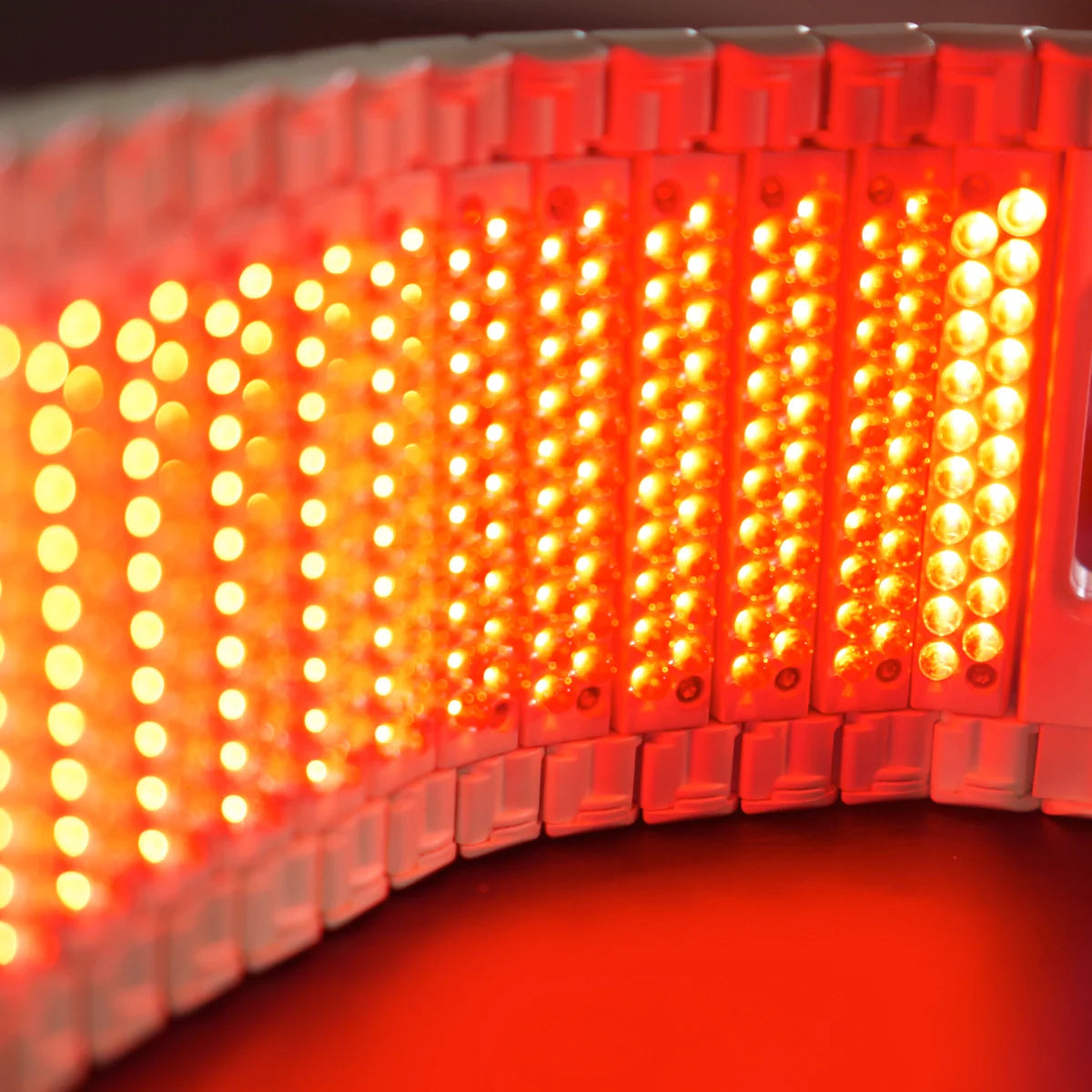
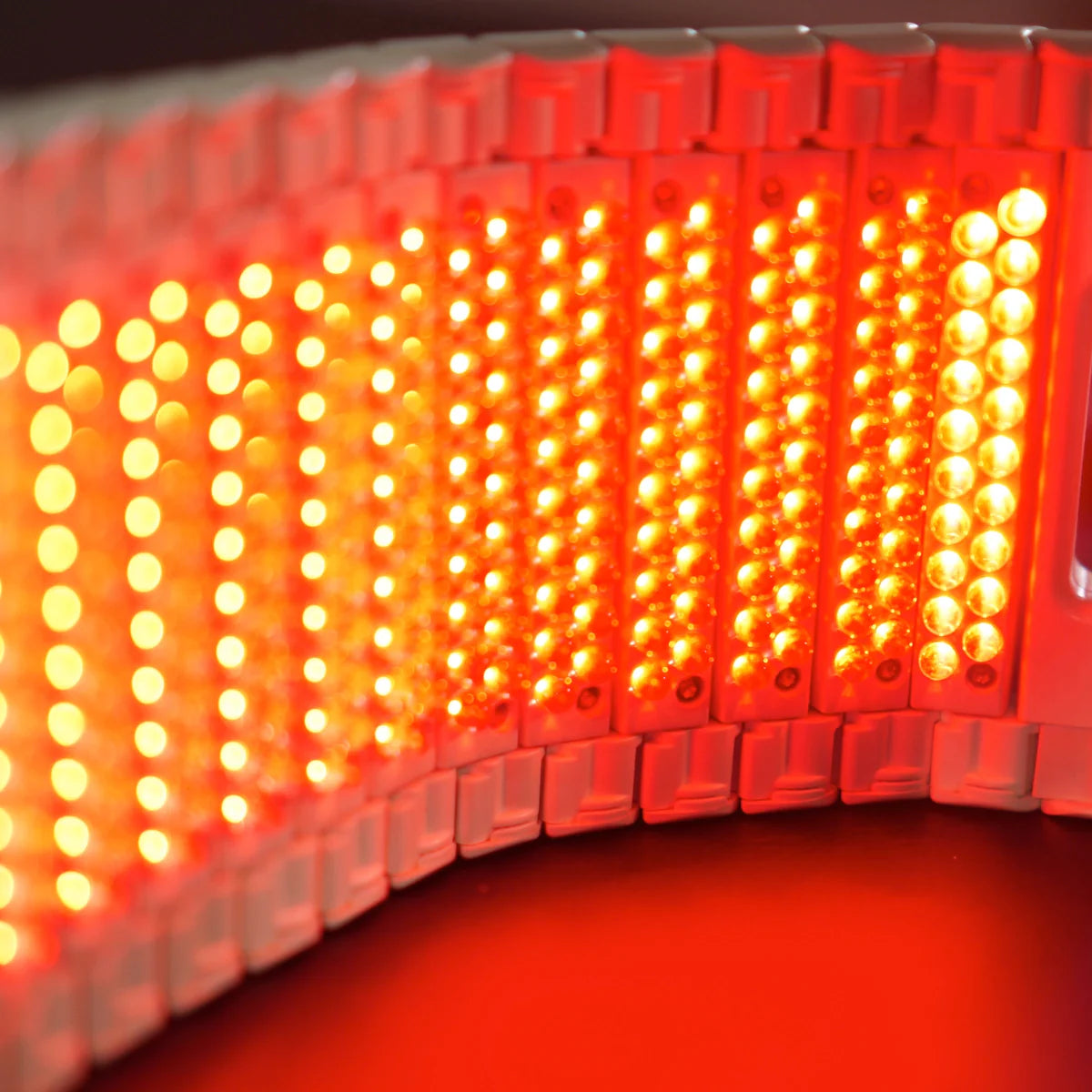
A contact pad — like those made by HealthLight — is a flexible LED array designed to sit directly against the skin. No air gap. The pad conforms to the curve of your knee, wraps around your ankle, lies flat against your lower back, or drapes across your shoulder.
The physics advantage is straightforward: when there is no air between the light source and the skin, none of the emitted power is lost to distance before reaching the treatment area. The full rated output arrives at the skin surface, and penetration physics take over from there. Red wavelengths (630–670nm) penetrate to a few millimeters. Near-infrared (800–900nm) penetrates several centimeters, reaching joints, tendons, ligaments, nerves, and deeper muscle tissue.
Contact pads also allow precise positioning. You can place the pad directly over a neuropathic foot, position it on the medial joint line of an arthritic knee, or lay it across a lumbar nerve root. The treatment area is exactly where you put it — not a general zone around where you put it.
Who Contact Pads Are For
Contact pads are the right tool when you have a specific location to treat: a single joint, a neuropathic extremity, a post-surgical site, or a chronic pain area. The clinical research on photobiomodulation for specific conditions — neuropathy, arthritis, wound healing, nerve pain — was largely conducted with contact or near-contact devices. That is the evidence basis supporting this format for therapeutic use.
HealthLight, the leading contact pad system for medical use, holds FDA 510(k) clearance as a Class II medical device and qualifies for HSA and FSA reimbursement. That regulatory status reflects the clinical design intent of the device. For the full HealthLight product comparison — including how it stacks up against major panel brands like Joovv — see: HealthLight vs Joovv: Which Red Light Therapy System Is Right for You?
Panels: How They Work and When They Win
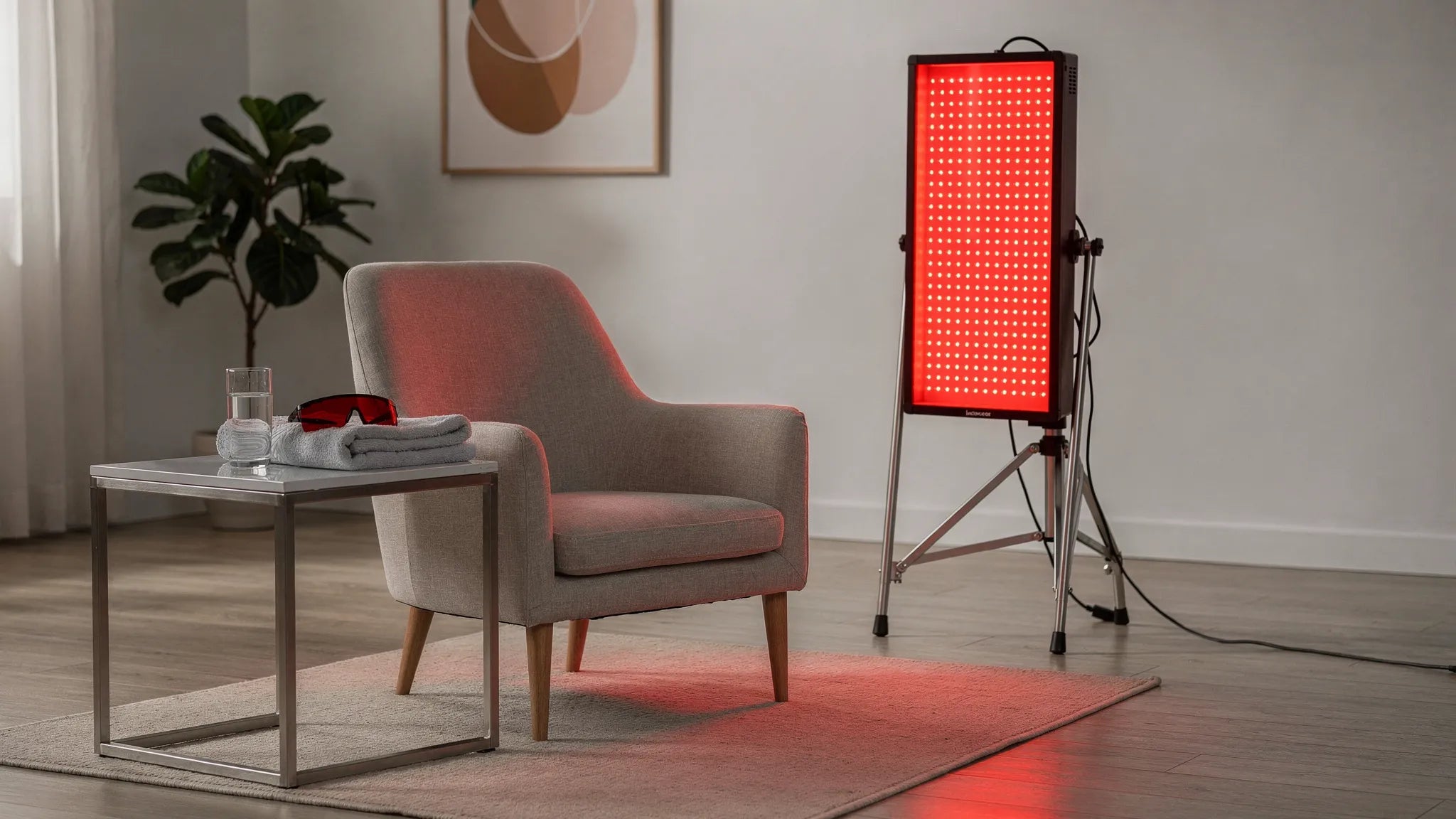
A red light therapy panel delivers light across an air gap — typically 6 to 18 inches between the panel and your body. You stand, sit, or lie in front of it and expose the target area (or your entire body) to the emitted wavelengths.
The physics disadvantage is also straightforward: light intensity follows the inverse-square law, dropping rapidly with distance. The irradiance (power per unit area) measured at the panel face is always higher than what arrives at your skin. At 6 inches, a significant portion of the emitted energy is lost. At 12 inches, more is lost. The actual dose reaching tissue beneath the skin is further reduced.
But panels have a coverage advantage that contact pads cannot match at scale. A full-body panel exposes your entire torso, face, or back in a single session without repositioning. For users whose goal is whole-body wellness — skin health, general circulation support, broad muscle recovery — that coverage efficiency is a real benefit.
Who Panels Are For
Panels work best for surface-level and whole-body goals: skin tone and anti-aging, general post-workout recovery for broad muscle soreness, circadian support, and overall wellness routines. They are also more convenient for users who want a low-friction daily habit — stand in front of the panel for 10 minutes, done.
The tradeoff is that distance-based delivery makes panels less effective for deep tissue targets. A 2-centimeter air gap between a panel and your skin is not the same as a contact pad delivering the same wavelengths directly to the surface. For joint interiors, nerve pathways, or deep tissue repair, the panel's physics are a meaningful limitation.
Contact Pads vs Panels: Direct Comparison
| Factor | Contact Pads (e.g., HealthLight) | Panels (e.g., Joovv, PlatinumLED) |
|---|---|---|
| Dose delivery | 100% of output reaches skin surface | Dose reduced by distance (inverse-square law) |
| Deep tissue penetration | Maximized — no pre-skin dose loss | Reduced — some dose lost before skin contact |
| Targeting precision | Exact — pad placed on treatment area | Approximate — zone around body position |
| Coverage area | Limited per pad (multi-pad kits expand coverage) | Wide — whole-body in one session |
| Convenience | Requires positioning pads on each area | Stand in front of panel, minimal setup |
| Best for conditions | Neuropathy, arthritis, joint pain, post-surgical | Skin health, general wellness, broad recovery |
| FDA status (leading brands) | 510(k) cleared medical device (HealthLight) | General wellness device |
| HSA/FSA eligible | Yes (HealthLight) | Not typically |
| Evidence base for conditions | Stronger — most clinical trials used contact devices | Moderate — general PBM evidence; condition-specific data limited |
| Price range | $395–$1,103 (HealthLight single pad to full body) | $369–$8,000+ (single panel to full system) |
The Evidence Question: What Format Does the Research Support?
Photobiomodulation has a large body of clinical research, including multiple systematic reviews and meta-analyses. The evidence is strong for several specific applications: pain reduction, neuropathy symptom improvement, wound healing, arthritis, and muscle recovery.
What is less often discussed is that the majority of this evidence was generated using contact or near-contact devices delivering precise, measurable doses to specific tissue targets. These are the protocols that established how photobiomodulation works and what parameters produce results.
When panel systems are marketed using this body of evidence, some extrapolation is required. The wavelengths are the same. The biological mechanisms are the same. But the delivery parameters — irradiance at tissue, dosing consistency across sessions — differ between contact-based research protocols and consumer panel use at recommended distances.
This does not mean panels are ineffective. For surface goals with sufficient session duration and appropriate distance, panels can deliver meaningful doses. But for specific therapeutic conditions — particularly deep tissue targets or nerve-involved conditions — the contact pad format is more directly supported by the clinical evidence base.
Practical Decision Guide: Which Format Is Right for You?
Choose contact pads if: You have neuropathy, diabetic foot pain, or peripheral nerve symptoms. You have chronic joint pain (knee, hip, shoulder, wrist) or arthritis. You are recovering from surgery or an injury and want targeted photobiomodulation as part of your protocol. You want to use HSA or FSA funds. You need a device that qualifies for clinical or supervised use.
Choose a panel if: Your primary goal is skin health, anti-aging, or collagen support. You want a whole-body daily wellness routine with minimal setup. You have diffuse post-workout soreness rather than a localized condition. You do not have a specific medical condition to address.
The biggest mistake I see is buyers choosing based on price or brand recognition rather than format fit. A $1,500 Joovv panel is the wrong tool for treating neuropathy — and a small contact pad is the wrong tool for someone who wants to expose their entire body in a 10-minute session. Match the format to the goal first.
HealthLight: The Leading Contact Pad System for Medical Use
Among contact pad systems, HealthLight is the standout option for medical and clinical buyers. Their flexible LED pads come in configurations for specific body areas — feet and ankles for neuropathy, back and lumbar, shoulder and arm, knee and joint — as well as the HealthLight Ultimate Body Kit for comprehensive multi-zone coverage.
HealthLight holds FDA 510(k) clearance as a Class II medical device, qualifies for HSA and FSA reimbursement, and is used by chiropractors, physical therapists, and medical doctors alongside home users with chronic conditions. The clinical design is reflected in how the device is built: direct contact delivery, flexible conforming pads, and wavelength combinations (red 630–670nm, NIR 830–880nm) matched to the research supporting their use cases.
For a full breakdown of the HealthLight product line and which kit fits which situation, see: HealthLight Ultimate Body Kit Review: Complete Buyer's Guide
Bottom line on contact pads vs panels: The format determines the dose. Contact pads deliver 100% of their output to the treatment surface and are the clinically appropriate choice for targeted therapeutic conditions. Panels are efficient for whole-body wellness and surface goals but lose dose to distance. Buy the format that matches your goal — not the one with the most impressive panel dimensions or marketing budget.
Frequently Asked Questions
Are red light therapy contact pads better than panels?
For targeted therapeutic conditions — neuropathy, joint pain, arthritis, post-surgical healing — contact pads deliver a higher dose to the treatment area because there is no air gap reducing intensity before the light reaches tissue. For whole-body wellness, skin health, and general daily recovery routines, panels offer better coverage with less repositioning. Neither format is universally better — the right choice depends on your goal.
Does distance reduce the effectiveness of red light therapy panels?
Yes. Light intensity follows the inverse-square law, dropping with distance. A panel rated at a certain irradiance at its face delivers less power per unit area at 6 inches, and less again at 12 inches. For surface-level goals (skin, general wellness), this reduction is manageable with appropriate session duration. For deep tissue targets, the pre-skin dose loss is a more significant limitation compared to contact-based delivery.
What is the best red light therapy contact pad system?
HealthLight is the leading contact pad system for medical and clinical use. It holds FDA 510(k) clearance as a Class II medical device, qualifies for HSA and FSA reimbursement, and is used by chiropractors and medical professionals. Their pads come in configurations for specific body areas plus a comprehensive Ultimate Body Kit for multi-zone coverage.
Can I use red light therapy contact pads after surgery?
Photobiomodulation with contact pads can be appropriate in a post-surgical recovery protocol — but only with your surgeon's or clinician's clearance regarding timing and positioning near the surgical site. HealthLight's FDA medical device status makes it appropriate for supervised clinical recovery use. Always follow your care team's protocol before applying any device near a surgical site.
Are red light therapy panels HSA or FSA eligible?
Most consumer panels (Joovv, PlatinumLED, Mito Red, etc.) are not HSA or FSA eligible because they are classified as general wellness devices. HealthLight contact pads qualify for HSA and FSA reimbursement because they hold FDA 510(k) clearance as a Class II medical device. If using pre-tax HSA or FSA funds, HealthLight is the appropriate choice.
How long should I use red light therapy contact pads per session?
Typical protocols use contact pads for 20–30 minutes per treatment area, once or twice daily. The contact design means dose delivery is efficient — you do not need to compensate for distance loss with longer sessions. Specific protocol details depend on the condition being treated; follow manufacturer guidelines and, for clinical conditions, discuss timing with your care provider.
Shop FDA-Cleared Contact Pad Therapy
HealthLight's flexible LED contact pads deliver maximum dose directly to your treatment area — FDA cleared, HSA/FSA eligible, and used by clinicians nationwide.
Questions? Call (612) 360-2490
About the Author — Justin Webster
Justin Webster is the owner of Your Health Sanctuary. Before founding his consulting company, he served as COO of a chain of 13 medical clinics, then spent his career helping build more than 20 additional niche medical clinics across the United States. Working alongside MDs, chiropractors and physical therapists introduced him to the clinical-grade equipment that practitioners actually prescribe. That background, combined with direct relationships with manufacturers including HealthLight and BIOFLEX, shapes how Your Health Sanctuary evaluates and recommends recovery technology. Justin personally owns and uses the HealthLight General Pain Relief Kit. Your Health Sanctuary sells primarily to medical professionals and clinicians, not consumer gadget buyers.