
Red Light Therapy for Weight Loss: What Results Are Real?
If you are considering red light therapy for weight loss, the honest answer is this: some results are real, but they are usually modest, local, and dependent on your overall lifestyle. Red light therapy can be a useful support tool for body contouring, recovery, inflammation control, and consistency with exercise. It is not a stand-alone fat-loss shortcut.
That distinction matters. A device can help you look slightly leaner in a treated area without producing meaningful scale weight loss. It can support your training routine without replacing a calorie deficit. And it can improve how your body feels during a weight-loss phase without “melting fat” the way many ads imply.
Below, we will separate the results supported by science from the claims that deserve skepticism, then walk through how to use red and near-infrared light therapy realistically in 2026.

The realistic scorecard: what results are real?
Red light therapy, also called photobiomodulation, uses specific wavelengths of red and near-infrared light to influence cellular activity. In wellness and recovery devices, common therapeutic ranges include 630 to 660 nm red light and 810 to 850 nm near-infrared light.
For weight-loss goals, the most realistic benefits fall into four categories: small circumference changes in treated areas, body composition support when paired with diet and exercise, possible workout consistency improvements via better recovery, and improved skin appearance. The key takeaway: red light therapy is better understood as a body-contouring and recovery adjunct, not a primary weight-loss treatment.
What the research actually suggests
The strongest weight-related evidence for red light therapy is not about losing pounds. It is about short-term circumference reduction in areas such as the waist, hips, thighs, and arms.
A frequently cited randomized, double-blind trial published in Lasers in Surgery and Medicine evaluated low-level laser therapy for non-invasive body contouring and reported reductions in combined circumference measurements compared with placebo. You can review the study abstract through PubMed.
A 2025 randomized, sham-controlled trial in the Journal of Cosmetic Dermatology (Nishioka et al., 2025) tested red and near-infrared LED photobiomodulation on abdominal fat in 90 patients split across three groups, including a sham-treated control. Both active treatment groups showed reductions in waist circumference and ultrasound-measured subcutaneous fat thickness compared to sham, with biopsy analysis confirming structural changes in the treated fat cells. You can review the study through PMC. As with earlier trials, the effect on body weight itself remained small and dependent on accompanying lifestyle changes.
How red light therapy might affect fat cells
The proposed weight-loss mechanism is usually described as “fat cell lipolysis,” but that phrase is often oversimplified in marketing. Some laboratory and clinical research suggests that low-level light may temporarily affect adipocytes. Once mobilized, those lipids still need to be used by the body, which is where movement, nutrition, and metabolic health matter.
Red and near-infrared light may also support weight-loss efforts indirectly through mitochondrial activity, inflammation modulation, circulation support, exercise recovery, and sleep/relaxation routines. None of these mechanisms mean red light “burns belly fat” while you sit still.
Why the scale may not move
You might use red light therapy consistently, notice your waist measurement change slightly, feel less bloated, or see smoother-looking skin, yet the scale barely moves. That does not necessarily mean nothing happened. Circumference can change because of fluid shifts, inflammation reduction, posture, digestion, muscle tone, or small local changes in tissue volume.
If your goal is true fat loss, the fundamentals still matter most: sustainable calorie deficit, adequate protein, strength training, daily movement, sleep consistency, and stress management. Red light therapy may make those habits easier to maintain, especially if recovery or soreness has been holding you back.
What results should you expect after 4, 8, and 12 weeks?
Results vary by device quality, dosing, consistency, starting body composition, and lifestyle. A realistic timeline: 1–2 weeks of better routine consistency, 3–6 weeks of possible small circumference changes in treated areas, 6–12 weeks of more noticeable changes when paired with nutrition and exercise.
If a brand promises dramatic fat loss in a few sessions, be cautious. Real body composition changes take time.
Best protocol for red light therapy and weight-loss goals
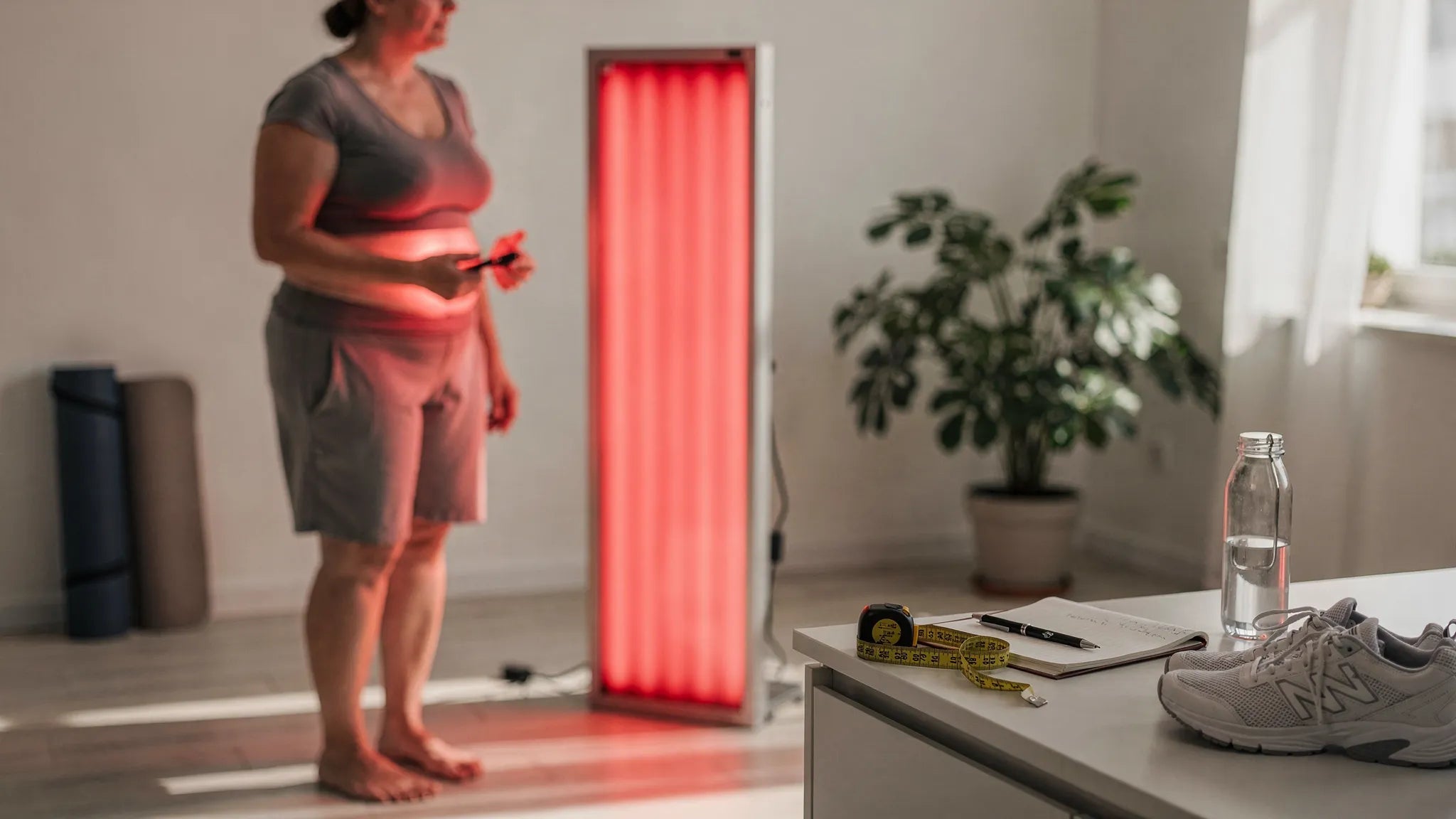
For general body-contouring support, a reasonable starting point is 10 to 20 minutes per target area, 3 to 5 days per week, for at least 6 to 8 weeks. Common target areas include the abdomen, hips, thighs, upper arms, and lower back.
To improve your odds of seeing real results: treat before movement when possible, be consistent for 6–8 weeks, measure rather than guess, don't increase dose endlessly, and stack with the fundamentals. See our guide to red light therapy at home for setup details.
Choosing a device without falling for hype
Prioritize wavelength transparency (630–660 nm red, 810–850 nm NIR), irradiance data at specific treatment distance, treatment area coverage, FDA status clarity, warranty and support, and realistic claims. For a deeper device-selection breakdown, see our guide to the best red light therapy panels.
Safety and who should be cautious
Red light therapy is generally low risk when used as directed. Talk with a healthcare professional before starting if you are pregnant, have active cancer or a history of cancer in the treatment area, take photosensitizing medications, have a seizure disorder triggered by light, have an active infection or suspicious skin lesion, or are managing a complex medical condition. Use eye protection when recommended.
So, is red light therapy worth it for weight loss?
It can be worth it if your expectations are realistic. It is most reasonable for people who already have a consistent plan around nutrition, movement, and recovery. It may help with modest inch loss, body-contouring support, skin appearance, soreness, and workout consistency. It is probably not worth it if you are looking for effortless fat loss or a replacement for lifestyle habits.
For more expectation-setting examples, our guide to red light therapy before and after results explains what changes tend to appear first.
Frequently Asked Questions
Does red light therapy burn belly fat? It may support local body-contouring effects in treated areas, but it should not be viewed as a stand-alone belly fat burner.
How many pounds can you lose with red light therapy? Red light therapy alone is not reliably shown to produce significant scale weight loss.
How long does it take to see results? Some people notice recovery or soreness changes within 1 to 2 weeks. Body measurement changes usually require at least 3 to 6 weeks of consistent use.
Can I use red light therapy every day? Many people use red light therapy several days per week, and some devices are designed for frequent use.
Is at-home red light therapy effective? At-home therapy can be effective when the device has appropriate wavelengths, adequate output, enough coverage, and clear instructions.
Ready to Add Red Light Therapy to Your Recovery Stack?
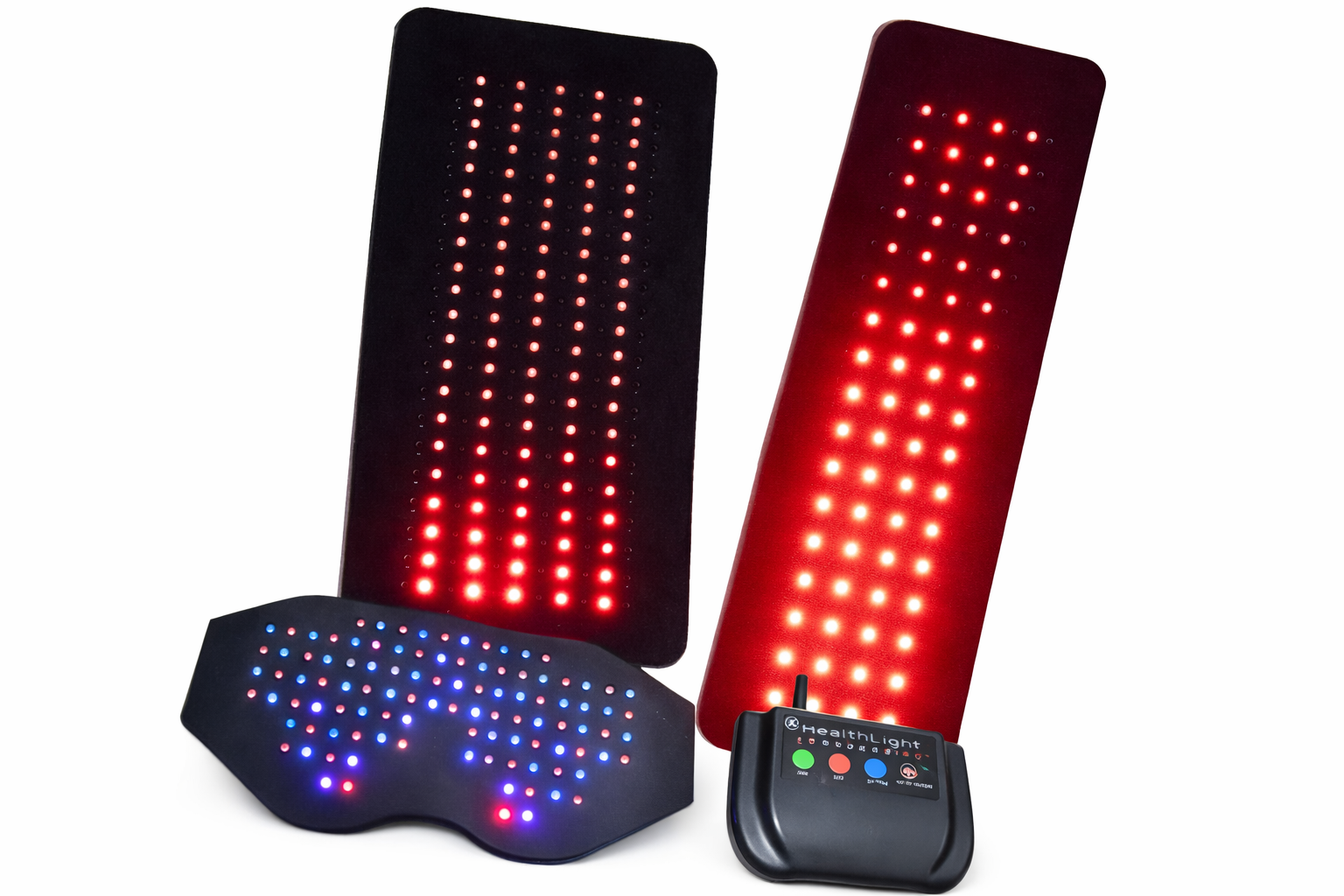
If you've reviewed the evidence and you want a red light therapy device that delivers true medical-grade output for body contouring, recovery, and skin work, our top recommendations are the HealthLight Ultimate Body Kit (FDA-cleared LED pad therapy at clinical power densities — wraps around the abdomen, hips, thighs, and arms for true target-area treatment) and the TheraFace Mask FDA Cleared (hands-free wearable for face-focused photobiomodulation). Both deliver true medical-grade wavelengths in formats designed for consistent daily use.
Both devices may be HSA/FSA eligible with a Letter of Medical Necessity from your physician for a documented medical condition. For weight loss or body contouring alone, HSA/FSA reimbursement is typically not available — but if you're using the device for broader medical purposes (chronic pain, neuropathy, post-surgical recovery, etc.), the pre-tax purchase can convert to roughly 26-40% in real tax savings depending on your tax bracket.
Questions about which red light therapy device fits your body-composition goals, training routine, or HSA/FSA documentation? Call us at (612) 360-2490 — we'll talk through your specific situation and help you avoid the most common mistake: expecting a device to do the work that protein, strength training, walking, and sleep actually do.
About the Author
Justin Webster, owner of Your Health Sanctuary, has spent his career helping build over 20 niche medical clinics across the USA and has written 2 books on the subject. Working alongside dozens of MDs, he saw firsthand what actually works for weight loss, recovery, and anti-aging, and what doesn't. He even published a weight loss book centered on Apple Cider Vinegar. When he realized it wasn't at the level it needed to be, he had the humility to pull it entirely and start over. That willingness to hold himself to a higher standard, even when it costs him, is what drives how Your Health Sanctuary operates. Life and business experience in the medical field led to everything this store is built on. Justin has personally lost 55 lbs. and made anti-aging his obsession. He didn't start this store to push products. He started it because he knew the tools clinicians trust, the ones that deliver real results, were out of reach for most people. Your Health Sanctuary exists to change that.