

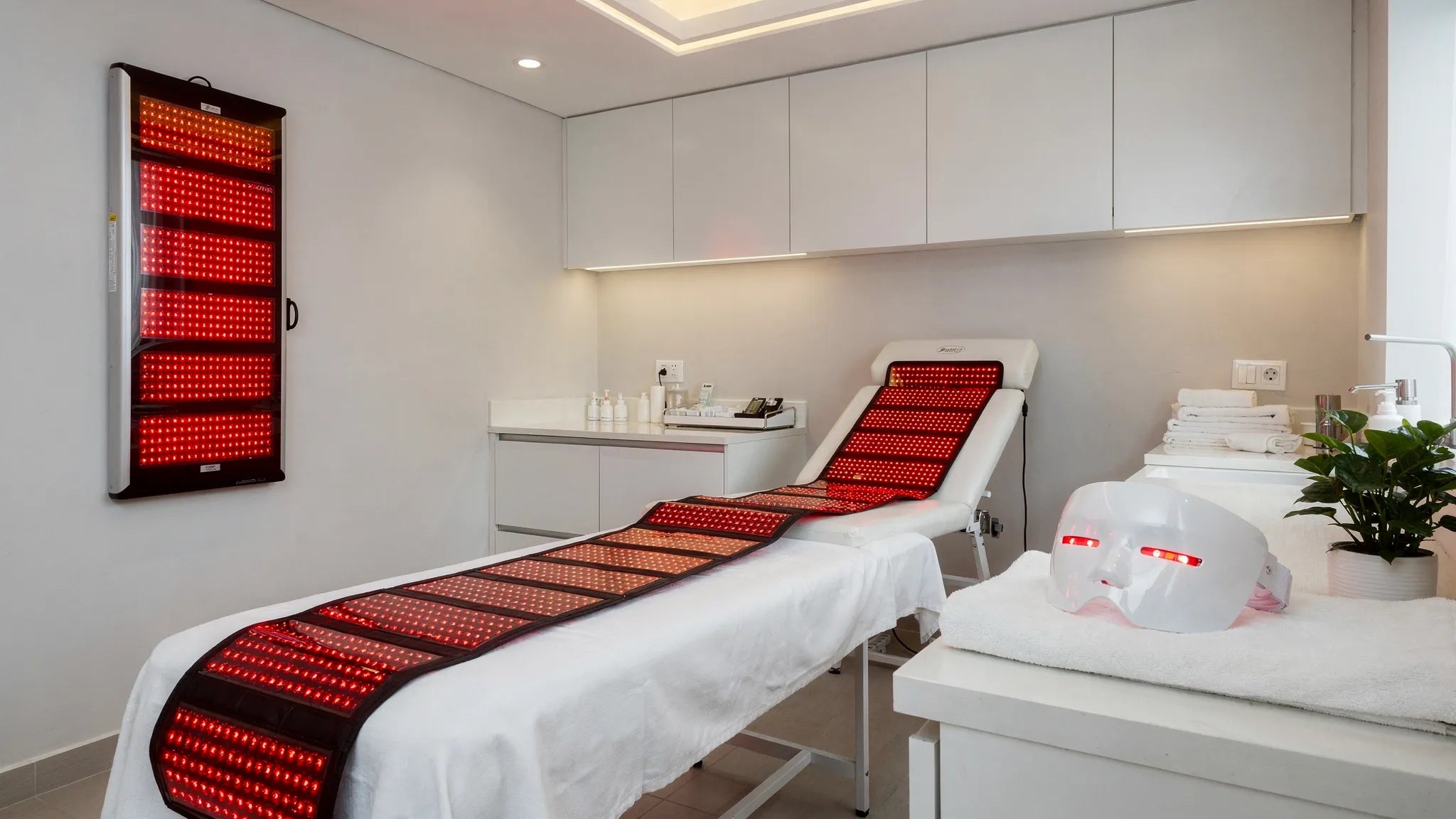
Professional Red Light Therapy Devices Worth Buying in 2026
Buying a professional red light therapy device in 2026 is less about finding the brightest panel and more about matching the device to the job you need it to do. A clinic treating neuropathy, an athlete managing heavy training weeks, and a home user trying to calm knee or back pain do not need the same form factor.
The best professional red light therapy devices have a few things in common: transparent specifications, evidence-aligned wavelengths, realistic treatment times, reliable support, and a design that makes consistent use easy. If a device looks powerful but hides basic dose information, it is usually not the smartest long-term buy.
Here is the practical shortlist before we go deeper.
| Primary goal | Device type worth considering | Best fit |
|---|---|---|
| Targeted pain, joints, back, feet, neuropathy support | Flexible red and near-infrared therapy pads | Home users and clinicians treating specific areas |
| Clinic-level photobiomodulation protocols | Professional laser or multi-port PBM systems | Chiropractors, physical therapists, sports medicine clinics |
| Whole-body wellness and athletic recovery | Modular red light therapy panels | Athletes, wellness users, performance facilities |
| Facial skin and acne care | FDA-cleared LED face masks | Skin-focused users who do not need body treatment |
| Spa, wellness room, or high-throughput clinic use | Full-body red light beds or recliners | Facilities that need repeatable sessions with minimal setup |
What makes a red light therapy device professional in 2026?
Red light therapy, also called photobiomodulation, uses specific wavelengths of red and near-infrared light to interact with tissue. Research has explored its effects on mitochondrial activity, inflammation, circulation, pain signaling, and tissue repair. A widely cited review on photobiomodulation and inflammation explains why dose, wavelength, and treatment parameters matter as much as the light source itself.
That is the key point for buyers: professional does not simply mean expensive. A professional-grade device should help you deliver a repeatable dose to the right tissue, safely and consistently.
| Buying factor | What to look for | Why it matters |
|---|---|---|
| Wavelengths | Common therapeutic ranges include red light around 630 to 660 nm and near-infrared around 800 to 850 nm | Red light is often used for skin and superficial tissue, while near-infrared is commonly selected for deeper muscles and joints |
| Irradiance | Measured output at the actual treatment distance, not only total wattage | Total wattage does not tell you how much light reaches the body |
| Delivery format | Panel, flexible pad, laser probe, face mask, bed, or recliner | Form factor determines coverage, comfort, and treatment consistency |
| FDA status | Model-specific clearance or registration when applicable | FDA status should match the device's intended claims, not just the brand's marketing |
| Protocol support | Clear session times, distances, treatment areas, and contraindications | Better protocols reduce guesswork and overuse |
| Support and warranty | Responsive seller, replacement parts, setup help, and transparent specs | Professional devices are long-term purchases, so support matters |
One useful rule: if the brand only advertises LED count, total watts, or vague claims about deep healing, keep looking. Those numbers can be part of the picture, but they do not replace measured output, treatment area, wavelength data, and dosing guidance.

Professional red light therapy devices worth considering in 2026
1. HealthLight therapy pads: best for targeted home and clinical recovery
HealthLight-style flexible therapy pads are a strong choice when the goal is targeted treatment rather than whole-body exposure. Instead of standing in front of a large panel, the pad sits directly over the area you want to treat, such as the lower back, knee, shoulder, foot, hip, or calf.
That direct-contact format is a major advantage for pain and recovery users. It reduces positioning guesswork, helps keep the treatment area consistent, and makes it easier to treat curved joints or awkward areas. For people dealing with chronic discomfort, post-training soreness, or localized inflammation, this can be more practical than a panel.
HealthLight is especially worth considering if you want a professional-grade system for home use but do not want a large clinic laser. It is also a good fit for practitioners who want an accessible, contact-based LED therapy option for broad-area treatment.
It may not be the best fit if your main goal is full-body skin exposure, general wellness sessions, or treating large areas at once. For those uses, a high-quality panel or full-body system may be more convenient.
If you are comparing HealthLight with panel systems, the detailed HealthLight vs Joovv comparison is a helpful next read.
2. BIOFLEX MultiPort: best for clinic-level photobiomodulation programs
BIOFLEX belongs in a different category than most home red light therapy devices. It is designed for more structured, clinic-level photobiomodulation and low-level laser therapy applications. For chiropractors, physical therapists, sports medicine clinics, and pain-focused practices, that difference matters.
The main reason to consider BIOFLEX is control. Professional laser and multi-port systems are typically selected when practitioners need more precise protocols, deeper clinical workflow integration, and a system suited to recurring patient care. This is especially relevant for clinics treating chronic pain, arthritis, neuropathy, tendinopathies, or post-injury rehabilitation under professional supervision.
For a casual home user, BIOFLEX may be more device than you need. For a clinic, however, the calculation changes. Documentation, patient throughput, protocol consistency, training, and long-term reliability become part of the purchase decision.
If you are evaluating a clinic purchase, start with this deeper professional laser therapy system review before comparing models.
3. Joovv-style modular panels: best for whole-body wellness and athletic recovery
Large red light therapy panels are popular for a reason. They are convenient for broad exposure, easy to build into a daily routine, and useful when the goal is general recovery, skin support, sleep routine support, or athletic wellness rather than one small injury site.
A professional panel setup can make sense for athletes, active adults, and wellness facilities that want to expose the back, legs, torso, or multiple areas in a single session. Panels are also easier to share among multiple users because there is no need to wrap or position pads on each treatment site.
The limitation is dose precision. Panel output changes with distance, angle, and body position. A session at 6 inches is not the same as a session at 18 inches. If you choose a panel, look for published irradiance at realistic distances, red and near-infrared wavelength data, low EMF information, build quality, and a warranty that matches the price point.
Panels are worth buying when you want broad coverage and routine convenience. They are less ideal when you need direct, targeted treatment around a joint, nerve pathway, or specific pain point.
For more panel-specific buying criteria, see the guide to choosing the best red light therapy panels.
4. TheraFace Mask: best for facial skin and acne-focused users
The TheraFace Mask is not a full-body therapy system, but it deserves mention because it solves one job well: facial skin care. For buyers focused on facial rejuvenation, acne support, and a consistent hands-free routine, an FDA-cleared LED mask can be a smarter choice than trying to use a large body panel for the face.
The TheraFace Mask uses red light, blue light, and near-infrared modes depending on the selected treatment. It is most relevant for users who want a structured facial device with a defined use case, not a general pain or sports recovery system.
This is worth buying if your primary goal is facial skin, ease of use, and consistent sessions. It is not the right device if you want to treat back pain, knee arthritis, hamstring soreness, or neuropathy symptoms.
If FDA status is part of your decision, remember to verify the current model and indication. You can search device records through the FDA 510(k) database, and you can read more in the site guide to whether the TheraFace Mask is FDA cleared.
5. Full-body red light beds and recliners: best for wellness rooms and clinics
Full-body red light beds and therapy recliners are not necessary for most home users, but they can be worth buying for the right facility. A wellness clinic, recovery studio, med spa, or performance center may benefit from a setup that delivers a repeatable, comfortable session with minimal repositioning.
The advantage is convenience and experience. Users can relax while the system treats a large surface area. For businesses, the value may come from session consistency, user comfort, and the ability to offer red light therapy as part of a larger recovery service.
The tradeoffs are space, cost, sanitation, service access, and throughput planning. Before buying a full-body system, confirm electrical requirements, cleaning procedures, warranty terms, replacement part availability, and whether the device's claims match your intended use.
Full-body systems are worth considering for facilities. For individual buyers with limited space or targeted pain goals, pads or panels usually make more sense.
6. Professional-grade starter panels: best for buyers who want quality without a full system
Not every buyer needs a large modular panel wall or a clinic laser. A smaller professional-grade panel can be a good entry point if it has transparent specs, a usable treatment area, and a reputable seller behind it.
This category is worth considering for people who want to treat one body area at a time, such as the knees, lower back, abdomen, or shoulders. It can also be useful for athletes who want a recovery tool that fits into a small home gym.
The caution is that the budget panel category is crowded with lookalike devices. Choose based on published wavelengths, measured irradiance, build quality, warranty, and support. Do not buy only because a product page shows high wattage or dramatic before-and-after claims.
Quick comparison: which device type should you buy?
| Device category | Best buyer | Main advantage | Main limitation |
|---|---|---|---|
| Flexible therapy pads | Home users and clinics treating localized pain or recovery needs | Direct contact and easy targeting | Less efficient for whole-body sessions |
| Professional laser or PBM systems | Medical, chiropractic, physical therapy, and sports medicine clinics | Protocol control and professional workflow fit | Usually unnecessary for casual home wellness |
| Modular panels | Athletes and wellness users wanting broad exposure | Large treatment area and simple routine | Dose depends heavily on distance and positioning |
| LED face masks | Skin-focused users | Convenient facial treatment | Not designed for body pain or deep-tissue recovery |
| Full-body beds or recliners | Wellness facilities and clinics | Comfortable full-body experience | Space, cost, and maintenance requirements |
| Smaller high-spec panels | Entry-level professional buyers | Balanced cost and quality | Requires careful spec verification |
How to choose based on your actual goal
If your goal is pain relief or inflammation support
Choose a device that can treat the painful area consistently. For joints, back pain, plantar fascia discomfort, or localized soft-tissue irritation, a flexible pad or targeted professional system often makes more sense than a large panel. Contact-style treatment can be especially useful when positioning is difficult.
For deeper clinical questions, such as arthritis, nerve pain, or post-surgical recovery, work with a healthcare professional and choose devices with clear protocols. You can also review the complete guide to red light therapy for pain relief for condition-specific considerations.
If your goal is athletic recovery
Panels, pads, and full-body systems can all work depending on your training style. Endurance athletes often like panels or full-body systems because legs, hips, and back can be addressed in one routine. Strength athletes may prefer targeted pads for shoulders, elbows, knees, or lower back after heavy sessions.
Consistency matters more than intensity. A device you can use three to five times per week is usually more valuable than a more powerful system that is inconvenient to set up.
If your goal is skin health
For facial skin, a dedicated LED mask may be the most practical option. For broader skin exposure, a panel can make sense. Red wavelengths in the 630 to 660 nm range are commonly used in skin-focused devices, while near-infrared may be included for deeper tissue support.
Be realistic about timelines. Skin changes usually require consistent use over weeks, not one or two sessions.
If your goal is weight loss or body composition
Do not buy a professional red light therapy device expecting it to replace nutrition, exercise, sleep, and medical care. Red light therapy may support recovery, circulation, and some body-contouring goals, but it should be treated as an adjunct, not the main driver of fat loss.
If body composition is your primary goal, choose a device only if you will also use it for recovery, inflammation support, or wellness. That makes the purchase more practical and less dependent on a single outcome.
If your goal is clinic revenue or patient care
Clinic buyers should think beyond wavelengths. Consider training, treatment room workflow, appointment length, documentation, contraindication screening, warranty service, and whether the device fits your patient population.
Professional systems can be excellent investments, but only when the protocols match the conditions you actually treat. A sports recovery studio, a neuropathy-focused practice, and a med spa may need very different devices.
Questions to ask before you buy
Before purchasing any professional red light therapy device, ask these questions:
- What wavelengths does the device use, and are they clearly listed by the manufacturer?
- Is irradiance measured at the treatment distance you will actually use?
- Does the brand explain session length, treatment distance, and frequency?
- Is the FDA status model-specific, and does it match the claims being made?
- Is the device designed for your use case, such as pain, skin, recovery, or clinical practice?
- Are eye protection, contraindications, and safety instructions clearly provided?
- Can you reach a real support team if you need help choosing, setting up, or troubleshooting the device?
The last question is easy to underestimate. With professional recovery technology, the seller matters. A cheaper device with poor support can become expensive if you cannot get answers, replacement parts, or clear setup guidance.
Safety and realistic expectations
Most healthy adults tolerate red and near-infrared light therapy well when devices are used as directed. Still, professional does not mean risk-free.
Avoid shining bright panels or lasers into the eyes, and use eye protection when recommended. Ask a clinician before use if you are pregnant, have active cancer, take photosensitizing medications, have a seizure disorder triggered by light, have impaired sensation, or are treating an area after surgery. People with neuropathy should be especially careful with heat, pressure, and session duration because reduced sensation can make it harder to notice irritation.
Also, more light is not always better. Photobiomodulation is often described as having a biphasic dose response, meaning too little may do nothing and too much may reduce the desired effect. Dose recommendations vary by condition and body area, which is why organizations such as the World Association for Photobiomodulation Therapy publish guidance by treatment site and indication.
For home buyers, the practical takeaway is simple: follow the device protocol, start conservatively, track your response, and avoid stacking long sessions just because the device feels comfortable.
Frequently Asked Questions
What are the best professional red light therapy devices for home use in 2026? For most home users, the best choices are flexible therapy pads for targeted pain and recovery, or high-quality panels for broader wellness and athletic recovery. The right choice depends on whether you need precise local treatment or large-area exposure.
Are professional red light therapy devices FDA approved? Many red light therapy devices are FDA registered or FDA cleared for specific indications, but FDA approved is usually not the correct term for this category. Always verify the exact model and claims rather than relying on broad marketing language.
Are panels or pads better for pain relief? Pads are often better for targeted pain because they stay in contact with the treatment area and are easier to position around joints or the lower back. Panels are better when you want broad exposure for general recovery, skin, or whole-body wellness routines.
Is higher wattage better for red light therapy? Not necessarily. Delivered dose depends on wavelength, irradiance, distance, treatment time, beam angle, and body position. A device with transparent measured output is more useful than one that only advertises high wattage.
How long does it take to see results from professional red light therapy? Some users notice short-term changes in soreness or stiffness within a few sessions, while chronic pain, skin goals, and tissue recovery usually require consistent use over several weeks. Results vary based on condition, dose, device quality, and overall health plan.
Can red light therapy replace physical therapy or medical care? No. Red light therapy can be a helpful adjunct for recovery, pain, and inflammation support, but it should not replace diagnosis, rehabilitation, medication guidance, or post-surgical instructions from a qualified professional.
Find the right professional red light therapy device
A professional red light therapy device is worth buying when it matches your goal, fits your routine, and comes from a source that can support you after the sale. The best device for targeted back pain may not be the best device for facial skin, and the right clinic system may be unnecessary for a home wellness routine.
Your Health Sanctuary curates professional-grade recovery and wellness devices for home users, athletes, and clinical environments, including red light therapy, compression therapy, and percussion therapy tools. Devices are selected with quality, practical use, and support in mind, with free shipping included, a price match guarantee, flexible financing options, and expert customer support.
If you are unsure whether you need pads, panels, a clinic-grade PBM system, or a full-body setup, start by comparing your goals with the device categories above, then visit Your Health Sanctuary for current options and personalized guidance.
Ready to Upgrade Your Recovery?
The equipment referenced in this guide, in stock and ready to ship. Many products qualify for HSA/FSA — call us to confirm eligibility for your situation.
Questions? Talk to our recovery specialists: (612) 360-2490

:%20The%20TheraFace%20Mask%20has%20been%20discontinued%20at%20Your%20Health%20Sanctuary.%20For%20a%20current%20option,%20see%20our%20red%20light%20therapy,%20or%20talk%20to%20Justin's%20team%20at%20(612)%20360-2490.Buying%20a%20profe...)