

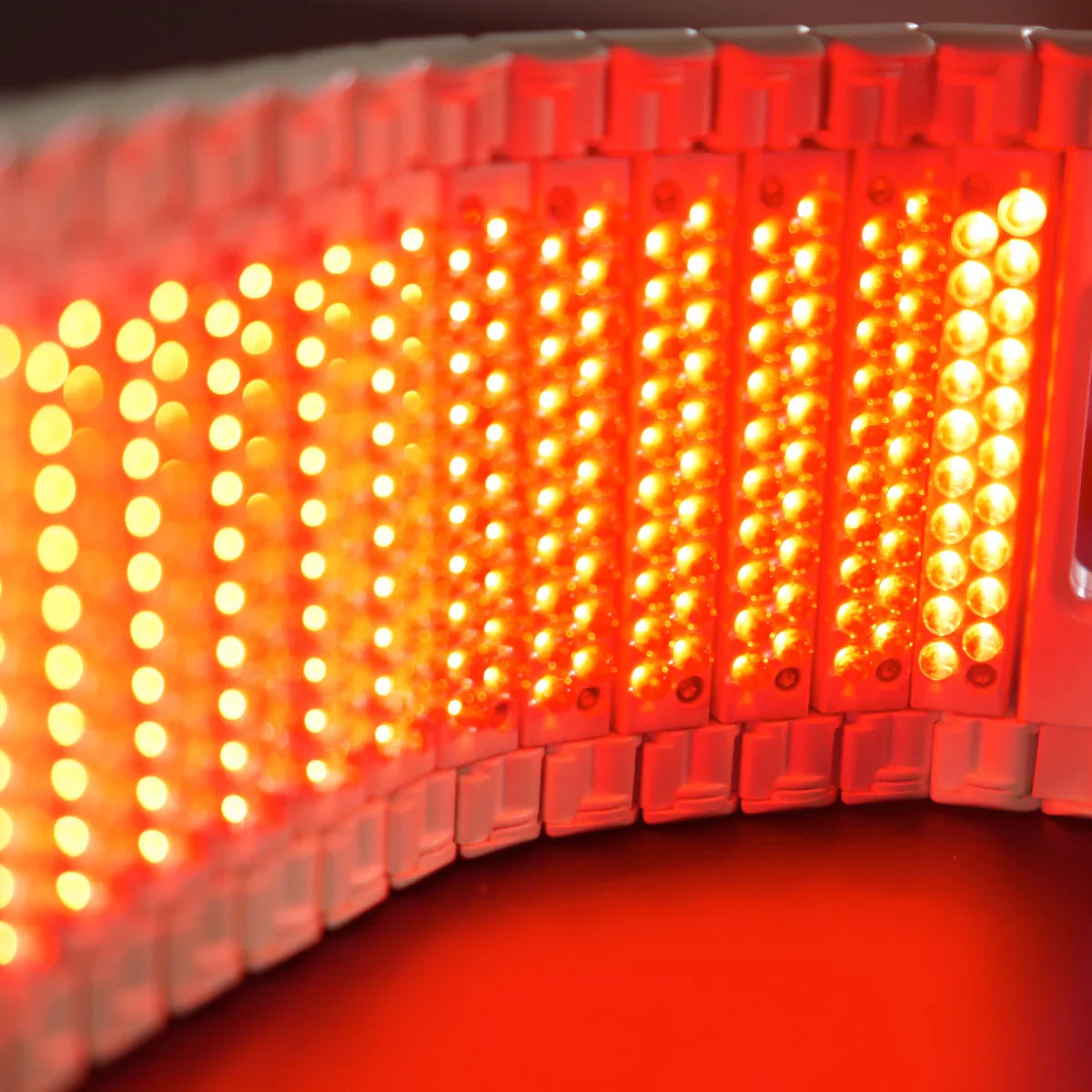
BIOFLEX vs Erchonia: Which Cold Laser System Gets Better Clinical Results?
Cold laser therapy — also called low-level laser therapy (LLLT) or photobiomodulation — has become one of the most talked-about recovery tools in professional sports medicine and physical therapy. Two names come up constantly in that conversation: BIOFLEX and Erchonia. Both are FDA-cleared, both are used by clinicians worldwide, and both have passionate supporters. But they take very different technical approaches to delivering photobiomodulation.
If you're comparing BIOFLEX vs Erchonia and trying to figure out which system makes more sense — whether for a clinic, a sports training facility, or a serious at-home recovery setup — this breakdown will give you the straight answers you need.
The Core Difference: How Each System Delivers Light
BIOFLEX and Erchonia both use low-level laser energy to stimulate cellular repair, reduce inflammation, and accelerate healing — but their engineering philosophies differ significantly.
BIOFLEX is a Canadian-engineered clinical system built around a multi-diode array approach. The flagship BIOFLEX MultiPort System uses a combination of laser diodes and superluminous diodes (SLDs) operating at 660nm (red) and 830–840nm (near-infrared). The large-pad arrays allow clinicians to treat broad tissue areas simultaneously rather than scanning a single handheld probe across the skin.
Erchonia is a US-based manufacturer known for low-power, line-generated scanning lasers. Their most recognized devices use 635nm (red) and 405nm (violet) wavelengths. Erchonia has built their reputation heavily on third-party double-blind randomized controlled trials (RCTs), accumulating more FDA 510(k) clearances for specific conditions than any other LLLT company in the US.
FDA Clearance: Who Has More?
As of 2025, Erchonia holds the most FDA 510(k) clearances of any low-level laser company in the world. Their cleared indications include chronic low back pain, neck and shoulder pain, post-surgical pain, plantar fasciitis, onychomycosis, and non-invasive body contouring. Each clearance required clinical trial data.
BIOFLEX carries FDA 510(k) clearance as a general laser therapy device and holds Health Canada approval. In Canada, BIOFLEX is one of the most clinically established LLLT brands and is standard equipment in many physiotherapy and chiropractic practices.
Bottom line: Erchonia wins on the number of indication-specific FDA clearances. BIOFLEX wins on breadth of clinical adoption, particularly in Canada and international markets.
Wavelengths and Tissue Penetration
- BIOFLEX uses 660nm (red) and 830–840nm (near-infrared, penetrates 3–5cm for deep joint, muscle, and nerve tissue). The dual-wavelength protocol mirrors research showing sequential wavelength application improves cellular response.
- Erchonia uses 635nm (red) and 405nm (violet, very shallow — primarily bactericidal and cellular surface effects). Near-infrared models (such as the XLR8 with 808nm) are available but not included on all devices.
For deep joint or spine treatment — ACL recovery, rotator cuff repair, lumbar disc pathology — BIOFLEX's near-infrared diodes are purpose-built for that depth. For surface-level inflammation or conditions where the 405nm violet has specific evidence, Erchonia's combination is compelling.
Clinical Workflow and Treatment Time
BIOFLEX is designed for set-and-treat workflow. The flexible probe arrays attach to the patient and the device runs a timed protocol while the clinician moves on to another task. This makes BIOFLEX scalable in high-volume practices.
Erchonia devices are typically handheld with line-generated beams. Treatment protocols are often shorter (8–15 minutes) but require more active clinician involvement.
Research and Evidence Base
Erchonia's clinical trial program is exceptional by industry standards. Their RCTs use sham controls and independent evaluation. A 2021 study published in Pain Research and Management demonstrated statistically significant results for chronic low back pain with the Erchonia FX-405.
BIOFLEX's research is primarily drawn from the broader LLLT/photobiomodulation literature — a body of over 6,000 peer-reviewed studies as of 2024. The evidence base is strong, but it's more aligned with general photobiomodulation science than device-specific RCTs.
Price and Total Cost of Ownership
- BIOFLEX MultiPort System: Typically $8,000–$15,000+ USD depending on configuration.
- Erchonia FX-405 / XLR8: Ranges from $5,000–$12,000+ USD.
BIOFLEX generally has a higher upfront cost but lower per-treatment labor cost due to the set-and-treat protocol.
Which System Should You Choose?
Choose BIOFLEX if: You run a high-volume physiotherapy or sports medicine clinic, you primarily treat deep joint and musculoskeletal injuries, or you want a proven clinical workhorse with scalable workflow.
Choose Erchonia if: You want the most FDA-cleared device for specific conditions, your treatment scope includes plantar fasciitis, post-surgical pain, or neuropathy where Erchonia's RCT data is strongest.
For home users and serious athletes: the BIOFLEX MultiPort System is the most clinically comprehensive option. Want to understand how cold laser fits into a complete protocol? Read our BIOFLEX Laser Therapy System Review.
Frequently Asked Questions: BIOFLEX vs Erchonia
Is BIOFLEX or Erchonia better for chronic pain?
Both are effective. Erchonia has more condition-specific FDA clearances. BIOFLEX's near-infrared wavelengths penetrate deeper and are well-suited for musculoskeletal and joint pain.
Can I use BIOFLEX or Erchonia at home?
BIOFLEX devices are available for home use through authorized retailers like Your Health Sanctuary. Erchonia devices are primarily marketed to licensed clinicians.
Does BIOFLEX use near-infrared light?
Yes. The BIOFLEX MultiPort System uses both 660nm (red) and 830–840nm (near-infrared) wavelengths, penetrating 3–5cm into tissue for deep joint and nerve conditions.
Is cold laser therapy the same as red light therapy?
No. Cold laser therapy (LLLT) uses coherent, collimated laser light at specific power densities. Red light therapy panels use non-coherent LEDs. For targeted clinical applications, LLLT delivers more concentrated, tissue-specific energy.
Ready to Add Cold Laser Therapy to Your Recovery Protocol?
The BIOFLEX MultiPort System is one of the most clinically validated LLLT systems available. Questions? Call us at (612) 360-2490).
Ready to Upgrade Your Recovery?
The equipment referenced in this guide, in stock and ready to ship. Many products qualify for HSA/FSA — call us to confirm eligibility for your situation.
Questions? Talk to our recovery specialists: (612) 360-2490
About the Author
Justin Webster is the founder of Your Health Sanctuary and has helped thousands of athletes, post-surgical patients, and chronic pain sufferers identify the right recovery tools for their needs.
Not Sure Which Device Is Right for You?
Take the 4-Question Device Quiz
4 quick questions. We will match you to the clinician-trusted device built for your exact situation — and Justin reviews every submission personally.
Find My Device →
%20or%20photobiomodulation%20%E2%80%94%20has%20become%20one%20of%20the%20most%20talked-about%20recovery%20tools%20in%20professional%20sports%20medicine%20and%20physical%20therapy.%20...)