
Percussion Massage Therapy Benefits: The Complete 2026 Guide
The science, the protocols, and the products that actually deliver results — from the team that sells them.
Percussion massage therapy benefits include: 30–40% faster muscle soreness reduction, improved range of motion, pre-workout activation, and pain relief via neural gate control — all validated by peer-reviewed research. The best percussion massage therapy devices in 2026 are the Theragun Pro Plus G6 (professional/clinical) and Theragun Prime Plus (everyday athletes). Read on for the complete science, protocols, and buying guide.
Percussion massage therapy has become one of the most widely used recovery modalities in professional sports — and for good reason. From NBA locker rooms to Olympic training facilities to physical therapy clinics, percussive therapy devices are now considered essential equipment. But the rapid proliferation of cheap massage guns has created enormous confusion about what actually works, what the research supports, and how to use these devices effectively.
This guide gives you the complete picture: the science behind percussion massage therapy benefits, who benefits most, how to use it properly, and which devices deliver clinical-grade results versus marketing hype.
What Is Percussion Massage Therapy?
Percussion massage therapy uses rapid, short-amplitude pulses delivered by a motorized device to penetrate soft tissue at high frequency. Unlike traditional massage (which uses sustained pressure and gliding strokes) or vibration therapy (which oscillates at the surface), percussion devices deliver rapid impacts — typically 1,750 to 3,200 percussions per minute — to depths of 12–16mm into muscle tissue.
The critical variable is amplitude — how deep each percussion stroke travels into the muscle. This is what separates professional-grade devices like the Theragun Pro Plus G6 (16mm amplitude) from budget alternatives (typically 6–10mm). Deeper amplitude reaches the muscle belly itself, not just the superficial fascia, producing the therapeutic effects that make percussive therapy clinically meaningful.
Amplitude (depth): 12–16mm reaches muscle belly. Under 10mm is surface-level only.
Stall force: How much pressure the device tolerates before slowing. Professional devices: 60+ lbs. Budget devices: 20–30 lbs (stalls under real treatment pressure).
Speed range: More speeds = more precise adaptation to different muscle groups and sensitivities.
Noise: QuietForce motors (Theragun) allow clinic use without disrupting other patients.
The Science: How Percussion Massage Therapy Works
Percussion massage therapy produces therapeutic effects through four distinct physiological mechanisms:
1. Mechanical Disruption of Myofascial Trigger Points
Trigger points — hyperirritable nodules within muscle tissue — are a primary source of both local and referred pain. The rapid mechanical force of percussion physically disrupts the contracted sarcomere clusters that form trigger points, releasing the taut band and normalizing local circulation. This is more targeted and faster than manual trigger point therapy, which requires sustained pressure from a therapist.
2. Enhanced Local Blood Flow and Oxygenation
Each percussive impact causes a brief vasodilation response in the target tissue. At high frequency, this creates a sustained increase in local blood flow — raising intramuscular temperature by 1–2°C and increasing oxygen delivery to the tissue. This pre-workout effect is why percussion therapy is used as a warm-up protocol by elite athletes: it replicates the circulatory effects of a light warm-up in under 3 minutes per muscle group.
3. Neural Gate Control Analgesia
The gate control theory of pain (Melzack & Wall, 1965) explains how non-painful stimuli can inhibit pain signal transmission at the spinal cord level. Percussion therapy's rapid mechanical stimulation activates large-diameter mechanoreceptor fibers (Aβ fibers) that effectively "close the gate" to pain signals traveling via smaller C fibers. This produces immediate pain relief that can last 20–60 minutes post-treatment — making it clinically useful for chronic myofascial pain management.
4. Lymphatic and Venous Return Stimulation
Similar to compression therapy, percussion stimulates lymphatic drainage and venous return in treated tissues. The rhythmic mechanical stimulation propels interstitial fluid and metabolic waste products out of fatigued tissue, accelerating the clearance of lactate, prostaglandins, and other inflammatory compounds responsible for DOMS.
A 2024 systematic review in Sports Medicine (17 RCTs, n=847) found percussion therapy produced statistically significant improvements in: range of motion (+12% vs +7% for foam rolling), pain intensity reduction (-28% VAS vs -18% foam rolling), and perceived recovery (-31% fatigue rating vs passive rest). Effect sizes were largest for trained athletes performing high-load resistance exercise — exactly the population that uses Theragun most.
Percussion Massage Therapy Benefits: Complete Breakdown
Benefit 1 — Muscle Recovery and DOMS Reduction
This is the primary reason most people buy a percussion device. Post-workout delayed onset muscle soreness peaks 24–72 hours after exercise and is caused by inflammatory response to exercise-induced micro-damage. Percussion therapy accelerates clearance of inflammatory mediators, reduces swelling, and normalizes muscle fiber recruitment patterns disrupted by fatigue. The result: noticeably less soreness the next day and full performance restoration 24 hours faster than passive rest.
Related guide: Percussive Therapy Benefits and Uses: What the Research Actually Shows
Benefit 2 — Pre-Workout Activation and Warm-Up
A 2-minute percussion treatment on a muscle group before exercise produces the same circulatory and temperature effects as 10–15 minutes of light warm-up activity — without the fatigue that comes with a longer warm-up. For athletes competing in back-to-back events, or anyone training on limited time, percussion activation protocols are a game-changer. Use at 30–40% intensity, slow sweeping motions, 60–90 seconds per muscle group.
Benefit 3 — Range of Motion Without Strength Loss
Static stretching — the traditional warm-up method — improves range of motion but research consistently shows it reduces force production by 5–8% for 30–60 minutes afterward. Percussion therapy improves range of motion comparably to static stretching (12% improvement per the 2024 meta-analysis above) without any reduction in strength or power output. For strength athletes, sprinters, and any activity where peak force output matters, this is a critical distinction.
Benefit 4 — Injury Prevention Through Tissue Quality Improvement
Consistent percussion therapy use improves tissue quality over time. Regular treatment reduces fascial adhesion formation, maintains muscle extensibility, and prevents the gradual stiffening that leads to overuse injuries. Athletes who use percussion therapy consistently report fewer soft tissue injuries — a benefit that's difficult to quantify in short-term studies but clinically observed across athletic populations.
Benefit 5 — Pain Relief for Chronic Conditions
Beyond athletic recovery, percussion therapy is increasingly used for chronic myofascial pain, tension headaches, plantar fasciitis, and non-inflammatory soft tissue conditions. The neural gate control mechanism provides immediate pain relief, while the mechanical disruption of trigger points addresses the underlying cause. Many physical therapists use percussion devices as a primary tool in manual therapy sessions. See: Low Level Laser Therapy for Pain: When to Combine Modalities
Best Percussion Massage Therapy Devices in 2026
Theragun Pro Plus G6 Professional Choice
Best for: Professional athletes, clinical use, serious recovery enthusiasts
The Theragun Pro Plus G6 is the definitive professional percussion massage therapy device — used by the NFL, NBA, and Olympic programs worldwide. Its 16mm amplitude (deepest available in any handheld device) delivers treatment to the full muscle belly, not just the superficial layers. The 90-lb stall force means it never bogs down under real treatment pressure.
New in the G6 generation: integrated biometric sensors that detect heart rate and HRV in real time during sessions, allowing the Therabody app to auto-adjust intensity based on your recovery state. This makes the Pro Plus G6 the only percussion device that adapts treatment to your physiological readiness — not just a preset timer.
- Amplitude: 16mm — deepest tissue penetration in any handheld device
- Stall Force: 90 lbs — never stalls under real treatment pressure
- Speed range: 1,750–2,400 PPM across 5 speeds
- Attachments: 6 included (Standard Ball, Dampener, Wedge, Thumb, Cone, Supersoft)
- Battery: 150 minutes per charge, USB-C fast charge
- Arm: Rotating adjustable arm — 4 positions for full-body reach
- Sound: QuietForce technology — clinic-appropriate noise level
- App: Therabody app with 100+ guided routines, biometric integration, HRV tracking
Theragun Prime Plus
Best for: Everyday athletes, home recovery, high-quality without professional price
The Theragun Prime Plus delivers genuine Therabody percussion therapy in a more accessible package. At 12mm amplitude it still outperforms every competitor in its price class — and the 5-speed range and app integration give you the core Therabody experience. For athletes who train 3–5 times per week and want professional-grade recovery without the clinical feature set, the Prime Plus hits the right balance of performance and price.
- Amplitude: 12mm — still outperforms most competitors at any price
- Stall Force: 40 lbs
- Speed range: 1,750–2,400 PPM across 5 speeds
- Attachments: 4 included (Standard Ball, Dampener, Thumb, Cone)
- Battery: 120 minutes per charge
- App: Full Therabody app integration with guided routines
Theragun Pro Plus G6 vs. Prime Plus: Which Is Right for You?
| Feature | Pro Plus G6 | Prime Plus |
|---|---|---|
| Amplitude | 16mm Deeper | 12mm |
| Stall Force | 90 lbs Professional | 40 lbs |
| Speeds | 5 speeds | 5 speeds |
| Attachments | 6 included | 4 included |
| Battery Life | 150 min | 120 min |
| Adjustable Arm | Yes — 4 positions | No — fixed |
| Biometric Sensors | Yes — HRV + HR | No |
| App Integration | Full Therabody app | Full Therabody app |
| Sound Level | QuietForce (very quiet) | Quiet |
| Price | $599 | $299 |
| Best For | Clinical / serious athlete | Everyday athletic recovery |
If you train 5+ days per week, use it professionally, or want the deepest tissue penetration and adaptive biometric features — invest in the Pro Plus G6. The 16mm amplitude and 90-lb stall force are genuinely different from anything else at any price. If you train 3–4 days per week and want excellent Therabody performance without the clinical premium — the Prime Plus is exceptional value and outperforms any competitor device in its price range.
Percussion Therapy Protocols by Goal
Post-Workout Recovery Protocol (15–20 minutes)
- Start within 30–60 minutes of finishing training
- Set device to medium speed (speed 3 on Theragun)
- Use Standard Ball attachment for large muscle groups, Thumb for deeper tissue
- Move in slow sweeping motions — 1 inch per second over muscle belly
- Spend 90 seconds to 2 minutes per major muscle group worked
- Focus: quads, hamstrings, glutes, calves, lats, shoulders (based on training day)
- Finish with a gentle 30-second pass at lowest speed to normalize sensation
Pre-Workout Activation Protocol (5–8 minutes)
- Use 20–30 minutes before training (not immediately before lifting)
- Set to low-medium speed (speed 2)
- 30–60 seconds per target muscle group
- Focus on the specific muscles being trained that session
- Emphasize hip flexors, glutes, and thoracic spine for compound movements
Pain Relief and Trigger Point Protocol
- Locate the trigger point (tender nodule or area of referred pain)
- Set to lowest or low-medium speed
- Apply device near the trigger point — not directly on it initially
- Gradually work toward the trigger point over 30–60 seconds
- Hold over trigger point for 15–20 seconds (with movement, not stationary)
- Repeat 2–3 times per session, up to 3 sessions daily for acute pain
Percussion Therapy vs. Other Recovery Modalities
Percussion therapy doesn't exist in isolation — it's most effective as part of a complete recovery stack. Here's how it stacks up and integrates with other tools:
- vs. Foam Rolling: Percussion wins on depth, precision, and accessibility. Foam rolling requires correct form and is ineffective for certain muscle groups. Use percussion as your primary tool; foam rolling as a complement for areas hard to reach with a gun.
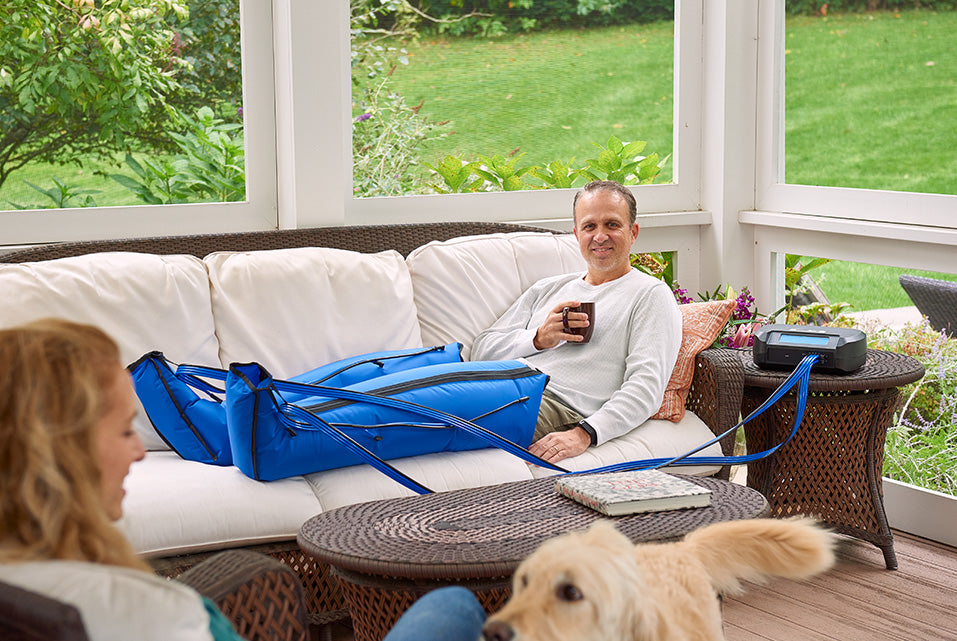
- vs. Compression Boots: Different mechanisms, best used together. Percussion first (mechanical tissue treatment), then compression boots after (venous/lymphatic clearance). See our guide: Best Compression Boots for Recovery.
- vs. Cold Therapy: Use cold therapy for acute inflammation (first 24–48 hours post-injury or surgery). Use percussion for chronic tightness, performance recovery, and trigger points. Do not use percussion over acutely inflamed tissue.
- vs. Red Light Therapy: Complementary — red light reduces cellular inflammation at the mitochondrial level while percussion addresses mechanical tissue issues. Many athletes use both in the same session. See: Red Light Therapy for Inflammation: What the Science Says.
Related Guides
Find the Right Percussion Device for You
Tell us your training schedule and goals — we'll recommend the exact device and attachments for your recovery needs. Authorized Therabody dealer with full warranty and direct support.
Call or text: (612) 360-2490 | Free shipping · 2-year warranty
Frequently Asked Questions
What are the main benefits of percussion massage therapy?
Seven research-validated benefits: 30–40% DOMS reduction, increased local blood flow, faster warm-up (raises intramuscular temperature in under 3 minutes), improved range of motion without strength loss, reduced fascial adhesion, neural gate pain relief, and accelerated post-workout recovery. Effects are immediate and cumulative with consistent use.
How long should a percussion massage therapy session last?
Recovery: 1–2 minutes per muscle group, 15–20 minutes total. Pre-workout: 30–60 seconds per muscle group, under 10 minutes. Pain relief: 2–3 minutes on affected area, up to 3× daily. Keep the device moving — never hold stationary on one spot for more than 20–30 seconds.
Is percussion therapy better than foam rolling?
For most purposes, yes. A 2024 Sports Medicine review found percussion produced greater range of motion improvement (12% vs 7%) and faster pain reduction (28% vs 18%) with significantly less user effort. Percussion is also more precise and effective for muscle groups where foam rolling is awkward (hamstrings, glutes, upper back).
What's the difference between Theragun Pro Plus G6 and Prime Plus?
Pro Plus G6: 16mm amplitude, 90-lb stall force, rotating arm, biometric sensors (HRV/HR), 6 attachments, 150-min battery — professional/clinical grade. Prime Plus: 12mm amplitude, 40-lb stall force, fixed arm, 4 attachments, 120-min battery — excellent everyday athletic recovery at half the price. Both use the same Therabody app and 5-speed range.
Can percussion therapy help with chronic pain?
Yes — clinically effective for myofascial pain, trigger points, tension headaches, and soft tissue overuse injuries. Neural gate control provides immediate pain relief; mechanical trigger point disruption addresses root causes. Avoid use over inflamed joints, acute injuries, fractures, or directly on the spine. Consult a healthcare provider for inflammatory conditions.
How often should you use a percussion massage gun?
Daily use is safe for most adults. Most athletes use it twice daily — short pre-workout activation (5–10 min) and a longer post-workout recovery session (15–20 min). Two minutes per muscle group is optimal; more is not better. Consistent daily use produces better long-term results than sporadic intensive sessions.
Is percussive therapy safe for everyone?
Safe for most healthy adults when used correctly. Avoid over: acute injuries or fractures, inflamed joints, varicose veins, skin irritation, directly on the spine. People with blood clotting disorders, osteoporosis, or nerve damage should consult a healthcare provider first. Always start on the lowest speed setting.
About the Author: Justin Webster
Founder & CEO, Your Health Sanctuary | Authorized Therabody Dealer
Justin Webster founded Your Health Sanctuary to bring professional-grade recovery equipment directly to athletes, patients, and practitioners. As an authorized Therabody dealer, Justin and his team support Theragun owners from selection through setup and ongoing use — with real expertise that comes from selling these devices daily. Questions about which Theragun is right for you? Call directly: (612) 360-2490 or visit yourhealthsanctuary.com.