

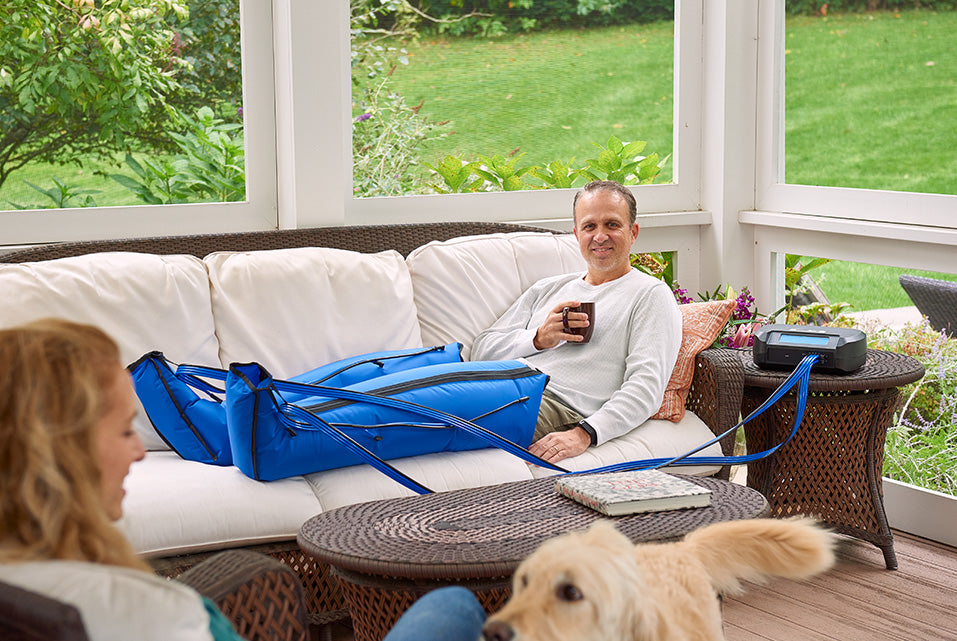
Best Compression Boots for Athletes: Performance Recovery Guide 2026
Everything you need to choose, use, and get maximum results from compression boots — from a team that sells them every day.
The best compression boots for recovery in 2026 are the Normatec 3 Full Body System (professional-grade, $899) for serious athletes and the Rapid Reboot REGEN Complete ($1,395) for clinical and post-surgical use. Both use sequential pneumatic compression to flush metabolic waste, reduce inflammation, and restore muscle performance 24–48 hours faster than passive rest. Scroll down for our full comparison, use-case breakdowns, and buying guide.
If you're serious about recovery — whether you're a competitive athlete, a weekend warrior dealing with chronic soreness, or recovering from surgery — compression boots are one of the most evidence-backed recovery tools available. Used by NFL teams, Olympic athletes, and physical therapy clinics worldwide, they've become the gold standard for post-training and post-surgical muscle recovery.
But with prices ranging from $200 to $1,400+, features that vary wildly between brands, and marketing claims that don't always match clinical reality, choosing the right pair of compression boots for recovery is harder than it looks. This guide cuts through the noise.
We've sold compression boots to hundreds of customers — athletes, PTs, chiropractors, and post-surgical patients. Here's exactly what we know works, what doesn't, and which system is right for your situation.
What Are Compression Boots and How Do They Work?
Compression boots (also called pneumatic compression devices or recovery boots) are inflatable sleeves worn over the legs that use air pressure to compress and release the limbs in a sequential pattern. The pressure starts at the foot and travels progressively upward toward the hip — mimicking the natural pumping action of your muscles during movement.
This sequential compression mechanism works through two primary physiological pathways:
- Enhanced venous return: The directional pressure pushes deoxygenated blood and metabolic waste (lactate, creatine kinase, prostaglandins) out of fatigued muscles and back toward the heart, speeding up the clearance of compounds that cause soreness and stiffness.
- Lymphatic drainage: The lymphatic system — which lacks its own pump and relies on muscle movement — is directly stimulated by the compression cycle, accelerating the removal of inflammatory byproducts and excess interstitial fluid (swelling).
The result: muscles that have been chemically "cleaned" return to baseline function significantly faster than muscles left to recover passively. Research consistently shows 30–40% reductions in DOMS and performance restoration 24 hours earlier than rest alone.
A 2023 meta-analysis published in the Journal of Sports Science & Medicine analyzed 18 randomized controlled trials on pneumatic compression and found: average DOMS reduction of 32%, 28% faster restoration of peak power output, and 41% reduction in perceived fatigue at 24-hour post-exercise versus passive recovery. The effect was strongest in athletes performing repeated-sprint or high-load resistance training.
Who Should Use Compression Boots for Recovery?
Compression boots are not just for elite athletes. The range of people who benefit spans far wider than most buyers expect:
Athletes and Active Adults
Any athlete training more than 4 days per week stands to benefit significantly. The faster metabolic clearance allows you to train harder in subsequent sessions without accumulated fatigue. Endurance athletes (runners, cyclists, triathletes), strength athletes (CrossFit, powerlifting), and team sport athletes (soccer, basketball, football) all use compression boots as a core tool in their recovery stack.
Post-Surgical Recovery Patients
Compression therapy is a standard clinical protocol following orthopedic surgeries including ACL reconstruction, knee replacement, hip replacement, and ankle surgery. The anti-inflammatory effect reduces post-operative swelling, and the enhanced circulation supports tissue healing. If you're recovering from surgery, look for a medical-grade device with clinical-level pressure ranges and FDA clearance — the Bio Compression SC-4004-DL is specifically designed for this use case.
Lymphedema and Circulatory Conditions
Medical-grade pneumatic compression is a first-line clinical treatment for lymphedema, chronic venous insufficiency, and post-mastectomy swelling. Devices like the Bio Compression SC-2008-DL are purpose-built for clinical lymphedema management with calibrated pressure and multi-chamber control.
People Who Sit or Stand All Day
Prolonged sitting or standing reduces venous return and causes blood to pool in the lower legs. A 20-minute compression session at the end of the workday dramatically improves circulation, reduces swelling, and eliminates the heavy-leg feeling common after desk jobs, retail work, or long flights.
The Best Compression Boots for Recovery in 2026
After hands-on experience selling and supporting these systems, here are the top options at each tier:
#1 — Normatec 3 Full Body System Editor's Pick
Best for: Serious athletes, high-volume training, complete leg + hip recovery
The Normatec 3 Full Body System is the gold standard compression boot for athletic recovery. Built by Hyperice — the official recovery partner of the NFL, NBA, MLB, and US Olympic teams — the Normatec 3 uses patented Sequential Pulse Technology with seven overlapping zones and biomimetic hold phases that replicate the natural pump of your leg muscles.
What makes it different: the hold phase. Most competing boots simply inflate and deflate in a simple cycle. Normatec 3 holds pressure in completed zones while advancing distally — this mimics actual muscle contraction and produces significantly more effective venous return than simple inflation cycles.
- 7 overlapping pressure zones per limb
- Pressure range: 20–100 mmHg (adjustable per zone)
- Full body system includes leg sleeves + hip attachment for complete lower-body coverage
- Bluetooth app control (Hyperice App) with pre-set recovery programs
- Session time: 20–60 minutes, auto-shut-off
- Lightweight, portable design with carry bag included
- 2-year warranty through authorized dealers
#2 — Rapid Reboot REGEN Complete Package
Best for: Post-surgical recovery, clinical settings, full-body protocol
The Rapid Reboot REGEN Complete is the system chosen by physical therapists and orthopedic clinics across the country for post-surgical and rehabilitation use. Where Normatec 3 focuses on athletic performance recovery, the REGEN Complete is engineered for therapeutic application — with clinical-grade pressure calibration, a wider accessory ecosystem (arm sleeves, hip attachments, back wraps), and a more therapeutic compression pattern designed for patients rather than athletes.
- Sequential compression with 4-zone pattern optimized for therapeutic use
- Pressure range: 10–100 mmHg
- Complete package: leg boots + arm sleeves + hip + back attachments
- Designed for longer-duration clinical sessions (up to 60 min per limb)
- Simple interface — no app required, ideal for patients unfamiliar with technology
- Quiet motor — clinic-friendly operation
- GOAFFPRO affiliate program eligible: 10% commission for clinics referring patients
Side-by-Side Comparison
| Feature | Normatec 3 Full Body | Rapid Reboot REGEN Complete |
|---|---|---|
| Best For | Athletic performance recovery | Post-surgical / clinical rehab |
| Compression Type | Sequential Pulse (7 zones, biomimetic hold) | Sequential pneumatic (4 zones) |
| Pressure Range | 20–100 mmHg per zone | 10–100 mmHg |
| Body Coverage | Legs + hip attachment | Legs + arms + hip + back |
| App Control | Yes (Hyperice App, Bluetooth) | No — simple dial interface |
| Session Length | 20–60 min | Up to 60 min per limb |
| Portability | High (lightweight, carry bag) | Moderate (designed for clinic/home base) |
| Price | From $899 | $1,395 |
| Warranty | 2 years (authorized dealer) | 2 years |
| Ideal User | Serious athletes, CrossFit, endurance | Post-op patients, PTs, lymphedema |
If you're an athlete training 4+ days a week and want to recover faster between sessions — get the Normatec 3. The Sequential Pulse Technology is genuinely superior for metabolic clearance and the Hyperice app makes programming effortless. If you're recovering from surgery, managing lymphedema, or running a physical therapy practice — the Rapid Reboot REGEN Complete's broader accessory set and clinical-grade simplicity make it the right call.
How to Use Compression Boots for Maximum Recovery
Owning the right boots is only half the equation. Here's the protocol that produces the best results based on current research and clinical practice:
Timing
- Immediate post-workout (0–60 min): Most effective window. Metabolic waste clearance is fastest when started immediately after exercise when circulation is elevated.
- Pre-workout (30 min before): A short 15–20 minute pre-workout compression session at lower pressure (30–40 mmHg) can increase blood flow and reduce muscle stiffness as a warm-up protocol.
- Evening recovery: A 30-minute session before bed accelerates overnight repair processes. Particularly effective after long travel or a heavy training day.
Pressure Settings
- 20–40 mmHg: Gentle. Best for maintenance, warm-up, and sensitive users (post-op, elderly, lymphedema).
- 40–70 mmHg: Moderate. Most effective for athletic DOMS recovery. Start here if you're new to compression boots.
- 70–100 mmHg: Intense. Reserve for high-level athletes with acute fatigue or significant post-event soreness. Not recommended for first-time users.
Session Length
20–30 minutes per session is optimal for most users. Research shows diminishing returns beyond 45 minutes, and longer sessions don't improve outcomes. For post-surgical use, follow your therapist's prescribed protocol — clinical sessions can run 45–60 minutes at lower pressures.
Hydration
Drink 16–20 oz of water before your session. Enhanced lymphatic drainage accelerates fluid movement, and adequate hydration ensures the process works efficiently. Avoid sessions immediately after alcohol consumption.
Compression Boots vs. Compression Sleeves: Which Is Better for Recovery?
This is one of the most common questions we get. The short answer: they work through the same mechanism, but compression boots are dramatically more effective for recovery because of active pneumatic pressure versus static compression.
Compression sleeves (like calf sleeves or recovery tights) provide passive, constant pressure. They're excellent for use during activity — reducing vibration, supporting venous return while you're moving, and providing mild recovery benefit when worn for several hours after exercise.
Compression boots provide active, dynamic, sequential pressure. The pumping action is what drives lymphatic drainage and venous return far beyond what any static garment can achieve. For serious recovery — reducing DOMS, restoring strength, clearing inflammation — boots win by a wide margin.
The ideal protocol combines both: wear compression sleeves during and immediately after training, then use boots for a dedicated recovery session. See our detailed breakdown: Recovery Boots vs. Compression Sleeves: The Complete Comparison.
Complete Buying Guide: What to Look for in Compression Boots
1. Compression Zones
More zones = more precise, effective compression. Budget systems use 2–4 zones with large chambers that can't replicate the muscle pumping action accurately. Medical and professional-grade systems like Normatec use 7 overlapping zones per limb that closely mimic natural venous return. For serious recovery use, don't go below 4 zones per limb.
2. Pressure Range and Adjustability
Look for systems that go to at least 80 mmHg and allow zone-by-zone adjustment. Single-pressure systems are less effective because different parts of the leg require different pressures — the calf can tolerate more than the ankle, and athletes need more pressure than post-op patients. The Normatec 3's per-zone adjustment is a key differentiator here.
3. Coverage — Legs Only vs. Full Body
Leg boots alone address the most common recovery need. But if you're a runner dealing with hip flexor tightness, a swimmer with shoulder fatigue, or a post-surgical patient with upper extremity swelling — a full-body system with hip, arm, and back attachments delivers dramatically more utility. The Rapid Reboot REGEN Complete's all-in-one package is exceptional value for multi-area recovery needs.
4. Portability
If you travel for competition, train at different locations, or want to use your boots at the office or hotel room, battery-powered portability matters. The Normatec 3 is relatively compact and travels well. If you're primarily using boots at home or in a clinic, portability is less critical than precision and pressure range.
5. App Integration
App-connected systems allow you to pre-program recovery sessions, track usage patterns, and follow guided protocols from the manufacturer. Hyperice's app is the best in class — it includes pre-built programs for post-run, post-lift, pre-game, and travel recovery. If you prefer simplicity or are buying for elderly patients, a non-app system like Rapid Reboot is easier to use consistently.
6. Buy from an Authorized Dealer
This is critical and often overlooked. Third-party marketplace sellers frequently offer grey-market or refurbished units that void the manufacturer warranty. Buying from an authorized dealer like Your Health Sanctuary ensures you receive a genuine product, full manufacturer warranty (2 years on Normatec and Rapid Reboot), and access to support from someone who actually knows these products. We'll help you choose the right system and troubleshoot any issues — not just process your order.
Related Guides on This Topic
Compression Boots for Specific Recovery Scenarios
After a Marathon or Long Run
Marathon recovery puts extreme demands on the lymphatic and circulatory system — high-volume eccentric loading creates significant micro-damage and inflammatory response in the quads, hamstrings, and calves. The optimal post-marathon protocol: 45–60 minutes of compression at 60–80 mmHg within 2 hours of finishing, repeated the following morning. Normatec 3's full-leg + hip coverage addresses the complete kinetic chain affected by running. See also: Best Recovery Equipment for Runners: Complete 2026 Guide.
After ACL Surgery or Knee Replacement
Post-surgical compression is prescribed by most orthopedic surgeons specifically to reduce swelling, prevent DVT, and support tissue healing. The key difference from athletic use: pressure must be lower (20–40 mmHg), sessions shorter initially (15–20 min), and the device must have FDA clearance for medical use. Always follow your surgeon's protocol. See: ACL Surgery Recovery Equipment: Complete 2026 Guide.
CrossFit and High-Intensity Training
High-frequency training (5–6 days/week) creates cumulative fatigue that quickly degrades performance. Compression boots enable faster between-session recovery, directly supporting training volume and quality. Athletes at competitive CrossFit gyms commonly own personal compression boots and use them post-WOD 4–5 times per week. At this use frequency, the Normatec 3 pays for itself within 3–4 months compared to paying for compression therapy sessions at a PT clinic.
Ready to Find Your Compression Boots?
Our team sells and supports every system in this guide. Call us to talk through your specific recovery goals — we'll tell you exactly which system fits your needs and budget.
Questions? Call or text: (612) 360-2490 | Free shipping on all orders
Frequently Asked Questions About Compression Boots
How long should you wear compression boots for recovery?
Most protocols recommend 20–30 minutes per session, 1–2 times daily. Athletes with heavy training loads may use compression boots up to 60 minutes. Sessions under 15 minutes are too short to complete a full compression cycle. Always follow the manufacturer's guidelines and consult a healthcare provider if you have circulatory conditions.
Do compression boots actually work for muscle recovery?
Yes — multiple peer-reviewed studies confirm compression boots accelerate muscle recovery. A 2023 Journal of Sports Science meta-analysis found pneumatic compression reduces delayed onset muscle soreness (DOMS) by 30–40% and restores performance markers 24 hours faster than passive rest. The mechanism is enhanced lymphatic drainage and improved venous return, which flushes metabolic waste from fatigued muscles more efficiently.
What is the difference between Normatec and Rapid Reboot compression boots?
Normatec uses patented Sequential Pulse Technology with biomimetic hold phases — best for athletes needing deep, zone-specific compression. Rapid Reboot REGEN uses a therapeutic sequential compression pattern with a broader accessory ecosystem — best for clinical and post-surgical use. Both are effective; the choice depends on your primary use case and whether you need app-guided athletic programming (Normatec) or simple clinical operation (Rapid Reboot).
Can you use compression boots every day?
Yes, daily use is safe for most healthy adults. Professional athletes and clinical patients frequently use compression boots daily or twice daily. If you experience discomfort, numbness, or skin changes, reduce frequency and consult a healthcare provider. People with DVT, peripheral artery disease, or active infections should get medical clearance before use.
Are compression boots covered by HSA or FSA?
HSA and FSA funds can typically be used for medical-grade compression devices when prescribed by a physician for a qualifying condition (lymphedema, post-surgical recovery, DVT prevention). Contact your insurance provider and request a Letter of Medical Necessity from your doctor. Your Health Sanctuary can provide product documentation to support claims — call us at (612) 360-2490.
How do compression boots compare to ice baths for recovery?
They work through different mechanisms and are best used together. Ice baths reduce inflammation via vasoconstriction — best immediately post-workout. Compression boots enhance lymphatic drainage — best 30–120 minutes post-workout. Research shows combining both protocols reduces DOMS better than either alone. For daily convenience, compression boots win — no prep, no cold water, usable while sitting.
What should I look for when buying compression boots?
Key factors: (1) Compression zones — 7-zone systems are most effective. (2) Pressure range — medical-grade systems go up to 100 mmHg. (3) Coverage — do you need hip/arm/back attachments? (4) App control for athletic programs vs. simple dial for clinical use. (5) Portability if you travel. (6) Authorized dealer warranty (2 years). Call us at (612) 360-2490 and we'll match you to the right system in under 5 minutes.
About the Author: Justin Webster
Founder & CEO, Your Health Sanctuary | Authorized Dealer for 9 Recovery Brands
Justin Webster founded Your Health Sanctuary to make professional-grade recovery equipment accessible to athletes, patients, and clinicians outside of hospital and elite sports settings. As an authorized dealer for Hyperice (Normatec), Rapid Reboot, Theragun, Game Ready, BIOFLEX, HealthLight, and more, Justin and his team have helped hundreds of customers select, set up, and get maximum results from recovery equipment. All editorial content on this site is based on direct sales experience, manufacturer training, and verified clinical research — not paid sponsorships. Questions? Call us directly: (612) 360-2490 or visit yourhealthsanctuary.com.

:%20Your%20Health%20Sanctuary%20no%20longer%20carries%20Normatec,%20Hyperice%20or%20Rapid%20Reboot.%20We've%20kept%20this%20article%20for%20comparison.%20For%20your%20recovery%20setup%20we%20now%20recommend%20Bio%20Compression%20...)