

Low Frequency Sound Therapy Benefits: What 2026 Evidence Shows
If you have ever felt your chest buzz at a concert when the bass dropped, you have already experienced the raw mechanism behind low frequency sound therapy benefits. The difference is that therapeutic sound is tuned, dosed, and aimed at your nervous system rather than your eardrums. Across more than 20 years of helping build niche medical clinics, I watched modalities like this move from the fringe to the treatment room, and the better ones earned their place with data. A 2025 mixed-methods pilot published in Healthcare (Basel) found vibroacoustic low-frequency methods feasible and well tolerated, with measurable signals for attention and emotional self-regulation. That is not a cure-all claim, and I will not pretend it is one. But for pain, sleep, and stress, the research is now solid enough that it deserves an honest look from anyone serious about recovery.
What Low Frequency Sound Therapy Actually Is
Low frequency sound therapy, often called vibroacoustic therapy (VAT), delivers pure sine-wave vibrations in the range of roughly 20 to 120 Hz directly into the body through transducers built into a chair, recliner, bed, or mat. You do not just hear the sound, you feel it as a gentle, rhythmic pressure traveling through muscle and connective tissue. The most studied frequency is 40 Hz, which became the reference dose after decades of clinical work originating with Norwegian educator Olav Skille and later refined at Wilfrid Laurier University.
The proposed mechanisms are concrete, not mystical. Low-frequency mechanical vibration stimulates Pacinian corpuscles, the pressure-sensing receptors in your skin and deep tissue, which can dampen pain signaling through the gate control mechanism. There is also evidence that rhythmic 40 Hz stimulation interacts with gamma-band brain activity associated with sensory processing. A 2024 study in the journal Sensors measured reductions in physiological and cognitive stress markers after vibroacoustic stimulation, reinforcing that the effects show up in the body, not just in how people say they feel.
The Benefits Backed by Research
Pain and Fibromyalgia
The strongest signal is in chronic pain. In a frequently cited clinical study by Naghdi, Ahonen and colleagues, fibromyalgia patients treated with 40 Hz low-frequency sound stimulation twice weekly for five weeks reported significant drops in pain and disability, and a portion were able to reduce or discontinue pain medication. A 2019 double-blind randomized controlled trial in PLOS One on rhythmic sensory stimulation found preliminary evidence that gamma-frequency vibroacoustic input eased fibromyalgia symptoms and associated comorbidities. For musculoskeletal pain more broadly, a 2023 systematic review and meta-analysis in the Journal of Orthopaedic Surgery and Research concluded that vibration-based therapy improved both pain and function in chronic low back pain.
Sleep and Stress
Patients consistently describe the 40 Hz session as a parasympathetic reset, the same shift your body makes before deep sleep. That subjective report lines up with the measured stress-marker reductions noted above. This is the benefit I see translate most reliably to real life: people who struggle to downshift at night often fall asleep faster after an evening session.
Mobility and Neurological Conditions
Work out of Wilfrid Laurier University reported that long-term 40 Hz physioacoustic vibration improved motor symptoms in people with Parkinson's disease. That evidence is earlier-stage and should be framed as promising rather than proven, but it shows why the modality keeps drawing clinical interest.
How Low Frequency Sound Therapy Compares
Sound therapy is one tool among several recovery modalities. Here is how it stacks up against options many of my customers already own.
| Feature | Low Frequency Sound Therapy | Red Light / Photobiomodulation |
|---|---|---|
| Primary mechanism | Mechanical vibration, gate control, parasympathetic shift | Light energy absorbed by mitochondria (ATP production) |
| What you feel | Gentle full-body vibration and deep relaxation | Mild warmth on the skin surface |
| Best for | Widespread pain, stress, sleep, muscle tension | Localized joint pain, skin, circulation, inflammation |
| Typical session | 20 to 45 minutes | 10 to 20 minutes per area |
| Clinical evidence | Promising, growing, smaller trials | Extensive, including FDA-cleared devices |
| Treatment area | Whole body at once | Targeted zones |
| HSA/FSA eligible | Varies by device | Yes, FDA-cleared units |
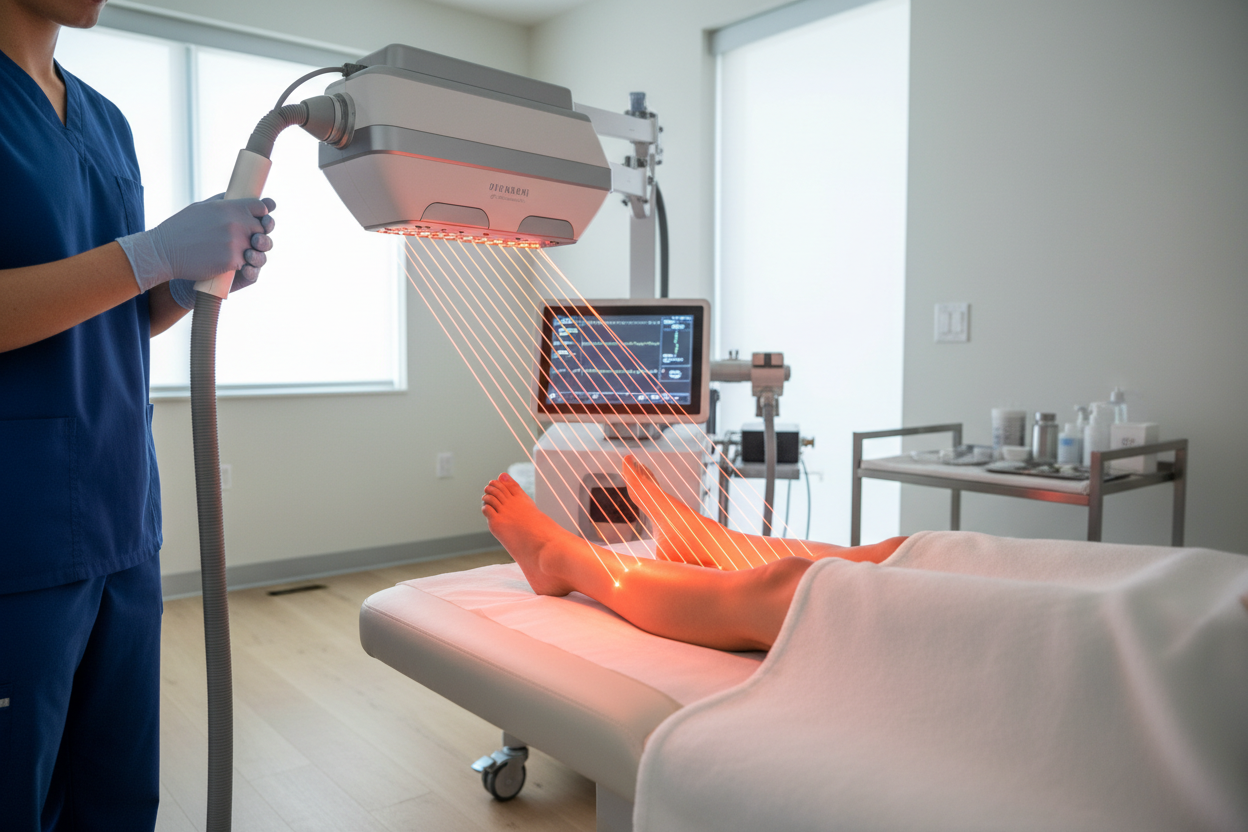
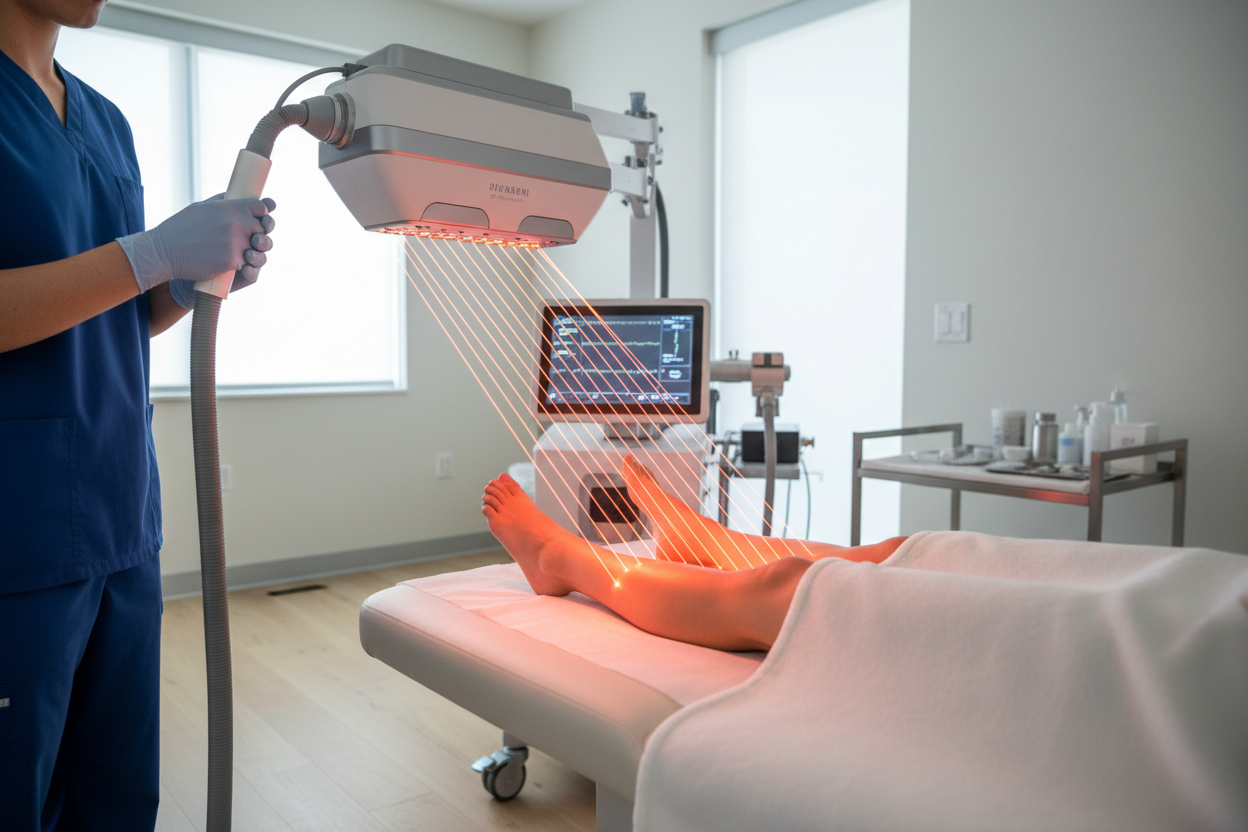
The honest takeaway: these are complementary, not competing. Many people pair an evening sound-therapy session for whole-body downshift with targeted red light therapy from a system like the HealthLight Ultimate Body Kit for a specific joint or wound site. If you want the deeper science on the light side of that pairing, our guide to vibroacoustic therapy for pain and our full Body Balance System recliner review break down the clinical details.
How to Use It at Home
Clinic-grade vibroacoustic equipment used to mean a trip to a specialized practice. Today, the same 40 Hz harmonic-frequency technology is built into home recovery furniture like the Harmonic Frequency Recliner, so you can run a session in your living room. A practical starting protocol most people tolerate well: 20 to 30 minutes, three to four times per week, in a quiet room, ideally in the evening. Keep the intensity comfortable, never jarring. As with any recovery tool, consistency over weeks matters far more than the length of any single session, which mirrors exactly what the five-week fibromyalgia protocols above demonstrated.
Can You Use HSA or FSA Funds for Recovery Devices?
Many of the FDA-cleared recovery devices we carry qualify as HSA/FSA-eligible expenses, which can mean roughly 30 to 40 percent in effective savings using pre-tax dollars. The HealthLight Ultimate Body Kit and the TheraFace Mask FDA Cleared are both FDA-cleared red light devices that pair well with a sound-therapy routine and are strong HSA/FSA candidates. Eligibility depends on your specific plan and often a Letter of Medical Necessity from your provider, so check with your plan administrator before purchasing.
Frequently Asked Questions
What are the main low frequency sound therapy benefits?
The best-supported benefits are reduced chronic pain (especially fibromyalgia and low back pain), lower physiological stress, improved relaxation and sleep onset, and reduced muscle tension. Early research also points to mobility benefits in neurological conditions like Parkinson's disease.
What frequency is used in low frequency sound therapy?
The most researched and widely used frequency is 40 Hz, delivered as a pure sine wave. Therapeutic protocols typically work in the 20 to 120 Hz range, but 40 Hz is the clinical reference dose used in most published studies.
How long before low frequency sound therapy works?
Many people notice immediate relaxation after a single session, but the pain and sleep benefits in clinical studies built over a multi-week course, commonly twice weekly for about five weeks. Treat it as a consistency-based recovery habit, not a one-time fix.
Is low frequency sound therapy safe?
For most healthy adults it is low-risk and non-invasive. People with pacemakers, recent surgery, active blood clots, pregnancy, or seizure disorders should consult their physician first, since deep mechanical vibration is not appropriate for every condition.
Is a harmonic frequency recliner HSA or FSA eligible?
It depends on the device and your plan. FDA-cleared therapeutic devices are more likely to qualify, often with a Letter of Medical Necessity. The HealthLight Ultimate Body Kit and TheraFace Mask are FDA-cleared and strong HSA/FSA candidates. Always confirm eligibility with your plan administrator before buying.
The Bottom Line
Low frequency sound therapy is no longer a wellness curiosity. As of 2026, the evidence base, while still smaller than something like red light therapy, supports real benefits for pain, stress, and sleep, with a clean safety profile for most people. It is exactly the kind of tool I started Your Health Sanctuary to make accessible: clinician-trusted, results-driven, and finally affordable enough for the home.
Build Your Home Recovery Setup
If you are ready to combine the whole-body downshift of sound therapy with targeted, clinically backed light therapy, two of our most popular FDA-cleared tools are the HealthLight Ultimate Body Kit and the TheraFace Mask FDA Cleared. Both may be purchasable with your HSA or FSA account, since many of our medical-grade recovery devices qualify as HSA/FSA-eligible expenses. Check with your plan administrator. Chronic pain rarely waits, and neither should your recovery plan. Questions about which setup fits your situation? Call our team at (612) 360-2490 and we will walk you through it.
:%20The%20TheraFace%20Mask%20has%20been%20discontinued%20at%20Your%20Health%20Sanctuary.%20For%20a%20current%20option,%20see%20our%20red%20light%20therapy,%20or%20talk%20to%20Justin's%20team%20at%20(612)%20360-2490.If%20you%20have%20ev...)