
Is Red Light Therapy HSA FSA Eligible? 2026 Answer
Is red light therapy HSA FSA eligible? In most cases, yes — but only when the device is purchased to treat a diagnosed medical condition and you have the right documentation. Medical-grade red light therapy devices are FDA-cleared Class II medical devices, and in 2026 the IRS continues to treat qualifying medical devices as reimbursable medical expenses under IRS Publication 502. The savings are real: with the IRS setting the 2026 HSA contribution limit at $4,400 for individuals and $8,750 for families (IRS Revenue Procedure 2025-19), a buyer in the 24% bracket can save roughly 30–40% on a qualifying device by paying with pre-tax dollars. I'm Justin Webster, owner of Your Health Sanctuary. Over a career helping build more than 20 niche medical clinics alongside dozens of MDs, I watched patients overpay for tools their own tax-advantaged accounts could have covered. This guide fixes that, in plain language.
The Short Answer: Yes, With a Letter of Medical Necessity
Red light therapy (also called photobiomodulation) is not on the IRS's automatic "always eligible" list the way bandages or crutches are. Instead, it falls into the category of expenses that are eligible when prescribed for a specific medical condition. The bridge between "general wellness gadget" and "qualified medical expense" is a single document: a Letter of Medical Necessity (LMN) from a licensed provider.
If a clinician documents that a red light device is being used to treat a diagnosed condition — chronic joint pain, arthritis, diabetic neuropathy, a slow-healing wound, or a dermatologic condition — then the device generally qualifies for HSA or FSA reimbursement. Without that documentation, the IRS treats it as a personal wellness purchase, which is not eligible.
What Makes Red Light Therapy HSA/FSA Eligible?
Three things have to line up. Miss any one and reimbursement can be denied or clawed back during an audit.
1. A qualifying medical purpose
The device must address the diagnosis, treatment, mitigation, or prevention of a disease — the exact language IRS Publication 502 uses. "I want to feel better" does not meet that bar. "Managing chronic plantar fasciitis pain" does.
2. A Letter of Medical Necessity
This short letter names your condition, states that the device is recommended to treat it, and is signed by a licensed provider. It is your audit-proof paper trail. Keep it with your receipt for at least three years.
3. A medical-grade, FDA-cleared device
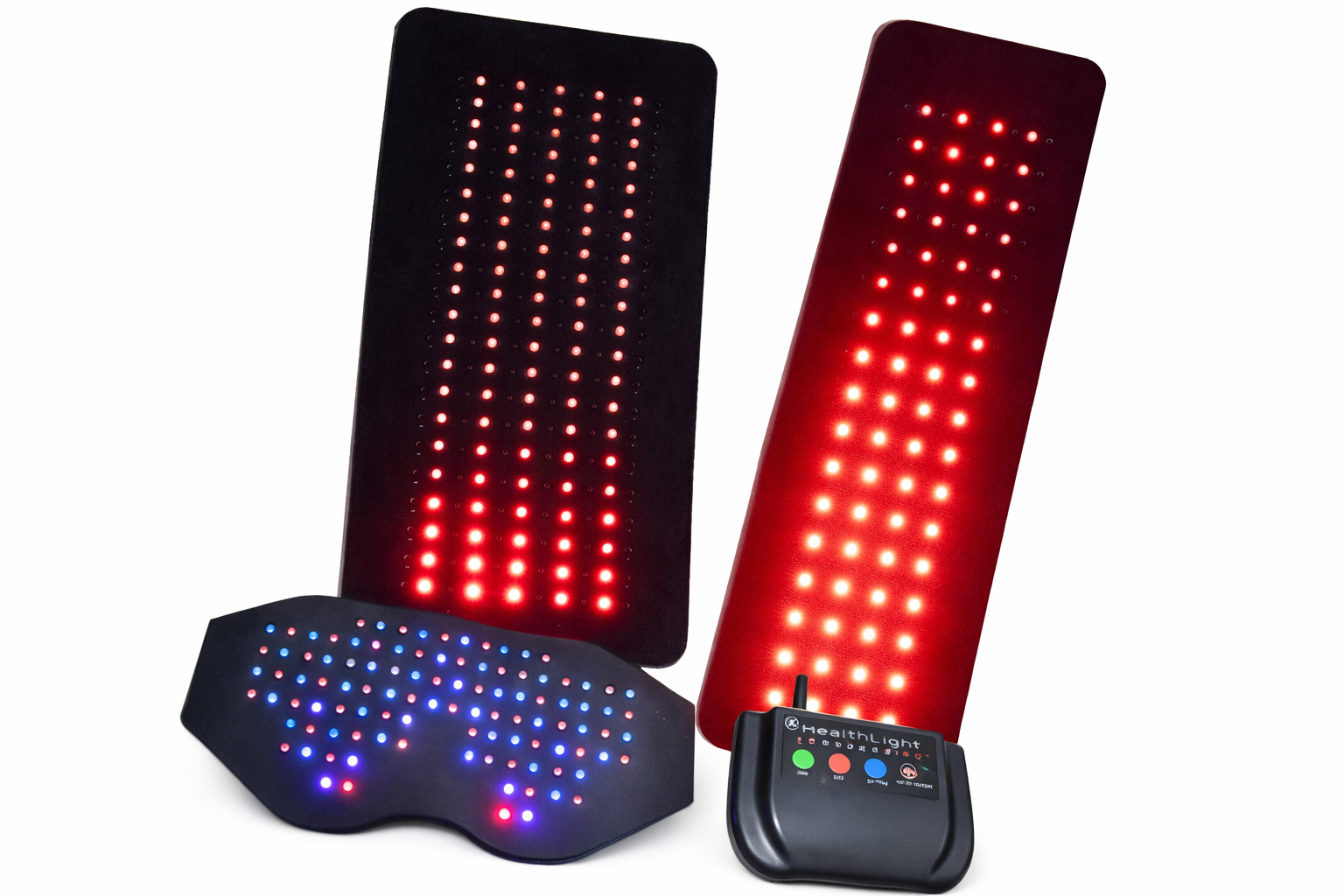
Consumer beauty gadgets are a harder sell to an HSA administrator than an FDA-cleared medical device with documented irradiance and treatment parameters. Choosing a medical-grade system like the HealthLight Ultimate Body Kit removes most of the ambiguity, because the clearance and clinical specs are already on record.
HSA/FSA Eligibility at a Glance
Eligibility is really about how you buy, not just what you buy. Here is how common scenarios compare.
| Factor | Eligible Path | Not Eligible |
|---|---|---|
| Device type | FDA-cleared medical-grade red light system | Unregulated novelty/beauty gadget |
| Documentation | Letter of Medical Necessity on file | No prescription or LMN |
| Stated purpose | Treating a diagnosed condition (pain, arthritis, neuropathy, wounds) | General wellness or "anti-aging" |
| Payment method | HSA/FSA card or reimbursement with receipt + LMN | Personal card with no records kept |
| Recordkeeping | Receipt + LMN kept 3+ years | No receipt retained |
| Typical tax savings | ~30–40% (pre-tax dollars) | $0 (post-tax purchase) |
Can You Use HSA or FSA Funds for a Red Light Device at Your Health Sanctuary?
Yes. Your Health Sanctuary partners with Truemed to make this simple at checkout. When you select the Truemed option, you complete a short health survey. A licensed provider reviews it and, if appropriate, issues your Letter of Medical Necessity — usually within minutes. You then pay with your HSA or FSA card, or pay normally and submit the LMN and receipt to your administrator for reimbursement.
For most buyers in the 22–32% federal bracket, that translates to 30–40% in effective savings on a qualifying device. On a four-figure medical-grade system, that is often several hundred dollars back — money the IRS already lets you set aside tax-free. Both the HealthLight Ultimate Body Kit and the more targeted TheraFace Mask FDA Cleared are eligible through this path.
HSA vs. FSA: Which One Should You Use?
Both work for a qualifying red light device, but the mechanics differ. An FSA is "use it or lose it" within the plan year, so it is ideal if you have a balance you need to spend before year-end. An HSA rolls over indefinitely and is yours for life, so it is better for a planned, larger purchase. If you have both, many people spend down the FSA first and preserve the HSA for future flexibility. If you want help mapping this to your situation, our team can walk you through it — we do it every day.
Frequently Asked Questions
Is red light therapy HSA FSA eligible without a prescription?
Generally no. Red light therapy is a "dual-purpose" expense, so a Letter of Medical Necessity or prescription tied to a diagnosed condition is what makes it eligible. Truemed generates that documentation at checkout.
What conditions qualify red light therapy for HSA/FSA reimbursement?
Commonly documented conditions include chronic pain, arthritis, diabetic and peripheral neuropathy, slow-healing wounds, and certain dermatologic conditions. Your provider determines what applies to you.
How much can I actually save?
Because you are paying with pre-tax dollars, savings roughly equal your marginal tax rate — typically 30–40% once federal and state taxes are combined. On a medical-grade system, that is frequently several hundred dollars.
What records do I need to keep?
Keep your itemized receipt and the Letter of Medical Necessity for at least three years in case your plan administrator or the IRS requests substantiation.
Are consumer red light masks and panels eligible too?
FDA-cleared devices with documented medical use are the safest choice. An unregulated novelty gadget marketed purely for beauty is far more likely to be denied, even with an LMN.
Does the 2026 HSA limit increase change anything?
It helps. With the 2026 limit at $4,400 (individual) and $8,750 (family) per IRS Revenue Procedure 2025-19, more buyers have pre-tax room to cover a qualifying device this year.
About the Author
Justin Webster, owner of Your Health Sanctuary, has spent his career helping build over 20 niche medical clinics across the USA and has written 2 books on the subject. Working alongside dozens of MDs, he saw firsthand what actually works for weight loss, recovery, and anti-aging, and what doesn't. He even published a weight loss book centered on Apple Cider Vinegar. When he realized it wasn't at the level it needed to be, he had the humility to pull it entirely and start over. That willingness to hold himself to a higher standard, even when it costs him, is what drives how Your Health Sanctuary operates. Life and business experience in the medical field led to everything this store is built on. Justin has personally lost 55 lbs. and made anti-aging his obsession. He didn't start this store to push products. He started it because he knew the tools clinicians trust, the ones that deliver real results, were out of reach for most people. Your Health Sanctuary exists to change that.
Ready to Use Your HSA or FSA?
Don't leave tax-free money on the table — if you have an FSA balance, it may expire at year-end. The medical-grade HealthLight Ultimate Body Kit delivers full-body, clinic-level red light therapy at home, while the TheraFace Mask FDA Cleared targets the face and skin. Both qualify for HSA/FSA payment through Truemed at checkout. Questions about eligibility or which system fits your condition? Call our team at (612) 360-2490 and we'll help you confirm your HSA/FSA savings before you buy.
Related reading: HealthLight Ultimate Body Kit Review, HealthLight vs Joovv, and Medical-Grade vs Consumer Red Light Therapy.
This article is educational and not tax or medical advice. HSA/FSA eligibility depends on your individual circumstances and plan rules — confirm with your plan administrator and a licensed provider.