
Vibroacoustic Therapy for Pain: What the Research Shows
Vibroacoustic Therapy for Pain: What the Research Shows
If you've been living with chronic pain — fibromyalgia, low back pain, or persistent musculoskeletal tension — you know how fast the conventional options run out. Medication manages it; it rarely solves it. I've spent years working alongside MDs in over 20 niche medical clinics, and one thing I learned early is that the tools clinicians actually use for stubborn pain rarely make it into mainstream conversations. Vibroacoustic therapy for pain is one of them. A 2025 systematic review and meta-analysis published in Nature Scientific Reports confirmed that whole-body vibration training produces statistically significant improvements in fibromyalgia impact scores across seven randomized controlled trials — controlled research, not wellness marketing. This guide breaks down exactly what vibroacoustic therapy is, what the clinical evidence shows, and whether a Harmonic Frequency recliner could be the missing piece in your pain management plan.
What Is Vibroacoustic Therapy?
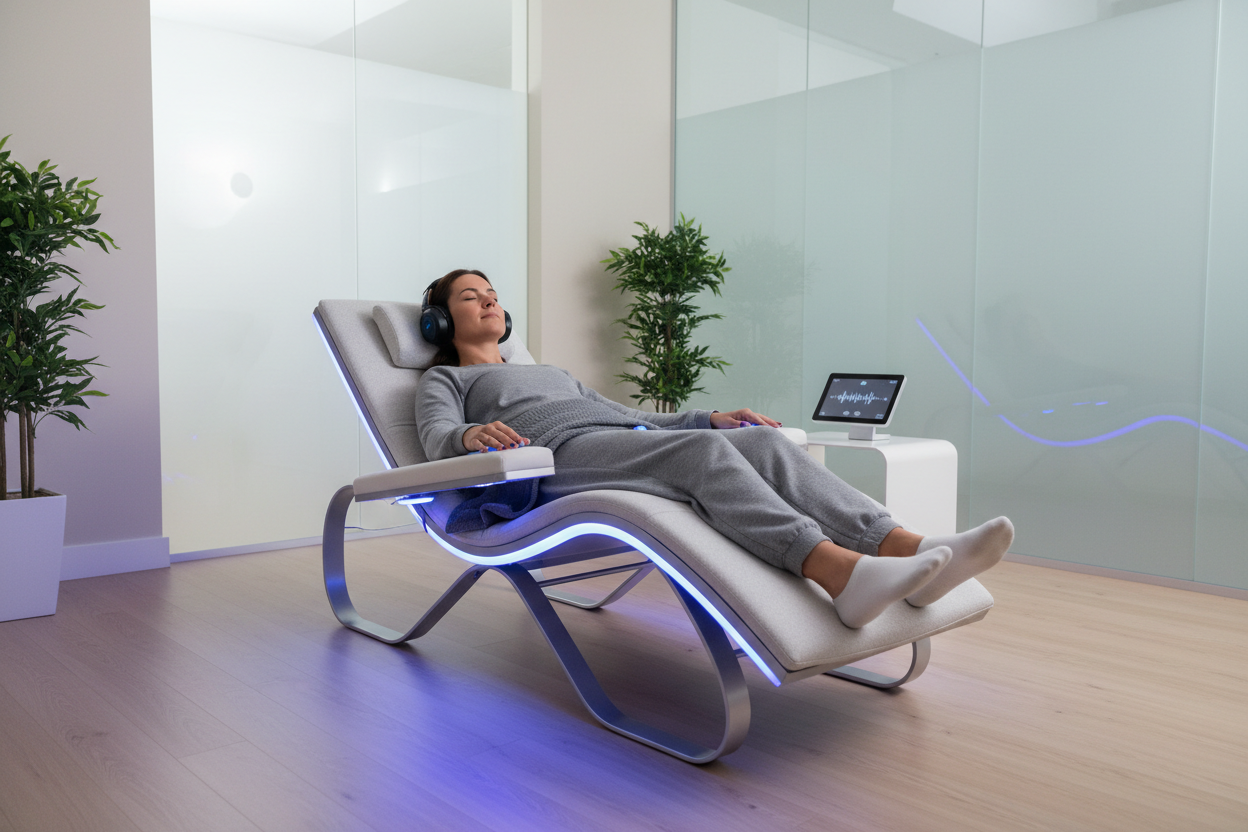
Vibroacoustic therapy (VAT) delivers low-frequency sound vibrations — typically between 20 and 100 Hz — directly into the body through a specially designed chair, mat, or bed. Transducers embedded in the surface convert audio into physical vibration, and those vibrations penetrate deep into soft tissue, the autonomic nervous system, and bone.
That's fundamentally different from how a massage chair works. A massage chair applies surface pressure through mechanical rollers or airbags. VAT operates at a neurological and cellular level. The low frequencies entrain the nervous system, slow the stress response, reduce muscle guarding, and increase microcirculation in the tissues where pain signals originate.
Think about why certain low-frequency sounds — bass rumble, deep drones — produce a physical sensation even when you're not touching the source. That phenomenon, when delivered as precise calibrated vibration through a purpose-built chair, is the mechanism behind VAT. Sessions typically run 20–45 minutes, often with frequencies layered or cycled throughout rather than held at a single tone.
What the Clinical Evidence Actually Shows
VAT has a growing body of peer-reviewed research, particularly for chronic musculoskeletal and fibromyalgia pain. Here's what controlled studies found:
81% improvement in Fibromyalgia Impact Questionnaire scores in a clinical study using twice-weekly 40 Hz vibroacoustic sessions for five weeks. The same cohort showed 90% improvement in sleep quality and a 49% reduction in the Pain Disability Index. Many participants reduced their reliance on pain medication, according to early clinical research on vibroacoustic therapy cited in a 2022 PMC scoping review.
65% improvement on the Pain-Visual Analogue Scale in a pilot study on chronic back pain using indirect vibroacoustic therapy over 12 weeks, with mean pain reductions of 2.9 for shoulder pain and 3.7 for low back pain at week 12.
Source: Treatment of Chronic Back Pain Using Indirect VAT, ResearchGate / Academia.edu
A 2022 scoping review published in PMC (PMC8984038) analyzed 20 peer-reviewed VAT studies and found consistent benefit for chronic pain conditions including fibromyalgia, non-specific musculoskeletal pain, low back pain, and Ehlers-Danlos syndrome. The 2025 meta-analysis in Nature Scientific Reports examining whole-body vibration specifically for fibromyalgia confirmed statistically significant FIQ improvement across seven RCTs — the highest tier of clinical evidence short of a pharmaceutical trial.
Why 40 Hz? It matches the gamma oscillation frequency associated with pain perception modulation in the central nervous system. Researchers believe the entrainment of neural oscillations at this frequency interrupts the central sensitization loop that amplifies chronic pain signals — which is precisely why patients with fibromyalgia, a central sensitization disorder, respond so strongly.
Which Types of Pain Respond Best
Based on current evidence, vibroacoustic therapy for pain shows the strongest clinical signal in these categories:
- Fibromyalgia — The most-studied VAT application and the strongest evidence base. Central sensitization and widespread musculoskeletal pain both respond directly to VAT's neurological entrainment mechanism.
- Chronic low back pain — Multiple pilot studies show meaningful VAS reductions over 8–12 week protocols. The reclining position used in most clinical studies allows full spinal exposure to therapeutic vibration.
- Stress-amplified musculoskeletal pain — Chronic stress raises cortisol and muscle tension, which amplifies pain perception. VAT directly targets the nervous system response driving this cycle.
- Post-exercise recovery soreness — VAT accelerates lymphatic drainage and reduces cortisol, shortening the inflammatory recovery window for active individuals.
Where evidence is thinner: acute injury pain (VAT is not a replacement for medical care in acute settings), neuropathic pain from structural causes like disc herniation, and joint pain with significant active inflammation. VAT may be used adjunctively in these cases but shouldn't be the primary intervention.
Harmonic Frequency Chairs: Clinical VAT Without the Clinical Price Tag
Clinical VAT systems cost $5,000–$30,000 and live in therapy offices. Body Balance System changed that with their Harmonic Frequency recliner line — chairs built around the same transducer-based vibration delivery used in clinical research, at a price most people can actually consider for home use.
What separates the Body Balance System furniture from generic vibration cushions flooding the wellness market comes down to two things: transducer quality and frequency range. Low-cost vibration pads produce surface-level, single-frequency buzz. Harmonic Frequency chairs use embedded transducers that transmit calibrated low-frequency sound throughout the full chair frame — reaching your spine, pelvis, and thorax, the same anatomical targets used in controlled VAT protocols.
Harmonic Freq. Comfort Chair ($1,195)
The Harmonic Freq. Comfort Chair is the entry point to the Body Balance System line. Five finish options, full transducer integration, and a footprint that works in any room. For someone using this daily for chronic pain management, it's a fraction of the cost of ongoing therapy sessions and works on your schedule — not an appointment calendar.
Harmonic Freq. Microfiber Recliner ($1,895)
The Harmonic Freq. Microfiber Recliner adds a reclining position that puts the body in near-horizontal alignment — the same posture used in most clinical VAT research protocols. Horizontal alignment reduces compensatory muscle activation and allows vibration to reach the full length of the spine, which may improve the therapeutic response for low back pain specifically.
Both chairs connect to standard audio sources, so you can play therapeutic frequency tracks exactly as clinical sessions are structured. For more detail on the science behind harmonic frequency as a therapeutic modality, see: Harmonic Frequency Therapy Benefits: What the Science Actually Says in 2026. For whole-body vibration research specifically: Whole Body Vibration Therapy Benefits: What the Research Actually Shows in 2026.
Who Should Consider VAT (and Who Should Be Cautious)
Strong candidates: Adults with fibromyalgia, chronic low back or neck pain, high allostatic stress loads, sleep disruption linked to pain, and anyone who has plateaued on conventional physical therapy or medication management. If you've tried everything and are still in pain, the mechanism here is genuinely different from anything you've likely already done.
Use with caution — consult your physician first: Pregnant women, people with cardiac pacemakers or electronic implants, individuals with recent fractures or orthopedic hardware, and anyone with active deep vein thrombosis. Low-frequency vibration is very well tolerated by most adults, but these populations warrant medical clearance before starting.
Frequently Asked Questions
What is vibroacoustic therapy for pain?
Vibroacoustic therapy delivers low-frequency sound vibrations (20–100 Hz) through a chair or mat into the body. The vibrations stimulate deep tissue, regulate the nervous system, and improve circulation — reducing the perception of chronic pain without medication. It's used for fibromyalgia, chronic back pain, and musculoskeletal pain.
What frequency is best for pain relief?
40 Hz is the most clinically studied frequency for pain. A fibromyalgia study using 40 Hz sessions twice weekly for five weeks produced an 81% improvement in FIQ scores. Effective protocols often cycle through multiple frequencies in a session rather than holding a single tone throughout.
Is vibroacoustic therapy scientifically proven?
The evidence is credible and growing. A 2025 meta-analysis in Nature Scientific Reports confirmed statistically significant improvements in fibromyalgia impact scores across seven RCTs of whole-body vibration. A 2022 scoping review of 20 VAT studies found consistent benefit for chronic musculoskeletal pain. This is not fringe science — it is an emerging, evidence-backed modality.
How is this different from a regular massage chair?
A massage chair uses mechanical rollers and air compression on the surface of the body. Vibroacoustic therapy uses transducers to deliver calibrated sound-as-vibration deep into tissue — including the spine, organs, and nervous system. The mechanism is neurological and cellular, not surface mechanical pressure. That's why it reaches pain that surface massage doesn't.
Can I do vibroacoustic therapy at home every day?
Yes — and daily use is consistent with clinical protocols. Most studies used 20–45 minute sessions two to seven times per week. Body Balance System's Harmonic Frequency chairs are built for daily home use. Connect to any audio source to run therapeutic frequency audio, exactly as clinical sessions are structured.
Explore Body Balance System Harmonic Frequency Chairs
If chronic pain is part of your daily life, the research on vibroacoustic therapy is worth taking seriously. Your Health Sanctuary carries the full Body Balance System line — engineered for daily home use, backed by the same science used in clinical VAT protocols.
Harmonic Freq. Comfort Chair — $1,195 Harmonic Freq. Microfiber Recliner — $1,895Questions? Call us: (612) 360-2490 — we're here to help you find the right solution for your specific situation.