
Laser Therapy for Pain Management: The Complete 2026 Guide
Laser therapy for pain management has moved from the fringes of alternative medicine to a mainstream clinical tool — and for good reason. Backed by hundreds of peer-reviewed studies and recommended by the American College of Physicians as a first-line non-pharmacological treatment, low-level laser therapy (LLLT) and Class IV therapeutic laser offer something most pain treatments cannot: measurable, drug-free relief that works at the cellular level. In a 2025 randomized controlled trial, 72.4% of patients treated with therapeutic laser achieved significant pain reduction, compared to just 27.6% in the placebo group.
Whether you're a physical therapist equipping a clinic, an athlete recovering from injury, or a chronic pain patient tired of medication cycles, this guide covers everything you need to know: how laser therapy works, which conditions respond best, how LLLT compares to Class IV laser, what the research actually says, and which professional systems deliver results. By the end, you'll know exactly whether laser therapy is right for your situation — and what to look for when investing in equipment.
Last Updated: April 2026 | Reading time: ~18 minutes
1. What Is Laser Therapy for Pain?
Laser therapy for pain management — also called photobiomodulation therapy (PBMT), low-level laser therapy (LLLT), or cold laser therapy — is the application of specific wavelengths of light energy to injured or painful tissue to stimulate healing and reduce pain. Unlike surgical lasers, which cut or ablate tissue, therapeutic lasers operate at power levels that penetrate skin without heat damage, driving cellular repair from the inside out.
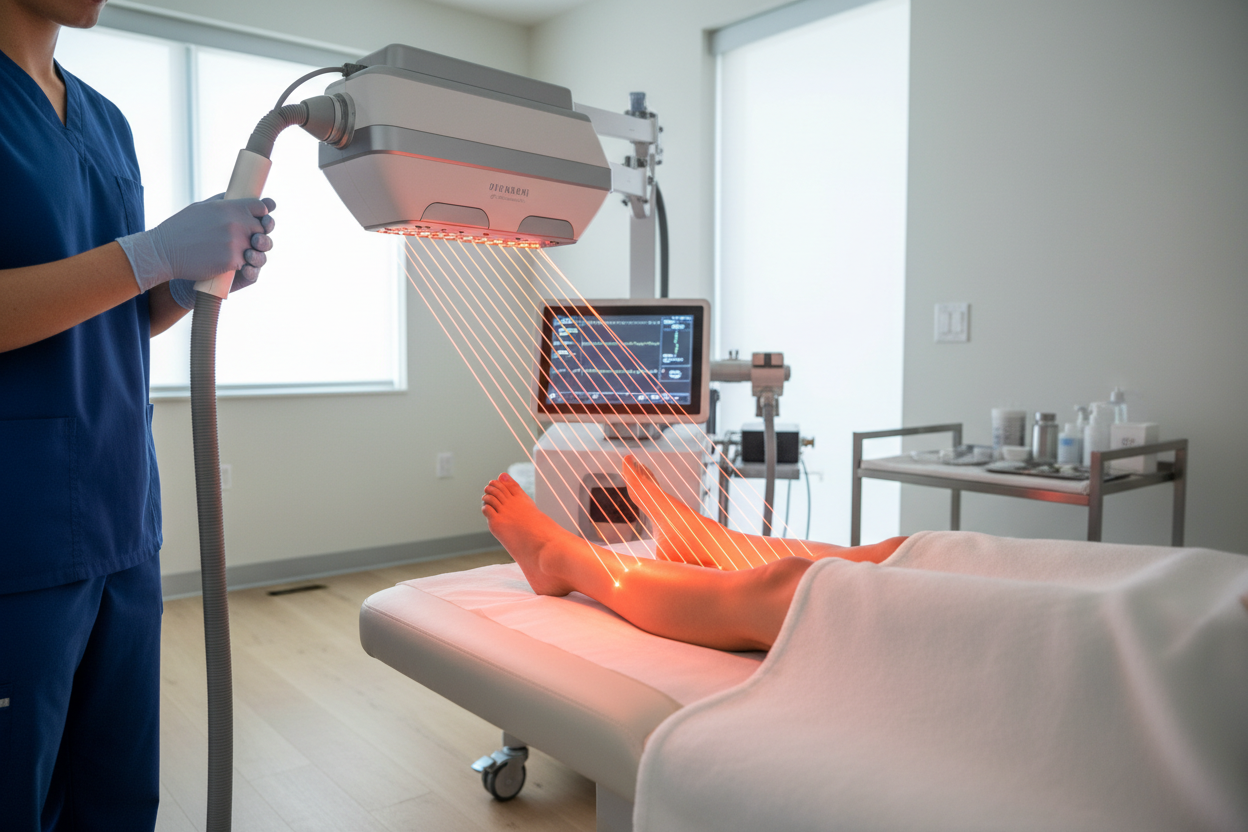
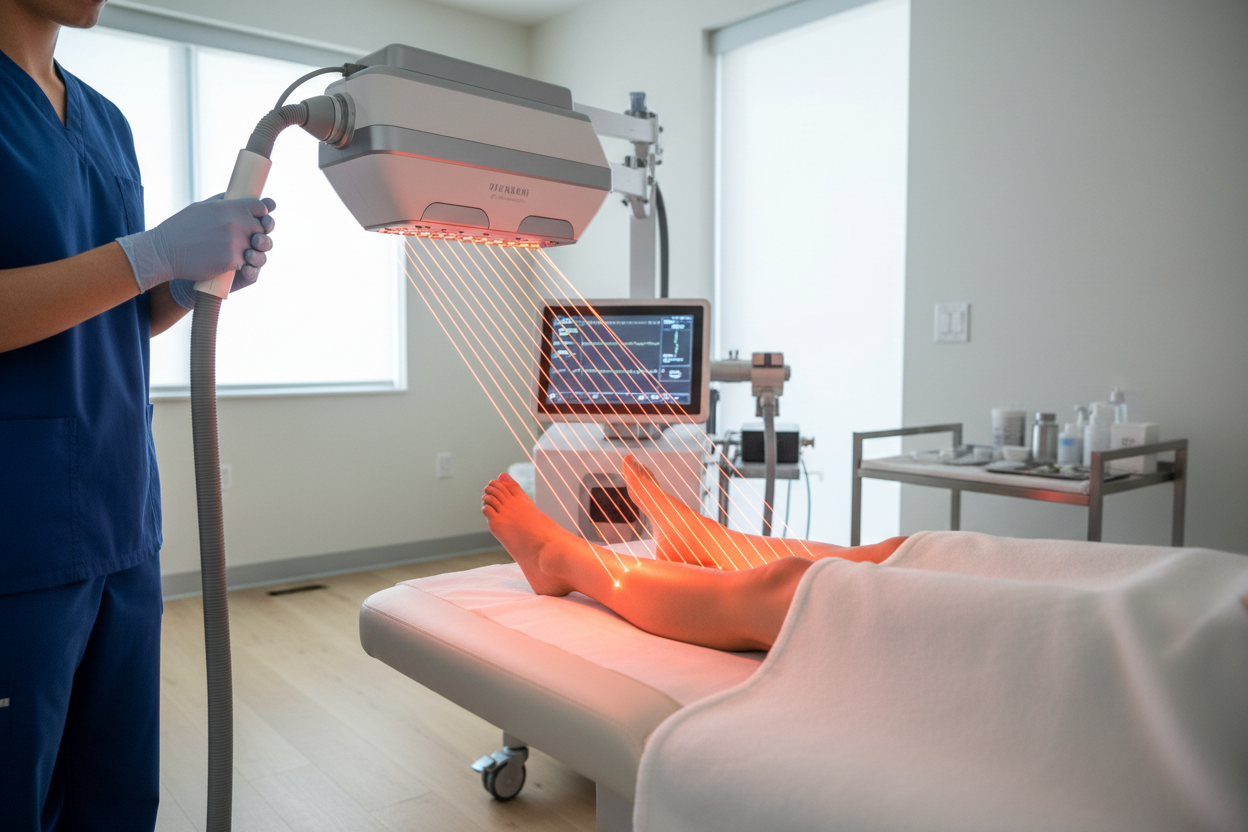
The therapy is delivered through a handheld probe or multi-diode array applied directly to the skin over the target area. Treatment sessions typically last 5–20 minutes, are painless, and require no recovery time. Patients often notice reduced pain within 1–3 sessions, with cumulative benefits building over a full treatment course.
Therapeutic lasers are classified by output power:
- Low-Level (Cold) Laser — Class 3B: Output under 500 mW. Non-thermal, deeper tissue penetration at lower fluence. Used in home devices and some clinical systems. The BIOFLEX system operates in this class.
- Class IV High-Power Laser: Output above 500 mW (often 5–30+ watts). Higher fluence, faster treatment times, more heat generation. Standard in many chiropractic and sports medicine clinics.
Both classes use photobiomodulation as their mechanism — the distinction is primarily power density and treatment protocol. We cover this in detail in our guide to Laser Therapy vs. Red Light Therapy.
2. How Laser Therapy Works: The Science of Photobiomodulation
The mechanism behind laser therapy is photobiomodulation — the interaction between photons of specific wavelengths (typically 630–1,000 nm, in the red and near-infrared spectrum) and chromophores in the mitochondria of cells.
Step-by-Step Mechanism
Step 1 — Photon Absorption: Laser light penetrates skin and subcutaneous tissue, reaching target cells. The primary chromophore is cytochrome c oxidase (CCO), the terminal enzyme in the mitochondrial electron transport chain.
Step 2 — Mitochondrial Activation: Absorbed photons increase the activity of CCO, which in turn drives increased production of ATP (adenosine triphosphate) — the cell's primary energy currency. More ATP means cells have more energy to repair, regenerate, and function optimally.
Step 3 — Downstream Cellular Effects: The ATP boost triggers a cascade of beneficial effects: reactive oxygen species (ROS) signaling that activates healing pathways, nitric oxide (NO) release that improves local circulation, and modulation of inflammatory cytokines (reducing pro-inflammatory markers like IL-1β, IL-6, and TNF-α).
Step 4 — Pain Signal Modulation: Laser therapy reduces pain through multiple pathways: decreasing substance P (a pain neurotransmitter), increasing endorphin release, and — at appropriate doses — altering the membrane potential of dorsal root ganglion neurons that transmit pain signals to the brain.
Step 5 — Tissue Healing: Increased ATP and circulation accelerate fibroblast proliferation (essential for collagen and tissue repair), reduce edema, and stimulate angiogenesis (formation of new blood vessels) in chronic wound or injury sites.
The net result: faster healing, reduced inflammation, and measurable pain relief — without pharmaceuticals, needles, or downtime.
Wavelength Matters
Not all wavelengths are equally effective. The "therapeutic window" for laser therapy spans approximately 630–1,100 nm. Within this range:
- 630–700 nm (red light): Best for superficial tissue, skin healing, wound care. Penetrates up to ~1 cm.
- 780–860 nm (near-infrared): Deep tissue penetration (2–5 cm). Most effective for joints, muscles, tendons, and nerves.
- 904–980 nm (pulsed/superpulsed NIR): Peak depth penetration. Used in systems like BIOFLEX for deep-joint conditions.
Professional systems designed for pain management typically combine red and near-infrared wavelengths to address both superficial and deep tissue simultaneously.
3. Conditions Laser Therapy Treats Best
Laser therapy has strong clinical evidence across a wide range of musculoskeletal and neurological pain conditions. Here are the conditions with the best research support:
Musculoskeletal Pain
- Knee osteoarthritis: Meta-analyses show up to 14.23 mm VAS (pain scale) improvement with LLLT. Studies show significant improvements in both pain and functional outcomes.
- Cervical pain (neck pain): LLLT reduced VAS scores by up to 19.86 mm in cervical disease. Acute neck pain patients treated with laser were significantly more likely to improve than placebo groups.
- Spinal conditions (back pain): VAS improvements of 13.7 mm in spinal disease. A 2025 systematic review confirmed LLLT as a valuable adjunct for chronic low back pain.
- Tendinopathies (Achilles, patellar, rotator cuff, tennis elbow): Strong evidence for pain reduction and improved tissue regeneration in chronic tendon conditions.
- Plantar fasciitis: Multiple RCTs demonstrate superior outcomes to sham treatment and comparable results to cortisone injection without the side effects.
- Fibromyalgia: Emerging evidence for reduced tender point sensitivity and improved sleep quality.
Post-Surgical Recovery
Laser therapy is increasingly used post-ACL reconstruction, rotator cuff repair, and joint replacement to accelerate tissue healing, reduce swelling, and shorten return-to-activity timelines. For a deep dive into post-surgical applications, see our complete guide to LLLT for pain.
Neuropathic Pain
Peripheral neuropathy, post-herpetic neuralgia, carpal tunnel syndrome, and chemotherapy-induced neuropathy all show positive responses to laser therapy, with evidence suggesting laser modulates dorsal root ganglion activity and reduces aberrant pain signaling. See our full clinical guide on photobiomodulation for neuropathy treatment.
Inflammatory Conditions
- Rheumatoid arthritis (adjunct therapy)
- Bursitis
- Trigger points and myofascial pain syndrome
- Post-traumatic edema
Sports Injuries
Grade I–II muscle strains, ligament sprains, stress fractures, and contusions all respond to laser therapy with faster resolution and reduced pain compared to rest-only approaches.
4. LLLT vs. Class IV Laser: What's the Difference?
The debate between LLLT (Class 3B, ≤500 mW) and Class IV high-power laser (500 mW to 30+ watts) is one of the most common questions in laser therapy. Here's how they compare:
| Factor | LLLT / Class 3B (e.g., BIOFLEX) | Class IV High-Power (e.g., K-Laser) |
|---|---|---|
| Output Power | Up to 500 mW | 500 mW – 30+ Watts |
| Treatment Time | 10–30 minutes per site | 3–10 minutes per site |
| Thermal Effect | Non-thermal (no heat) | Mild-moderate thermal sensation |
| Tissue Penetration | Deep (superpulsed NIR) | Deep (high fluence) |
| Clinical Applications | Chronic pain, neuropathy, deep joints, post-surgical | Acute sports injuries, large muscle groups, fast turnover clinics |
| FDA Clearance | 510(k) cleared (BIOFLEX) | 510(k) cleared (varies by model) |
| Safety Profile | Excellent; no thermal risk | Good; eye protection required; thermal risk if misused |
| Evidence Base | 700+ peer-reviewed studies (BIOFLEX protocol) | Strong; most evidence in sports medicine |
| Ideal For | Multi-condition clinics, chronic conditions, elderly patients | Sports/rehab clinics with high patient volume |
| Investment Level | $15,000 – $30,000+ | $15,000 – $40,000+ |
Key insight: The choice between LLLT and Class IV laser should be driven by your patient population and clinical goals — not power output alone. BIOFLEX's superpulsed diode approach delivers high peak power in bursts with zero thermal build-up, making it uniquely effective for sensitive patient populations including post-surgical, elderly, and neuropathic cases. For a head-to-head comparison with K-Laser specifically, see our BIOFLEX vs. K-Laser deep dive.
5. What the Research Says: Clinical Evidence in 2026
Laser therapy is one of the best-studied non-pharmacological pain interventions in physical medicine. Here is a summary of the most relevant evidence as of 2026:
Key Research Findings
72.4% significant pain reduction (2025 RCT): In a randomized controlled trial published in 2025, 72.4% of patients receiving therapeutic laser achieved clinically significant pain reduction, compared to 27.6% in the sham laser group. This represents one of the highest responder rates reported in the laser therapy literature.
Knee osteoarthritis meta-analysis: A 2025 narrative review in the Journal of Orthopedic Science synthesized data from multiple RCTs and found LLLT produced up to 14.23 mm improvement on the visual analogue scale (VAS) for knee OA — a clinically meaningful reduction that approaches the threshold for "substantial improvement" in most pain outcome frameworks.
Cervical and spinal pain: Analysis of pooled RCT data found VAS improvements of 19.86 mm in cervical disease and 13.7 mm in spinal conditions with LLLT. Patients with acute neck pain were significantly more likely to improve compared to placebo groups.
American College of Physicians Guidelines (updated 2025): The ACP recommends non-pharmacological interventions including LLLT as a first-line approach for both acute and chronic low back pain — positioning laser therapy as a guideline-supported, evidence-based treatment, not an experimental option.
CDC non-pharmacological guidance: The US Centers for Disease Control and Prevention's updated opioid prescribing guidelines emphasize that clinicians should recommend non-pharmacological modalities, including LLLT, as part of an integrated pain management strategy — a direct response to the ongoing opioid crisis.
BIOFLEX-specific evidence: BIOFLEX Laser Therapy systems have an independent evidence base of 700+ peer-reviewed publications supporting the specific low-level, superpulsed protocol. Multiple double-blind studies show statistically significant improvements in pain, range of motion, and function across musculoskeletal and neurological conditions.
What the Research Does NOT Show
Intellectual honesty matters for E-E-A-T. The laser therapy literature has limitations:
- Effect sizes vary considerably across studies — patient selection, dosing protocols, and equipment quality drive outcomes significantly.
- Long-term (12+ month) follow-up data remains limited for most conditions.
- The "optimal dose" (fluence, wavelength, frequency) is still being refined — a well-programmed clinical protocol outperforms generic application.
- Laser therapy works best as part of a comprehensive rehab plan — not as a standalone cure for degenerative conditions.
Bottom line: the evidence supports laser therapy as an effective, safe adjunct to pain management — but results depend heavily on the equipment quality and the clinical protocol used.
6. Professional Laser Therapy Systems Compared
If you're evaluating laser therapy equipment for a clinic or serious home use, here's how the leading professional systems compare on the most important clinical and practical factors:
| System | Class | Wavelengths | Max Power | Best For | FDA Cleared | Evidence Base |
|---|---|---|---|---|---|---|
| BIOFLEX MultiPort System | 3B (LLLT) | 660 nm + 830–840 nm | 200 mW per diode | Chronic pain, neuropathy, post-surgical, deep joints | ✅ Yes | 700+ studies |
| K-Laser Cube 4 | IV | 660/800/905/970 nm | 15 W | Sports injuries, large muscle groups | ✅ Yes | Strong (quad-wavelength) |
| Erchonia FX 635 | 3B | 635 nm | 7.5 mW/diode | Neuropathic pain, post-surgical | ✅ Yes (specific indications) | RCT-backed |
| Summus Medical Class IV | IV | 810/980/1064 nm | 30 W | Chiropractic, sports medicine | ✅ Yes | Moderate |
| HealthLight (Red/NIR) | LED/LLLT | 630–880 nm | Multi-pad array | Red light therapy, surface and joint pain | ✅ FDA Cleared | Strong (photobiomodulation) |
Note: This comparison focuses on clinical laser therapy systems. Home LED devices (including some red light therapy panels) are related but distinct — see our guide comparing laser therapy and red light therapy for a full breakdown of the difference.
7. What to Expect from Laser Therapy Treatments
A Typical Treatment Session
A standard laser therapy session for pain management follows this general sequence:
- Assessment: The clinician identifies the target tissue — the primary lesion and surrounding reactive tissue. For chronic low back pain, this might be L4–L5 discs, facet joints, and paraspinal muscles.
- Probe/Pad Placement: The laser probe or flexible diode array is placed directly on the skin over the target site. No special preparation is needed.
- Treatment Delivery: The system delivers the programmed dose. With LLLT, you feel nothing — no heat, no sensation. Some Class IV patients feel mild warmth. Treatment times: 5–30 minutes depending on area and system.
- Immediate Effects: Many patients notice reduced stiffness and pain within 30–60 minutes post-treatment as endorphin release and nitric oxide vasodilation take effect.
- Post-Treatment: No restrictions. Patients can resume normal activity immediately. Mild temporary soreness (similar to a deep tissue massage effect) may occur in the first session or two.
Treatment Protocol: How Many Sessions?
Results depend on condition chronicity:
- Acute injuries (less than 2 weeks): 4–6 sessions, often 3×/week. Many patients see significant improvement by session 3.
- Subacute injuries (2–8 weeks): 6–10 sessions, 2–3×/week.
- Chronic conditions (3+ months): 10–20 sessions recommended, 2×/week initially. Some chronic conditions (arthritis, neuropathy) benefit from ongoing maintenance sessions (1×/month).
- Post-surgical recovery: 8–15 sessions starting 48–72 hours post-op, depending on surgical type and tissue volume.
It's important to set realistic expectations: laser therapy accelerates the body's natural healing process — it doesn't override it. Degenerated cartilage cannot be fully regenerated; however, the inflammatory and pain components of arthritis respond well to laser.
8. Who Benefits Most from Laser Therapy?
Laser therapy for pain management is particularly well-suited for specific patient profiles:
Best Candidates
- Patients who cannot use NSAIDs or opioids: Elderly patients, those with GI issues or kidney concerns, or patients managing addiction recovery who need effective non-pharmacological pain control.
- Post-surgical patients: Particularly ACL reconstruction, rotator cuff repair, joint replacement, and spinal surgery — laser accelerates tissue healing and reduces post-op edema and pain.
- Chronic pain patients who've plateaued on other therapies: Physical therapy, chiropractic, and massage address mechanical dysfunction; laser therapy addresses the underlying inflammatory and cellular environment.
- Athletes seeking faster return to play: Grade I–II strains and acute sports injuries benefit enormously from early laser intervention (within 24–72 hours of injury).
- Neuropathy patients: Diabetic peripheral neuropathy, chemotherapy-induced neuropathy, and post-herpetic neuralgia all show favorable responses to superpulsed LLLT.
- Clinic owners and healthcare providers: Adding laser therapy to a chiropractic, PT, or sports medicine practice adds a high-value, high-retention service. Read our complete guide on laser therapy equipment for chiropractors for a full clinical ROI analysis.
Contraindications
Laser therapy is contraindicated or requires caution in the following situations:
- Direct irradiation over active cancerous tissue
- Treatment over the uterus in pregnant patients
- Direct eye exposure without appropriate eye protection
- Irradiation over an active implanted pacemaker or defibrillator (area-specific caution)
- Tattoos under treatment area (increased absorption; reduce dose)
- Photosensitizing medications (consult prescriber)
9. Buying Guide: Choosing a Professional Laser System for Pain Management
If you're selecting a laser therapy system — for a clinical practice or high-level personal use — here are the key evaluation criteria:
1. Wavelength Selection
Look for systems offering at least one visible red wavelength (630–680 nm) and one near-infrared wavelength (820–980 nm). Dual-wavelength or multi-wavelength systems treat both superficial and deep tissue in a single pass. Single-wavelength systems are a compromise.
2. Delivery Method
Multi-diode flexible arrays (like the BIOFLEX system) allow simultaneous treatment of a large surface area and can be shaped to fit joints (knee, shoulder, wrist). Single-probe handheld systems are faster per point but require more clinician time for multi-site conditions. For chronic pain with large coverage areas (lumbar spine, hip), pad-based systems outperform probes on efficiency.
3. FDA Clearance and Certifications
Ensure the system carries FDA 510(k) clearance for the specific indications you intend to treat. Some systems are cleared for "temporary relief of minor pain" only; others carry clearance for specific musculoskeletal conditions. BIOFLEX holds 510(k) clearance for musculoskeletal applications. This matters for insurance billing, liability, and compliance in clinical settings.
4. Software and Protocol Library
The best professional systems come with pre-programmed treatment protocols for common conditions (osteoarthritis, tendinopathy, acute inflammation, neuropathy). This reduces clinician training time and standardizes patient outcomes. BIOFLEX's software includes 200+ protocols validated against their clinical research database.
5. Evidence Base
Ask the manufacturer for peer-reviewed publications specific to their system — not just generic LLLT literature. Systems with a proprietary evidence base (BIOFLEX: 700+ studies; Erchonia: multiple FDA-cleared RCTs) demonstrate that the specific device has been tested and proven, not just that "laser therapy works in general."
6. Service, Training, and Support
Professional laser systems require clinical training for safe and effective use. Look for manufacturers who offer certified clinical training programs, hands-on onboarding, and ongoing support. For high-ticket equipment ($15,000–$30,000+), post-purchase support is as important as the device itself.
7. Total Cost of Ownership
Factor in: device purchase, probe/array replacement cycles, annual calibration service, training costs, and insurance/billing infrastructure for clinical systems. Class IV systems sometimes require higher ongoing maintenance than Class 3B LLLT devices.
Ready to Add Laser Therapy to Your Practice or Recovery Plan?
Your Health Sanctuary is an authorized dealer for the two leading professional-grade laser and light therapy systems — both FDA-cleared, both backed by clinical evidence, and both available with expert guidance from our team.
BIOFLEX MultiPort System
The gold standard in clinic-grade low-level laser therapy. 700+ peer-reviewed studies. Dual-wavelength (660 nm + 830–840 nm). Multi-diode flexible array for efficient, large-area treatment. Pre-programmed protocols for 200+ conditions. FDA 510(k) cleared. Trusted by physical therapists, chiropractors, and sports medicine clinics worldwide.
- ✅ Non-thermal — zero tissue damage risk
- ✅ Superpulsed delivery for deep tissue penetration without heat
- ✅ Flexible array adapts to any joint or body region
- ✅ 700+ clinical studies support the specific BIOFLEX protocol
View BIOFLEX MultiPort System →
HealthLight Ultimate Body Kit
For comprehensive full-body photobiomodulation — covering the entire body with medical-grade red and near-infrared light therapy pads. FDA cleared. Ideal for systemic inflammation, chronic widespread pain, and post-surgical full-body recovery. The HealthLight system bridges the gap between targeted laser therapy and whole-body photobiomodulation.
- ✅ Full body coverage in a single session
- ✅ Medical-grade LED arrays (not consumer-grade bulbs)
- ✅ FDA cleared for pain relief and circulation improvement
- ✅ Professional-quality results at home
View HealthLight Ultimate Body Kit →
Questions? Call us at (612) 360-2490 — we help clinicians and patients select the right system every day.
Frequently Asked Questions: Laser Therapy for Pain Management
Q1: Does laser therapy actually work for chronic pain?
Yes — the evidence is substantial. A 2025 randomized controlled trial found 72.4% of patients achieved significant pain reduction with therapeutic laser, compared to 27.6% in the sham group. The American College of Physicians now recommends LLLT as a first-line non-pharmacological option for chronic low back pain. For conditions like knee osteoarthritis, cervical pain, and tendinopathies, meta-analyses consistently show clinically meaningful VAS pain reductions. Results are dose-dependent and vary by condition chronicity — chronic conditions typically require 10–20 sessions for sustained benefit.
Q2: What is the difference between cold laser therapy and Class IV laser?
Cold laser (LLLT, Class 3B) operates at under 500 mW and produces no thermal effect — it works purely through photobiomodulation without heating tissue. Class IV laser operates above 500 mW (often 5–30 watts), delivers treatment faster due to higher power, and produces mild heat as a byproduct. Both use photobiomodulation as the core mechanism. Cold laser tends to be preferred for sensitive populations (elderly, post-surgical, neuropathic patients) while Class IV is common in sports medicine for fast turnaround. Neither is universally superior — the right choice depends on your clinical population.
Q3: How many laser therapy sessions are needed to see results?
Most patients notice improvement within 3–6 sessions. Acute injuries (within 2 weeks of onset) often respond within 4–6 sessions at 3×/week. Chronic conditions (3+ months) typically require 10–20 sessions at 2×/week before sustained relief is achieved. Neuropathic conditions and deep-joint osteoarthritis may require longer courses and periodic maintenance sessions. Unlike pharmaceutical approaches, laser therapy effects are cumulative — later sessions often produce more significant gains than the first few.
Q4: Is laser therapy safe? Are there side effects?
Laser therapy has an excellent safety profile and is well-tolerated across all age groups, including elderly patients. Side effects are rare and typically mild — some patients experience temporary soreness or mild skin redness at the treatment site in early sessions, similar to a deep tissue massage response. Serious adverse effects are extremely uncommon when the equipment is used by trained clinicians following FDA-cleared protocols. Key contraindications include direct irradiation over active cancerous tissue, over the uterus in pregnancy, and direct eye exposure without appropriate protection.
Q5: How does laser therapy compare to other pain management options?
Compared to NSAIDs: laser therapy produces comparable pain relief for musculoskeletal conditions without GI, cardiovascular, or renal side effects — making it the preferred option for long-term pain management. Compared to corticosteroid injections: laser therapy produces slower onset but more durable results without the tissue-weakening effects of repeated steroid exposure. Compared to opioids: laser therapy is non-addictive, non-sedating, and addressing the source of pain (inflammation, tissue damage) rather than masking the signal. As part of an integrated plan with physical therapy and appropriate exercise, laser therapy consistently outperforms single-modality approaches for chronic musculoskeletal pain.
Q6: Can laser therapy be used alongside other recovery treatments?
Yes — and it's often most effective as part of a multimodal protocol. Laser therapy pairs well with compression therapy, cold therapy, percussion massage, and targeted exercise. In clinical settings, laser is commonly combined with manual therapy and therapeutic exercise for conditions like rotator cuff tendinopathy and lumbar disc disease. The anti-inflammatory and healing effects of laser therapy enhance the benefits of physical rehabilitation by optimizing the cellular environment for repair and reducing pain barriers to therapeutic exercise.
Q7: Which laser therapy system is best for a physical therapy or chiropractic clinic?
For clinics treating a diverse patient population including chronic pain, neuropathy, post-surgical, and orthopedic cases, the BIOFLEX MultiPort System is consistently the top choice among clinical professionals. Its non-thermal approach, multi-condition protocol library, and 700+ evidence base make it appropriate for the full spectrum of pain conditions. For high-volume sports medicine or chiropractic practices focusing primarily on acute injuries and fast treatment times, a Class IV system may also merit consideration. We detail the full comparison in our laser therapy equipment for chiropractors guide.
The Bottom Line
Laser therapy for pain management is no longer an experimental modality — it's a guideline-supported, evidence-backed clinical tool with decades of peer-reviewed research behind it. Whether you're a clinician looking to differentiate your practice, an athlete seeking faster recovery, or a chronic pain patient searching for drug-free relief, the data strongly supports exploring laser therapy as part of your pain management strategy.
The keys to success are threefold: the right system (properly dosed, FDA-cleared, protocol-driven), the right conditions (musculoskeletal pain, neuropathy, post-surgical healing respond best), and the right expectations (laser accelerates and optimizes healing — it works with the body's systems, not around them). When those three factors align, the results can be dramatic.
At Your Health Sanctuary, we've been helping clinicians and patients navigate the laser therapy landscape since our founding. If you have questions about which system fits your needs, call us directly at (612) 360-2490 — we're here to help you make an informed decision.