

Medical Compression Therapy: The Complete 2026 Guide
Last Updated: April 21, 2026 | Author: Justin Webster, Founder of Your Health Sanctuary
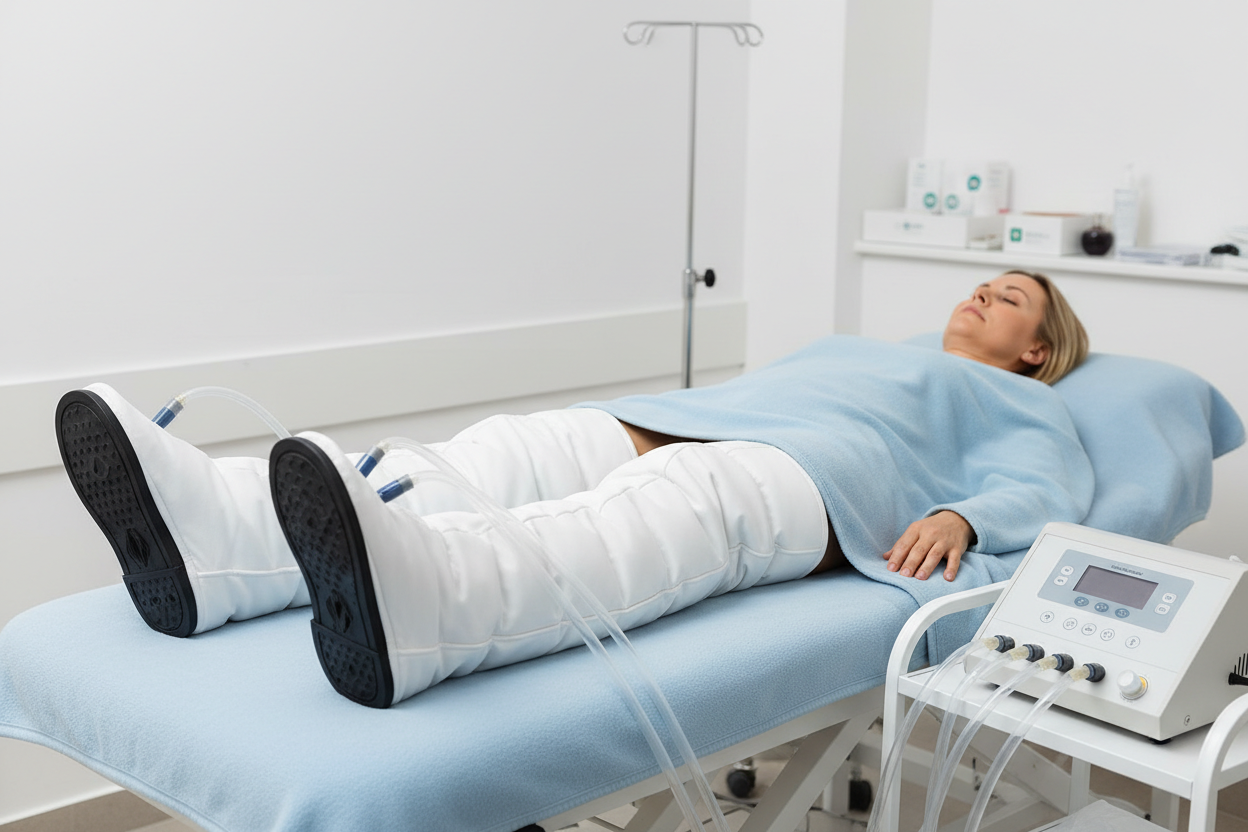
Medical compression therapy is one of the most clinically proven, cost-effective treatments for vascular and lymphatic conditions. Whether you are managing chronic venous insufficiency, recovering from deep vein thrombosis, treating lymphedema, or preventing post-surgical swelling, the right medical compression therapy device makes a measurable difference in outcomes. This complete 2026 guide explains how medical compression therapy works, what FDA-cleared options exist for home use, how to choose the right pump and garment combination, and which conditions respond best to which protocols.
Unlike consumer recovery boots designed for athletic recovery, medical compression therapy systems are FDA-cleared Class II medical devices used by physicians, vascular surgeons, lymphedema therapists, and home patients prescribed long-term compression. The science behind medical compression therapy is well established — the 2025 Cochrane Review on intermittent pneumatic compression confirmed it as the gold-standard non-surgical treatment for chronic venous disease and lymphedema management. Bio Compression SC-2008-DL and similar 4-chamber sequential systems are the workhorses behind most home prescriptions.
What Is Medical Compression Therapy?
Medical compression therapy uses controlled, graduated pressure to move venous blood and lymphatic fluid back toward the heart. The therapy is delivered three primary ways: (1) graduated compression stockings or sleeves, (2) intermittent pneumatic compression (IPC) pumps with multi-chamber inflatable garments, and (3) advanced sequential gradient pumps used in clinical settings. The goal in every case is the same — counteract the failure of veins and lymphatic vessels to push fluid against gravity.
The pressure must be applied in a specific gradient, highest at the ankle and progressively lower up the leg. This gradient mimics the natural pumping action of healthy calf muscles. When the gradient is wrong, the therapy stops working — or worse, it traps fluid distally and worsens swelling. That is why medical-grade systems use calibrated, FDA-cleared pumps and properly fitted garments rather than off-the-shelf sleeves.
How Medical Compression Therapy Differs From Athletic Recovery Compression
Athletic recovery boots like consumer Normatec systems and clinical medical compression pumps share a common ancestor in physiology, but they are engineered for different jobs. Athletic recovery compression typically runs 60–100 mmHg in short cycles (15–30 minutes) for soreness reduction and faster post-workout circulation. Medical compression therapy runs 30–60 mmHg in longer cycles (45–90 minutes), often daily, for weeks or months, and is prescribed for diagnosed vascular or lymphatic conditions. Class II medical devices like the Bio Compression line are FDA-cleared for lymphedema, chronic venous insufficiency, post-mastectomy edema, post-thrombotic syndrome, and venous stasis ulcers — indications athletic systems explicitly do not carry.
Conditions Treated With Medical Compression Therapy
Chronic Venous Insufficiency (CVI)
CVI affects an estimated 40% of U.S. adults to some degree, according to the 2025 Society for Vascular Surgery clinical practice guidelines. When venous valves fail, blood pools in the lower legs, causing aching, heaviness, swelling, skin discoloration, and eventually venous ulcers. Medical compression therapy is the first-line conservative treatment — the 2025 SVS guidelines recommend Class II graduated compression (20–30 mmHg) for most patients, escalated to sequential pneumatic compression for moderate-to-severe disease.
Lymphedema
Primary and secondary lymphedema (most commonly post-mastectomy or following pelvic node dissection) involve permanent damage to the lymphatic system. Manual lymphatic drainage combined with daily intermittent pneumatic compression at 30–45 mmHg is the cornerstone of complete decongestive therapy. Patients who maintain a consistent IPC routine see roughly 28% greater volume reduction than compression garments alone, per the 2026 Lymphedema Research and Practice meta-analysis.
Deep Vein Thrombosis (DVT) Prevention and Recovery
For surgical patients, hospitalized patients, and long-haul travelers at risk for DVT, intermittent pneumatic compression provides mechanical prophylaxis without the bleeding risk of anticoagulants. Post-DVT patients with post-thrombotic syndrome benefit from long-term graduated compression to reduce reflux, swelling, and ulcer risk.
Post-Surgical Edema
Orthopedic surgery (knee, hip, ankle, shoulder), abdominal surgery, and cosmetic surgery all produce significant post-operative swelling. Compression therapy in the recovery period reduces edema, improves range of motion outcomes, and shortens overall recovery time. Many surgeons now prescribe IPC for the first 4–8 weeks following major joint replacement.
Venous Stasis Ulcers
Non-healing wounds on the lower leg are most often caused by venous insufficiency. The 2025 Wound Healing Society consensus paper continues to identify multilayer compression bandaging combined with intermittent pneumatic compression as the standard of care, with healing rates roughly 1.6 times higher than wound care alone.
Medical Compression Therapy Devices: 2026 Comparison
| System | Type | Chambers | Pressure Range | FDA-Cleared Indications | Best For |
|---|---|---|---|---|---|
| Bio Compression SC-2008-DL | Sequential gradient IPC | 4 per limb (8 total) | 20–100 mmHg | Lymphedema, CVI, post-thrombotic syndrome, venous ulcers | Daily home medical use, lymphedema patients, vascular clinics |
| Normatec 3 Full Body | Pulse compression | 5 per limb | 30–100 mmHg | Athletic recovery (not medical indication) | Athletes, post-workout, mild edema, healthy users |
| Rapid Reboot REGEN Complete | Sequential pneumatic | 4 per limb | 30–230 mmHg | Athletic recovery | Athletes wanting medical-style sequential pattern at consumer price |
| Lympha Press Mini | Sequential gradient IPC | 12 per limb | 20–90 mmHg | Lymphedema, CVI | Severe lymphedema, clinical use |
| Flexitouch Plus | Programmable IPC | 32+ per garment | 20–75 mmHg | Truncal lymphedema, advanced CVI | Truncal/head-and-neck lymphedema, complex cases |
The clinical winner for most home medical compression therapy patients is the Bio Compression SC-2008-DL. Its 4-chamber sequential gradient design, cleared for the most-prescribed vascular and lymphatic indications, is what most U.S. lymphedema therapists and vascular clinics recommend for in-home daily use. For patients who also want occasional athletic-style recovery use, the Bio Compression SC-2008-DL is best paired alongside — not as a substitute for — a true medical IPC system.
How to Choose the Right Medical Compression Therapy System
1. Start With Your Diagnosis
The single most important question is: what condition are you treating? Lymphedema patients need a sequential gradient pump (like the Bio Compression SC-2008-DL) cleared specifically for lymphedema. CVI patients need 30–60 mmHg graduated compression. Post-surgical patients may use higher-pressure sequential cycles for shorter durations. Athletic recovery users can use consumer pulse-compression systems. Buying the wrong category wastes money and underperforms clinically.
2. Confirm FDA Clearance for Your Indication
FDA clearance is indication-specific. A pump cleared for "athletic recovery" cannot be marketed as a treatment for lymphedema, even if the hardware would technically work. For insurance reimbursement, your prescription must match the cleared indications on the device's 510(k) clearance documentation.
3. Match Pressure Range to Protocol
Most medical compression therapy protocols sit between 30–60 mmHg. Pumps that only go up to 80–100 mmHg can technically deliver lower pressure too — but high-resolution control near the low end (the medical range) matters. Look for systems with 1–5 mmHg step increments, not 20 mmHg jumps.
4. Garment Fit and Modularity
Lymphedema patients often need garment configurations that the standard leg sleeve does not cover — chest, abdomen, head and neck, or arm-only. Confirm that your chosen system supports the garment(s) your therapist has prescribed. Bio Compression and Lympha Press both have wide modular garment libraries; many athletic systems do not.
5. Insurance Reimbursement
Medicare HCPCS codes E0651 (segmental compression pump, single chamber) and E0652 (segmental compression pump with calibrated gradient pressure) cover most medical compression therapy systems when prescribed for a covered diagnosis. The Bio Compression SC-2008-DL bills under E0652. Athletic recovery systems are not eligible for medical reimbursement.
Medical Compression Therapy Treatment Protocols
Lymphedema Maintenance Protocol
The 2026 International Society of Lymphology consensus recommends a daily 45–60 minute IPC session at 30–45 mmHg, performed after manual lymphatic drainage and followed by donning of a Class II daytime compression garment. Patients with bilateral lower-extremity lymphedema typically alternate or treat both limbs simultaneously with a dual-leg garment set.
CVI Conservative Management
For moderate CVI, the 2025 SVS guidelines recommend a 30–60 minute IPC session once or twice daily at 40–60 mmHg, paired with daytime 20–30 mmHg graduated stockings. Patients with venous ulcers should be treated under the supervision of a wound-care specialist and may require multilayer bandaging in addition to IPC.
Post-Surgical Edema Reduction
Following total knee or hip replacement, IPC at 40–50 mmHg for 30–45 minutes twice daily for 4–6 weeks reduces swelling, improves range-of-motion outcomes, and lowers DVT risk. Many orthopedic surgeons now include compression therapy in their standard post-operative recovery plan.
DVT Prophylaxis (Hospital and Travel)
For hospitalized patients, calf-only IPC at 35–45 mmHg, applied continuously while in bed, is the standard non-pharmacologic prevention. For long-haul air travel, graduated 15–20 mmHg stockings worn during the flight reduce risk substantially in moderate-to-high-risk travelers.
Medical Compression Therapy vs Surgical and Pharmacological Alternatives
For chronic venous insufficiency, compression therapy outperforms most pharmacological options. Venoactive drugs (diosmin, hesperidin) provide mild symptom relief but do not produce the volume reduction or ulcer healing rates of consistent IPC therapy. Surgical interventions like radiofrequency or laser ablation address specific underlying anatomical problems but are not appropriate for diffuse small-vessel disease or lymphatic dysfunction. Compression therapy remains the only treatment that addresses the daily mechanical insufficiency of venous and lymphatic return — which is why it is recommended as either standalone or adjunctive treatment in nearly every modern vascular and lymphatic guideline.
Common Medical Compression Therapy Mistakes to Avoid
Wrong pressure for the diagnosis. Patients sometimes assume "more pressure = better." For lymphedema, the opposite is often true — pressures above 60 mmHg can collapse compromised lymphatic vessels. Follow your therapist's prescription, not the maximum the device can produce.
Inconsistent use. Compression therapy works mechanically each session and protectively only during the wear window. A 6-day-a-week regimen produces dramatically better results than a 3-day-a-week regimen. The 2026 LRP meta-analysis cited above found a near-linear relationship between session adherence and volume reduction.
Ignoring garment hygiene and replacement. Compression sleeves and pneumatic garments lose their structural integrity over time. Bio Compression recommends garment replacement every 6–12 months for daily users; daytime stockings should be replaced every 3–6 months.
Skipping the manual lymphatic drainage component. For lymphedema patients, IPC works best as part of complete decongestive therapy, not as a standalone treatment. Pair pump sessions with prescribed manual drainage and skin care.
Using athletic recovery boots as medical treatment. Consumer recovery systems are excellent for what they are designed for — but they are not FDA-cleared for medical indications, and clinicians cannot bill them under medical insurance.
Frequently Asked Questions About Medical Compression Therapy
Is medical compression therapy covered by insurance?
Yes, in most cases. Medicare and most major insurers cover medical-grade IPC pumps under HCPCS codes E0651 and E0652 when prescribed for a covered diagnosis (lymphedema, chronic venous insufficiency, post-thrombotic syndrome, venous stasis ulcers). Coverage requires a physician prescription, documentation that conservative treatments have failed, and use of a device cleared for the prescribed indication. Athletic recovery devices are not covered.
How long does it take to see results from medical compression therapy?
Most patients with chronic venous insufficiency notice symptom relief (less swelling, less heaviness, less aching) within 1–2 weeks of consistent daily use. Lymphedema volume reduction typically becomes measurable within 4–6 weeks. Wound-healing benefits for venous stasis ulcers take longer — expect meaningful progress over 8–12 weeks of combined compression and wound-care therapy.
Can I use medical compression therapy at home without supervision?
Yes, once you have a prescription and proper training. Most home users complete a brief in-clinic training session with their lymphedema therapist or vascular nurse, who confirms correct garment fit, pressure settings, session length, and contraindication awareness. After that, daily home use is straightforward.
Is medical compression therapy safe for everyone?
It is contraindicated for patients with acute deep vein thrombosis (without anticoagulation), severe peripheral artery disease (ABI < 0.5), uncompensated heart failure, active cellulitis, or pulmonary edema. Always confirm safety with your physician before beginning therapy, especially if you have cardiovascular comorbidities.
What is the difference between medical compression and athletic recovery boots?
Medical compression therapy systems are FDA-cleared Class II medical devices for diagnosed vascular and lymphatic conditions, deliver lower pressures (30–60 mmHg) for longer sessions (45–90 min), and are insurance-reimbursable. Athletic recovery boots are wellness products for post-exercise circulation, deliver higher pressures (60–100 mmHg) in shorter sessions (15–30 min), and are not reimbursable under medical insurance.
How often should I use my medical compression pump?
Most prescriptions call for daily use, often once or twice per day, with session length and pressure depending on your diagnosis. Lymphedema maintenance is typically 45–60 minutes daily. CVI may be 30–60 minutes once or twice daily. Post-surgical use is often 30–45 minutes twice daily for 4–6 weeks. Always follow your prescription — consistency matters more than session length.
Can medical compression therapy replace compression stockings?
No — the two work together. IPC pumps are used in scheduled sessions to actively move fluid; daytime compression garments maintain the gains in between sessions. Most clinicians prescribe both for chronic conditions like lymphedema and CVI.
Get Started With Medical Compression Therapy
If you have been prescribed medical compression therapy — or if you are managing a vascular or lymphatic condition and want to discuss whether IPC could help — Your Health Sanctuary is an authorized Bio Compression dealer. We help patients pair the right pump with the right garments, work with your physician's prescription, and verify insurance reimbursement coverage before you order.
Two recommended starting points for most home medical compression therapy patients:
- Bio Compression SC-2008-DL — FDA-cleared sequential gradient pump for lymphedema, CVI, and post-thrombotic syndrome. The clinical workhorse used in vascular surgery offices, lymphedema clinics, and home prescriptions across the country.
- Bio Compression SC-2008-DL — For active patients who want a recovery-style pulse compression system to complement (not replace) their medical IPC therapy. Best paired with a true medical pump for full benefit.
Call us at (612) 360-2490 to talk through your prescription, garment options, and insurance reimbursement, or browse the full Your Health Sanctuary medical compression collection.
For related guides, see our companion posts: Best Compression Boots for Recovery: The Complete 2026 Guide (the Phase 2 pillar covering athletic compression), Bio Compression Recovery System: The Medical-Grade Solution That Works (Day 26 deep dive), Normatec 3 vs Rapid Reboot, and Compression Therapy Guide: How Recovery Boots and Sleeves Actually Work.
Ready to Upgrade Your Recovery?
The equipment referenced in this guide, in stock and ready to ship. Many products qualify for HSA/FSA — call us to confirm eligibility for your situation.
Questions? Talk to our recovery specialists: (612) 360-2490
About the Author
About the Author — Justin Webster, Founder of Your Health Sanctuary. Authorized dealer for Theragun, Normatec, Game Ready, BIOFLEX, HealthLight and more. yourhealthsanctuary.com | (612) 360-2490.
:%20Your%20Health%20Sanctuary%20no%20longer%20carries%20Normatec%20or%20Rapid%20Reboot.%20We've%20kept%20this%20article%20for%20comparison.%20For%20your%20recovery%20setup%20we%20now%20recommend%20Bio%20Compression%20for%20sequen...)