
Rotator Cuff Surgery Recovery Equipment: The Complete 2026 Guide
Rotator Cuff Surgery Recovery Equipment: The Complete 2026 Guide
The right tools make a measurable difference. Here's exactly what equipment speeds rotator cuff recovery, reduces pain, and gets you back to full strength faster.
Rotator cuff surgery is one of the most common orthopedic procedures in the United States — and one of the longest recoveries. Full return to activity can take anywhere from three to twelve months depending on the tear size, the repair type, and how diligently you manage rehabilitation. What most patients don't realize until they're mid-recovery is that the equipment they use at home plays a huge role in how quickly and completely they heal.
This guide covers the best rotator cuff surgery recovery equipment available in 2026 — what each category does, which specific devices are worth the investment, and how to use them together for maximum results. Whether you're preparing for surgery or already in recovery, this is the most thorough resource you'll find.
Why the Right Equipment Matters After Rotator Cuff Surgery
Rotator cuff repairs attach torn tendon back to bone using anchors. The first 6–12 weeks are critical because the tendon is healing at its most vulnerable point — re-tearing during this window is a serious risk. Your job in early recovery is to control inflammation, manage pain without over-relying on medication, maintain circulation, and protect the repair.
The right equipment helps on every front. Cold therapy reduces swelling and blunts acute pain. Compression improves lymphatic drainage and reduces edema. Photobiomodulation (red and near-infrared light) has emerging evidence supporting tissue repair at the cellular level. Later in recovery, percussion therapy helps break down scar tissue and restore range of motion. The challenge is knowing which devices to use, when, and in what combination.
Cold Therapy Systems: The Most Important Tool for Weeks 1–6
Icing is the cornerstone of post-surgical pain management for good reason — cold vasoconstricts blood vessels, slows nerve conduction, and dramatically reduces the inflammatory cascade. But not all cold therapy is equal. A bag of ice from the freezer is imprecise, melts quickly, and can damage tissue if left too long. A motorized cold therapy system delivers controlled, continuous cold at a consistent temperature, with far better clinical outcomes.
What to Look for in a Cold Therapy Machine
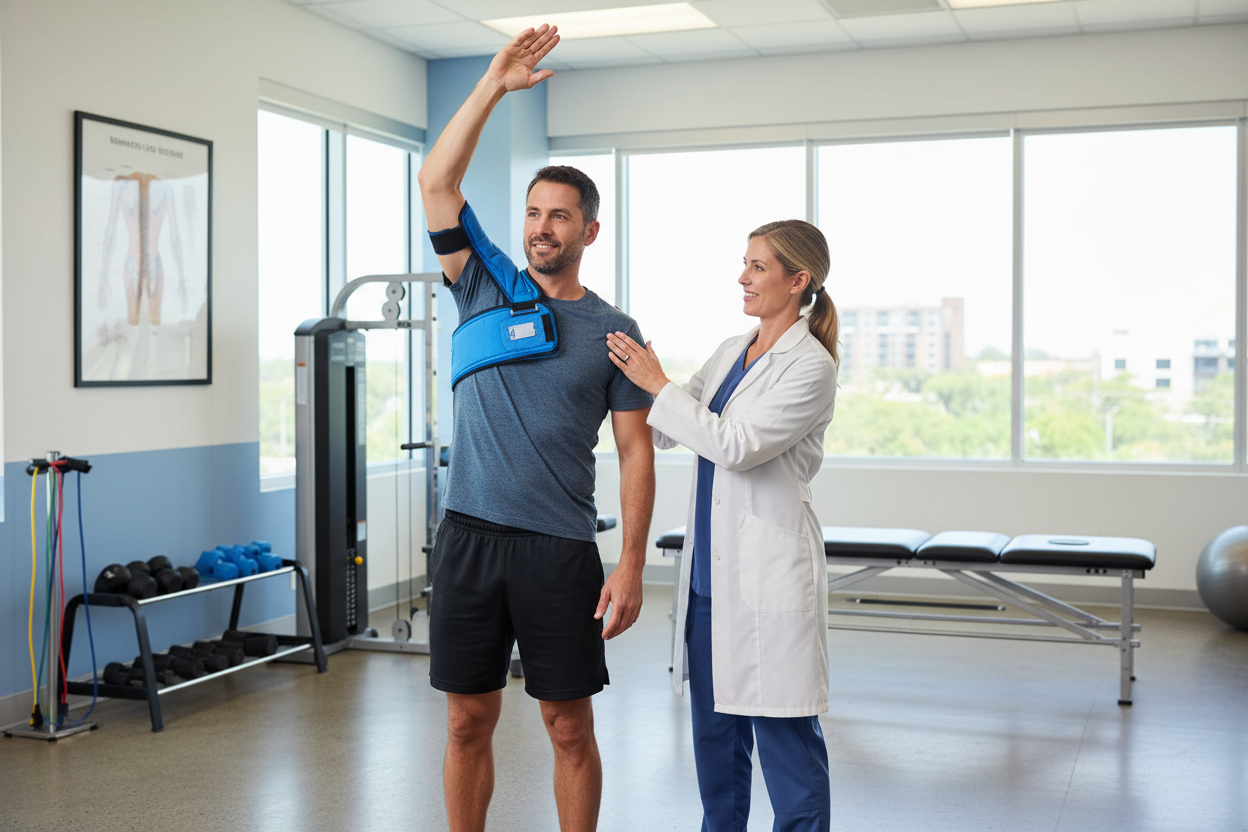
Look for a unit that circulates refrigerated water through a shoulder-specific wrap. The wrap conforms to the shoulder and delivers uniform cold coverage to the entire joint — critical for a rotator cuff repair, where the surgery site is curved and multi-directional. Motorized circulation prevents the water from warming at the skin contact point, which is the main failure mode of passive cold packs.
The Game Ready GRPro 2.1 is the system of choice at most orthopedic surgery centers and sports medicine clinics for exactly this reason. It combines adjustable active compression with circulating cold water — you control both the temperature and the compression level independently. The shoulder wrap is purpose-built for rotator cuff surgery and ACL-caliber procedures. Most major sports teams and high-volume orthopedic practices use Game Ready as their post-op standard.
Game Ready vs. Standard Ice Machines
- Game Ready actively circulates cold water — no warm spots
- Built-in compression control enhances lymphatic drainage
- Shoulder-specific wraps designed for post-surgical anatomy
- Precise temperature settings prevent tissue damage from over-icing
- Used in NFL, NBA, and MLB training rooms as standard protocol
How Long to Use Cold Therapy After Surgery
In the first two weeks post-op, most surgeons recommend 20–30 minute cold therapy sessions every 2–3 hours during waking hours. As swelling decreases through weeks 3–6, frequency typically drops to 3–4 sessions per day. After physical therapy exercises introduce movement (usually weeks 6–12), cold therapy after each PT session becomes the standard protocol to manage exercise-induced inflammation.
Compression Therapy: Reducing Swelling and Accelerating Drainage
Surgical trauma causes the lymphatic system to become overwhelmed. Fluid accumulates in the tissue around the shoulder, creating the characteristic post-op puffiness that contributes to pain and stiffness. Compression therapy — distinct from cold therapy — mechanically moves that fluid by applying graduated external pressure, stimulating lymphatic vessels to drain the swelling.
Sequential compression devices (SCDs) and medical-grade compression garments are used in hospital settings precisely because passive rest alone doesn't clear edema efficiently. For shoulder surgery, compression works best when combined with elevation (arm above heart level where possible) and movement (gentle pendulum exercises your PT prescribes).
Timing matters here too. Swelling peaks around days 3–5 post-op for most rotator cuff repairs, which is exactly when compression therapy delivers the most value — well before most patients have their first follow-up appointment. Starting compression sessions as soon as your surgeon clears wound care (often within the first week) tends to produce a noticeably shorter and less painful swelling phase than waiting until swelling is already visibly established.
Medical-Grade Compression Systems
The Bio Compression SC-2008-DL is a professional sequential compression device used in clinical settings. It delivers programmable, multi-chamber compression that moves fluid proximally (toward the lymph nodes), a mechanism called "milking" that's significantly more effective than static compression garments alone. For post-surgical edema management in the arm and shoulder region, sequential compression is the clinical standard.
| Recovery Tool | Primary Benefit | Best Recovery Phase | Frequency |
|---|---|---|---|
| Cold Therapy (Game Ready) | Pain control, inflammation reduction | Weeks 1–12, especially post-PT | 3–6× daily |
| Sequential Compression | Edema drainage, lymphatic support | Weeks 1–8 | 1–2× daily, 30–45 min |
| Red / Near-Infrared Light | Tissue repair, inflammation modulation | Weeks 2–ongoing | Daily, 10–20 min |
| Percussion Therapy | Scar tissue, muscle recovery, range of motion | Weeks 8–12+ | Post-PT, as directed |
| Whole Body Compression Boots | Systemic circulation, systemic recovery | All phases | Daily |
Red Light and Near-Infrared Therapy: Healing at the Cellular Level
Photobiomodulation (PBM) — commonly marketed as red light therapy or low-level laser therapy at lower power levels — uses specific wavelengths of light (typically 630–850nm) to stimulate mitochondrial activity in cells. The proposed mechanism is well-documented: light in these wavelengths is absorbed by cytochrome c oxidase in the mitochondria, increasing ATP production and triggering downstream effects that reduce oxidative stress, modulate inflammation, and support collagen synthesis.
For rotator cuff recovery specifically, red and near-infrared light therapy has a growing clinical evidence base for accelerating tendon healing, reducing post-surgical pain, and decreasing the duration of inflammatory phases. A double-blind, sham-controlled randomized clinical trial in Lasers in Surgery and Medicine found that patients who self-administered photobiomodulation at home after rotator cuff arthroscopic repair showed accelerated improvement in pain, functionality, and quality of life compared to a sham device (PubMed, PMID: 37288499). A 2025 study in Wound Repair and Regeneration found that combining photobiomodulation with exercise-based rehabilitation improved pain and functional recovery in rotator cuff pathology beyond exercise alone (PubMed, PMID: 40371595). The key is using a device with sufficient power density (irradiance) and proper wavelengths — consumer-grade devices vary enormously in quality.
What the Clinical Research Shows
The Abufoul et al. trial (2023) randomized 50 rotator cuff arthroscopic repair patients to either an active or sham photobiomodulation device for at-home self-treatment during the first 6 months post-surgery. Patients using the active device showed accelerated improvement in patient-reported pain, functionality, and quality-of-life scores compared to the sham group — a meaningful finding because it demonstrates benefit from patient-administered treatment, not just in-clinic sessions supervised by a practitioner.
The more recent Maiya et al. study (2025) looked specifically at combining photobiomodulation with exercise-based rehabilitation across a broader rotator cuff pathology population (not limited to post-surgical patients) and found the combination outperformed exercise-based rehabilitation alone on both pain and functional recovery measures. Together, these two studies support two practical takeaways: light therapy appears to help both in isolation during early recovery and as an add-on once your PT-directed exercise program begins.
HealthLight Ultimate Body Kit
The HealthLight Ultimate Body Kit is a medical-grade flexible pad system that delivers both red (633nm) and near-infrared (850nm) light in large-surface-area flexible pads. Unlike rigid panels, the flexible pads can be draped over the shoulder to treat the surgical area, front and back, simultaneously. HealthLight products are FDA-cleared, a critical distinction that separates clinical-grade from consumer gadgets.
Use red/NIR light starting around week 2 post-op (once incisions have initial closure) and continue through the entire recovery period. Daily sessions of 10–20 minutes directly over the shoulder joint — following your surgeon's guidance on wound care — can meaningfully support the tissue repair timeline.
Percussion Therapy: Later-Stage Recovery and Scar Tissue Management
Percussion therapy is a late-phase recovery tool — do not use it near the surgical site during the first 6–8 weeks. Once your surgeon clears you for progressive strengthening (typically the transition from passive to active-assisted range of motion), percussion becomes valuable for several reasons.
Post-surgical scar tissue forms around the repair site and, if not addressed, can limit shoulder mobility. Percussion therapy's rapid mechanical input increases local circulation, breaks down adhesions, and helps restore normal tissue texture in the surrounding musculature. The periscapular muscles (trapezius, rhomboids, serratus anterior) work overtime during recovery as they compensate for the repaired cuff — they frequently develop trigger points and tightness that percussion therapy addresses effectively.
The Theragun Pro Plus G6 includes a dedicated attachment for sensitive areas and an OLED screen showing recommended protocols by body region. For rotator cuff recovery, you'll use percussion primarily on the upper back, neck, and upper trapezius — areas nowhere near the surgical site — and eventually, under PT guidance, closer to the shoulder once healing is established.
Full-Body Compression Boots: Systemic Recovery Support
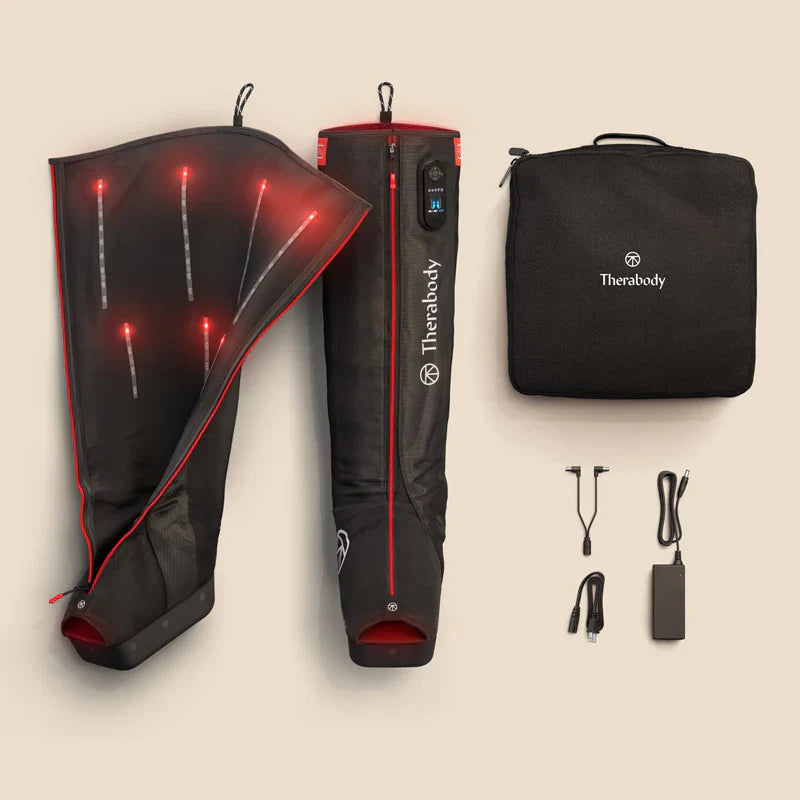
One underappreciated aspect of shoulder surgery recovery is its full-body toll. You're sedentary for weeks. Your sleep is disrupted by pain. Your cardiovascular system decelerates. Systemic inflammation can persist even as the local surgical site heals. Full-body compression boots — typically used on the legs — support systemic circulation, reduce whole-body inflammatory load, and improve sleep quality during this difficult recovery period.
The Normatec 3 Full Body system and the Rapid Reboot REGEN Complete both provide professional-grade sequential compression to the lower extremities, which enhances venous return, supports lymphatic drainage systemically, and helps maintain leg fitness even while the upper body is immobilized. Many rotator cuff surgery patients find compression boot sessions excellent for relaxation, sleep prep, and general inflammation management during the long recovery stretch.
Building Your Rotator Cuff Recovery Equipment Stack
Not everyone can afford or needs every device. Here's how to prioritize based on your recovery timeline and budget:
Essential Tier (Weeks 1–12)
Cold therapy machine with a shoulder wrap is non-negotiable for weeks 1–6. If you can only invest in one device, this is it. Pain control in early recovery directly affects sleep quality, compliance with the sling protocol, and long-term outcomes. The Game Ready GRPro 2.1 is the best option available for a device you'll use multiple times daily for months.
High-Value Addition (Weeks 2–ongoing)
Red and near-infrared light therapy represents the best cost-to-benefit ratio for ongoing recovery support. Unlike cold therapy (which you eventually stop needing), light therapy supports every phase of healing — acute inflammation, tissue repair, and scar remodeling — and continues to provide benefit well past the initial recovery window.
Later-Stage (Weeks 8–12+)
Percussion therapy becomes relevant once your surgeon clears active movement. A quality percussion device like the Theragun Pro Plus G6 will serve you far beyond shoulder recovery — it's a tool you'll use for years of maintenance and training recovery.
Is Rotator Cuff Recovery Equipment HSA/FSA Eligible?
For most patients, yes — with the right documentation. The Game Ready GRPro 2.1 and Bio Compression SC-2008-DL are both FDA-cleared medical devices, which is the threshold most HSA/FSA plan administrators look for when evaluating a recovery-equipment purchase tied to a documented surgical procedure. A Letter of Medical Necessity from your surgeon, referencing your rotator cuff repair and the prescribed recovery protocol, is typically what your plan will ask for.
Using pre-tax HSA/FSA dollars for equipment you would otherwise buy out of pocket effectively converts to a real discount in the range of 20–35% depending on your tax bracket — meaningful given that a quality cold therapy system and a compression device together represent a real investment. Confirm your plan's specific documentation requirements before purchasing, and keep your surgeon's paperwork on file in case your plan requests it after the fact.
What to Expect to Spend
Budget realistically across the recovery timeline rather than trying to buy everything at once. A motorized cold therapy system with a shoulder wrap typically runs $1,500–$2,500 for a clinical-grade unit like the Game Ready GRPro 2.1 — the single highest-value purchase given how many sessions you'll run through it in the first 12 weeks. A medical-grade red/NIR light pad system is usually $500–$1,500 depending on coverage area, and a quality percussion device runs $300–$700. Sequential compression devices for the shoulder region are typically the highest-cost item at $2,000+ for true medical-grade units, which is where HSA/FSA eligibility (see below) makes the biggest practical difference.
If budget forces a choice, prioritize in this order: cold therapy first (weeks 1–6 impact is largest), red/NIR light second (lowest cost, longest useful window), then compression and percussion as your recovery timeline and surgeon's clearance allow.
Shop Rotator Cuff Surgery Recovery Equipment
Your Health Sanctuary carries professional-grade recovery systems used by orthopedic clinics and top sports medicine programs. Free expert guidance included with every order.
The Game Ready GRPro 2.1 and Bio Compression SC-2008-DL may be HSA/FSA eligible for post-surgical recovery — ask us about documentation when you call.
Shop Game Ready GRPro 2.1 Shop HealthLight Body KitQuestions? Call our recovery specialists: (612) 360-2490
Frequently Asked Questions
What is the most important piece of equipment for rotator cuff surgery recovery?
A motorized cold therapy system with a shoulder wrap is the single most impactful piece of equipment in early recovery (weeks 1–6). It controls pain, manages swelling, and reduces the need for opioid pain medication. The Game Ready GRPro 2.1 is the clinical standard used in orthopedic surgery centers nationwide.
Can I use a percussion massager on my shoulder after rotator cuff surgery?
Not in early recovery. Percussion therapy should be avoided near the surgical site for at least 8–12 weeks post-op, or until your surgeon and physical therapist specifically clear active-phase movement. In earlier phases, percussion is valuable for surrounding musculature (upper back, traps, neck) but requires professional guidance before use anywhere near the repair site.
Does red light therapy actually help after rotator cuff surgery?
There is growing clinical evidence supporting photobiomodulation (red and near-infrared light) for post-surgical tissue healing. Studies show it can reduce pain, modulate inflammation, and support collagen synthesis in tendon tissue. The key is using a medical-grade device with correct wavelengths (630–850nm) and adequate power density. Consumer-grade devices vary widely — look for FDA-cleared products like the HealthLight Ultimate Body Kit.
How long does rotator cuff surgery recovery typically take?
Recovery timelines vary by tear type and repair technique. Small tears with arthroscopic repair may allow return to light activity by 3–4 months. Large or complete tears requiring open repair can take 9–12 months for full functional recovery. Consistent use of appropriate recovery equipment, combined with diligent physical therapy, is associated with better and faster outcomes.
Is compression therapy useful after shoulder surgery?
Yes — sequential compression therapy supports lymphatic drainage and reduces post-surgical edema, which is common after shoulder procedures. Medical-grade devices like the Bio Compression SC-2008-DL deliver programmable multi-chamber compression that moves fluid away from the surgical site more effectively than static compression garments.
Where can I buy professional rotator cuff surgery recovery equipment?
Your Health Sanctuary (yourhealthsanctuary.com) specializes in medical-grade and professional recovery equipment. We carry the Game Ready GRPro 2.1, HealthLight products, Theragun, and other clinical-grade devices with expert guidance on setup and use. Call (612) 360-2490 with any questions about your specific recovery needs.
Can full-body compression boots help with rotator cuff surgery recovery?
Indirectly, yes. Full-body compression boots like the Normatec 3 or Rapid Reboot REGEN target lower-extremity circulation rather than the shoulder itself, but improving systemic circulation and lymphatic drainage during a long, sedentary recovery period supports overall inflammation management, sleep quality, and general fitness maintenance. For the shoulder joint specifically, a local cryo-compression system like the Game Ready GRPro 2.1 is the more directly beneficial tool.
Is rotator cuff recovery equipment HSA/FSA eligible?
Often, yes. The Game Ready GRPro 2.1 and Bio Compression SC-2008-DL are both medical-grade, FDA-cleared devices that commonly qualify as HSA/FSA-eligible expenses when purchased for a documented post-surgical recovery need — a Letter of Medical Necessity from your surgeon may be required depending on your plan. Check with your HSA/FSA plan administrator to confirm eligibility and documentation requirements before purchasing.