
Full Body Red Light Therapy Before and After: Real Timelines
Set your reminder for week 4, not day 4. That is the first practical advice I give customers who ask me what full body red light therapy before and after results should look like.
I’m Justin Webster, owner of Your Health Sanctuary. After spending my career helping build more than 20 niche medical clinics across the United States and working alongside dozens of MDs, I’ve seen one pattern over and over: people quit too early because they expect photo-level changes before the body has had time to respond.
The short version is this: you may feel changes before you see changes. Soreness, comfort, and recovery trends can shift in days to weeks, while skin texture, body contouring, and chronic pain trends usually require a consistent 8 to 12 week window. And if your device is underpowered or your dosing is inconsistent, the timeline stretches.
Full body red light therapy before and after: what changes by week?
Use this as a realistic planning table, not a guarantee. Research on photobiomodulation varies by wavelength, dose, body area, and device type, so full-body panels and beds should not be treated as identical to clinical lasers or targeted LED pads.
| Timeline | What you may notice | What is unlikely yet | Best way to track it |
|---|---|---|---|
| First session to week 1 | Warmth, relaxation, easier routine compliance, possible short-term comfort | Visible fat loss, major skin tightening, dramatic pain reversal | Baseline photos, pain score, sleep notes, training log |
| Weeks 2 to 4 | Early recovery trends, less post-workout soreness for some users, small changes in skin tone or redness | Reliable wrinkle reduction, major circumference change | Weekly photos in the same lighting, soreness notes 24 and 48 hours after workouts |
| Weeks 4 to 8 | More meaningful trends in pain, mobility, training consistency, skin clarity, or inflammation-related appearance | Guaranteed weight loss or structural joint repair | Measurements, range of motion notes, function-based goals |
| Weeks 8 to 12 | More credible before-and-after comparison for skin texture, fine lines, chronic discomfort trends, and body contouring support | Instant transformation or results without consistent use | Side-by-side photos, tape measurements, symptom averages |
| 3 to 6 months | Maintenance phase, clearer long-term pattern, better understanding of whether the device fits your goal | Permanent results without ongoing habits | Monthly review and protocol adjustment |
The reason I push people toward 8 to 12 weeks is simple: the better evidence for photobiomodulation is not built around one-off sessions. For skin, a controlled clinical trial by Wunsch and Matuschka found improvements in complexion, skin roughness, and collagen-related measures after a multi-week red and near-infrared light treatment course (Photomedicine and Laser Surgery, 2014). For neck pain, a Lancet systematic review found low-level laser therapy could reduce pain in certain acute and chronic neck pain settings, but those studies used targeted dosing rather than casual full-body exposure (Chow et al., 2009).

What does full body red light therapy actually do?
Red light therapy, also called photobiomodulation, uses specific red and near-infrared wavelengths to interact with light-sensitive structures inside cells. The most discussed mechanism involves cytochrome c oxidase in the mitochondria, with downstream effects on cellular energy signaling, nitric oxide, and oxidative stress pathways. That mechanism is reviewed in detail by de Freitas and Hamblin in a 2016 paper on photobiomodulation mechanisms (IEEE Journal of Selected Topics in Quantum Electronics, 2016).
For a customer, here is what that means in plain English: light is not pushing fat out, melting tissue, or mechanically repairing a joint. It is a biological signal. The outcome depends on whether the right wavelength reaches the right tissue at the right dose, often enough to matter.
Full-body systems mainly help with coverage and consistency. If you are trying to expose large areas, such as legs, back, shoulders, hips, or the whole trunk, a bed or large panel setup is easier than moving a small handheld device around for 40 minutes. But coverage does not automatically mean better results. A targeted pad or professional cold laser system may be more appropriate when the goal is a specific nerve, tendon, joint, surgical site, or focal pain pattern.
This is where I see buyers get tripped up. They shop for the biggest glow instead of the most appropriate delivery method. Full-body red light therapy can be useful, but the timeline depends on the job you are asking it to do.
What before-and-after results are realistic by goal?
Skin tone, texture, and fine lines: think 8 to 12 weeks
Skin changes are usually the easiest to photograph, but they still take time. In the 2014 controlled trial mentioned earlier, red and near-infrared light treatment was associated with improved skin complexion, reduced roughness, and increased collagen density measurements after a structured course of sessions, not after a weekend of use.
A realistic full-body red light therapy before and after timeline for skin is:
- Weeks 1 to 2: skin may look temporarily brighter because of hydration, lighting, or circulation changes, but this is not a reliable result yet.
- Weeks 4 to 6: some users may notice calmer-looking skin or more even tone if the protocol is consistent.
- Weeks 8 to 12: this is the first fair window for comparing texture, fine lines, and overall tone.
If skin is your primary goal, take photos weekly, not daily. Daily photos magnify noise. Weekly photos reveal trends.
Muscle recovery and soreness: some changes can show up faster
Recovery is where some people notice red light therapy sooner, especially athletes or active adults tracking soreness after repeat workouts. A systematic review and meta-analysis on phototherapy for exercise performance and recovery markers reported benefits in exercise-related recovery outcomes when appropriate parameters were used (Leal-Junior et al., 2015).
That does not mean a full-body red light panel will make you invincible. It means your before-and-after may show up in your training log before it shows up in a mirror. Look for patterns like less soreness 24 to 48 hours after hard sessions, better ability to complete planned workouts, or reduced need to skip training days.
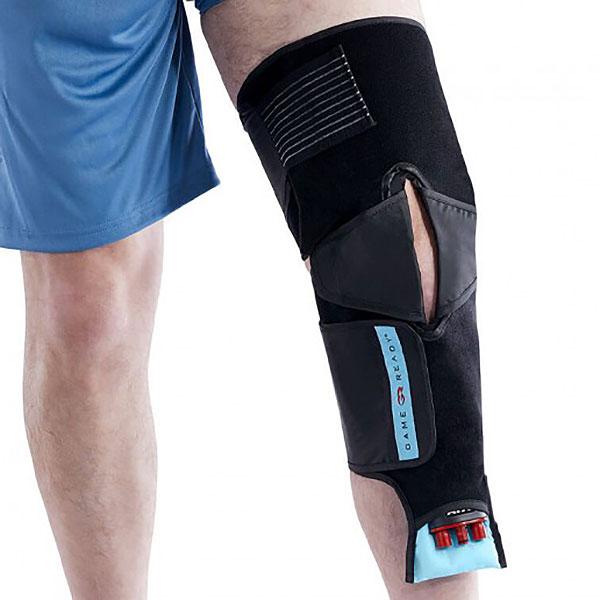
For serious athletes, I usually prefer pairing red light therapy with the right recovery tool for the job. Pneumatic compression boots, cold compression systems, and percussive massage all solve different recovery problems. Red light is not a replacement for those tools, but it can fit into the same recovery stack when the goal is better consistency.
Pain and stiffness: expect trends, not miracles
For pain, the key question is whether the light is reaching the tissue you care about. A full-body panel may help with broad exposure, but deep pain from a hip joint, lumbar disc irritation, or complex neuropathy may need a more targeted approach.
The evidence base for pain is stronger when the therapy is delivered with appropriate wavelength, dose, and positioning. The 2009 Lancet review on low-level laser therapy for neck pain found clinically meaningful pain reduction in selected studies, but again, that was not the same thing as standing casually in front of any red lamp.
A practical timeline for pain-related before-and-after tracking looks like this:
| Pain goal | First useful signal | More reliable review point | What to measure |
|---|---|---|---|
| General stiffness | 1 to 3 weeks | 4 to 6 weeks | Morning stiffness time, mobility notes |
| Workout-related aches | 1 to 4 weeks | 4 to 8 weeks | Soreness score, training completion |
| Chronic back, neck, or joint pain | 3 to 6 weeks | 8 to 12 weeks | Pain average, flare frequency, daily function |
| Nerve-related discomfort | 4 to 8 weeks | 12 weeks or longer | Burning, tingling, sleep interruption, walking tolerance |
If pain is worsening, spreading, or linked to weakness, numbness, fever, unexplained swelling, or recent surgery, stop treating it like a wellness experiment and talk to a qualified clinician.
Weight loss and body contouring: be very skeptical of dramatic photos
This is where the internet gets sloppy. Some studies on low-level laser therapy for body contouring show circumference changes with specific devices and protocols. For example, a randomized controlled study by Jackson and colleagues evaluated low-level laser therapy as a noninvasive body contouring method (Lasers in Surgery and Medicine, 2012).
But that does not prove that a full-body red light therapy bed causes major fat loss on its own. Body contouring studies often measure inches, not long-term scale weight, and they use defined treatment parameters. If someone shows you a 10-day red light before-and-after with major abdominal change, assume lighting, posture, sodium intake, glycogen, posing, and diet all played a role unless the data says otherwise. If weight loss is your main focus, our guide to red light therapy weight loss before and after goes deeper on what results are realistic.
For weight-loss-related goals, use a 12-week tracking window and measure:
- Waist, hips, thighs, and arms with the same tape and same posture.
- Body weight as a weekly average, not a single morning number.
- Exercise consistency, because recovery support only matters if it helps you train and move regularly.
- Nutrition adherence, because red light is not a substitute for food quality and energy balance.
If your primary goal is weight loss, red light therapy should be an adjunct. The main before-and-after driver will still be your total lifestyle plan.
Post-surgery recovery: timing depends on your surgeon’s restrictions
Full body red light therapy after surgery is a different conversation. You are dealing with incisions, tissue healing, swelling, medications, and sometimes blood clot risk. Do not put a red light device over a fresh incision or surgical area unless your surgeon or treating clinician clears it.
In the clinics I helped build, the early post-op priority was usually basic: control swelling, protect the repair, manage pain safely, restore motion at the right pace, and avoid complications. Depending on the procedure, cold compression, pneumatic compression, and physical therapy may be more central early on than full-body red light.
If your surgeon clears red light therapy, track function more than photos. For example: can you sleep better, walk longer, tolerate therapy exercises, or reduce flare-ups after rehab sessions? That kind of before-and-after is more useful than trying to judge incision appearance under different lighting.
Why many full body red light therapy before-and-after photos are misleading
The camera lies easily. A slight change in posture can flatten the stomach. A different bulb can make skin look smoother. A workout pump can make muscles look fuller. A salty dinner can change abdominal appearance the next morning. None of that tells you whether photobiomodulation did anything.
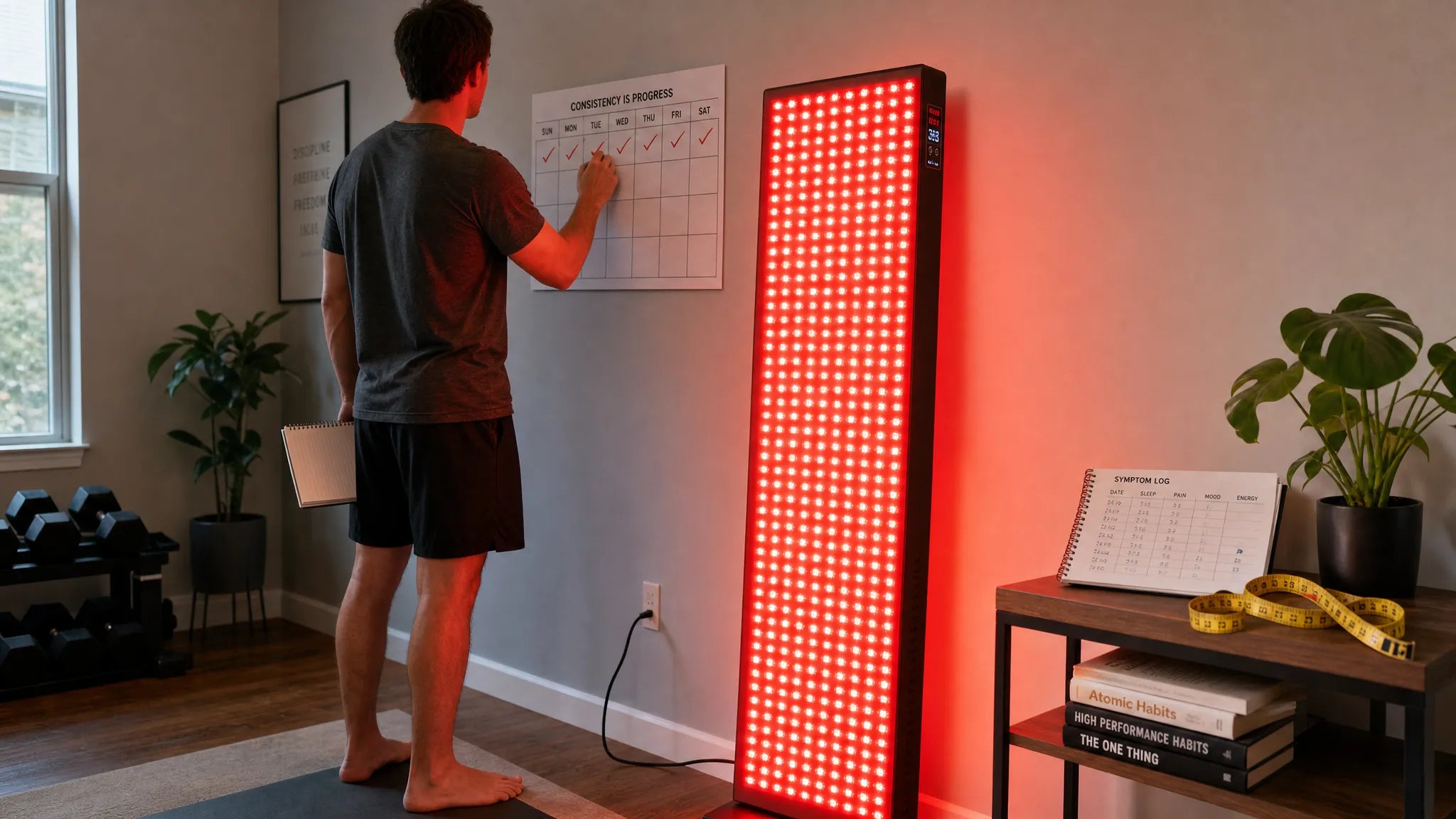
I tell customers to use a simple tracking system. Keep the process boring and repeatable. A useful recovery journal should read more like plain notes than a marketing reel. I like the grounded, no-polish spirit of personal health and life reflections because honest tracking is more useful than hype when you are trying to understand what is actually changing.
Use the same setup every time:
- Same room and lighting.
- Same camera distance and angle.
- Same time of day.
- Same clothing or exposed treatment area.
- Same pose, relaxed and neutral.
- Same weekly measurement day.
- Same symptom scale, such as 0 to 10 pain or soreness.
If you change five variables, you cannot trust the comparison.
What affects your red light therapy timeline the most?
Dose matters more than brightness
More light is not automatically better. Photobiomodulation has a biphasic dose response, which means too little may do nothing and too much may reduce the desired effect. Huang and colleagues reviewed this dose-response issue in low-level light therapy research (Dose-Response, 2009).
That is why device specs matter. Wavelength, irradiance, treatment distance, session length, and body positioning all change the delivered dose. A strong device used incorrectly can disappoint you. A modest device used consistently and correctly may outperform a premium device used randomly.
The goal determines the tool
Full-body red light therapy is convenient, but not every goal needs full-body exposure. If you are treating a localized knee, shoulder, foot, or neuropathy pattern, a flexible pad or a clinical photobiomodulation system may be a better fit. If you are focused on general wellness, skin, or broad recovery, a full-body panel or bed may make more sense.
| Device style | Best fit | Timeline advantage | Limitation |
|---|---|---|---|
| Full-body bed | Convenience, large coverage, clinic or home wellness routines | Easier consistency for broad exposure | Less flexible for targeted positioning |
| Large panel | Home users wanting broad exposure with adjustable distance | Good balance of coverage and control | Requires consistent setup and positioning |
| Flexible red light pad | Knees, back, shoulders, feet, neuropathy patterns | Better contact and targeting for specific areas | Treats smaller areas per session |
| Professional cold laser or PBM system | Clinics, deeper or complex pain patterns, protocol-driven care | More precise clinical dosing | Higher cost and training needs |
If you are comparing medical-grade systems with consumer devices, read our guide to medical grade red light therapy vs consumer devices. If you are specifically considering a bed or large full-body setup, our full body red light therapy bed guide walks through the practical differences.
Consistency beats intensity
Most disappointed users are not failing because red light therapy never works. They are failing because their routine is scattered. They use it four times in week one, forget week two, restart week three, then judge results on day 19.
A realistic home plan is usually built around repeatable sessions, manufacturer instructions, and a defined review point. Do not adjust the protocol every few days. Give one approach enough time to show a trend.
Device quality changes expectations
If a device does not disclose wavelength, irradiance, treatment distance, safety guidance, or regulatory status, be cautious. If a company claims FDA clearance, you can verify device listings through the FDA 510(k) database. FDA clearance does not guarantee your personal result, but it is one useful screening step when comparing devices.
A practical 12-week tracking plan
Here is the tracking plan I would give a customer who wants real before-and-after data without turning their life into a science project.
| Week | What to do | What to avoid changing |
|---|---|---|
| 0 | Take baseline photos, measurements, pain scores, sleep notes, and workout notes | Do not start five new supplements or treatments at once |
| 1 to 2 | Follow the device protocol exactly and record session days | Do not judge visible results yet |
| 3 to 4 | Review soreness, stiffness, sleep, and routine compliance | Do not increase session length just because results feel slow |
| 5 to 8 | Take comparison photos and check symptom averages | Do not compare yourself to influencer photos |
| 9 to 12 | Decide whether the trend is strong enough to continue, adjust, or change devices | Do not ignore pain or symptoms that need medical evaluation |
If you are using red light therapy with other recovery tools, separate the purpose of each device. For example, cold compression may be used for post-surgical swelling under clinical guidance, pneumatic compression may support leg recovery or edema management, and percussive massage may help with soft tissue tightness. Red light therapy should have its own measurable goal, not a vague promise to fix everything.
That is also how we help people at Your Health Sanctuary. We do not start by asking which shiny device you want. We start by asking what you are trying to change, where the problem is, what you have already tried, and whether your situation is general wellness, athletic recovery, chronic pain, neuropathy, arthritis, or post-surgical recovery.
When your results are slower than expected
If you are at week 6 and nothing is changing, do not immediately assume red light therapy is useless. Check the basics first.
Your session may be too short for the device output. You may be standing too far away from a panel. You may be treating through clothing. Your target tissue may be too deep for a broad LED setup. Your before-and-after photos may be inconsistent. Or your primary problem may require a different recovery tool, such as cold laser therapy, cold compression, pneumatic compression, percussive massage, or a clinician-directed rehab plan.
The biggest mistake is doubling the dose blindly. Because of the biphasic dose response, more time under the light is not always the fix. Tighten the protocol first, then reassess.
Frequently Asked Questions
How long does full body red light therapy take to show results? Most people should judge visible before-and-after changes at 8 to 12 weeks. Recovery and soreness trends may show earlier, often in the first few weeks, but skin, body contouring, and chronic pain trends need a longer and more consistent review window.
Can full body red light therapy help with weight loss before and after photos? It may support body contouring goals when paired with nutrition, exercise, and consistent use, but it should not be treated as a stand-alone weight-loss method. The strongest body-contouring studies used specific low-level laser protocols, so dramatic full-body red light weight-loss claims deserve skepticism.
Should I use red light therapy every day for faster results? Not necessarily. Follow the device instructions and avoid assuming that longer or more frequent sessions are better. Photobiomodulation has a dose-response curve, so excessive exposure may not improve results.
Do you need bare skin for full body red light therapy? In most cases, yes, the treatment area should be exposed because clothing blocks or reduces light reaching the skin. Follow your device manual, especially for distance, session time, and eye protection.
Why do I feel better but see no before-and-after difference? Your first changes may be functional rather than visual. Less soreness, better mobility, fewer flare-ups, or improved workout consistency can matter even when photos look unchanged. Track symptoms and function alongside pictures.
Is a red light therapy bed better than a panel? A bed is often more convenient for full-body exposure, while a panel gives more control over distance and positioning. A flexible pad or clinical photobiomodulation system may be better for targeted pain, neuropathy, or joint-specific goals.
Can I use full body red light therapy after surgery? Only after your surgeon or treating clinician clears it, especially near incisions or repaired tissue. Post-surgical recovery often requires a structured plan that may include physical therapy, cold compression, pneumatic compression, and other tools before red light therapy becomes appropriate.
Choosing the right device for your timeline
If your goal is skin tone and general wellness, a full-body panel or bed may make sense. If your goal is neuropathy, arthritis, focal back pain, or a specific joint, a targeted HealthLight-style pad or BIOFLEX cold laser approach may fit better. If your goal is post-surgical swelling or early injury recovery, cold compression and pneumatic compression may be the more urgent tools to evaluate first.
Your Health Sanctuary carries professional-grade recovery and wellness equipment for home and clinical use, including red light therapy, cold laser therapy, pneumatic compression, cold compression, percussion massage, and whole-body vibration options. Our role is to help you match the device to the timeline you actually care about, not sell you a miracle photo.
If you are unsure which category fits your situation, start with your goal, your diagnosis or recovery stage, and the result you want to measure at week 12. That one step will save you money, frustration, and a lot of misleading before-and-after comparisons.
Ready to Upgrade Your Recovery?
The equipment referenced in this guide, in stock and ready to ship. Many products qualify for HSA/FSA — call us to confirm eligibility for your situation.
Questions? Talk to our recovery specialists: (612) 360-2490