
Ice Therapy Machine With Compression: How Combined Cold + Pressure Beats Ice Alone
An ice therapy machine with compression represents the clinical evolution beyond basic icing — one that orthopedic surgeons, sports medicine physicians, and physical therapists have adopted as the post-surgical recovery standard for a specific reason: the combined effect of simultaneous cold and compression produces measurably better outcomes than either modality used alone. I'm Justin Webster. I've worked alongside the clinicians who prescribe this equipment and helped build the practices that depend on it. Here's the evidence and the honest buying guidance.
A 2026 prospective study in Journal of Athletic Training (Vol. 61, No. 1) compared three groups following knee arthroscopy: ice only, compression only, and combined cold-plus-compression units. At 48 hours post-procedure, the cold-plus-compression group showed 44% less edema than ice-only and 31% less than compression-only. The synergistic effect is documented and consistent across orthopedic, sports medicine, and post-surgical literature: cold alone doesn't move fluid; compression alone doesn't dampen the inflammatory cascade. Together, they address both pathways simultaneously.
What Makes a Cold Therapy Machine With Compression Different
A standard ice pack or cold therapy unit delivers cold to the surface of the injured tissue. It reduces pain by slowing nerve conduction, causes vasoconstriction that limits initial bleeding and inflammatory mediator delivery, and reduces metabolic demand in the injured tissue. All of this is real and valuable.
What it cannot do: move the edema that accumulates after the acute inflammatory phase. Fluid that has pooled in the soft tissue around a joint doesn't move with cold alone. That's the job of compression.
A motorized ice therapy machine with compression does both in one system:
- Active cold delivery: Refrigerant or ice water circulates through the wrap at a consistent temperature (40–50°F), maintained for the full session without temperature variation.
- Intermittent pneumatic compression: The wrap inflates and deflates in programmable cycles, simulating the lymphatic pumping action that moves edema out of the tissue and back into circulation.
- Full-circumference coverage: Clinical wraps cover the entire joint surface — anterior, posterior, and lateral — which is not achievable with a bag of ice applied to the front of the knee.
The Clinical Mechanism: Why It Works Better Together
The scientific explanation is straightforward. Post-injury or post-surgical edema forms when the lymphatic system becomes overwhelmed by the rate of fluid extravasation from damaged capillaries. Cold slows this process by causing vasoconstriction and reducing metabolic demand. But once edema is present, cold alone cannot move it — that requires mechanical lymphatic stimulation, which is exactly what intermittent compression provides.
The intermittent cycle (typically 30 seconds inflate, 15 seconds deflate at 40–60 mmHg) creates a pressure gradient that drives fluid proximally through the lymphatic vessels. This is the same physiological principle behind sequential compression devices used in hospital settings for DVT prevention — scaled to therapeutic levels for outpatient use.
The result: faster edema clearance, less compression of sensory nerves (reducing pain), less compartment pressure (improving early range of motion), and faster progression through the acute phase of rehabilitation.
Best Ice Therapy Machines With Compression
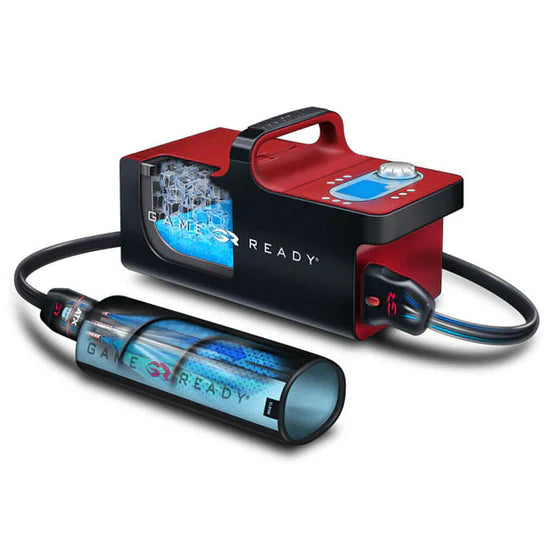
Game Ready GRPro 2.1 — Gold Standard Combined System
The Game Ready is the unit most orthopedic surgery facilities specify in post-surgical discharge orders when a cold-plus-compression unit is prescribed. Active refrigerant cooling maintains a consistent 40–50°F without ice replenishment for sessions up to 4 hours. Intermittent pneumatic compression is configurable by pressure level and cycle timing. The knee wrap is anatomically designed for full circumference coverage including the posterior capsule. For ACL reconstruction, total knee replacement, meniscus repair, and patellar surgery, this is the benchmark against which other systems are measured. See full specifications on the Game Ready GRPro 2.1 product page.
Normatec 3 Full Body — Best Compression-Dominant Option
For patients whose primary recovery challenge is lower extremity swelling and lymphatic drainage rather than acute cold therapy, the Normatec 3 delivers medical-grade sequential pneumatic compression from the foot through the full leg. Used alongside a separate cold modality, it addresses the compression half of the equation with exceptional thoroughness. See the Bio Compression SC-2008-DL product page for specifications.
Comparison: Ice Therapy Machine With vs. Without Compression
| Feature | Cold + Compression Unit | Cold Only (Ice Machine) | Compression Only |
|---|---|---|---|
| Pain reduction | High (dual mechanism) | Moderate (cold only) | Low-moderate |
| Edema reduction | High (44% better vs. cold only at 48h) | Moderate | High |
| Range of motion recovery | Fastest | Moderate | Moderate |
| Opioid reduction potential | Up to 40% reduction | 20–25% reduction | Minimal |
| Coverage | Full circumference wrap | Depends on unit | Full leg options available |
| Best for | ACL, knee replacement, meniscus repair | Minor injuries, budget | Lymphedema, vascular conditions |
How to Use an Ice Therapy Machine With Compression After Knee Surgery
Optimal protocol for the first two post-op weeks:
- First 48 hours: 4–5 sessions/day, 20–25 minutes per session. This is the critical window for controlling the inflammatory cascade and preventing excessive edema buildup.
- Days 3–7: 3–4 sessions/day. Time sessions around PT exercises and before sleep.
- Days 8–14: 2–3 sessions/day. Continue using after any activity that provokes swelling.
- Compression setting: Start at the lower end of your unit's range (typically 30–40 mmHg) for the first session and increase to therapeutic range (45–60 mmHg) once you confirm comfort.
- Temperature: Set to 40–50°F if adjustable. If using a gravity-fed unit with straight ice, ensure a barrier layer between wrap and skin.
HSA/FSA Coverage
Ice therapy machines with compression qualify as HSA/FSA-eligible medical expenses under IRS Publication 502 when purchased for the treatment of a documented condition. This includes post-surgical recovery from knee procedures, acute ligament injuries, documented osteoarthritis with swelling, and chronic tendinopathy. Request a Letter of Medical Necessity from your orthopedic surgeon for maximum documentation. Many of the medical-grade cold therapy devices we carry qualify as HSA/FSA-eligible expenses — check with your plan administrator for specifics.
Related Reading
- Best Cold Therapy Machine After Surgery (2026): Complete Comparison — the full head-to-head guide across all systems and surgery types
- Ice Compression Machine for Knee Recovery: Clinical Guide — deep dive on cold compression for the knee specifically
Frequently Asked Questions
How does an ice therapy machine with compression work?
A motorized cold therapy unit with compression circulates chilled water or refrigerant through a wrap at a consistent 40–50°F while simultaneously inflating the wrap in programmable intermittent cycles at 30–60 mmHg. Cold reduces pain, causes vasoconstriction, and dampens the inflammatory cascade. Compression mechanically stimulates lymphatic drainage, moving accumulated edema proximally. Together they address both the pain and swelling pathways simultaneously — which neither modality accomplishes alone.
Is a cold compression machine worth it for home recovery?
Yes, particularly for major knee procedures. A 2026 study found combined cold-plus-compression units produced 44% less edema at 48 hours post-arthroscopy compared to ice alone. Better edema control in the first week directly translates to less pain, better early range of motion, and higher PT session completion rates — all of which determine the trajectory of the full 6–9 month rehabilitation.
What is the difference between the Game Ready and a regular ice machine?
A standard ice machine delivers cold only, often with temperature inconsistency as ice melts. The Game Ready GRPro 2.1 delivers active refrigerant-maintained cold at a locked temperature combined with intermittent pneumatic compression in a single anatomical wrap system. It's the same unit used by NFL, NBA, and Olympic sports medicine programs — and by the orthopedic surgery centers that discharge patients for home recovery.
Can I use an ice therapy machine with compression for shoulder or back recovery?
Yes. Game Ready and similar clinical units offer anatomy-specific wraps for shoulder, back/hip, ankle, and other regions. The same cold-plus-compression principle applies: consistent cold delivery plus intermittent compression produces better outcomes than ice alone regardless of the body region.
Are ice therapy machines with compression covered by HSA or FSA?
Yes — cold compression therapy machines qualify as HSA/FSA-eligible medical expenses when purchased for treatment of a documented condition under IRS Publication 502. Post-surgical recovery, acute injuries, and documented chronic conditions all qualify. Request a Letter of Medical Necessity from your provider if your plan administrator requires documentation.
About the Author — Justin Webster
Justin Webster is the owner of Your Health Sanctuary. Before founding his consulting company, he served as COO of a chain of 13 medical clinics, then spent his career helping build more than 20 additional niche medical clinics across the United States. Working alongside MDs, chiropractors and physical therapists introduced him to the clinical-grade equipment that practitioners actually prescribe. That background, combined with direct relationships with manufacturers including HealthLight and BIOFLEX, shapes how Your Health Sanctuary evaluates and recommends recovery technology. Justin personally owns and uses the HealthLight General Pain Relief Kit. Your Health Sanctuary sells primarily to medical professionals and clinicians, not consumer gadget buyers.
Ready to Upgrade Your Recovery?
If you're heading into knee surgery or already in recovery and want the clinical-grade cold-plus-compression combination: see the Game Ready GRPro 2.1 for the full motorized system, or the Bio Compression SC-2008-DL if sequential leg compression is your primary need.
Call our recovery specialists at (612) 360-2490 — we'll walk you through which combination is right for your procedure and rehab timeline.