
How to Choose Red Light Therapy Devices That Actually Work
Red light therapy devices can look deceptively similar: glowing LEDs, sleek panels, impressive before-and-after claims, and a price range that runs from impulse buy to clinic investment. The real difference is not how bright a device looks in a photo. It is whether it delivers the right wavelengths, measurable energy, consistent coverage, and a realistic treatment protocol for your goal.
That matters because red light therapy, also called photobiomodulation, is dose-dependent. Too little light may do nothing. Too much, or the wrong setup, can be inefficient and disappointing. If you are buying a device for pain relief, inflammation support, athletic recovery, skin health, or whole-body wellness, the best choice starts with understanding the specs that predict real-world performance.
This guide breaks down how to evaluate red light therapy devices before you buy, without getting lost in marketing language.
Start with the outcome you actually want
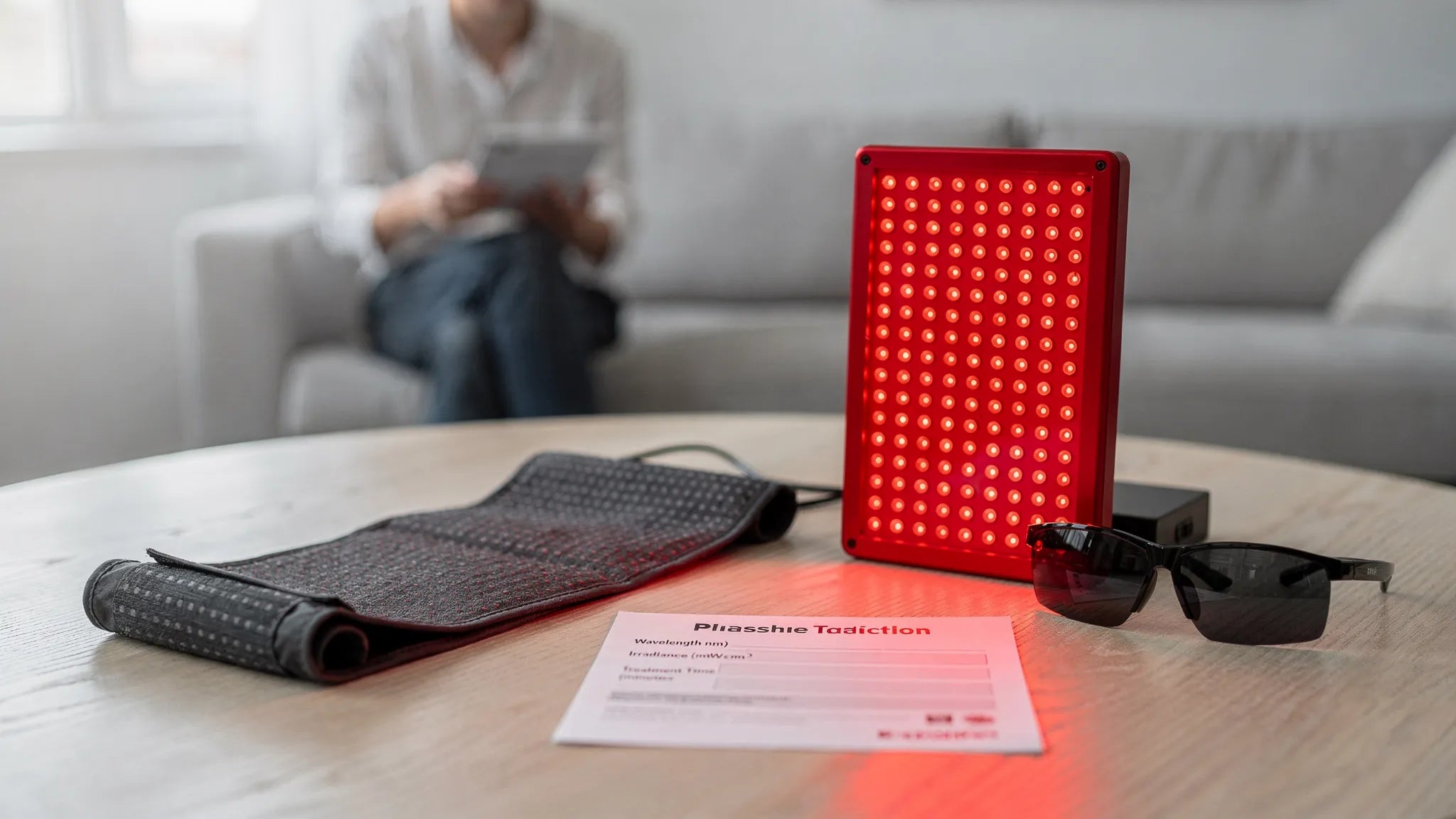
There is no single best red light therapy device for everyone. A face mask designed for skin rejuvenation is not the same tool as a flexible therapy pad for knee pain or a large panel for muscle recovery. The first step is matching the format to the job.
| Primary goal | Best-fit device style | Wavelength focus | What matters most |
|---|---|---|---|
| Facial skin health | LED mask or small panel | Red around 630 to 660 nm, sometimes near-infrared | Fit, safety, eye comfort, consistent facial coverage |
| Muscle recovery | Medium or large panel, flexible pad | Red plus near-infrared around 810 to 850 nm | Treatment area, irradiance, session practicality |
| Joint or back discomfort | Flexible pad, wrap, targeted panel | Near-infrared plus red | Contact delivery, coverage over painful area, protocol support |
| Foot or nerve-related wellness support | Contact pads or targeted systems | Red plus near-infrared | Safety guidance, ease of repeated use, clinical-grade specs |
| Whole-body wellness | Large panel or multi-panel system | Red plus near-infrared | Uniformity, treatment distance, total coverage |
| Clinic or multi-user use | Professional-grade system | Depends on indication | Durability, documentation, FDA status, training and support |
If your goal is general wellness, a quality panel may be enough. If your goal is targeted therapeutic use, such as chronic joint discomfort or post-exercise soreness in a specific area, a device that maintains close contact with tissue can be easier to dose consistently.
Why specs matter more than brightness
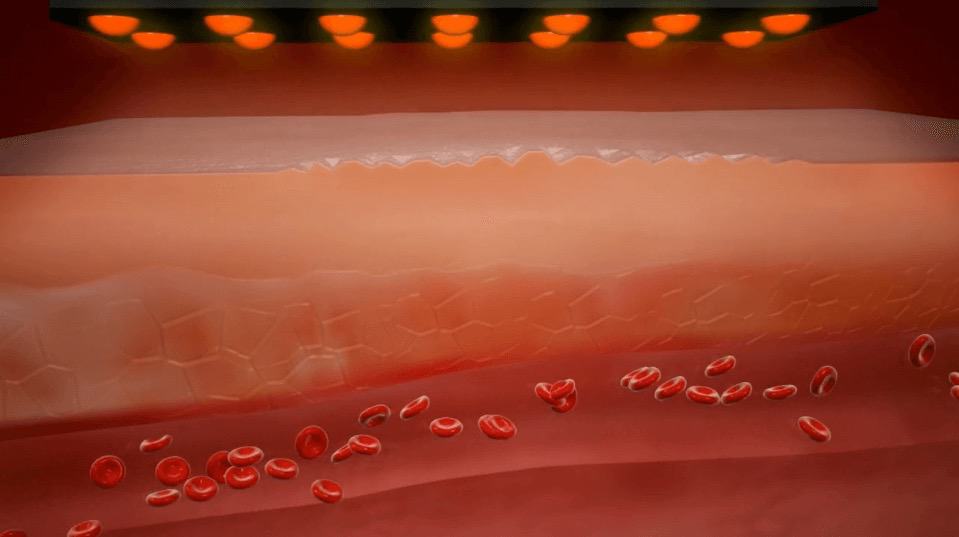
Photobiomodulation works when specific wavelengths of light interact with cells. Research on low-level light therapy suggests that red and near-infrared light can influence mitochondrial activity, inflammatory signaling, circulation, and cellular repair processes. A foundational review in Annals of Biomedical Engineering explains that cytochrome c oxidase in mitochondria is one of the key proposed photoacceptors involved in these effects through photobiomodulation mechanisms.
But the body does not respond to a device simply because it glows red. It responds to wavelength, intensity, treatment time, distance, tissue depth, and total energy delivered. A device that looks powerful but lacks measurable output data is hard to evaluate.
There is also a biphasic dose response, meaning more is not always better. A well-known review on low-level light therapy dosing found that too little energy can be ineffective, while excessive dosing may reduce or reverse the desired biological response in certain contexts. This is one reason serious devices include protocols rather than vague instructions like use until you feel better.
The 6 specs that separate effective devices from glowing gadgets
1. Wavelengths: look for red and near-infrared ranges with a purpose
The most common therapeutic red light range is roughly 630 to 660 nanometers. Red light is often used for superficial tissues, skin health, and surface-level circulation support. Near-infrared light, commonly around 810 to 850 nanometers, penetrates deeper and is often used for muscles, joints, and larger treatment areas.
A device does not need 12 wavelengths to be effective. In many cases, a well-built dual-wavelength device using red and near-infrared light is more useful than a device advertising a long list of poorly documented wavelengths.
- Choose red wavelengths around 630 to 660 nm for skin, surface tissue, and general wellness.
- Choose near-infrared wavelengths around 810 to 850 nm for deeper muscles, joints, and recovery-focused use.
- Choose a combination device if you want flexibility across skin, pain, inflammation, and recovery goals.
2. Irradiance: verify output at the treatment distance
Irradiance, often listed as power density, tells you how much optical power reaches a given area. It is typically reported in milliwatts per square centimeter. This is one of the most important specs, but also one of the most commonly misused. A product page should tell you the irradiance at a specific distance, such as 6 inches or direct contact.
3. Dose: make sure the session length is realistic
Dose is the amount of light energy delivered to tissue over time. The basic formula is: Dose = irradiance (W/cm2) x time (seconds). If a device delivers 40 mW/cm2 at your treatment distance, a 10-minute session delivers approximately 24 J/cm2. This calculation helps you spot unrealistic claims.
4. Coverage area: match the device to the body part
The best red light therapy devices are not always the largest. They are the ones that cover your intended treatment area well enough that you will use them consistently.
5. FDA status: understand clearance versus registration
FDA clearance, through the 510(k) pathway, means the device was cleared for specific indications. FDA registration alone does not mean the device has been reviewed for effectiveness. See our complete guide to FDA cleared red light therapy devices for a full breakdown.
6. Build quality, safety, and support
Look for eye protection guidance, timers, heat management, warranty details, return policies, and responsive customer support. Red light therapy is a routine, and the device needs to be safe and practical over months or years of use.
A quick red light therapy device quality checklist
| Spec or claim | Good sign | Caution sign |
|---|---|---|
| Wavelengths | Specific nm values listed (e.g. 660 nm and 850 nm) | Vague claims with no numbers |
| Irradiance | Reported in mW/cm2 at a stated distance | Only lists wattage or LED count |
| Dose guidance | Clear session times by body area or goal | One universal session length for every condition |
| FDA language | States FDA clearance and indication | Uses FDA registered as if it proves effectiveness |
| Safety | Includes eye guidance, contraindications, heat warnings | No safety instructions |
| Support | Warranty, specs, customer service, protocol help | Marketplace listing with no brand support |
Choose the right device format
| Device type | Best for | Strengths | Trade-offs |
|---|---|---|---|
| Large panel | Whole-body wellness, athletic recovery | Covers broad areas, efficient sessions | Distance affects dose |
| Medium or small panel | Face, joints, localized recovery | Flexible and easier to store | May require multiple positions |
| Flexible pad or wrap | Back, knees, shoulders, feet | Close contact, consistent positioning | Treats one region at a time |
| LED mask | Facial skin and acne routines | Convenient facial coverage | Not useful for body pain |
| Handheld device | Small areas, travel, spot use | Portable and affordable | Time-consuming for larger regions |
| Professional system | Clinical treatment, therapeutic protocols | Highly controlled, indication-specific | Higher cost, stricter safety needs |
Devices we recommend at Your Health Sanctuary
For facial red light therapy with verified wavelengths and FDA clearance, the TheraFace Mask FDA Cleared covers the 630-660 nm range and is designed for reliable daily use.
For professional-grade full-body and targeted therapy, the HealthLight Ultimate Body Kit delivers both red and near-infrared light across multiple body zones. HSA/FSA eligible. Free shipping. Price match guarantee. Call us at (612) 360-2490.
If you are comparing panels, read our guide to the best red light therapy panels. For consumer vs medical-grade, see our medical-grade vs consumer devices guide.
Common marketing traps to avoid
Highest power does not automatically mean best results. More LEDs do not guarantee better therapy. Lux and lumens are not therapeutic dose measurements. FDA registered is not the same as FDA cleared.
For a balanced overview of weight loss claims, see our red light therapy for weight loss guide.
When professional-grade is worth considering
Professional-grade devices are especially worth considering for treating larger areas, frequent use, or chronic pain and recovery routines. The HealthLight Ultimate Body Kit is designed for this use case. Our red light therapy for pain relief guide explains specific use cases in more detail.
Safety considerations before you start
Red light and near-infrared therapy are generally considered low risk when used properly. Avoid staring directly into bright LEDs. Do not use over suspicious lesions or active cancer sites. Talk with a healthcare professional if you are pregnant, take photosensitizing medications, or are treating a serious medical condition.
HSA/FSA Eligible: Many red light therapy devices qualify for HSA/FSA purchase when used for a qualifying medical purpose. Call us at (612) 360-2490 to confirm eligibility.
About the Author
Justin Webster
Justin Webster is the Co-founder and COO of Your Health Sanctuary, overseeing a network of 13 integrative health clinics with more than 20 additional clinic partnerships. With a background in clinical operations and hands-on experience evaluating and sourcing professional-grade recovery equipment, Justin works directly with practitioners and device manufacturers to identify technologies that deliver measurable patient outcomes. His work focuses on bridging the gap between clinical-grade therapy tools and the home recovery market.
Frequently Asked Questions
What wavelengths should red light therapy devices have?
For most buyers, red wavelengths around 630 to 660 nm and near-infrared wavelengths around 810 to 850 nm are the most practical ranges to look for.
How much irradiance do I need?
Look for measured irradiance in mW/cm2 at the distance you will actually use. The device should provide realistic treatment times that match its output.
Are FDA-cleared red light therapy devices better?
FDA clearance is indication-specific. A device cleared for one use is not automatically cleared for every condition. Transparent specs and safety documentation still matter.
Can cheap red light therapy devices work?
Some may be useful for basic wellness if they provide verified wavelengths, irradiance, and safety guidance. Many budget devices do not publish enough data to confirm meaningful dosing.
Is a panel or a pad better?
A panel is better for large-area exposure and general recovery. A pad is better for targeted areas because it stays close to the tissue.
How long does it take to see results?
Some users notice changes within days or weeks. Skin and chronic discomfort routines often require 8 to 12 weeks of consistent use.
Get help choosing the right device
At Your Health Sanctuary, we offer professional-grade recovery and wellness devices curated by medical professionals. Free shipping, price match guarantee, flexible financing, and expert support. Call us at (612) 360-2490.