
Do Cold Therapy Machines Work Without Ice?
If you are sitting next to a knee surgery cooler at 11 p.m. and the ice is gone, here is the practical answer: most cold therapy machines do not deliver real cold therapy without ice unless they were built as iceless systems. They may still pump water. They may still feel cool for a few minutes. But if the unit depends on an ice-water reservoir, no ice means no sustained therapeutic cooling.
I’m Justin Webster, owner of Your Health Sanctuary. After helping build more than 20 niche medical clinics across the USA and working alongside dozens of MDs, I’ve seen this confusion come up constantly with post-op patients and caregivers. The label on the box might say “cold therapy,” “cryotherapy,” “cold compression,” or “no ice required,” but those terms do not all mean the same thing.
The useful question is not just, “Does a cold therapy machine work without ice?” The better question is: what is the machine using as its cooling source, and can it keep the treatment area cold enough, long enough, and safely enough for your recovery plan?
The short answer: only some cold therapy machines work without ice
A cold therapy machine without ice works only if it has another way to create or store cold. That usually means one of three designs: active electric refrigeration, thermoelectric cooling, or pre-frozen cooling cartridges. If the machine is a traditional cooler-style ice-water circulation unit, it needs ice to keep the water cold.
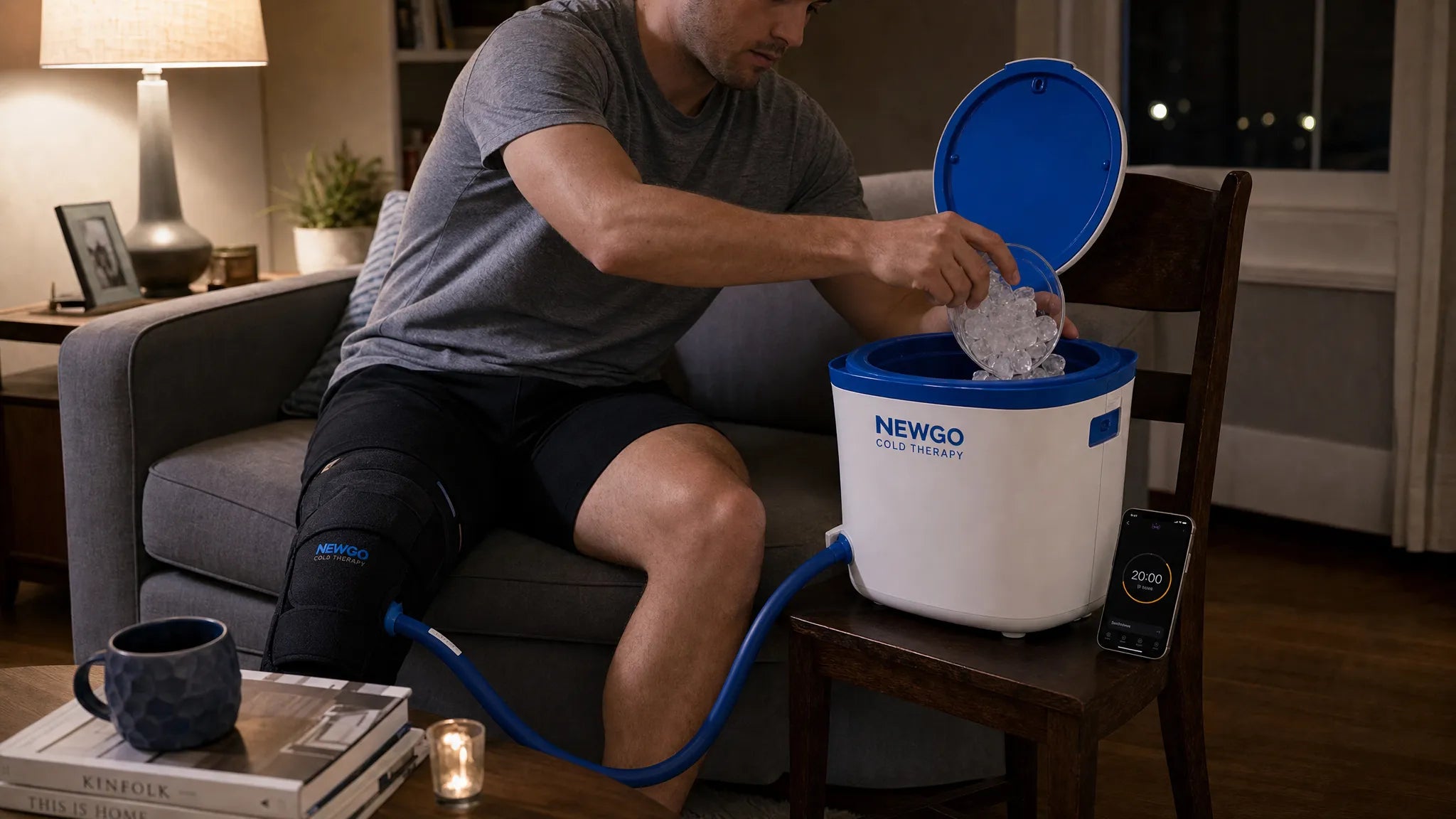
Traditional ice-water machines are simple. You fill the reservoir with water and ice, the pump circulates chilled water through a wrap, and the wrap transfers cold to the joint or injured area. Without ice, the system becomes a water circulation device. It may feel mildly cool at first if you add cold tap water, but it will warm quickly.
That matters because the clinical effect of cryotherapy depends on lowering tissue temperature. In a controlled study published in the British Journal of Sports Medicine, cryotherapy reduced nerve conduction velocity and increased pain threshold, which helps explain why cold can reduce pain sensation during recovery (Algafly and George, 2007). If the machine is not actually cooling the tissue, you should not expect the same pain-relief effect.
What “without ice” actually means
The phrase “without ice” can mean several different things. Some are truly iceless. Some just avoid loose ice cubes. Some do not provide cold therapy at all.
| Device type | Needs ice cubes? | How it cools | Best fit | Main watch-out |
|---|---|---|---|---|
| Ice-water circulation machine | Yes | Ice chills water in a reservoir, then water circulates through a wrap | Common post-op home recovery, knees, shoulders, hips | Without ice, cooling drops off quickly |
| Cold compression system with ice-water cooling | Yes | Combines chilled water circulation with pneumatic compression | Post-surgical swelling, acute orthopedic recovery, sports medicine | More setup, ice refills, higher cost |
| True iceless cold therapy machine | No | Uses active electric cooling, often compressor or thermoelectric technology | Caregivers who cannot refill ice, clinics wanting simpler workflow | Verify actual temperature range, indications, and device clearance |
| Freezer-pack or cartridge system | No loose ice | Uses pre-frozen inserts or cartridges | Shorter sessions, portability, travel | Still needs freezer access and has limited duration |
| Pneumatic compression device | No | Does not cool, uses air pressure only | Circulation support, swelling management when cold is not needed | Not cryotherapy, even if it helps with edema management |

The key is to look past the marketing phrase and identify the cooling method. If a machine has no compressor, no thermoelectric cooling plate, and no frozen insert, it probably still needs ice.
Can you run a regular ice therapy machine without ice?
You usually can run the pump with water only if the manufacturer’s instructions allow it, but it will not perform like a cold therapy machine. It will circulate water through the pad, then gradually warm toward room temperature and body temperature.
For comfort, cool tap water may be better than nothing for a short period. For post-surgical swelling and pain control, it is not the same as a properly chilled system.
Here is the plain test I use when explaining this to customers: if the unit’s only cooling source is ice in the reservoir, removing the ice removes the therapy. The motor is not what makes it cold. The ice is.
Do not try to “hack” a regular ice machine by adding salt, alcohol, chemical cold packs, or anything the manual does not approve. That can damage the unit, overcool the skin, or create a leak risk. If you want less mess, some users ask about frozen water bottles. That may be acceptable for certain reservoirs if the manual allows it, but frozen bottles often have less cooling surface area than loose ice and may not cool as consistently.
Do iceless cold therapy machines provide the same recovery benefit?
They can, but you should not assume they do. The benefit depends on temperature control, wrap design, treatment duration, and whether the device is appropriate for the body part and condition being treated.
Clinical evidence supports cold therapy as a pain and swelling management tool in certain orthopedic settings, but the research is not a blank check for every machine. A 2023 Cochrane review on cryotherapy after total knee replacement found that cryotherapy may reduce pain and blood loss and may improve early range of motion, but the certainty of evidence was low to very low in several outcomes (Cochrane Review, 2023). Translation: cold can help, but device quality, protocol, and patient selection matter.
Cold plus compression is a separate category. Systems like the Game Ready GRPro 2.1 are used in clinics because they combine continuous ice-water cooling with intermittent pneumatic compression. That is different from a basic cooler pump and different from a simple iceless wrap. A multicenter randomized trial in total knee arthroplasty evaluated cryopneumatic therapy after surgery, which is one reason orthopedic teams often treat cold compression as a more advanced modality than passive icing alone (Su et al., 2012).
For a true cold therapy machine without ice, the question is whether the device can deliver a controlled, repeatable cold dose. A well-designed iceless system may be easier for a caregiver to use because there are no midnight ice runs. A weak iceless system may be convenient but underpowered. Convenience is valuable, but it does not replace performance.
When a cold therapy machine without ice makes sense
Iceless cold therapy is worth considering when the limiting factor is not motivation, but logistics. After surgery, the patient may be on crutches, the caregiver may be exhausted, and filling a cooler several times per day can become the part of recovery everyone dreads.
A cold therapy machine without ice may be a good fit if you:
- Live alone or have limited caregiver support.
- Need frequent sessions and do not want to manage bags of ice.
- Are using the device in a clinic, training room, or multi-patient setting.
- Are traveling for surgery or rehab and cannot rely on freezer access.
- Want more precise temperature control than a basic ice reservoir provides.
Travel is a real issue for out-of-town procedures. If your surgeon clears you to travel, plan your cooling device, medication schedule, leg elevation, and transportation before the day of discharge. For patients coordinating airport transfers or non-emergency post-procedure transportation, a reliable nationwide airport car service can make the logistics simpler, especially when the patient should not drive.
Iceless also makes sense for clinicians who want predictable setup between patients. In a clinic, the hidden cost of ice is staff time, cleanup, storage, and inconsistent refills.
When an ice-based cold therapy machine is still the better choice
Ice-based systems are not outdated. In many post-surgical settings, they remain the practical standard because ice-water cooling is strong, simple, and familiar to orthopedic teams.
If your surgeon specifically recommended a Game Ready-style cold compression system or a cooler-style post-op ice machine, do not swap it for an iceless model without asking why that recommendation was made. After ACL reconstruction, total knee replacement, rotator cuff repair, or major sports injury, the treatment goal may include both cooling and compression. A basic iceless unit may not provide that combination.
Ice-based systems can also be easier to evaluate. You know the reservoir has ice. You know the circulating water is cold. If the wrap fit is correct and the machine is functioning, there is less mystery about where the cooling is coming from.
The trade-off is maintenance. You need ice, water, drainage, cleaning, and a caregiver who can safely handle the setup. For some families, that is no problem. For others, an iceless system is the difference between using cold therapy consistently and abandoning it after two days.
What to check before buying a cold therapy machine without ice
Before you buy, slow down and verify the specifications. “No ice required” is not enough information for a medical recovery device.
Look for these details:
- Cooling method: True active cooling, thermoelectric cooling, compressor cooling, or frozen cartridge.
- Temperature control: Adjustable settings are better than a vague “cold” mode.
- Treatment area: Knee, shoulder, ankle, hip, back, and hand wraps are not interchangeable.
- Compression: If swelling control is a main goal, confirm whether the unit includes pneumatic compression or only cooling.
- Timer and shutoff: Recovery patients should not have to guess session length.
- Skin protection instructions: The manual should clearly explain barriers, inspection, and session limits.
- Regulatory status: For post-surgical or clinical use, verify whether the device is FDA cleared for its intended indications, not just “FDA registered.” You can search manufacturer claims through the FDA medical device databases.
- Cleaning requirements: Any circulating water system needs a cleaning routine to reduce odor, buildup, and contamination risk.
At Your Health Sanctuary, this is where we spend a lot of time with customers. The right question is not, “What is the fanciest machine?” It is, “What does your surgeon want controlled: pain, swelling, range of motion, circulation, or all of the above?” That answer determines whether you should look at cold compression, pneumatic compression, percussive massage, cold laser therapy, or another recovery tool.
How cold should therapy feel?
Cold therapy should feel cold, not painfully freezing. Numbness, burning, sharp pain, mottled skin, white patches, or blue discoloration are stop signs.
Many orthopedic home instructions use short sessions, often around 15-30 minutes, with skin checks and breaks between sessions. The American Academy of Orthopaedic Surgeons describes icing as part of RICE care for soft-tissue injuries and emphasizes wrapping ice rather than placing it directly on skin (AAOS OrthoInfo). The UK NHS gives similar practical advice for sprains and strains, including using a towel-wrapped ice pack for limited sessions rather than prolonged direct exposure (NHS).
Your surgeon’s protocol overrides general advice. Some post-op patients are told to use cold therapy frequently during the first few days. Others need extra caution because of nerve blocks, impaired sensation, diabetes, vascular disease, Raynaud’s, cold urticaria, fragile skin, or neuropathy. A clinical review of cryotherapy safety lists cold sensitivity conditions and impaired circulation among important contraindications and precautions (StatPearls, NCBI Bookshelf).
One practical rule: do not sleep with a cold therapy device running unless your surgeon and the device manual specifically allow it. A timer is not a substitute for skin awareness, especially after surgery when sensation may be altered.
What if you ran out of ice during recovery?
If your ice-water machine runs out of ice, do not panic. Stop the session, check the skin, and refill the reservoir according to the manual. If you cannot refill immediately, it is better to pause than to run a long, ineffective session and assume you received therapy.
If pain or swelling increases after missed cold sessions, elevate the limb if your care team recommended it, use prescribed medications as directed, and restart cold therapy when the unit is properly set up. If swelling is rapidly worsening, the calf is painful, the incision changes, or you have shortness of breath, chest pain, fever, or unusual drainage, contact your medical team urgently. Cold therapy is supportive care, not a way to cover up warning signs.
For caregivers, the best fix is preparation. Freeze extra bottles if the manual allows them, keep enough ice on hand, set a phone reminder for refills, and clean the reservoir on schedule. If ice management is not realistic, that is when a true cold therapy machine without ice becomes worth comparing.
Ice-free cooling vs pneumatic compression: do not confuse the two
A common mistake is buying a compression device and expecting it to cool. Pneumatic compression systems use air pressure to help move fluid. They can be excellent tools for certain recovery, circulation, athletic, and lymphedema-related goals, but they are not cold therapy unless they also include a cooling mechanism.
For example, pneumatic compression boots can help with post-exercise leg recovery and certain swelling-management goals when used appropriately. Cold compression systems are different because they pair cooling with compression around a specific joint or injury site. Percussive massage, red light therapy, and cold laser therapy are also different tools with different mechanisms.
That distinction matters after surgery. If your discharge paperwork says “ice machine,” do not assume compression boots replace it. If it says “compression,” do not assume an iceless cold wrap replaces it. Match the device to the medical instruction.
My buying advice for patients and caregivers
If you are recovering from orthopedic surgery, start with the device your surgeon or physical therapist recommends. Then compare options based on your real home setup.
Choose an ice-based cold compression system if you need strong cooling, the surgeon specifically recommended it, or you want the kind of technology commonly used in sports medicine and orthopedic rehab settings. Choose a cold therapy machine without ice if convenience, caregiver burden, travel, or clinic workflow is the main barrier, and the device has credible specifications.
Do not choose based on “coldest” alone. Too much cold can be unsafe, and too little cold may be useless. Choose based on controlled cooling, proper wrap fit, safe session timing, and support from a seller who can explain the difference.
Your Health Sanctuary carries professional-grade recovery and wellness equipment for home and clinical use, including cold compression, pneumatic compression, percussive massage, cold laser therapy, and red light therapy categories. We focus on clinic-trusted brands, detailed product specs, fair pricing, and responsive support because the wrong device wastes money and the right one gets used consistently.
Frequently Asked Questions
Do cold therapy machines work without ice? Some do, but only if they are designed with active cooling or a pre-chilled cooling source. A standard ice-water circulation machine will not provide sustained therapeutic cooling without ice.
Can I use cold water instead of ice in my cold therapy machine? Cold tap water may feel cool briefly, but it warms quickly. If the unit was designed for ice and water, cold water alone is usually not enough for a full post-surgical cryotherapy session.
Is a cold therapy machine without ice better after surgery? Not automatically. It may be more convenient, but you still need adequate cooling, the right wrap, safe timing, and surgeon approval. For high-swelling orthopedic cases, cold compression with ice-water circulation may still be the better fit.
Does Game Ready work without ice? The Game Ready GRPro 2.1 is designed around ice-water cooling plus intermittent pneumatic compression. Without ice, you should not expect meaningful cold therapy. Always follow the manufacturer’s setup instructions.
Are iceless cold therapy machines safer than ice machines? They can be easier to control, but they are not risk-free. Any cold therapy can irritate skin or cause cold injury if used too long, too cold, or on someone with impaired sensation or circulation.
How long should I use a cold therapy machine? Many home recovery protocols use sessions around 15-30 minutes, but surgery-specific instructions vary. Follow your surgeon’s protocol and the device manual, and check your skin during use.
Can I sleep with a cold therapy machine on? In most cases, do not sleep with cold therapy running unless your surgeon and the device manual specifically say it is safe. Reduced awareness during sleep increases the chance of overcooling the skin.
What is the best cold therapy machine without ice? The best choice depends on your surgery, joint, caregiver support, and whether you need compression. Look for true active cooling, clear temperature controls, appropriate wraps, safety timers, and credible regulatory documentation.
Need help choosing the right setup?
If you are comparing an ice-based machine, a cold therapy machine without ice, or a full cold compression system, we can help you sort out what actually fits your recovery plan. Visit Your Health Sanctuary to explore professional-grade recovery equipment, compare specs, and get support before you buy.