
Searching Red Light Therapy Near Me? Read This First
Typing “red light therapy near me” into Google is a reasonable first step. It can also be misleading. The closest studio, med spa, gym, chiropractor, or recovery center is not automatically the safest or most effective option for your goal.
Red light therapy, also called photobiomodulation when used therapeutically, can be useful for pain, inflammation, recovery, skin appearance, and general wellness when the device, dose, and treatment plan are appropriate. But local providers vary widely. Some use well-specified medical or professional systems. Others offer vague “red light beds” with little information about wavelengths, output, or treatment protocols.
Before you buy a package, book a first session, or choose a home device instead, use this guide to make a smarter decision.

What red light therapy actually is
Red light therapy uses specific wavelengths of visible red light and, in many devices, near-infrared light. Red light is commonly used in the 630 to 660 nm range, while near-infrared light is often used around 810 to 850 nm. Red wavelengths are typically associated with more superficial tissues, while near-infrared light can reach deeper structures, depending on device power, contact method, tissue type, and treatment setup.
The therapeutic concept is not simply “light feels relaxing.” Photobiomodulation research suggests that certain wavelengths interact with cellular processes, including mitochondrial signaling, circulation, oxidative stress, and inflammatory pathways. A widely cited review on photobiomodulation mechanisms discusses how light absorption may affect cellular energy production and tissue repair signaling through mitochondrial pathways. A 2025 systematic review in Photobiomodulation, Photomedicine, and Laser Surgery across 47 PBM device studies reaffirmed measurable benefits when wavelength, dose, and protocol are tracked carefully — exactly the variables that vary widely between local providers.
That said, red light therapy is not magic. It is dose-dependent. Too little energy may do nothing, while poorly planned or excessive exposure may fail to improve outcomes. The right question is not just “Is there red light therapy near me?” It is “Does this provider have the right device and protocol for my goal?”
Why “near me” is not enough
Local convenience matters, especially if you need multiple sessions per week. But proximity should not outrank safety, transparency, and fit. A red light bed at a wellness studio, a near-infrared panel at a gym, an LED pad in a recovery lounge, and a cold laser or PBM system in a clinic may all be described as “red light therapy,” even though they are not identical.
Different settings tend to serve different needs:
| Your goal | Best local fit to investigate | What matters most |
|---|---|---|
| Muscle soreness or athletic recovery | Recovery studio, sports performance center, physical therapy clinic | Treatment area coverage, session frequency, recovery plan |
| Back, joint, or nerve-related pain | Physical therapy clinic, chiropractor, medical clinic | Diagnosis, targeted application, clinical oversight |
| Skin appearance or cosmetic goals | Dermatology office or qualified med spa | Appropriate wavelengths, eye protection, realistic expectations |
| Weight-loss support or body contouring | Medical weight-loss clinic or med spa | Clear explanation of limitations and lifestyle requirements |
| Chronic swelling, post-surgery recovery, or complex medical history | Licensed medical provider | Screening, contraindications, provider coordination |
| General wellness | Reputable wellness center or home device | Transparent specs, safe use, consistency |
If your goal is pain relief, post-injury recovery, neuropathy symptoms, wound-related care, or post-surgical support, a medical or rehab-oriented provider is usually a better starting point than a purely cosmetic studio. If your goal is convenience and ongoing maintenance, a home device may make more sense after you understand what specs to look for.
For a deeper look at therapeutic use cases, see our guide to red light therapy for pain relief.
Questions to ask before booking a red light therapy session
A trustworthy provider should be able to answer basic device and protocol questions without making you feel difficult. If the staff cannot explain what they are using, what it is intended for, and how sessions are structured, that is a sign to pause.
| Question to ask | Why it matters | Good sign |
|---|---|---|
| What wavelengths does the device use? | Wavelength affects tissue interaction and treatment intent | They can name exact nm values, not just “red light” |
| Is it red light, near-infrared, or both? | Different goals may need different wavelengths | They explain why the device fits your goal |
| What type of device is it? | Beds, panels, pads, handhelds, and lasers deliver light differently | They describe coverage, distance, and contact method |
| What is the power density or irradiance? | Dose depends on output and distance | They provide manufacturer specs or documentation |
| Is it FDA-cleared for any indication? | Regulatory status helps separate medical claims from wellness marketing | They avoid vague “FDA approved for everything” claims |
| How long is each session and how often should I come? | Results usually require consistency | They give a structured plan, not random sessions |
| Do you screen for contraindications? | Some people need medical clearance first | They ask about medications, eye issues, skin conditions, and medical history |
| What should I expect after 2 to 6 weeks? | Realistic timelines reduce disappointment | They discuss measurable goals and limitations |
FDA language deserves special attention. Some devices are FDA-cleared for specific indications through the 510(k) pathway. That does not mean every marketing claim is proven, and it does not mean a device is “FDA approved” as a cure for pain, fat loss, arthritis, or any chronic condition. You can search device clearance information through the FDA’s 510(k) database if a provider gives you the device name or clearance number.
Red flags to watch for
A local provider does not need to run a hospital-grade operation to be legitimate. But certain warning signs should make you cautious.
Be careful if a provider promises guaranteed fat loss, permanent pain relief, “detox,” disease reversal, or dramatic results from one or two sessions. Red light therapy may support recovery and wellness, but it should not be sold as a standalone cure.
Also be cautious if the provider cannot tell you the wavelengths, cannot explain session length, does not provide eye protection when appropriate, or dismisses questions about medications and medical conditions. Near-infrared light can be invisible, so eye safety should be taken seriously even when the treatment feels mild.
Another red flag is pressure to buy a large package before you have tried the therapy or understood the plan. A better provider will explain why a certain number of sessions is recommended, what you should track, and when to reassess.
What should a session feel like?
Most red light therapy sessions should feel comfortable. You may feel gentle warmth, especially with higher-output panels or full-body devices, but the treatment should not feel painful or burning. If a provider uses a contact pad, you may feel the device resting against the treatment area. If a provider uses a panel, you may stand, sit, or lie at a specified distance.
A professional session should also feel organized. The staff should explain where to position yourself, how long the session will last, whether goggles are needed, and what to do if you feel discomfort. If you are receiving red light therapy for pain or recovery, the provider should ask what you are trying to improve and may measure pain, range of motion, swelling, or function over time.
For skin or cosmetic sessions, expect different goals and timelines. Skin-related changes often require repeated sessions and careful consistency. If your main interest is body composition, read our evidence-based overview of red light therapy for weight loss before committing to an expensive package.
Local clinic vs at-home red light therapy
A local session may be the right choice, but it is not always the most practical one. Red light therapy usually depends on repeated exposure over time. If your provider recommends three to five sessions per week for several weeks, travel time and package pricing can become the real barrier.
Here is a practical comparison:
| Factor | Local provider | Home device |
|---|---|---|
| Supervision | Better for diagnosis, complex conditions, and guided protocols | User must follow directions and seek medical advice when needed |
| Convenience | Requires appointments and travel | Easier for frequent short sessions |
| Cost structure | Per-session or package pricing | Higher upfront cost, lower marginal cost per use |
| Device quality | Can be excellent, but varies widely | Depends on choosing a well-specified device |
| Best for | New symptoms, post-surgical guidance, clinical care | Maintenance, recovery routines, ongoing wellness |
| Accountability | Staff may track progress | You need to track consistency and response |
A hybrid approach can work well. You might start with a qualified provider to clarify your goal, rule out conditions that need medical care, and learn a protocol. Then, if repeated sessions make sense, a home device can help you stay consistent.
If you are comparing device quality, our guide to medical-grade red light therapy vs consumer devices explains what separates serious equipment from low-spec products.
When you should choose a local professional first
Do not rely on a home device or wellness studio if you have unexplained pain, worsening symptoms, numbness, weakness, signs of infection, a recent injury, or post-surgical restrictions. Red light therapy can be part of a recovery plan, but it should not delay diagnosis or appropriate medical treatment.
You should also speak with a healthcare professional before using red or near-infrared light therapy if you are pregnant, have an active cancer diagnosis or a concerning skin lesion in the treatment area, take photosensitizing medication, have a photosensitive disorder, have a serious eye condition, recently had surgery, or are treating an open wound. This is especially important if the provider is making medical claims.
For pain, swelling, or neurological symptoms, a physical therapist, chiropractor, sports medicine provider, or medical clinic may be able to combine red light therapy with assessment, movement guidance, strengthening, compression, cold therapy, or other recovery tools.
When an at-home device may be smarter
Home red light therapy may be a better fit if you already know what you are trying to manage, your healthcare provider has not identified a condition requiring in-person treatment, and your goal requires consistent sessions over weeks or months.
For example, an athlete using red light therapy as part of a recovery routine may benefit from having a device available after training. Someone with recurring muscle tension may prefer targeted at-home sessions instead of driving across town multiple times per week. A person who wants general wellness support may be more consistent when the device is easy to access.
The key is choosing based on specifications, not hype. Look for clear wavelength information, realistic irradiance data, treatment area size, safety guidance, warranty and support, and transparent product documentation. If you are evaluating panels, our red light therapy panel buying guide covers the most important specs in more detail.
How to compare local pricing without getting trapped by packages
Prices for red light therapy vary widely by city, provider type, device category, and whether the session is part of a larger service. A recovery studio may price sessions differently than a med spa, and a medical provider may structure treatment as part of a broader care plan.
Instead of comparing only the advertised session price, calculate the full cost of the plan:
| Cost question | Why it matters |
|---|---|
| How many sessions are recommended per week? | Frequency determines the real monthly cost |
| How many weeks before reassessment? | A 4-week plan is very different from an open-ended package |
| Is the session standalone or bundled? | Bundles can hide the true therapy cost |
| What happens if I miss sessions? | Cancellation and expiration rules matter |
| Can I start with a trial session? | You should not need to commit blindly |
| Are results being measured? | Cost only makes sense if progress is tracked |
If the recommended schedule requires frequent long-term use, compare that total cost with the cost of a quality home device. This does not mean home equipment is always better. It means the math should be honest.
How to search smarter than “red light therapy near me”
Search engines often reward proximity and reviews, not clinical quality. To find better options, use more specific searches based on your goal.
Try searches like “photobiomodulation physical therapy near me,” “near-infrared therapy for back pain near me,” “low-level laser therapy chiropractor near me,” “red light therapy recovery studio near me,” or “FDA-cleared red light therapy clinic near me.” These searches may reveal providers using more precise terminology.
Then look beyond star ratings. Good reviews often mention clear explanations, professional staff, clean equipment, realistic expectations, and results tracked over multiple sessions. Vague reviews that only mention ambiance may be less useful if your goal is pain relief or recovery.
When you call, ask two or three of the questions from the table above. A credible provider should welcome informed patients.
Quick decision guide
Use this simple framework before booking:
| If this describes you | Best next step |
|---|---|
| You have a new injury, severe pain, numbness, weakness, or post-surgical restrictions | See a qualified medical provider first |
| You want skin rejuvenation or cosmetic support | Look for a dermatology office or reputable med spa with clear protocols |
| You want athletic recovery and convenience | Compare recovery studios with home device options |
| You need frequent sessions for a known recurring issue | Consider whether a home device is more practical |
| You are comparing panels, pads, beds, and lasers | Prioritize wavelengths, dose, coverage, and support |
| The provider cannot explain the device | Keep looking |
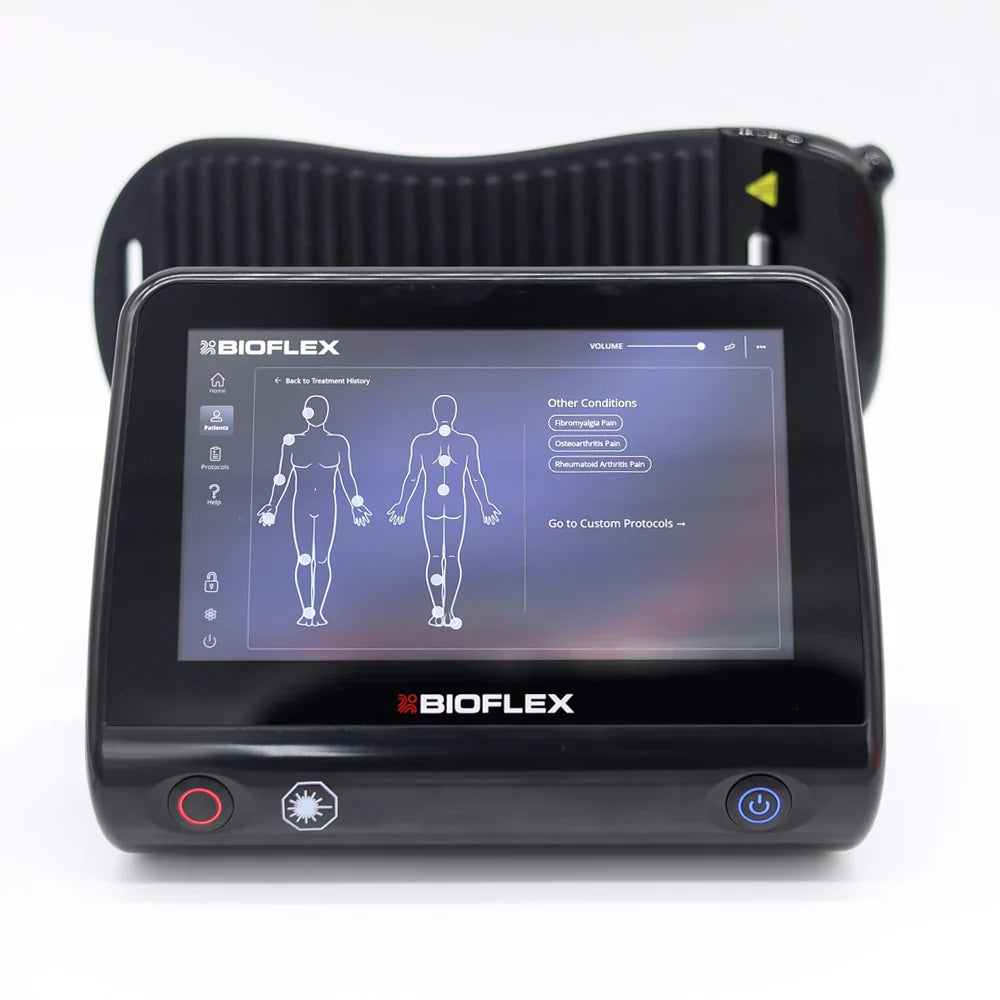
If you are choosing between different types of red light systems, you may also find our HealthLight vs Joovv comparison helpful. For at-home medical-grade options, the HealthLight Ultimate Body Kit (flexible 660 nm + 880 nm pads), the TheraFace Mask (FDA-cleared facial LED + vibration), and the BIOFLEX MultiPort System (clinician-grade sequential 660/830/905 nm) cover most use cases without needing a local studio.
Frequently Asked Questions
Is red light therapy near me better than buying a home device? Not always. A local provider is better when you need evaluation, medical oversight, or help with a specific condition. A home device may be better for frequent, ongoing sessions if you choose a quality system and follow safe usage instructions.
How many red light therapy sessions do I need? It depends on your goal, device output, treatment area, and health status. Many protocols involve multiple sessions per week for several weeks before reassessment. Be cautious of anyone promising major results from one session.
Is red light therapy the same as tanning? No. Quality red light therapy should not rely on UV light. Tanning beds use ultraviolet exposure to darken skin, while red and near-infrared therapy use different wavelengths for wellness or therapeutic purposes.
What wavelengths should I look for? Many red light therapy devices use red wavelengths around 630 to 660 nm and near-infrared wavelengths around 810 to 850 nm. The best choice depends on whether your goal is skin, pain, recovery, or deeper tissue support.
Is red light therapy safe every day? Some devices and goals may allow frequent use, but more is not always better. Follow the manufacturer’s instructions or your provider’s protocol, and ask a healthcare professional if you have medical conditions, photosensitivity, or take medications that increase light sensitivity.
Can red light therapy help with weight loss? Red light therapy may support body composition goals in limited contexts, but it should not be viewed as a replacement for nutrition, exercise, sleep, and medical care when needed. Be wary of clinics promising effortless fat loss.
Are home red light therapy devices HSA/FSA eligible? Yes — medical-grade devices like the HealthLight Ultimate Body Kit, TheraFace Mask, and BIOFLEX MultiPort System are FDA-cleared and HSA/FSA-eligible for documented conditions like chronic pain, post-surgical recovery, or acne when prescribed by a physician. A Letter of Medical Necessity is typically required and converts the pre-tax purchase to roughly 26-40% in real tax savings depending on your tax bracket.
Before you book the nearest session, compare your options
Searching for red light therapy near me can help you discover local providers, but it should not be the final step in your decision. The best choice depends on your goal, the device specifications, the treatment protocol, and whether you need professional supervision or long-term convenience.
If you decide that at-home treatment makes more sense, Your Health Sanctuary offers professional-grade recovery and wellness devices for home use, including red light therapy, compression therapy, and percussion therapy tools. Our products are curated with quality, fair pricing, detailed specs, free shipping, price match support, flexible financing options, and responsive expert guidance in mind.
Not Sure Whether to Book Local or Buy a Home Device?
Compare the HealthLight Ultimate Body Kit, TheraFace Mask, or BIOFLEX MultiPort System with a real recovery specialist — no pressure, no upsell, just honest guidance on whether home or clinical use makes more sense for your situation.
Shop HealthLight Ultimate Body Kit → Speak with Justin's Team: (612) 360-2490All three devices are HSA/FSA eligible with a Letter of Medical Necessity from your physician — for documented chronic pain, post-surgical recovery, neuropathy, or acne, LMN approval is routine and the pre-tax purchase converts to roughly 26–40% in real tax savings depending on your tax bracket.
Ready to Upgrade Your Recovery?
The equipment referenced in this guide, in stock and ready to ship. Many products qualify for HSA/FSA — call us to confirm eligibility for your situation.
Questions? Talk to our recovery specialists: (612) 360-2490