

Best Recovery Equipment for Runners: The Complete 2026 Guide to Faster Recovery
Best Recovery Equipment for Runners 2026: The Complete Guide to Running Faster, Recovering Smarter
Every serious runner knows the truth: you don't get faster during training — you get faster during recovery. The gains from your tempo runs, intervals, and long runs only materialize if your body can repair, adapt, and rebuild between sessions. Yet most runners invest heavily in shoes, watches, and race entries while neglecting the recovery equipment that determines whether their training actually translates to performance.
This guide ranks the best recovery equipment for runners in 2026 based on clinical evidence, real-world effectiveness, and value for the investment. Whether you're training for your first 5K or your 50th marathon, these tools will help you recover faster, stay injury-free, and reach your running potential.
The 6 Essential Recovery Categories for Runners
Effective runner recovery isn't about one magic device — it's about building a recovery system that addresses the specific stresses running places on your body. Here are the six categories of recovery equipment every serious runner should consider, ranked by impact and evidence:
| Rank | Category | Primary Benefit | Evidence Level | Runner Impact |
|---|---|---|---|---|
| #1 | Pneumatic Compression Boots | Circulation, lactate clearance, swelling | Strong | Game-changing |
| #2 | Percussive Therapy / Massage Guns | Muscle tension, trigger points, flexibility | Strong | Essential |
| #3 | Cold Therapy Systems | Inflammation, acute injury, pain relief | Strong | High for injury-prone |
| #4 | Red Light / Photobiomodulation | Cellular repair, deep tissue healing | Moderate-Strong | High for longevity |
| #5 | Foam Rollers / Mobility Tools | Fascia release, flexibility, warm-up | Moderate | Foundation |
| #6 | Compression Garments | Passive support, mild circulation boost | Moderate | Supplemental |
#1: Pneumatic Compression Boots — The Runner's Best Friend
If you could only invest in one piece of recovery equipment as a runner, pneumatic compression boots should be your choice. There's a reason every professional running team, Olympic training center, and elite marathon program has these in their recovery room.
Pneumatic compression boots use sequential air compression to flush metabolic waste products from your legs, reduce post-run swelling, and accelerate blood flow back to your heart. For runners, this directly addresses the primary recovery bottleneck: getting the byproducts of hard training out of your legs and fresh, nutrient-rich blood in.
Why Runners Love Compression Boots
- Accelerated lactate clearance — Studies show pneumatic compression can reduce blood lactate levels significantly faster than passive recovery, meaning your legs feel fresher sooner.
- Reduced DOMS — Delayed-onset muscle soreness after hard runs is markedly reduced with post-run compression sessions.
- Decreased swelling — Long runs and speed work create micro-trauma and swelling in leg tissues. Compression boots reduce this swelling faster than gravity alone.
- Improved range of motion — Post-compression, runners consistently report better ankle and hip mobility, which translates to better running form on subsequent sessions.
- Passive recovery — Unlike foam rolling or stretching, you just sit back and let the boots do the work. Perfect for exhausted post-long-run recovery.
Normatec 3 Full Body System
The Normatec 3 is the gold standard in pneumatic compression for athletes. Its patented Pulse technology uses dynamic air compression with a sequential pulse pattern that mimics natural muscle contractions. The full-body system includes leg, hip, and arm attachments — covering every muscle group runners stress. Features Bluetooth connectivity for customizable pressure zones and the HyperSmart app for guided recovery sessions. Used by virtually every professional running team and most Division I athletics programs.
Best for: Serious runners, marathon/ultra runners, running coaches with multiple athletes, anyone who wants the best compression system available.
Rapid Reboot REGEN Complete Package
The Rapid Reboot REGEN delivers clinical-grade sequential compression at a more accessible price point than the Normatec. The complete package includes full-leg boots that cover your feet, calves, quads, and hips. Multiple pressure settings allow you to customize intensity based on your recovery needs — gentle after easy runs, more aggressive after speed work or races. Excellent build quality and reliability with a strong track record among competitive runners.
Best for: Competitive runners seeking top-tier compression without the premium Normatec price, running clubs, home recovery setups.
#2: Percussive Therapy — Your Portable Running Therapist
Percussion massage guns have revolutionized how runners manage muscle tension, and for good reason. Running creates repetitive stress patterns that lead to tight IT bands, locked-up hip flexors, angry calves, and knotted hamstrings. A quality percussion device lets you address these issues immediately — before they become injuries.
Theragun Pro Plus G6
The Pro Plus G6 represents a quantum leap in percussive therapy. Beyond standard percussion, it integrates near-infrared light therapy, vibration therapy, and guided routines specifically designed for runners. The adjustable arm lets you reach your own back, hamstrings, and calves without a contortionist's flexibility. QuietForce Technology means you can use it while watching TV, on a plane to your next race, or at 5 AM without waking the house. The running-specific programs target IT band, plantar fascia, hip flexors, and calf/Achilles — the four areas that sideline runners most often.
Best for: Serious runners who want the most advanced percussion technology with built-in running protocols.
Theragun Prime Plus
The Prime Plus delivers Therabody's core percussive therapy technology at a more accessible price point. With the same QuietForce motor and Smart Percussive Therapy as the Pro Plus, you get clinical-grade percussion without the extra modalities. The app-guided routines include runner-specific programs for pre-run activation, post-run recovery, and injury prevention targeting common runner trouble spots. An excellent choice for runners who want proven percussive therapy without the premium investment.
Best for: Recreational to competitive runners who want proven Therabody percussion technology at a mid-range price.
Key Runner Areas to Target with Percussion
| Area | Why Runners Need It | When to Treat | Duration |
|---|---|---|---|
| IT Band | Runner's knee prevention, lateral knee pain | Post-run, pre-run if tight | 60-90 sec per side |
| Calves / Achilles | Achilles tendinopathy prevention, calf strain | Post-run (gentle), rest days | 60-120 sec per side |
| Quads | Knee tracking, downhill running recovery | Post-run, especially after hills | 90-120 sec per side |
| Hip Flexors / Psoas | Hip mobility, stride length, lower back pain | Daily for desk-bound runners | 60-90 sec per side |
| Glutes / Piriformis | Sciatic nerve issues, hip stability, power | Post-run, pre-run activation | 60-90 sec per side |
| Plantar Fascia | Plantar fasciitis prevention and management | Morning, post-run (soft attachment) | 30-60 sec per foot |
#3: Cold Therapy Systems — For Acute Recovery and Injury Management
Ice baths have been a runner's staple for decades, but professional cold therapy systems deliver targeted, controlled cooling that's far more effective (and more tolerable) than sitting in a trash can full of ice water.
Game Ready GRPro 2.1
The Game Ready GRPro 2.1 combines active cold therapy with intermittent compression — a combination that's dramatically more effective than ice alone. The system circulates ice water through anatomically designed wraps while simultaneously providing pneumatic compression, driving cold deep into tissue while reducing swelling. The leg wraps are purpose-built for runner injuries: knee, ankle, shin/calf, and hip. Used in virtually every professional sports training room and increasingly by serious recreational athletes who want clinical-grade injury management at home.
Best for: Injury-prone runners, marathon recovery, runners managing chronic conditions like shin splints or patellar tendinopathy, and post-race recovery.
#4: Red Light Therapy — The Deep Recovery Advantage
Red light therapy is the newest addition to the runner's recovery toolkit, but the evidence supporting its use is growing rapidly. Unlike compression and percussion that work mechanically, photobiomodulation works at the cellular level — stimulating mitochondrial function, reducing inflammation, and accelerating tissue repair.
For runners, this means faster healing of micro-damage from training, reduced inflammation in tendons and joints, and potentially enhanced adaptation to training stimulus. Pre-exercise application has even been shown to improve performance and reduce subsequent muscle damage.
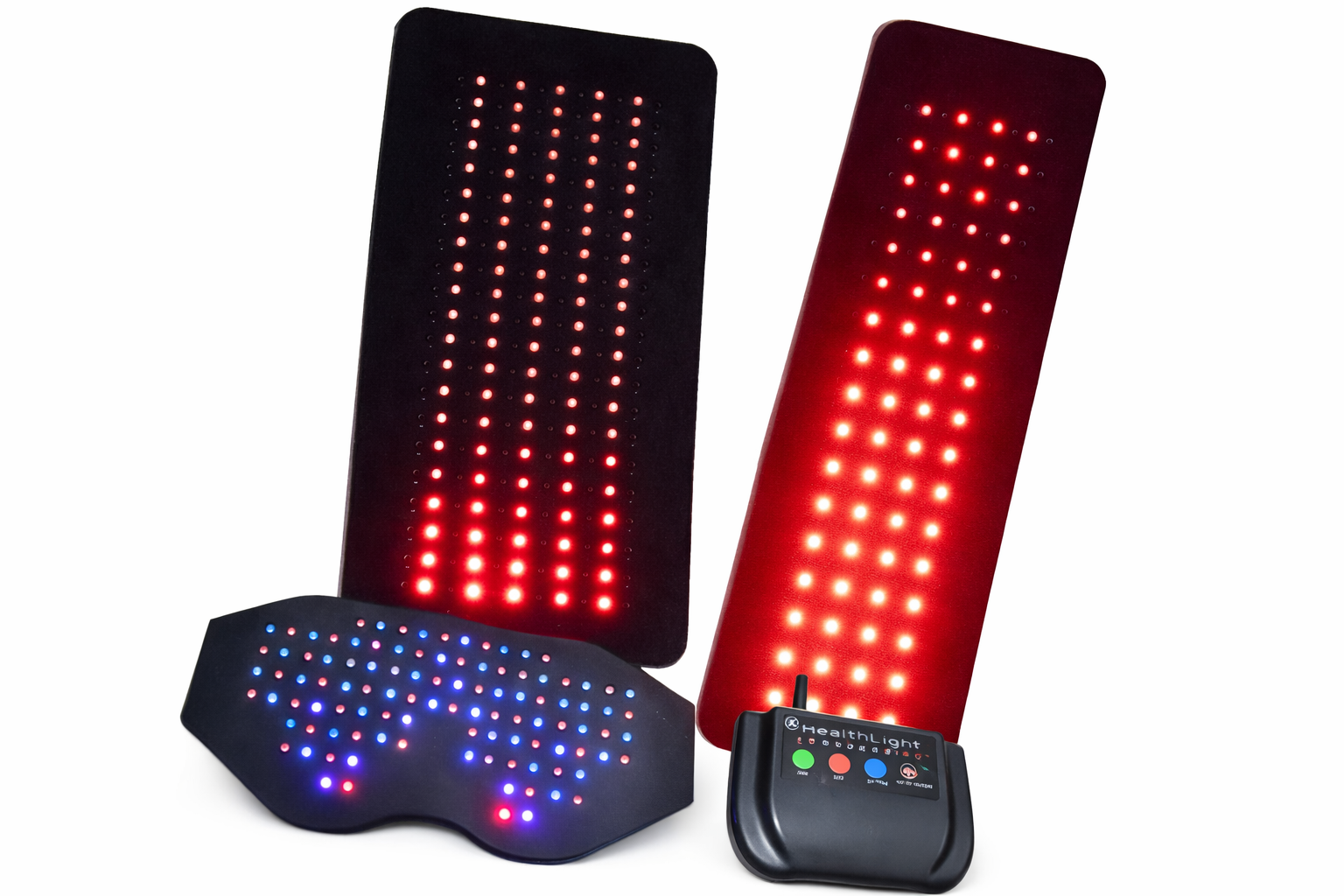
The HealthLight Ultimate Body Kit is ideal for runners who want full-body photobiomodulation coverage — treating legs, hips, back, and feet with clinical-grade LED pads. The BIOFLEX MultiPort System offers even more targeted laser therapy for specific injury sites and chronic conditions.
#5: Multi-Function Recovery Boots
Jetboot Pro Plus (FDA Cleared)
The Jetboot Pro Plus combines three recovery technologies in one system: pneumatic compression, vibration therapy, and infrared LED therapy. For runners, this means you get the circulatory benefits of compression boots plus the muscle-relaxing effects of vibration plus the cellular-healing benefits of infrared — all in a single session. The FDA clearance provides assurance of safety and efficacy. A remarkable value proposition for runners who want multi-modal recovery without buying three separate devices.
Best for: Runners who want maximum recovery technology in one device, space-conscious home setups, value-conscious athletes.
The Runner's Weekly Recovery Schedule
Knowing what equipment to use is only half the equation. Knowing when to use each tool for maximum benefit is what separates smart recovery from just going through the motions.
Sample Recovery Protocol: Marathon Training Block
| Day | Training | Recovery Protocol |
|---|---|---|
| Monday | Easy run (30-45 min) | 10 min percussion on calves/hips. 20 min compression boots while stretching. |
| Tuesday | Speed work / intervals | Compression boots immediately post-run (30 min). Percussion on quads and IT bands. Cold therapy if any acute soreness. |
| Wednesday | Easy run or cross-train | Light percussion pre-run for activation. 20 min compression boots post. Red light therapy on any problem areas. |
| Thursday | Tempo run | Compression boots post-run (30 min). Full percussion routine targeting all major running muscles. Red light therapy if available. |
| Friday | Rest or easy shakeout | Extended compression session (30-45 min). Full mobility routine with percussion. Red light therapy full body. |
| Saturday | Long run | Compression boots ASAP post-run (30-45 min). Cold therapy on knees/ankles if needed. Gentle percussion. Extra hydration and nutrition. |
| Sunday | Rest day | Morning: compression boots (20 min). Afternoon: full percussion routine. Evening: red light therapy. This is your "super-recovery" day. |
Building Your Recovery Kit: Budget Tiers
| Budget Tier | Essential Equipment | Investment | Best For |
|---|---|---|---|
| Starter | Theragun Prime Plus + foam roller | $$ | Recreational runners, 5K-half marathon |
| Serious | Theragun Pro Plus G6 + Rapid Reboot REGEN | $$$ | Competitive runners, marathon training |
| Elite | Theragun Pro Plus G6 + Normatec 3 Full Body + Game Ready GRPro 2.1 | $$$$ | Elite/professional runners, ultra marathon |
| Complete | All of the above + HealthLight Ultimate Body Kit or BIOFLEX | $$$$$ | Running coaches, PT clinics, team facilities |
Frequently Asked Questions
What is the single most important recovery tool for runners?
If you can only invest in one recovery device, pneumatic compression boots provide the highest return on investment for runners. They directly address the primary recovery bottleneck (flushing metabolic waste and reducing swelling in legs), they require zero effort to use (sit back and relax), and they produce noticeable results from the very first session. The Normatec 3 and Rapid Reboot REGEN are both excellent choices. That said, a percussion device like the Theragun is a close second due to its versatility and portability.
Should I use recovery equipment before or after running?
Both, but the timing depends on the tool. Compression boots are primarily a post-run tool (within 2 hours of finishing). Percussion devices work both ways: pre-run for muscle activation and warm-up (30-60 seconds per muscle group, lower intensity) and post-run for recovery (60-120 seconds per group, moderate intensity). Red light therapy can be used pre-run to enhance performance or post-run for recovery. Cold therapy is best used post-run for acute inflammation or after hard sessions.
How much should I spend on recovery equipment?
A good rule of thumb: invest in recovery proportional to your training investment. If you're running 30+ miles per week and spending on coaching, races, and gear, quality recovery equipment will do more for your performance than another pair of shoes. A Theragun Prime Plus plus a compression system represents a reasonable starting investment that covers the two most impactful recovery categories. You can always add cold therapy and red light therapy as your budget allows.
Can recovery equipment prevent running injuries?
Recovery equipment alone doesn't prevent injuries — smart training does. But recovery equipment is a critical component of injury prevention because it addresses the tissue-level fatigue and tension that accumulate with training and eventually lead to overuse injuries. Runners who use compression boots and percussion therapy consistently report fewer missed training days due to injury. The key is using these tools proactively (before problems develop) rather than reactively (after you're already hurt).
Do professional runners actually use this equipment?
Absolutely. Pneumatic compression boots (especially Normatec) are ubiquitous at every level of professional running — from NCAA cross-country programs to Olympic training centers to professional marathon teams. Percussion devices are similarly widespread. The Game Ready cold compression system is standard in professional sports medicine. Red light therapy is the newest addition but is rapidly being adopted by forward-thinking programs. The equipment in this guide isn't aspirational — it's what the best runners in the world actually use daily.
Is recovery equipment worth it for recreational runners?
Yes, and arguably even more so than for elite runners. Recreational runners often have less optimal biomechanics, less training experience, and more accumulated life stress (desk jobs, sleep deprivation, etc.) that impairs recovery. They also typically can't afford to take days off from their regular lives when training fatigue accumulates. Recovery equipment helps recreational runners maintain training consistency, which is the single biggest predictor of improvement at any level.
How soon after a marathon should I use recovery equipment?
Start as soon as possible. Within 30-60 minutes of finishing: gentle compression boots session (20-30 min at lower pressure). Within 2-4 hours: second compression session, very gentle percussion on quads and calves (avoid deep pressure on severely fatigued muscles). Days 1-3 post-marathon: daily compression sessions, cold therapy if significant swelling, gentle percussion. Days 3-7: gradually increase percussion intensity as soreness decreases. Red light therapy can begin immediately post-race and continue daily through the recovery period.
Build Your Complete Runner's Recovery System
Your Health Sanctuary carries every piece of recovery equipment in this guide — from compression boots to percussion devices to red light therapy systems. Our recovery specialists (many of them runners) can help you build the perfect recovery kit for your training level and goals.
Shop Normatec 3 Full Body Shop Theragun Pro Plus G6Need help choosing? Talk to a recovery specialist who gets it:
Continue Your Research
Clinical References
- Dupuy O, et al. "An evidence-based approach for choosing post-exercise recovery techniques to reduce markers of muscle damage, soreness, fatigue, and inflammation." Frontiers in Physiology. 2018;9:403.
- Draper SN, et al. "Effects of intermittent pneumatic compression on delayed onset muscle soreness (DOMS) in long distance runners." International Journal of Exercise Science. 2020;13(2):75-86.
- Konrad A, et al. "The acute effects of a percussive massage treatment with a hypervolt device on plantar flexor muscles' range of motion and performance." Journal of Sports Science and Medicine. 2020;19(4):690-694.
- Leal-Junior EC, et al. "Effect of phototherapy on exercise performance and markers of exercise recovery: a systematic review." Lasers in Medical Science. 2015;30(2):925-939.
- Machado AF, et al. "Can water temperature and immersion time influence the effect of cold water immersion on muscle soreness?" Sports Medicine. 2016;46(4):503-514.
Frequently Asked Questions
What is the best recovery equipment for runners?
The most evidence-backed recovery equipment for runners includes sequential compression boots (for lymphatic drainage and muscle recovery), percussion therapy devices (for muscle knot release and DOMS reduction), cold therapy systems (for post-long-run inflammation management), and red light therapy panels (for tissue repair and mitochondrial recovery). The ideal combination depends on training volume — ultra-runners and marathoners benefit most from compression and cold therapy, while high-mileage track athletes prioritize percussion and red light.
How often should runners use compression boots for recovery?
Most endurance runners use compression boots for 20–30 minutes immediately after long runs and hard workouts. For recovery weeks or taper periods, daily 20-minute sessions help clear lactate and reduce baseline inflammation. Elite runners often use them twice daily during peak training blocks. The key is consistency — compression therapy benefits compound over days and weeks of regular use.
Does red light therapy help runners recover faster?
Yes — multiple studies on photobiomodulation and endurance athletes show reduced DOMS, improved time-to-readiness, and measurable improvements in muscle function markers (creatine kinase, lactate dehydrogenase) when red light therapy is applied post-exercise. A 2015 meta-analysis found light therapy reduced post-exercise muscle damage markers by 23–45%. For high-volume runners, 10–15 minute full-leg red light sessions post-run are a practical and effective recovery addition.
Can runners use a Theragun and compression boots on the same day?
Yes — percussion therapy and compression therapy are complementary, not competing modalities. A common protocol is percussion therapy immediately post-run to address acute muscle tension and trigger points, followed by 20–30 minutes of compression therapy to flush metabolic waste and reduce swelling. Both can be used safely in the same session or on the same day without diminishing each other's effects.
Ready to Upgrade Your Recovery?
The equipment referenced in this guide, in stock and ready to ship. Many products qualify for HSA/FSA — call us to confirm eligibility for your situation.
Questions? Talk to our recovery specialists: (612) 360-2490