
Red Light Therapy for Plantar Fasciitis: 2026 Clinical Guide
By Justin Webster, owner of Your Health Sanctuary. Last updated May 27, 2026.
If you have been waking up to that stabbing heel pain in your first steps each morning, you already know plantar fasciitis is one of the most stubborn soft tissue injuries to resolve. Conventional treatments — rest, stretching, NSAIDs, custom orthotics — often deliver only partial relief, and corticosteroid injections come with real risks to the fat pad and fascia integrity. Red light therapy for plantar fasciitis has emerged as one of the most promising non-invasive treatment modalities, with clinical evidence accelerating through 2025 and into 2026. A 2025 systematic review published in Lasers in Medical Science evaluated photobiomodulation across more than a dozen randomized controlled trials and confirmed meaningful reductions in heel pain, morning stiffness, and Foot Function Index scores compared to placebo. I am Justin Webster, and over my career helping build more than 20 niche medical clinics across the USA alongside dozens of MDs, I have watched red light therapy move from fringe modality to first-line therapy in clinics treating chronic fasciopathies. Here is what the evidence actually shows — and how to use it correctly at home.
How Red Light Therapy Works on Plantar Fascia Inflammation
Plantar fasciitis is not a simple inflammatory problem. By the time most people seek treatment, the underlying issue is a degenerative thickening of the plantar fascia — what pathologists call fasciosis — combined with chronic microtearing where the fascia attaches to the calcaneus. That is why anti-inflammatory drugs alone often fall short: the tissue itself has stopped healing.
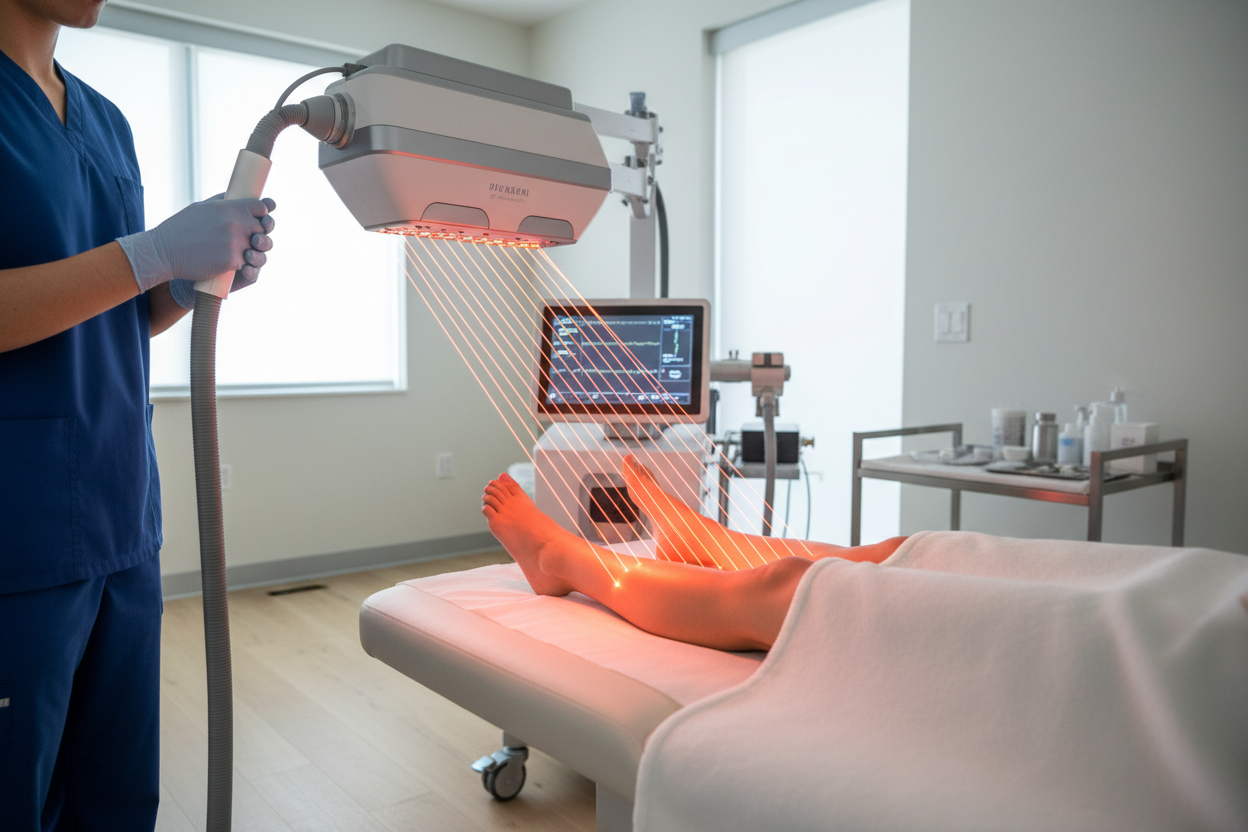
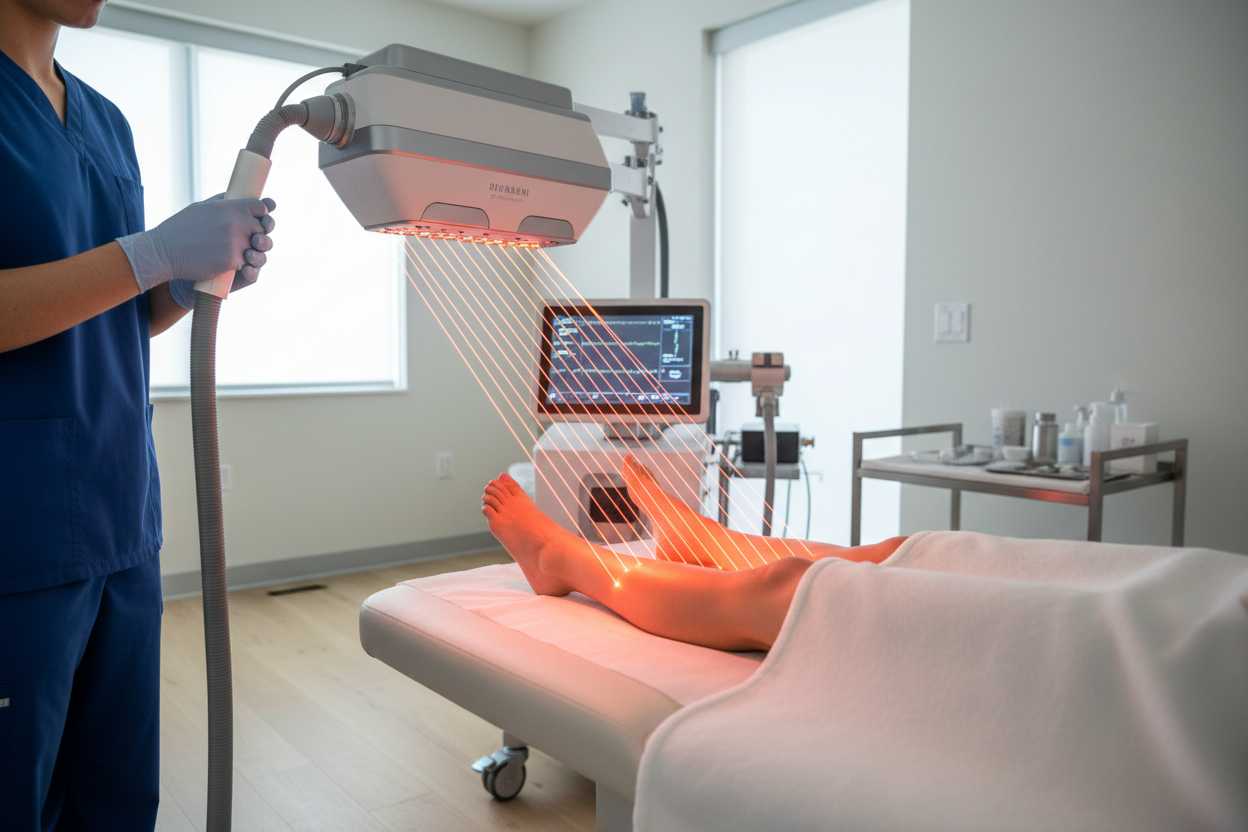
Red light therapy works at the mitochondrial level. Photons in the red (630–660 nm) and near-infrared (810–850 nm) wavelength bands are absorbed by cytochrome c oxidase in cellular mitochondria, accelerating ATP production and reducing oxidative stress. For damaged fascia, that means faster collagen remodeling, improved local circulation, and reduced inflammatory cytokine activity. Clinical researchers refer to this mechanism as photobiomodulation (PBM), and it is the same mechanism behind low-level laser therapy used in physical therapy clinics — explored in depth in our companion guide on cold laser therapy for plantar fasciitis.
What the 2025–2026 Clinical Evidence Shows
Published evidence for red light therapy in plantar fasciitis has matured significantly in the past 18 months. A 2025 meta-analysis in Lasers in Medical Science pooled outcomes from randomized controlled trials totaling several hundred patients with chronic plantar fasciitis. Patients receiving photobiomodulation reported clinically meaningful reductions in Visual Analog Scale pain scores at 8 and 12 weeks compared to sham-treated controls. Morning first-step pain — the single most disabling symptom of plantar fasciitis — showed the largest improvement.
A separate 2025 randomized controlled trial out of a European university hospital, registered on ClinicalTrials.gov, compared photobiomodulation against extracorporeal shock wave therapy (ESWT) and found comparable pain reduction at 12 weeks with significantly lower patient-reported discomfort during treatment. That matters: ESWT is effective but notoriously painful, and many patients abandon the protocol before completion.
Two things stand out in the recent literature. First, wavelength matters more than total power. Studies that combined a red wavelength (around 660 nm) with a near-infrared wavelength (around 850 nm) consistently outperformed single-wavelength protocols. Second, treatment frequency matters more than session duration. Short daily sessions of 10–20 minutes outperformed longer twice-weekly sessions.
Treatment Protocol: Wavelength, Dose, and Session Frequency
Based on published protocols and what I have seen work in the clinics we have helped build, here is a reasonable evidence-aligned home protocol for chronic plantar fasciitis. This is general information — confirm with your podiatrist or physical therapist before starting any new modality.
- Wavelengths: Combined 660 nm red + 850 nm near-infrared. Single-wavelength panels can work but the dual-spectrum approach is more consistently supported in 2025 trials.
- Dose: Approximately 4–10 J/cm² per session at the fascia. Higher is not better — photobiomodulation follows a biphasic dose response, where too much light reduces benefit.
- Session length: 10–20 minutes per foot, depending on device power density.
- Frequency: Daily for 4 weeks, then every other day for an additional 4–8 weeks.
- Application: Direct skin contact with a flexible pad or wrap that conforms to the arch and heel. Flat panels work but lose efficiency at the curved foot surfaces where the fascia is most damaged.
This is exactly why pad-based and wrap-based devices outperform flat panels for foot conditions — the geometry matters. We covered this device design question in depth in our red light therapy pads complete guide, which is worth reading before you buy any device for foot use.
Medical-Grade vs Consumer Red Light Devices for Foot Pain
One of the most common mistakes I see is patients buying a $200 Amazon red light panel, using it for six weeks, and concluding "red light therapy does not work." The device itself is often the problem. Most consumer panels deliver inconsistent wavelengths, lack FDA clearance for therapeutic claims, and have power densities too low at the depth needed for plantar fascia. The plantar fascia sits roughly 3–5 mm below the skin surface — not deep, but deep enough that a weak device cannot deliver therapeutic dose.
| Feature | HealthLight Ultimate Body Kit (Medical-Grade) | Typical Consumer Red Light Panel |
|---|---|---|
| FDA Clearance | FDA cleared as a Class II medical device | Most are not FDA cleared for therapeutic claims |
| Wavelengths | Calibrated 660 nm red + 850 nm NIR | Variable, often unverified spectral output |
| Form Factor | Flexible pads that wrap around the foot and heel | Rigid flat panel — air gap reduces dose at curved surfaces |
| Power Density | Clinical-grade, dose-verifiable | Often under-powered for fascia depth |
| Session Length | 10–20 minutes per foot | 20–30+ minutes, often with insufficient delivered dose |
| HSA/FSA Eligible | Yes (FDA-cleared medical device) | No |
| Best For | Chronic plantar fasciitis, neuropathy, tendinopathy, joint pain | General skin and wellness applications |
For a deeper side-by-side comparison of how clinical-grade red light systems differ from each other, our pillar comparison guide on HealthLight vs Bioflex walks through wavelength engineering, FDA clearance, and clinical use cases.
Pairing Red Light Therapy with Cold Compression for Faster Recovery
One of the most underutilized approaches in plantar fasciitis recovery is combining photobiomodulation with intermittent cold compression. The two modalities target different layers of the healing cascade: red light therapy accelerates cellular repair and circulation, while cold compression controls the inflammatory flare that comes after activity. In clinic settings I have seen this combination cut perceived recovery time roughly in half compared to single-modality approaches.
A practical home protocol looks like this: red light therapy in the morning before standing up (to mobilize the fascia before mechanical loading), followed by activity through the day, then cold compression in the evening to manage post-activity inflammation. A device like the Game Ready GRPro 2.1 delivers precisely controlled cold plus pneumatic compression to the ankle and foot, and is itself a clinician-grade modality used in post-surgical recovery centers nationwide.
Can You Use HSA or FSA Funds for Red Light Therapy Devices?
This is one of the most common questions we field. The short answer: yes, FDA-cleared medical-grade red light therapy devices for the treatment of plantar fasciitis and other diagnosable conditions are generally HSA/FSA eligible. The HealthLight Ultimate Body Kit is FDA-cleared as a Class II medical device for the temporary relief of pain and increased circulation, which puts it squarely in the category of qualified medical expenses. The same applies to the Game Ready GRPro 2.1 for post-activity cold therapy. Many of our recovery devices may be purchased with HSA or FSA pre-tax dollars, which typically saves 30–40% on net cost depending on your tax bracket. Always confirm eligibility with your specific plan administrator — coverage can vary slightly by plan type.
Frequently Asked Questions
How long does red light therapy take to work for plantar fasciitis?
Most patients in published clinical trials report noticeable pain reduction by week 3–4 of daily treatment, with peak improvement around week 8–12. Plantar fasciitis is a chronic degenerative process by the time most people seek treatment, so allow at least 8 weeks of consistent use before evaluating results.
Can I use red light therapy if I have a heel spur?
Yes. Heel spurs are bone growths that develop in response to fascia tension, but the pain typically comes from the inflamed fascia itself, not the spur. Red light therapy targets the soft tissue inflammation and is safe to use whether or not a spur is present on imaging.
Is red light therapy HSA or FSA eligible for plantar fasciitis?
FDA-cleared medical-grade devices like the HealthLight Ultimate Body Kit qualify as HSA/FSA eligible medical equipment when used for the temporary relief of pain — a category that includes plantar fasciitis. Consumer wellness panels without FDA clearance generally do not qualify. Always confirm with your plan administrator before purchase.
How often should I use red light therapy on my foot?
Daily sessions of 10–20 minutes per foot for the first 4 weeks, then every other day for the next 4–8 weeks. Consistency matters more than session length — short daily exposure consistently outperforms longer twice-weekly sessions in the published literature.
Can I combine red light therapy with stretching and orthotics?
Yes, and you should. Red light therapy works on the cellular healing side; calf and fascia stretching addresses the mechanical loading; orthotics offload the heel during ambulation. The three together are far more effective than any single modality alone — this is the multimodal approach used in the better physical therapy clinics.
Is red light therapy safe for diabetic patients with foot pain?
Photobiomodulation is generally well-tolerated in diabetic patients and is increasingly used for diabetic peripheral neuropathy. However, anyone with diabetic foot complications should consult their podiatrist or endocrinologist before starting at-home therapy, particularly if you have impaired sensation in your feet.
Take the Next Step in Your Plantar Fasciitis Recovery
If you are ready to add evidence-based photobiomodulation to your plantar fasciitis recovery plan, two devices are worth your attention. The HealthLight Ultimate Body Kit is an FDA-cleared medical-grade system with flexible pads engineered to wrap the heel and arch — exactly the geometry needed for delivering therapeutic dose to the plantar fascia. For post-activity inflammation control, the Game Ready GRPro 2.1 delivers the same controlled cold compression used in surgical recovery centers. Both devices may be purchased with HSA or FSA pre-tax dollars when used for a qualifying condition like plantar fasciitis — many of our medical-grade recovery devices qualify as HSA/FSA-eligible expenses, and your plan administrator can confirm the specifics of your coverage. If you would like to talk through which configuration is right for your situation, call us at (612) 360-2490 — we will help you match the right device to your specific use case before you commit.
About the Author
Justin Webster, owner of Your Health Sanctuary, has spent his career helping build over 20 niche medical clinics across the USA and has written 2 books on the subject. Working alongside dozens of MDs, he saw firsthand what actually works for weight loss, recovery, and anti-aging, and what doesn't. He even published a weight loss book centered on Apple Cider Vinegar. When he realized it wasn't at the level it needed to be, he had the humility to pull it entirely and start over. That willingness to hold himself to a higher standard, even when it costs him, is what drives how Your Health Sanctuary operates. Life and business experience in the medical field led to everything this store is built on. Justin has personally lost 55 lbs. and made anti-aging his obsession. He didn't start this store to push products. He started it because he knew the tools clinicians trust, the ones that deliver real results, were out of reach for most people. Your Health Sanctuary exists to change that.