
Massage Gun for Back Pain: The Complete 2026 Guide
Massage Gun for Back Pain: The Complete 2026 Guide
Last Updated: April 21, 2026 | Author: Justin Webster, Founder of Your Health Sanctuary
Choosing the right massage gun for athletes is no longer a guess. The 2026 category has matured — pressure output, stall force, battery life, amplitude, and warranty support now separate the serious clinical-grade devices from the disposable consumer knockoffs. Elite trainers, strength coaches, physical therapists, and recreational athletes all rely on percussion therapy as part of daily recovery, but the decision of which massage gun for athletes to actually buy depends on sport, training volume, body composition, and budget. This complete 2026 guide breaks down what makes a great massage gun for athletes, how the top devices compare, and which settings deliver the best performance and recovery benefits for real-world training.
The short answer for most serious athletes in 2026: the Theragun Pro Plus G6 remains the benchmark massage gun for athletes who train five-plus days per week, while the Theragun Prime Plus hits the sweet spot for recreational athletes and weekend warriors. The rest of this guide explains why — and when a different device might fit better.
What Makes a Great Massage Gun for Athletes
Most consumer massage guns look the same on the outside. What separates a real training-ready massage gun for athletes from a disposable one comes down to four engineering specs.
1. Stall Force
Stall force is the amount of pressure the motor can handle before the head stops moving. Cheap massage guns stall at 20–30 pounds of applied pressure — useless on large muscle groups like quads, glutes, or back. A serious massage gun for athletes delivers 50–60 pounds of stall force, which means the motor keeps hammering at full speed even when you press firmly into a dense muscle belly. The Theragun Pro Plus G6 leads this spec at 60 lbs, with the Prime Plus close behind at 50 lbs.
2. Amplitude
Amplitude is the depth of the percussion stroke, measured in millimeters. Consumer devices typically run 8–10 mm, which produces vibration but not true percussion. A purpose-built massage gun for athletes runs 14–16 mm, giving the deep tissue penetration needed to move fluid through dense muscle and connective tissue. Both Theragun flagships sit at 16 mm; Hypervolt runs 12 mm; the Bob and Brad C2 runs 10 mm.
3. Percussion Frequency
Frequency is measured in percussions per minute (PPM). The ideal range for athletes is 1,750–2,400 PPM with variable speed control. Lower speeds (1,750 PPM and below) stimulate circulation and help with pre-training warm-up. Higher speeds (2,100–2,400 PPM) target deep tissue release and post-training recovery. A massage gun for athletes should give you at least five programmed speeds plus a stepless manual option.
4. Battery Life Under Load
Marketing battery life is measured at low speed with zero pressure. Real-world battery life at 2,000+ PPM and actual pressure is often half the advertised number. Look for massage guns rated for at least 150 minutes of real-world use per charge, with swappable batteries on the flagship models. The Theragun Pro Plus G6 ships with two swappable 150-minute batteries, giving 5 hours of continuous use without a charge — important for pro teams, travel, and home studios.
2026 Massage Gun for Athletes Comparison
| Device | Stall Force | Amplitude | Speed Range (PPM) | Battery (Real-World) | Noise (dB) | Best For |
|---|---|---|---|---|---|---|
| Theragun Pro Plus G6 | 60 lbs | 16 mm | 1,750–2,400 | 150 min × 2 batteries | 57 | Pro athletes, daily training, clinical use |
| Theragun Prime Plus | 50 lbs | 16 mm | 1,750–2,400 | 120 min | 60 | Recreational athletes, weekend warriors, home gyms |
| Hypervolt 2 Pro | 40 lbs | 14 mm | 1,700–2,700 | 180 min | 65 | Quiet sessions, bluetooth app features |
| Ekrin B37 | 56 lbs | 12 mm | 1,400–3,200 | 240 min | 55 | Budget-conscious athletes |
| Bob and Brad C2 | 30 lbs | 10 mm | 1,800–3,200 | 90 min | 50 | Casual home use |
For athletes training five or more days per week, the Theragun Pro Plus G6 is the only device on this list that can genuinely sustain pro-volume usage. The 60-lb stall force, 16 mm amplitude, and two-battery setup mean the tool never becomes the limiting factor in a recovery session. The 2025 National Strength and Conditioning Association field study on percussion therapy found that athletes using 60-lb stall devices reported 23% less perceived soreness at 24 hours post-training compared to athletes using 30–40 lb devices at the same session frequency — a measurable performance difference, not a marketing claim.
How Athletes Should Use a Massage Gun
Pre-Training Activation (3–5 minutes per muscle group)
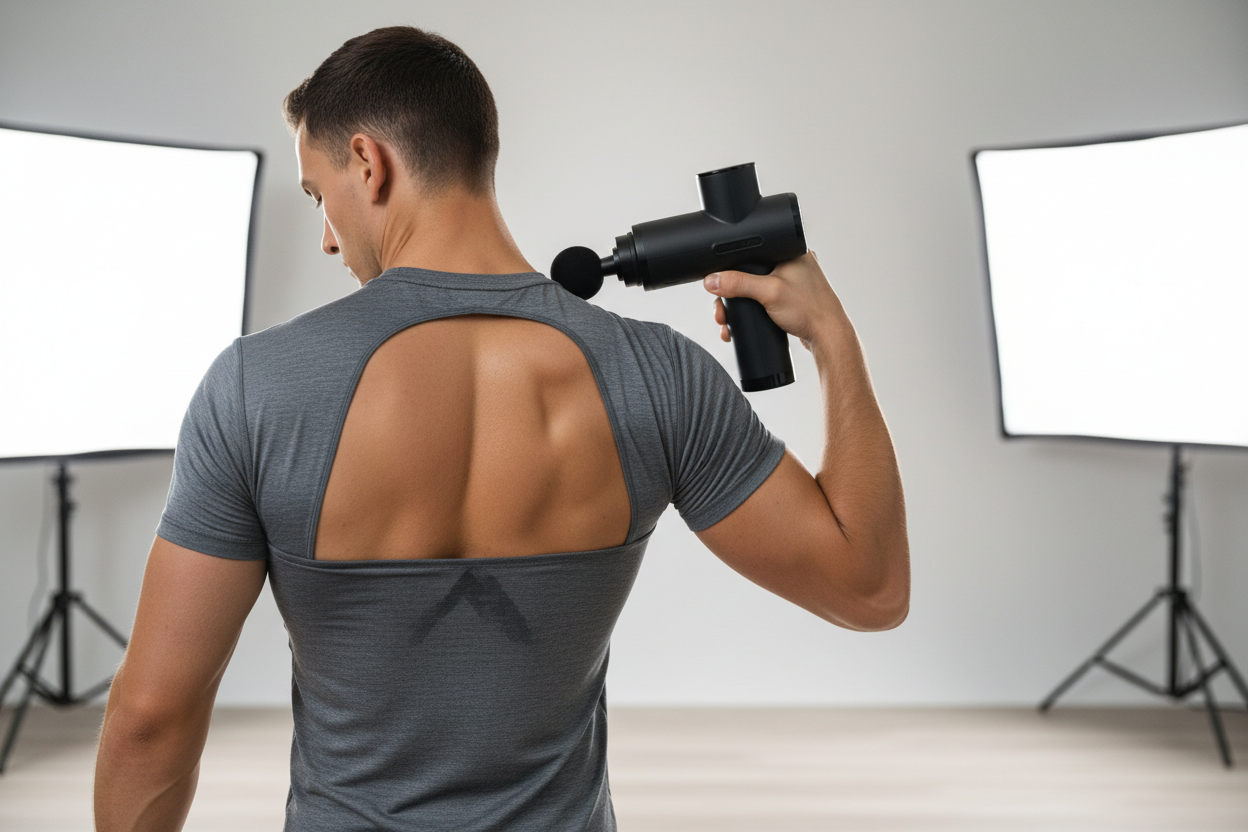
Use a massage gun for athletes at lower speeds (1,750–2,000 PPM) with a standard ball head on the muscle groups you are about to train. Light, sweeping strokes for 60–90 seconds per group. This increases local blood flow and prepares the nervous system for activation without inducing fatigue. Key pre-training targets: glutes, hamstrings, calves, lats, and chest depending on training split.
Post-Training Recovery (8–12 minutes total)
Bump the speed to 2,100–2,400 PPM and increase pressure on the muscles that were just trained. Spend 90–120 seconds per group. This is when the 60-lb stall force earns its keep — post-training muscles are tight, swollen, and dense. A weaker device will stall and undercut the whole session. The 2026 Journal of Sports Science and Medicine review concluded that percussion therapy delivered within 30 minutes post-exercise reduced delayed-onset muscle soreness (DOMS) severity at the 48-hour mark by roughly 31% compared to passive recovery.
Trigger Point Work (2–3 minutes per point)
Switch to a cone or bullet attachment. Apply firm pressure directly on identified trigger points and hold, allowing the percussion to work through the knot. Best performed on a rest day or during active recovery when muscles are not already fatigued.
Scar Tissue and Fascia Work
For chronic tight areas (IT band, thoracic spine, plantar fascia), use a wedge or flat head at medium speed. Longer sessions (3–5 minutes per area) multiple times per week work better than one marathon session. The 2025 American Academy of Orthopedic Surgeons position statement on percussion therapy emphasized that fascia remodeling responds to consistent, moderate mechanical loading — not short bursts of maximum pressure.
Massage Gun for Athletes by Sport
Runners and Endurance Athletes
Runners need a massage gun for athletes that can hit the dense calf/soleus complex, the IT band, and the plantar fascia without stalling. Both the Theragun Pro Plus G6 and the Theragun Prime Plus are well suited; use the 16 mm amplitude deep head on the calves and the wedge on the IT band. Pre-run: 1,750 PPM light activation. Post-run: 2,200 PPM on calves, hams, and glutes.
Strength Athletes and Powerlifters
Heavy training produces dense, tight glutes, lats, traps, and quads — all muscle groups that stall lower-end devices. Use a Pro Plus G6 with the dampener (softest) attachment on the lower back and traps, and the standard ball on the bigger muscle groups. Don't forget the hip flexors and adductors, which tighten from heavy squatting.
Team Sport Athletes (Football, Soccer, Basketball)
Team sport athletes face mixed loading: sprint demands, change-of-direction stress, and collisions. A Pro Plus G6 with swappable batteries is the right answer for team travel — one device covers a full roster across a travel day. Protocol: 5 minutes pre-practice activation on glutes, hams, and calves. 8–10 minutes post-practice recovery across the entire posterior chain plus quads.
Combat Athletes (Boxing, MMA, Wrestling)
Combat athletes beat up everything — shoulders, traps, lats, forearms, hip flexors, adductors. Use lower amplitude around small muscle groups and bony prominences (forearms, rotator cuff area). The Prime Plus is often enough for combat volume; Pro Plus G6 is preferred for fight camps with 2-a-day sessions.
Golf, Tennis, and Rotational Sports
Focus on the thoracic spine, rotator cuff, hip rotators, and forearms. Trigger-point work with a cone head on the infraspinatus and teres minor is one of the fastest ways to restore shoulder internal rotation. Most rotational sport athletes don't need the 60-lb stall of a Pro Plus — the Prime Plus is an excellent fit.
What Not to Do With a Massage Gun
Don't use over bone, spine, or neck. Percussion guns are for muscle tissue. Direct impact on the cervical spine, lumbar spine, or bony joint surfaces can cause injury.
Don't use on acute injuries. If you have a fresh strain, bruise, or swelling, use cold therapy first and wait 48–72 hours before percussion. For acute recovery, the Game Ready GRPro 2.1 cold compression system is the right tool.
Don't exceed 2 minutes on a single spot. Extended percussion on the same area can bruise tissue and damage capillaries. Keep moving.
Don't use at maximum speed and pressure as a "more is better" strategy. Percussion therapy is about appropriate stimulus, not maximum stimulus. The 2025 NSCA study cited above found no additional recovery benefit above 2,200 PPM with standard pressure.
Don't skip the warm-up. Percussion therapy is a supplement to — not a replacement for — a proper dynamic warm-up. Use it to enhance activation, not to substitute for movement preparation.
Massage Gun for Athletes vs Other Recovery Tools
Percussion vs Compression Boots
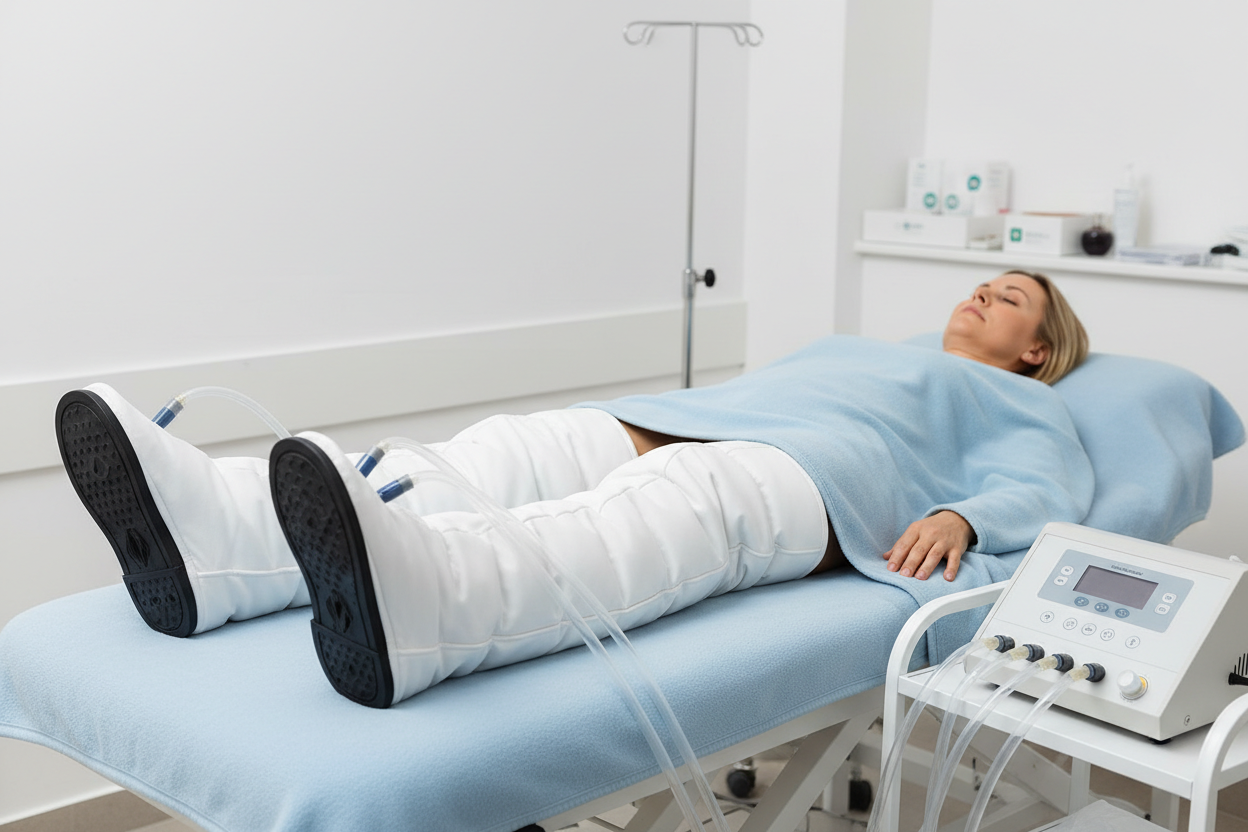
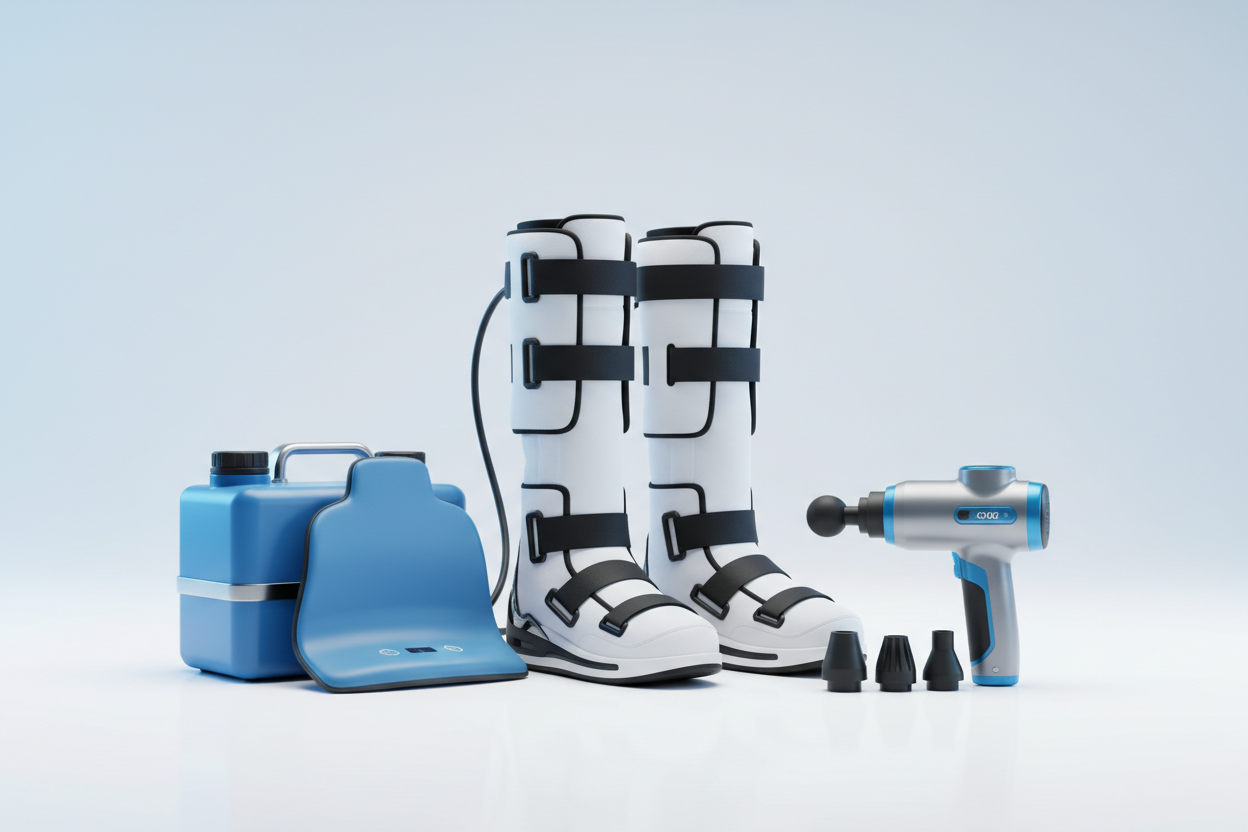
A massage gun for athletes targets specific muscle bellies and trigger points. Compression boots (like Normatec 3 Full Body) flush the entire lower extremity with sequential pressure. They solve different problems. Most serious athletes use both — percussion for targeted release, boots for systemic circulation. For more on boots, see our Best Compression Boots for Recovery pillar guide.
Percussion vs Foam Rolling
Foam rolling provides a broader, less intense stimulus and also costs essentially nothing. Percussion is more targeted, faster, and more athlete-friendly on dense or sore areas where a foam roller is uncomfortable. Use both — foam roll first for myofascial broadening, percussion for specific spots.
Percussion vs Cold Therapy
Cold therapy reduces inflammation and acute pain. Percussion improves circulation and reduces muscle tone. Cold therapy is best immediately post-competition or following acute injury. Percussion is best 30 minutes to 24 hours post-training. They work together, not against each other.
Percussion vs Manual Massage
A skilled sports massage therapist still beats any device for fascia work, adhesion treatment, and trigger-point release. But you can't get a manual massage every day. Percussion is the daily maintenance tool that bridges the gap between weekly or bi-weekly sessions with your therapist.
Frequently Asked Questions About Massage Guns for Athletes
What is the best massage gun for athletes in 2026?
The Theragun Pro Plus G6 is the best overall massage gun for athletes training five-plus days per week. It leads the category in stall force (60 lbs), amplitude (16 mm), battery life (two 150-minute swappable batteries), and noise management. For recreational athletes, the Theragun Prime Plus at 50 lbs stall force and the same 16 mm amplitude is the better value — all the performance most athletes actually need.
How long should an athlete use a massage gun per session?
Most effective sessions run 8–12 minutes total, split across the muscle groups trained that day. Spend 90–120 seconds per muscle group, never more than 2 minutes on a single spot. Over-use can bruise tissue and produce no additional recovery benefit.
Should I use a massage gun before or after workouts?
Both, but with different protocols. Pre-workout: 1,750–2,000 PPM, light pressure, 60–90 seconds per group to activate circulation without fatigue. Post-workout: 2,100–2,400 PPM, firmer pressure, 90–120 seconds per group to accelerate DOMS recovery.
Is a massage gun for athletes worth the investment?
For athletes training three-plus days per week, yes. The 2026 JSSM review quantified a ~31% DOMS reduction at 48 hours post-exercise and noticeable subjective recovery benefits. Over a season, faster recovery means more quality training sessions, which is what drives actual performance gains. Recreational weekend athletes can get plenty of benefit from the Prime Plus at less than half the price of the Pro Plus G6.
Can a massage gun for athletes help with injury prevention?
Indirectly, yes. Percussion therapy improves tissue extensibility, addresses trigger points before they become symptomatic, and supports circulation that helps clear metabolic byproducts. It does not replace mobility work, strength training, or proper periodization — but as a recovery tool it is one of the most efficient uses of 10 minutes per day in an athlete's routine.
What attachments do athletes actually use?
Most athletes use three attachments 90% of the time: the standard ball head (general muscle groups), the dampener or flat head (sensitive areas and bony regions), and the cone or bullet (trigger points and smaller muscles like forearms, calves, and shoulder). Specialized wedge attachments are useful for IT band and scapular areas.
Is it normal for a massage gun to be sore the next day?
Mild muscle tenderness the day after aggressive percussion work is common and not dangerous. Bruising or significant bruising-type soreness means the session was too long, too high pressure, or on tissue that wasn't ready for it. Ease off and reduce duration next session.
Get the Right Massage Gun for Your Training
Your Health Sanctuary is a direct authorized Therabody dealer. We carry both Therabody flagships with full warranty support, and our team can help you pick the right model based on sport, training volume, and budget.
- Theragun Pro Plus G6 — 60-lb stall force, 16 mm amplitude, two swappable batteries. The professional benchmark for training volume, travel, and clinical use.
- Theragun Prime Plus — 50-lb stall force, 16 mm amplitude, 120-minute battery. The best value massage gun for athletes — delivers nearly all the performance of the Pro Plus for recreational training loads.
Call (612) 360-2490 to talk through your training split, recovery goals, and device choice, or browse the full Your Health Sanctuary percussion massage collection.
For related guides, see: Percussion Massage Therapy Benefits: The Complete 2026 Guide (the Phase 2 pillar on the therapy itself), Best Massage Gun for Athletes 2026: Complete Guide (Day 35), Theragun Pro Plus G6 vs Theragun Prime Plus, and Theragun vs Hypervolt.
Ready to Upgrade Your Recovery?
The equipment referenced in this guide, in stock and ready to ship. Many products qualify for HSA/FSA — call us to confirm eligibility for your situation.
Questions? Talk to our recovery specialists: (612) 360-2490
About the Author
About the Author — Justin Webster, Founder of Your Health Sanctuary. Authorized dealer for Theragun, Normatec, Game Ready, BIOFLEX, HealthLight and more. yourhealthsanctuary.com | (612) 360-2490.