
Firefly Recovery vs Compression Boots: Which Wins? (2026)
Firefly recovery vs compression boots is one of the more common questions we get from athletes and clinicians trying to decide which recovery tool actually deserves a spot in their bag or their treatment room. A close second is how Firefly stacks up against plain compression socks. Firefly Recovery is a small electrical stimulation device you wear just below the knee. Compression socks apply steady, graduated pressure all day. Sequential pneumatic compression boots, like the Bio Compression SC-2008-DL we carry, are full-leg sleeves that inflate and deflate in sequence. All three claim to support recovery. They do it in completely different ways and they're built for different situations. Here's an honest, side-by-side look.
What Firefly Recovery Actually Is
Firefly Recovery is a lightweight device that sits on the outer leg just below the knee, over the fibular head. It uses neuromuscular electrical stimulation (NMES) to stimulate the peroneal nerve, which makes the calf muscles twitch gently and act like a pump for blood flow in the lower leg. The pitch is portability: it's small, worn under clothing, and you can use it on a plane, at your desk, overnight, or on the drive home from a race. Firefly is sold by the pair and is not rechargeable. Each device runs for roughly 30 hours and is then replaced, so it works more like a consumable than a one-time purchase. Firefly lists a single pair at $49, with lower per-pair pricing in bulk.
What Pneumatic Compression Boots Actually Are
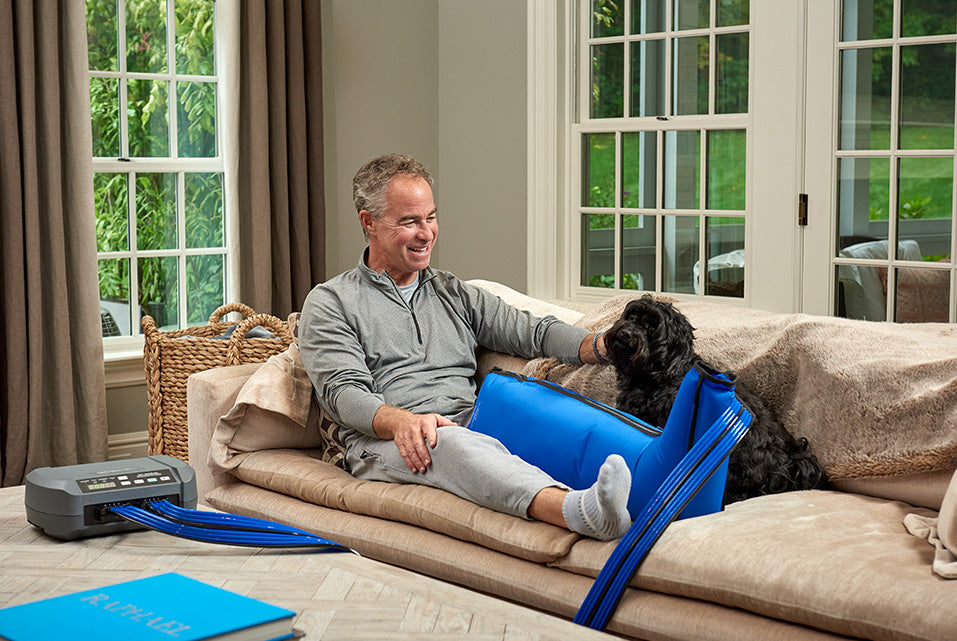
Sequential pneumatic compression works on a completely different principle: mechanical pressure. The sleeve covers the full leg and inflates in overlapping chambers, moving from the foot upward to push fluid back toward the core. It's a passive, structured session. You sit or lie down, put the sleeves on, and let the cycle do the work, usually for 20 to 30 minutes or longer. The Bio Compression SC-2008-DL is a medical-grade 8-chamber pump with adjustable pressure from 10 to 120 mmHg, adjustable cycle times from 60 to 120 seconds, a countdown timer or continuous mode, and a 3-year warranty. It can run one leg or both. This style of full-leg sequential compression is what you'll find in chiropractic offices, physical therapy clinics, and lymphedema care, which is who Your Health Sanctuary primarily sells to.
Firefly vs Compression Socks
This is where a lot of searches start, so it deserves a straight answer. Compression socks are passive: they apply constant, graduated pressure that is firmest at the ankle, and they're cheap, washable, and easy to wear all day. They don't actively move anything; they simply support the vein walls and limit pooling while you stand, sit, or travel. Firefly is active: it makes your own calf muscles contract on a rhythm, which is closer to what walking does for circulation. For a long flight or a desk day, either can make sense, and some athletes use both. The practical differences come down to feel and cost over time. Socks need no setup and last for months. Firefly involves a mild electrical sensation, correct placement, and ongoing replacement pairs. Neither one delivers the full-leg, chamber-by-chamber pressure of a dedicated compression session.
Firefly vs Compression Socks vs Compression Boots: Head-to-Head
| Category | Firefly Recovery | Compression Socks | Bio Compression SC-2008-DL |
|---|---|---|---|
| Mechanism | NMES (electrical stimulation of the peroneal nerve) | Static graduated compression | 8-chamber sequential pneumatic compression |
| Coverage | Lower leg, below the knee | Foot to calf (or thigh for thigh-high) | Full leg with an 8-chamber leg sleeve |
| How you use it | Wear during travel, work, or sleep | Wear all day | Dedicated seated or lying session |
| Adjustability | None beyond placement | Fixed by sock grade | Pressure 10–120 mmHg, cycle time 60–120 seconds |
| Cost | $49 per pair; each device runs about 30 hours, then is replaced | Low, one-time per pair | $900 pump; 8-chamber leg sleeves from $400 each, sold separately |
| HSA/FSA eligible | Varies by plan | Medical-grade socks often eligible | Generally yes, with a Letter of Medical Necessity |
| Best for | Endurance athletes and travelers who want support on the move | Everyday swelling, standing jobs, and flights | Clinics, lymphedema and swelling management, and athletes who want a full-leg session |
Where Firefly Genuinely Wins
We're not going to pretend Firefly doesn't have a real advantage: portability. If you're a triathlete flying to a race, or you want circulation support during a long commute, a compression session simply isn't practical, because you have to stop and sit still. Firefly also costs very little to try. Firefly's own marketing claims it moves more blood than compression boots. Research comparing NMES devices with pneumatic compression has been mixed, with some work favoring NMES for lower-leg blood flow and perceived soreness in certain settings. For an athlete whose real constraint is time and mobility, that's a legitimate selling point.
Where Compression Boots Win
Where sequential compression pulls ahead is coverage, control, and consistency. A full-leg session addresses the whole limb, not just the area below the knee, and a medical-grade pump lets you set the pressure and cycle time instead of accepting one fixed setting. It's also a genuinely passive, relaxing recovery window: no electrical sensation to get used to, no strap placement to get right, and nothing to throw away after 30 hours. For clinics, that repeatability is the whole point. For home users managing swelling, a pump like the SC-2008-DL is a long-term tool rather than a recurring purchase.
Firefly Recovery Alternatives
If you're looking for a Firefly alternative, start with the job you need done. For on-the-go circulation support, quality compression socks are the simplest and cheapest swap. For a deeper, full-leg recovery session at home or in a clinic, sequential pneumatic compression like the Bio Compression SC-2008-DL paired with an 8-Chamber Leg Sleeve is the step up. Many athletes end up using a portable option during travel and a compression system for dedicated recovery sessions.
Who Should Actually Buy Which
If you're an endurance athlete who needs recovery support while you're moving, commuting, or traveling, Firefly or compression socks solve a real problem that a compression pump doesn't. But if you're a chiropractor, physical therapist, or clinic owner building out a recovery room, or someone who wants a complete, adjustable, full-leg session, sequential pneumatic compression is the better foundation. It's also worth remembering the single biggest mistake we see buyers make: shopping by price first instead of weighing the short- and long-term value. A low-cost device you keep replacing isn't automatically the better buy if full-leg mechanical recovery is what you actually need, session after session.
HSA/FSA Eligibility
Medical-grade sequential compression pumps like the Bio Compression SC-2008-DL are generally HSA/FSA-eligible with a Letter of Medical Necessity, which can meaningfully offset the upfront cost. Medical-grade compression socks are often eligible as well. Eligibility for Firefly varies by plan. Check with your HSA/FSA administrator for your specific plan's requirements.
Not Sure Which Recovery System Is Right for You?
Call (612) 360-2490 and talk to Your Health Sanctuary directly. We'll help you decide between full-leg sequential compression and other recovery tools based on how you actually train and treat patients, not just what's trending.
Related Reading
See how sequential compression fits specific recovery needs in Compression Boots for Post-Surgery Recovery and Do Compression Boots Help Plantar Fasciitis?, or browse our full range of Bio Compression systems.
Frequently Asked Questions
Is Firefly Recovery better than compression boots?
Neither is universally "better" because they solve different problems. Firefly is better for portability and staying mobile during recovery. Compression boots are better for full-leg coverage, adjustable pressure, and a dedicated, passive recovery session, which is why they're the standard in clinical settings.
Is Firefly better than compression socks?
They work differently. Compression socks apply constant graduated pressure and are cheap and easy to wear all day. Firefly actively stimulates the calf muscles to pump blood. For travel or long sitting, either can help, and some athletes use both. Socks last for months, while each Firefly device runs about 30 hours before it needs replacing.
Can I use Firefly Recovery and compression boots together?
Yes. Some athletes use Firefly or compression socks during travel or downtime when a full compression session isn't practical, then use a sequential compression system for a dedicated recovery session at home or in the clinic.
What is a good alternative to Firefly Recovery?
For portable support, compression socks are the simplest alternative. For a deeper, full-leg session, a sequential pneumatic compression system such as the Bio Compression SC-2008-DL with an 8-chamber leg sleeve is the step up.
Is the Bio Compression SC-2008-DL HSA/FSA eligible?
Generally yes, with a Letter of Medical Necessity. Check with your HSA/FSA administrator to confirm eligibility for your specific plan.
What's the price difference between Firefly Recovery and compression boots?
Firefly lists a single pair at $49, and each device runs about 30 hours before it's replaced, so the cost is ongoing. The Bio Compression SC-2008-DL pump is $900, with 8-chamber leg sleeves from $400 each sold separately. It's a one-time investment in a medical-grade system with a 3-year warranty.
About the Author
Justin Webster is the owner of Your Health Sanctuary. Before founding his consulting company, he served as COO of a chain of 13 medical clinics, then spent his career helping build more than 20 additional niche medical clinics across the United States. Working alongside MDs, chiropractors and physical therapists introduced him to the clinical-grade equipment that practitioners actually prescribe. That background, combined with direct relationships with manufacturers including HealthLight and BIOFLEX, shapes how Your Health Sanctuary evaluates and recommends recovery technology. Justin personally owns and uses the HealthLight General Pain Relief Kit. Your Health Sanctuary sells primarily to medical professionals and clinicians, not consumer gadget buyers.