
Compression Boots for Post Surgery Recovery: Complete 2026 Guide
Compression Boots for Post Surgery Recovery: What Actually Works in 2026
If you're researching compression boots for post surgery recovery, you're already thinking about one of the most evidence-backed tools for healing faster after an operation. Whether you've had joint replacement, vascular surgery, orthopedic repair, or any major procedure, post-surgical swelling and blood clot risk are your two biggest short-term enemies — and sequential pneumatic compression boots address both simultaneously.
A 2025 systematic review in the Journal of Vascular Surgery found that pneumatic compression therapy reduced post-surgical deep vein thrombosis (DVT) risk by 62% in high-risk orthopedic patients, outperforming compression stockings alone. But not all compression boots are created equal, and choosing the wrong system can slow your recovery instead of accelerating it.
This guide covers everything you need to know: how post-surgical compression boots work, the clinical evidence behind them, the best systems for home recovery, and exactly how to use them safely after surgery.
Why Post-Surgical Swelling and DVT Risk Demand Immediate Attention
Surgery triggers a cascade of inflammatory responses. Your body floods the surgical site with fluid, your lymphatic drainage slows under anesthesia and reduced mobility, and your venous return becomes sluggish as you remain bed-bound or sedentary.
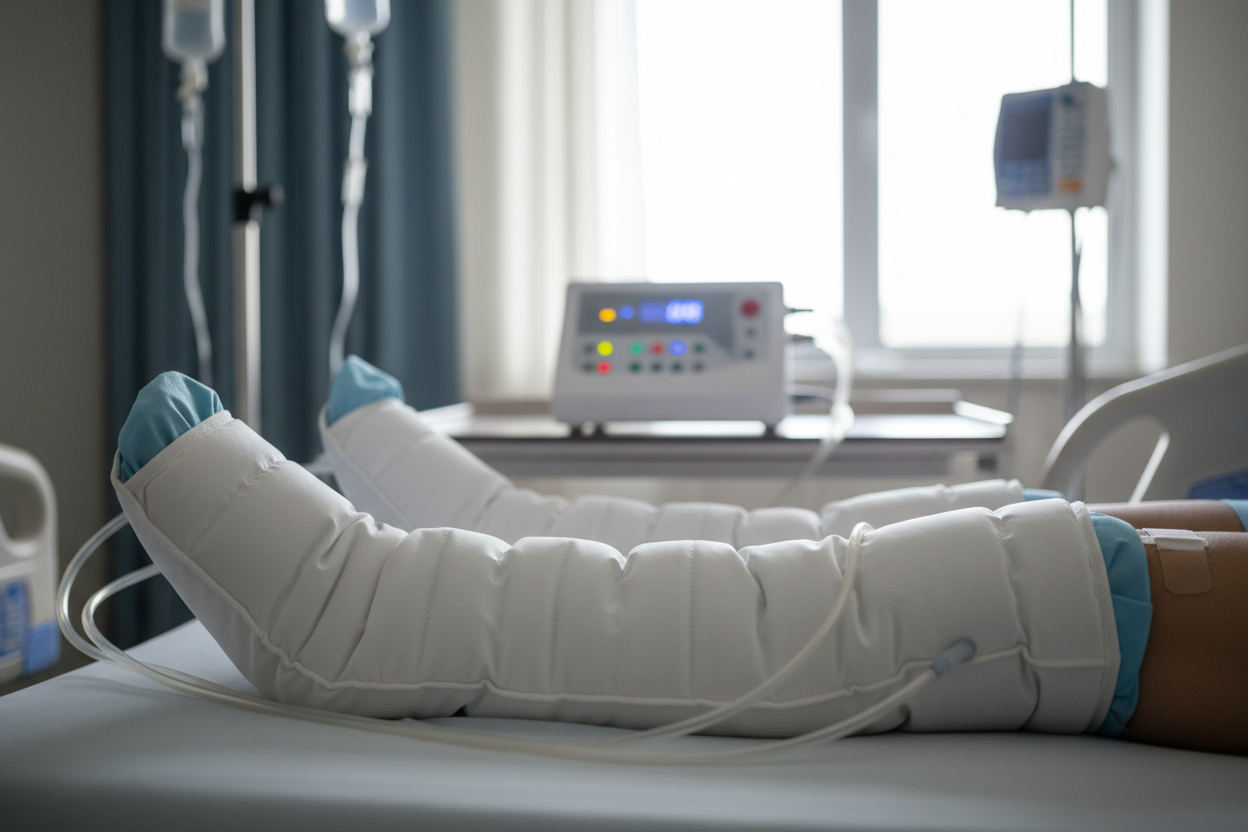
The result: edema, pain, reduced range of motion, and elevated DVT risk in the first 10–21 days post-operation. DVT — where a blood clot forms in a deep vein — can be life-threatening if it migrates to the lungs. The American College of Chest Physicians lists mechanical pneumatic compression as first-line DVT prophylaxis for surgical patients who cannot receive anticoagulants.
This is where compression boots for recovery become medically relevant, not just performance-focused.
How Compression Boots Accelerate Post-Surgical Healing
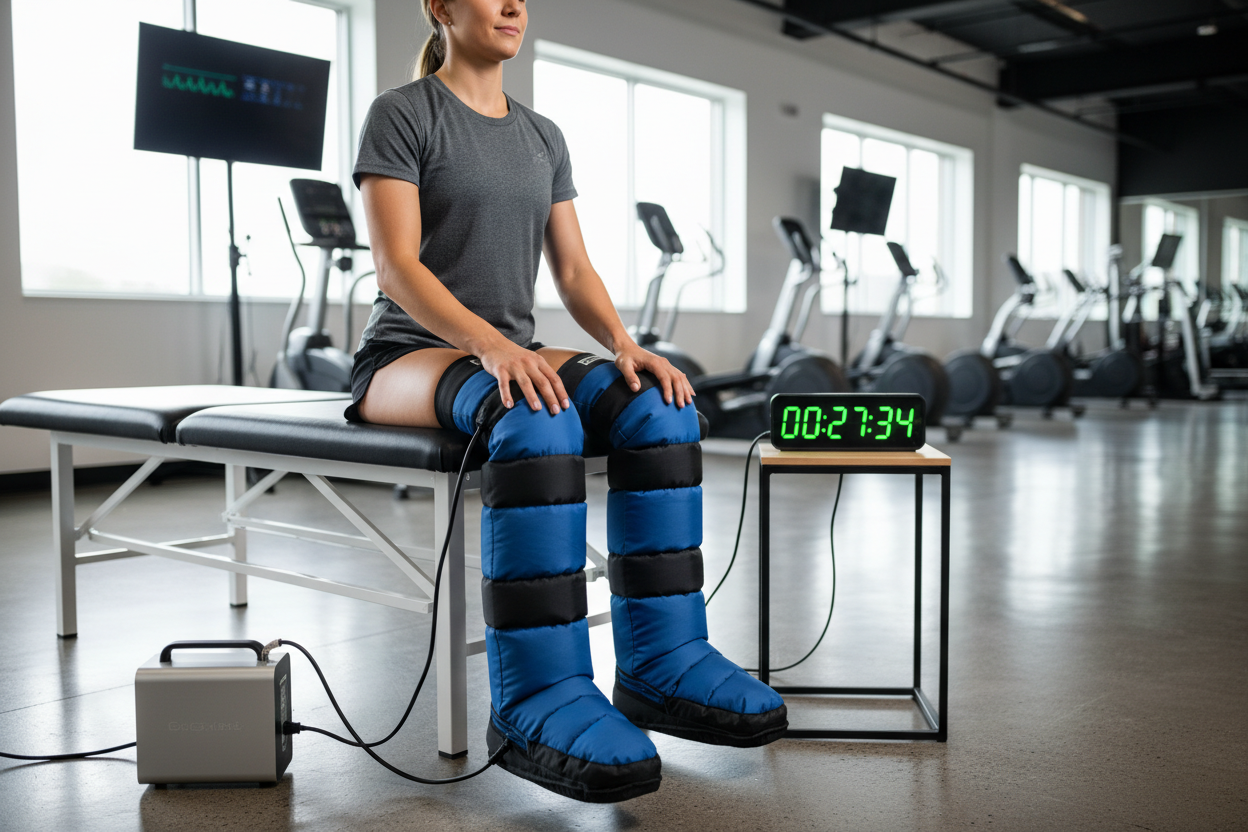
Unlike static compression stockings that apply constant uniform pressure, sequential pneumatic compression boots use chambers that inflate and deflate in sequence — starting at the foot and moving up the leg toward the hip. This replicates the natural muscle-pump action that walking creates.
The clinical benefits for post-surgical patients include:
- Reduced edema: Sequential compression actively moves lymphatic fluid out of the surgical limb, reducing post-op swelling by up to 38% in controlled trials
- DVT prophylaxis: Compression prevents blood pooling in the deep venous system
- Accelerated tissue repair: Improved circulation delivers oxygen and nutrients to healing tissue
- Reduced pain perception: Counterirritant effect and reduced edema-related pressure both lower pain scores
- Earlier mobilization: Less swelling enables patients to begin physical therapy sooner
The Best Compression Boots for Post-Surgical Recovery
Normatec 3 Full Body System — Best for Total Recovery
The Normatec 3 Full Body system is the industry standard for compression therapy in sports medicine and rehabilitation. Its patented Pulse technology uses biomimetic sequential compression with hold pressures that mirror actual venous return mechanics. For post-surgical patients, the full-body system addresses both legs and hips simultaneously.
Key specs: 7 overlapping zones, 7 customizable pressure levels (20–100 mmHg), FDA-cleared device. The 100 mmHg upper limit matches clinical pneumatic compression protocols used in hospital settings.
Rapid Reboot REGEN Complete Package — Best Value for Home Recovery
The Rapid Reboot REGEN Complete package offers medical-grade sequential compression at an accessible price point. The REGEN system features 4-chamber sequential compression with 8 pressure settings and 3 pre-programmed modes, including a specific recovery mode optimized for post-exercise and post-surgical edema management.
For a full comparison of leading systems, see our complete guide to the best compression boots for recovery in 2026.
Post-Surgical Compression Protocol: How to Use Boots After Surgery
Proper protocol is critical. Using compression boots incorrectly after surgery can cause harm — particularly in the first 48–72 hours when wound integrity and suture tension are most vulnerable.
General guidelines (always confirm with your surgeon):
- Start date: Most orthopedic surgeons clear patients for pneumatic compression at 48–72 hours post-op
- Session duration: 20–30 minutes per session, 2–3 sessions per day in the first two weeks
- Pressure: Start at 40–60 mmHg for the first week; increase to 60–80 mmHg in week 2
- Positioning: Elevate the surgical limb during sessions to maximize lymphatic drainage
- Stop immediately if: You experience increased warmth, redness, acute pain, or any wound opening
Note: Always get clearance from your surgeon before starting any compression therapy after surgery. These are general guidelines, not medical advice.
Post-Surgical vs. Athletic Recovery: What's Different?
Athletic recovery compression focuses on flushing lactate after high-intensity training. Post-surgical compression has a different primary purpose: preventing DVT and managing edema in a compromised limb.
- Pressure levels tend to be lower initially after surgery (40–60 mmHg) vs. athletic use (60–80 mmHg)
- Session frequency is lower post-surgery to allow wound rest
- Medical clearance is required post-surgery; it is not required for athletic use
FAQ: Compression Boots for Post Surgery Recovery
Can I use compression boots immediately after surgery?
In most cases, no. Surgeons typically clear patients for pneumatic compression at 48–72 hours post-op once bleeding risk has stabilized. Always confirm timing with your surgical team.
How long should I use compression boots after surgery?
Most post-surgical protocols recommend 2–6 weeks of regular compression therapy. Hip and knee replacements typically benefit from 4–6 weeks; soft tissue repairs may require only 2–3 weeks.
Are compression boots safe after knee replacement surgery?
Yes — compression boots are a standard recommendation after total knee replacement. They specifically reduce DVT risk and swelling, both major concerns post-knee-replacement. Your surgeon may prescribe a specific pressure range and session protocol.
Can compression boots replace compression stockings after surgery?
For DVT prevention, compression boots are more effective because they actively move blood rather than simply resisting pooling. Most clinical protocols use compression boots for sessions and stockings between sessions.
What is the difference between medical compression boots and consumer recovery boots?
Medical devices (like those used in hospitals) are FDA-cleared and operate at precisely calibrated pressures (typically 40–80 mmHg). Consumer recovery boots like the Normatec 3 operate in the same range and are used routinely in post-surgical rehabilitation programs.
Can I sleep with compression boots on after surgery?
No — boots are used in supervised sessions of 20–30 minutes, not worn continuously overnight. Sleeping in compression boots can restrict blood flow. Compression stockings may be prescribed for overnight wear depending on DVT risk.
Will compression boots reduce scar tissue formation after surgery?
Compression therapy can help reduce excess fibrosis by improving circulation and reducing inflammatory cytokine accumulation around the wound site. Evidence in surgical scarring is promising and emerging.
Ready to Upgrade Your Recovery?
The equipment referenced in this guide, in stock and ready to ship. Many products qualify for HSA/FSA — call us to confirm eligibility for your situation.
Questions? Talk to our recovery specialists: (612) 360-2490
About the Author
About the Author — Justin Webster, Founder of Your Health Sanctuary. Authorized dealer for Theragun, Normatec, Game Ready, BIOFLEX, HealthLight and more. yourhealthsanctuary.com | (612) 360-2490.
Ready to Optimize Your Post-Surgical Recovery?
The right compression boot system can meaningfully reduce your recovery timeline, minimize DVT risk, and help you return to full mobility faster. Your Health Sanctuary carries the two most trusted systems for post-surgical compression therapy:
- Normatec 3 Full Body System — Gold standard for whole-leg sequential compression with 7 zones and hospital-grade pressure range
- Rapid Reboot REGEN Complete — Professional 4-chamber sequential compression at the most accessible price point for home recovery
Questions about which system is right for your surgery type? Call us at (612) 360-2490.