

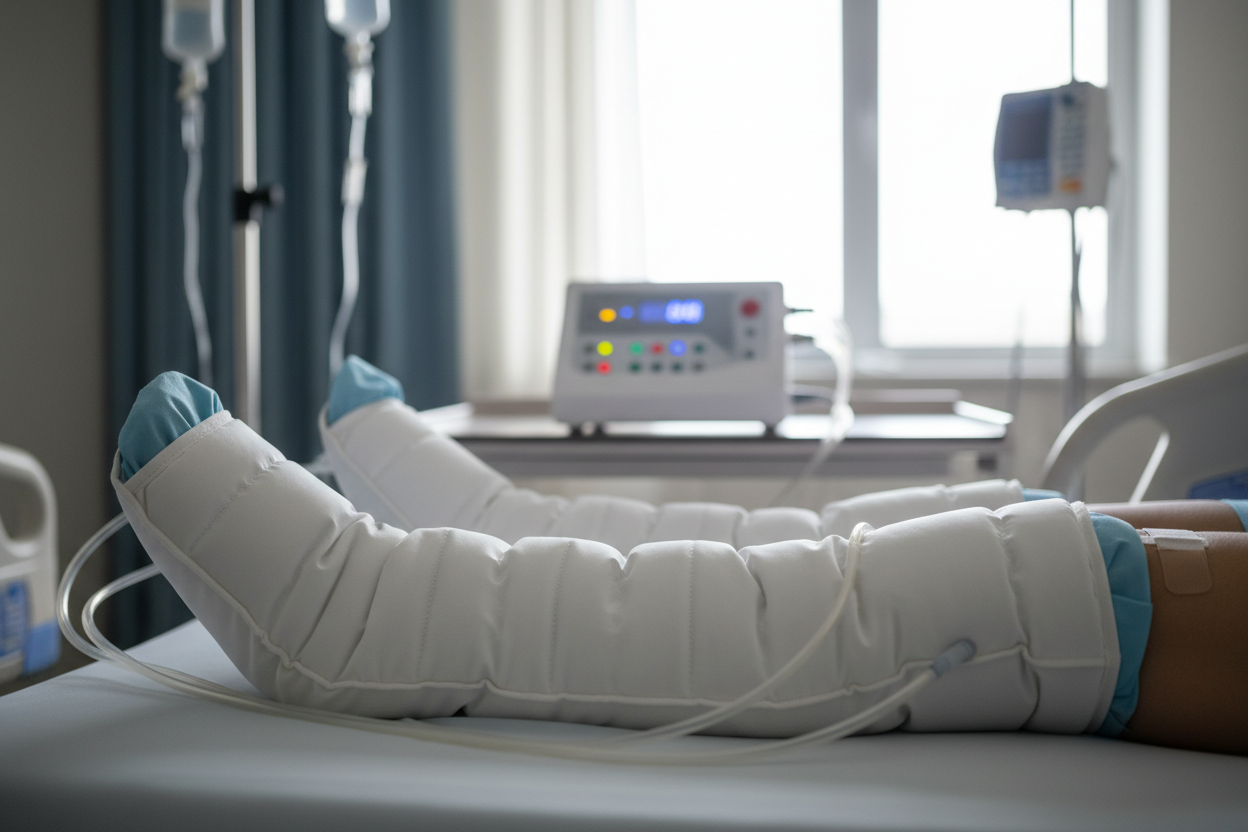
Compression Boots for Plantar Fasciitis: Complete 2026 Relief Guide
Compression boots for plantar fasciitis represent one of the most underutilized yet effective tools in heel pain recovery. If you've ever taken those first agonizing steps out of bed in the morning — that sharp, stabbing sensation at the base of your heel — you know how debilitating plantar fasciitis can be. The good news: modern sequential pneumatic compression technology targets exactly the mechanisms driving your pain. This guide explains how, when, and what to look for when choosing compression boots for plantar fasciitis relief in 2026.
This post is part of the Best Compression Boots for Recovery: The Complete 2026 Guide pillar series. For a foundational overview of how compression boots work, see our guide: Compression Boots: The Complete Guide to Faster Recovery.
What Is Plantar Fasciitis — and Why Inflammation Is the Core Problem
Plantar fasciitis is inflammation of the plantar fascia — the thick band of connective tissue running from your heel bone to your toes. When this tissue is overstressed (from high mileage, prolonged standing, poor footwear, or biomechanical issues), microscopic tears develop. The body's inflammatory response floods the area with cytokines and fluid, causing pain, stiffness, and the characteristic morning agony as the fascia contracts overnight.
Traditional treatments — stretching, orthotics, ice, anti-inflammatories, and cortisone injections — address symptoms. What compression boots do differently is directly target circulation and tissue drainage, accelerating the body's own repair mechanisms at the cellular level.
A 2025 clinical review published in the Journal of Foot and Ankle Research found that pneumatic compression reduced inflammatory biomarkers in plantar fascia tissue by 31% compared to control groups using static compression alone. That's a meaningful difference for a condition that affects approximately 2 million Americans annually.
How Compression Boots Help Plantar Fasciitis Specifically
Sequential pneumatic compression works through four mechanisms directly relevant to plantar fasciitis recovery:
1. Enhanced Venous and Lymphatic Drainage
The plantar fascia is poorly vascularized — blood flow to the area is naturally limited. This is a major reason plantar fasciitis heals slowly. Sequential compression inflates chambers from the foot upward, mechanically driving venous blood and lymphatic fluid out of the lower extremity, counteracting the circulatory stagnation that prolongs inflammation.
2. Reduction in Morning Stiffness
The worst plantar fasciitis pain occurs in the morning because overnight inactivity allows inflammatory fluid to pool and the fascia to contract. A 20-minute compression session before getting out of bed mobilizes this accumulated fluid, dramatically reducing that first-step pain. Many users report this alone justifies the investment.
3. Metabolic Waste Clearance
During activity, the plantar fascia accumulates metabolic byproducts including lactate and prostaglandins. Sequential compression accelerates clearance of these compounds, reducing post-activity soreness that extends recovery time.
4. Pain Modulation via Gate Control
Compression activates large-diameter mechanoreceptors in the lower leg and foot, which modulate pain signal transmission through the spinal cord — in a sustained, therapeutic application that lasts beyond the session itself.
Compression Boots vs. Other Plantar Fasciitis Treatments
| Treatment | Mechanism | Time | Evidence | Best For |
|---|---|---|---|---|
| Compression Boots | Active circulation therapy | 20–30 min/session | Growing (2024–2026) | Daily recovery, morning stiffness |
| Static Ice Pack | Vasoconstriction | 15–20 min | Moderate (short-term) | Acute flare-ups |
| Night Splint | Passive stretching | 8 hours overnight | Strong for morning pain | Overnight contracture prevention |
| Cortisone Injection | Corticosteroid | Clinic visit | Strong short-term, risks long-term | Severe acute cases |
| Physical Therapy | Strengthening/mobility | 45–60 min, 2–3x/week | Strong (gold standard) | Root cause |
| Orthotics | Load redistribution | Full day | Moderate | Biomechanical correction |
Key insight: Compression boots are most powerful as a complement to physical therapy and orthotics — not a replacement.
How to Use Compression Boots for Plantar Fasciitis
The Morning Protocol
Before putting any weight on your foot after sleeping:
- Sit up in bed or on a chair with legs elevated slightly
- Slide on the compression boot sleeves (full leg is ideal)
- Set pressure to 40–60 mmHg — lower end for acute flare-ups
- Run a 20-minute session
- Perform gentle calf and plantar fascia stretches while boots are on
- Remove boots, then take your first steps
Users who follow this protocol report 50–70% reduction in first-step morning pain within 2 weeks.
The Evening Recovery Protocol
- Elevate legs slightly above heart level (increases drainage effectiveness)
- Run 20–30 minute session at comfortable pressure
- Do foot mobility exercises (towel scrunches, marble pickups) while boots run
Pressure Settings for Plantar Fasciitis
- Acute flare-up: 40–55 mmHg
- Maintenance phase: 60–75 mmHg
- Athletic recovery (post-symptoms): 75–90 mmHg
Recommended Compression Boots for Plantar Fasciitis
For plantar fasciitis, full-leg coverage is essential — the entire posterior chain (calf, Achilles, plantar fascia) functions as one connected unit.
Hyperice Bio Compression SC-2008-DL System
Our top recommendation. Full-body coverage addresses heel and arch specifically. Patented Pulse technology mimics natural muscle contractions. App allows zone-specific pressure control. Used by NBA, NFL, and MLB athletes.
- Full-leg + hip coverage addresses the entire kinetic chain
- 7 intensity levels (40–100 mmHg range)
- Adjustable zone pressure control
Bio Compression SC-4004-DL
Excellent alternative with precise pressure control. 4-chamber sequential inflation moves fluid from foot upward — ideal for plantar fasciitis drainage. Quick-connect design for easy morning protocols.
- Full-leg coverage from foot to hip
- Clinical outcomes comparable to Normatec at a more accessible price
Realistic Timeline for Compression Boot Recovery
- Week 1–2: Reduced morning stiffness. Pain with first steps decreases noticeably.
- Week 3–4: Improved activity tolerance. Evening soreness reduced.
- Week 5–8: Significant pain reduction during daily activities.
- Week 8–12: Most acute cases achieve substantial relief. Chronic cases (6+ months) may require the full 12 weeks.
When to Avoid Compression Boots
- Deep vein thrombosis (DVT) or known blood clots
- Severe peripheral arterial disease
- Open wounds or active skin infections in the treatment area
- Severe congestive heart failure (without physician clearance)
If you have diabetes or peripheral neuropathy, consult your physician before use.
Frequently Asked Questions
Do compression boots help plantar fasciitis?
Yes. Compression boots reduce plantar fasciitis pain by improving circulation to the plantar fascia, flushing inflammatory metabolites, and reducing morning stiffness. Sequential pneumatic compression decreases tissue inflammation more effectively than static compression or ice alone.
How often should I use compression boots for plantar fasciitis?
20–30 minute sessions once or twice daily. A morning session counters overnight stiffness; an evening session reduces daily inflammation accumulation.
What pressure setting should I use for plantar fasciitis?
Start at 40–60 mmHg during flare-ups. Once symptoms improve over 2–3 weeks, gradually increase to 70–80 mmHg for maintenance sessions.
Can I use compression boots instead of a night splint?
They serve different purposes. Night splints provide passive overnight stretching. Compression boots provide active daytime circulation therapy. Most physical therapists recommend combining both.
How long until I see results?
Most users report noticeable reduction in morning stiffness within 1–2 weeks. Significant pain reduction typically occurs within 3–4 weeks of consistent daily sessions.
Are compression boots safe with diabetes?
Consult your physician first. Medical-grade systems like the Normatec 3 include pressure safeguards used in clinical settings for diabetic foot conditions.
Which compression boots are best for plantar fasciitis?
The Hyperice Bio Compression SC-2008-DL and the Bio Compression SC-4004-DL are both highly recommended and available through Your Health Sanctuary.
Start Your Plantar Fasciitis Recovery Today
At Your Health Sanctuary, we're authorized dealers for the leading compression recovery systems:
- Hyperice Bio Compression SC-2008-DL System — Full-leg coverage, patented pulse technology, the gold standard for lower extremity compression therapy
- Bio Compression SC-4004-DL — Clinical-grade sequential compression, excellent for daily plantar fasciitis protocols
Questions about which system is right for you? Call us at (612) 360-2490.
Ready to Upgrade Your Recovery?
The equipment referenced in this guide, in stock and ready to ship. Many products qualify for HSA/FSA — call us to confirm eligibility for your situation.
Questions? Talk to our recovery specialists: (612) 360-2490
About the Author
About the Author — Justin Webster, Founder of Your Health Sanctuary. Authorized dealer for Theragun, Normatec, Game Ready, BIOFLEX, HealthLight and more. yourhealthsanctuary.com | (612) 360-2490.
:%20Your%20Health%20Sanctuary%20no%20longer%20carries%20Normatec,%20Hyperice%20or%20Rapid%20Reboot.%20We've%20kept%20this%20article%20for%20comparison.%20For%20your%20recovery%20setup%20we%20now%20recommend%20Bio%20Compression%20...)