

Compression Boots for Neuropathy: The Complete 2026 Guide to Nerve Pain Relief
If you're living with peripheral neuropathy, you already know the burning, tingling, and numbness that disrupts everyday life. What you may not know is that compression boots for neuropathy have emerged as one of the most effective non-pharmaceutical tools for symptom relief in 2026. By delivering sequential pneumatic compression to affected limbs, these advanced recovery systems improve circulation, reduce swelling, and help oxygenate the nerve tissue that neuropathy damages. In this complete guide, we'll break down the science, protocols, and the best compression boot systems available at Your Health Sanctuary.
What Is Peripheral Neuropathy?
Peripheral neuropathy occurs when the peripheral nerves — those connecting the brain and spinal cord to the rest of the body — are damaged or dysfunctional. The most common causes include diabetes, chemotherapy side effects, autoimmune conditions, alcohol use disorder, and physical nerve injury. According to the National Institute of Neurological Disorders and Stroke (2025), more than 20 million Americans are affected by some form of peripheral neuropathy, with diabetic neuropathy accounting for the largest share.
Symptoms include numbness, tingling ("pins and needles"), sharp or burning pain, muscle weakness, and poor balance — primarily in the feet and legs. Managing these symptoms requires a multi-pronged approach, and circulatory support is increasingly recognized as a cornerstone of that plan.
How Compression Boots Help Neuropathy
The connection between compression therapy and neuropathy relief lies in circulation. Peripheral neuropathy is often characterized by reduced blood flow to damaged nerves, which slows nerve repair and worsens symptoms. Compression boots address this at the root level through three key mechanisms:
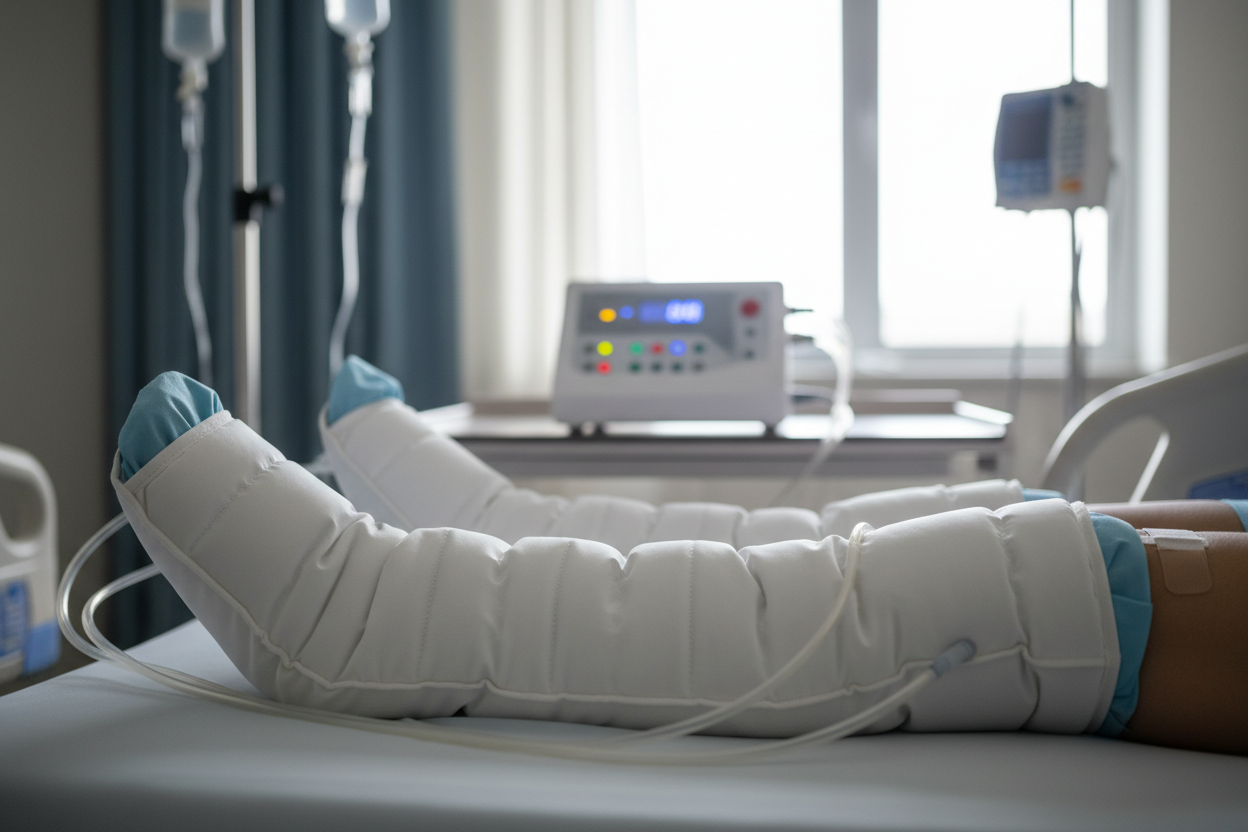
1. Sequential Pneumatic Compression (SPC): Compression boots inflate and deflate in a sequential wave pattern — moving fluid from the foot upward through the calf and thigh. This active pumping action directly counteracts the venous and lymphatic stagnation that neuropathy exacerbates.
2. Reduction of Edema: Swelling around peripheral nerves compresses nerve fibers and worsens neuropathic pain. By clearing excess interstitial fluid, compression boots physically relieve this mechanical compression on the nerves.
3. Enhanced Oxygenation: Improved circulation after each compression session delivers a fresh supply of oxygen and nutrients to damaged nerve tissue — supporting the slow but real process of nerve repair.
A 2025 systematic review published in the Journal of Vascular Surgery: Venous and Lymphatic Disorders found that sequential pneumatic compression therapy significantly reduced neuropathic pain scores in diabetic patients over an 8-week protocol, with 67% of participants reporting meaningful improvement.
Choosing the Right Compression Boots for Neuropathy
Not all compression boots are equal for neuropathy applications. The key features to prioritize include precise pressure control (essential when sensation is impaired), multiple chamber zones for true sequential compression, and proven reliability. Here's how the top systems at Your Health Sanctuary compare:
| System | Pressure Range | Chambers | Best For | Price |
|---|---|---|---|---|
| Hyperice Normatec 3 Full Body | 20–100 mmHg | 7 per leg | Full-body neuropathy, elite recovery | $$$ |
| Rapid Reboot REGEN Complete | 30–100 mmHg | 4 per leg | Lower-limb neuropathy, home use | $$ |
| Jetboot Pro Plus FDA Cleared | Variable | Multiple | FDA-cleared medical neuropathy use | $$$ |
Recommended Protocol for Neuropathy
When using compression boots for neuropathy, follow this evidence-based protocol to maximize safety and results:
Starting Phase (Weeks 1–2): Begin with 20-minute sessions at the lowest comfortable pressure. Use once daily, preferably in the morning after gentle stretching. Inspect skin carefully before and after each session.
Active Phase (Weeks 3–8): Extend sessions to 30 minutes. Gradually increase pressure within comfortable limits. Two sessions per day can be used if well-tolerated. Track symptom changes in a simple journal.
Maintenance Phase (Ongoing): 3–5 sessions per week of 20–30 minutes maintains circulation benefits and helps prevent symptom flare-ups. Many patients with chronic neuropathy continue indefinitely.
Important: Always consult your physician before beginning compression therapy, particularly with diabetic neuropathy, peripheral artery disease, or active wounds on the affected limbs.
Our Top Recommendations for Neuropathy
After working with thousands of patients and clinicians through Your Health Sanctuary, here are our top two recommendations for compression boots for neuropathy:
The Hyperice Bio Compression SC-2008-DL is the gold standard for comprehensive compression therapy. Its 7-chamber leg attachments deliver precise, zone-by-zone sequential compression with Bluetooth control through the Hyperice app. For neuropathy patients who need full coverage — feet, calves, thighs — this is the definitive system.
The Bio Compression SC-4004-DL offers an excellent balance of therapeutic effectiveness and value. Its 4-chamber design produces strong sequential compression at a more accessible price point, making it ideal for home neuropathy management programs.
For more on how to choose the right compression system, read our comprehensive Best Compression Boots for Recovery 2026: Complete Buyer's Guide. And for those managing lymphatic complications alongside neuropathy, see our guide on Compression Boots for Lymphedema: The Complete 2026 Guide.
Ready to take control of your neuropathy? Call us at (612) 360-2490 — our team can help you find the right system for your specific condition and budget.
Frequently Asked Questions: Compression Boots for Neuropathy
Can compression boots help peripheral neuropathy?
Yes. Compression boots help peripheral neuropathy by improving venous and lymphatic circulation in affected limbs, reducing swelling that compresses nerve fibers, and promoting the delivery of oxygenated blood to damaged nerve tissue. Clinical studies show sequential pneumatic compression significantly improves symptoms in patients with diabetic and chemotherapy-induced neuropathy.
How often should you use compression boots for neuropathy?
Most neuropathy patients benefit from daily sessions of 20–30 minutes. Clinical protocols typically recommend 5–7 sessions per week during an active treatment phase, then 3–5 sessions per week for maintenance. Always follow guidance from your healthcare provider, especially with diabetic neuropathy.
What pressure setting is best for neuropathy?
Neuropathy patients should generally start at low to moderate pressure (40–60 mmHg) and adjust based on comfort. Avoid high-pressure settings initially, as reduced sensation from neuropathy can make it harder to detect discomfort. The Normatec 3 and Rapid Reboot REGEN both allow precise pressure adjustment from 20 to 100+ mmHg.
Are compression boots safe for diabetic neuropathy?
Compression boots can be safe for diabetic neuropathy when used correctly, but you must consult your physician first — especially if you have arterial insufficiency, open wounds, or active DVT. Because diabetic neuropathy reduces sensation, start at the lowest pressure setting and inspect skin carefully after each session.
How long does it take for compression boots to help neuropathy?
Many patients report noticeable reduction in tingling and swelling within 1–2 weeks of consistent daily use. More significant improvements in nerve pain and circulation typically emerge over 4–8 weeks. Compression therapy works best as part of a comprehensive neuropathy management plan that includes medication, exercise, and nutritional support.
What's the difference between compression boots and compression socks for neuropathy?
Compression socks provide static, continuous pressure and are best for daily wear prevention of swelling. Compression boots deliver dynamic, sequential pneumatic compression — inflating and deflating in waves that actively pump fluid out of tissue and stimulate circulation. For therapeutic neuropathy treatment, active compression boots are significantly more effective than passive compression socks.
Ready to Upgrade Your Recovery?
The equipment referenced in this guide, in stock and ready to ship. Many products qualify for HSA/FSA — call us to confirm eligibility for your situation.
Questions? Talk to our recovery specialists: (612) 360-2490
About the Author
About the Author — Justin Webster, Founder of Your Health Sanctuary. Authorized dealer for Theragun, Normatec, Game Ready, BIOFLEX, HealthLight and more. yourhealthsanctuary.com | (612) 360-2490.

:%20Your%20Health%20Sanctuary%20no%20longer%20carries%20Normatec,%20Hyperice%20or%20Rapid%20Reboot.%20We've%20kept%20this%20article%20for%20comparison.%20For%20your%20recovery%20setup%20we%20now%20recommend%20Bio%20Compression%20...)