

Best Morning Habits for Less Back Stiffness
Best Morning Habits for Less Back Stiffness (2026)
If the first walk from your bed to the bathroom feels like your lower back has rusted overnight, start smaller than you think: breathe, loosen your hips, walk for a few minutes, then decide whether you need stretching, heat, or a recovery tool. These are the best morning habits for less back stiffness we recommend to customers dealing with this exact problem.
This guide is written for the person who wakes up stiff before work, before caregiving, or before training. It is not a diagnosis. It is a practical morning plan, with the evidence kept honest.
The 10-Minute Morning Routine
If your back stiffness is mild to moderate and improves once you move, try this for 7 to 14 mornings before changing everything else. Keep each movement easy — you are looking for less guarding, not a perfect stretch.
| Minute | Habit | What to do |
|---|---|---|
| 0–1 | Slow breathing before standing | Lie on your back or side and take 5 slow breaths, letting your ribs expand instead of bracing your lower back. |
| 1–3 | Gentle bed mobility | 10 small pelvic tilts, then 10 knee rocks side to side with both knees bent. |
| 3–5 | Stand and walk | Walk around the house for 2 minutes before sitting, checking your phone, or bending over the sink. |
| 5–8 | Hip and spine mobility | 5 cat-cow reps, 5 hip hinges with hands on thighs, 20–30 seconds of hip flexor stretching per side. |
| 8–10 | Core and glute activation | 5 bird dogs per side or 8 glute bridges, staying below any sharp pain. |
Most stiff backs tolerate movement better after circulation and temperature rise a little. Major guidelines for low back pain recommend staying active and using exercise as part of care, including the NICE guideline for low back pain and sciatica and clinical practice guidelines from major physician associations. Research reviewing multiple clinical trials has also found that exercise therapy probably reduces pain compared with no treatment or usual care in chronic low back pain, though the best exercise type varies by person.
Why Is My Back So Stiff In the Morning?
Morning back stiffness usually comes from a mix of overnight stillness, sleep position, tissue sensitivity, and how much load your back handled the day before. That does not automatically mean something is "out" or that your spine is damaged.
Low back pain is extremely common — the World Health Organization reported that low back pain affected about 619 million people globally in 2020 and is a leading cause of disability worldwide. Imaging findings can also be misleading: a systematic review of imaging studies found that disc degeneration, bulges, and other spinal imaging findings are common even in people without back pain, rising from roughly 37% at age 20 to 96% at age 80.
Judge the morning by function, not fear. Does the stiffness ease within 10 to 30 minutes of gentle movement? Is it mostly local to the low back, hips, or glutes? Did it follow a long drive, hard workout, poor sleep, or too much sitting? Is it improving week to week with movement and strength work? If yes, a habit-based approach is reasonable. If stiffness is severe, worsening, or paired with neurological or systemic symptoms, skip the self-experiment and get checked.
Ten Habits That Actually Help
1. Don't stretch hard before your back has warmed up. The biggest morning mistake is the dramatic toe-touch right after getting out of bed. Start with motion before stretch — pelvic tilts, knee rocks, cat-cow, and a few minutes of walking. Keep discomfort at 0–3 out of 10 during the first 10 minutes.
2. Walk before you sit. In a randomized clinical trial of an individualized walking and education program, participants saw the median time to recurrence of activity-limiting low back pain increase from 112 days in the control group to 208 days in the intervention group. Try 3 to 8 minutes in the morning before your first long sit.
3. Use heat when the back feels guarded, not inflamed. Clinical guidelines recommend superficial heat as an option for acute or subacute low back pain. Use it for 10–20 minutes while standing or moving lightly, and avoid it over reduced-sensation areas, open wounds, or fresh swelling.
4. Open the hips before blaming the lower back. Long sitting shortens the front-of-hip position for hours, so your lower back may compensate by arching. Try a short hip flexor stretch, figure-four stretch, and hip hinge drill after your morning walk.
5. Activate your glutes and deep core before loading the day. 60–120 seconds of glute bridges and bird dogs can remind your hips and trunk to share the job, without heavy spinal loading.
6. Fix your first sitting position of the day. For the first 30–60 minutes, avoid collapsing into a deep couch or working from bed. Use a chair where your feet touch the floor and your hips aren't sunk below your knees.
7. Match the habit to the type of stiffness. A runner, a desk worker, and someone with inflammatory-type symptoms shouldn't all use the same morning plan — see the table below.
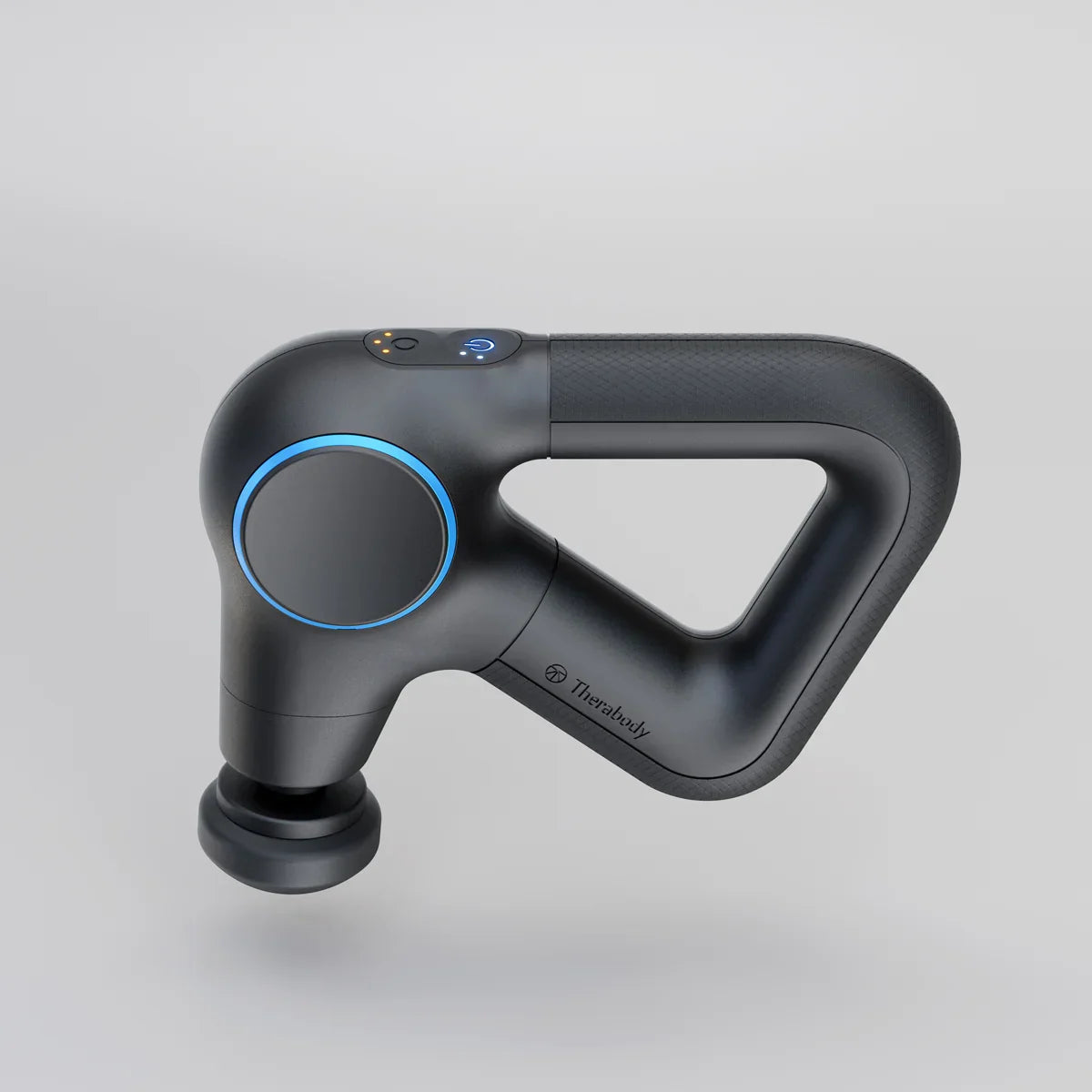
8. Use massage tools after movement, not instead of it. A percussion massage device can feel helpful for tightness around the glutes, hips, and back — but use it after you've already walked and done basic mobility, not as a replacement. Avoid hammering directly on the spine, ribs, kidneys, or numb areas.
9. Improve the night before. A randomized trial found that medium-firm mattresses were associated with better pain and disability outcomes than firm mattresses in people with chronic nonspecific low back pain.
10. Know when it's not a "stretch it out" problem. See the red-flag list below.
Match the Habit to Your Pattern
| What you feel | Likely pattern | Best first habit |
|---|---|---|
| Stiff 5–20 min, better after walking | Movement-sensitive mechanical stiffness | Walk first, then easy mobility |
| Tight after sitting, better standing | Sitting intolerance or hip stiffness | Hip flexor mobility, frequent position changes |
| Stiff after heavy training | Recovery and tissue sensitivity | Gentle walking, hydration, light mobility |
| Stiff 30–60+ min, wakes you at night, improves with exercise not rest | Possible inflammatory pattern | Book a medical evaluation |
| Numbness, weakness, or pain below the knee | Possible nerve involvement | Avoid aggressive stretching, get assessed |
For inflammatory back conditions such as ankylosing spondylitis, the National Institute of Arthritis and Musculoskeletal and Skin Diseases describes symptoms that can include pain and stiffness worse in the morning or after inactivity, which may improve with exercise. That pattern deserves a proper evaluation, not just a new stretch routine.
When Morning Stiffness Needs Medical Attention
Get urgent care if back stiffness or pain comes with loss of bladder or bowel control, numbness in the saddle area, major trauma, fever, unexplained weight loss, cancer history with new back pain, or progressive leg weakness. Book a non-urgent evaluation if stiffness lasts longer than an hour most mornings, steadily worsens, repeatedly wakes you in the second half of the night, or is paired with unexplained fatigue, eye inflammation, psoriasis, inflammatory bowel disease, or alternating buttock pain.
Frequently Asked Questions
What is the best morning stretch for lower back stiffness?
The best first move is usually not a deep stretch. Start with pelvic tilts, knee rocks, cat-cow, and a short walk. If those feel good, add hip flexor and figure-four stretches. Keep intensity low for the first 10 minutes.
How long should morning back stiffness last?
Mild stiffness that improves within 10 to 30 minutes of movement is common. Stiffness lasting more than 30 to 60 minutes most mornings, waking you at night, or improving with exercise but not rest should be evaluated.
Is walking good for morning back stiffness?
Yes. Guidelines encourage staying active for low back pain, and clinical trial research has found that a walking and education program delayed recurrence of activity-limiting low back pain in people with a history of recurrent episodes.
Should I use heat or ice for morning back stiffness?
Heat is often more useful for a guarded, stiff-feeling back, and clinical guidelines include superficial heat as an option for acute or subacute low back pain. Ice may be more appropriate after a fresh injury with swelling.
Can a bad mattress cause morning back stiffness?
It can contribute if it keeps you sagging, twisted, or unsupported for hours. In randomized clinical research, medium-firm mattresses performed better than firm mattresses for chronic nonspecific low back pain outcomes.
Are percussion massage devices safe for a stiff lower back?
They can be safe when used carefully on surrounding muscles such as glutes and hips, but should not be used directly over the spine, numb areas, or unexplained swelling. Start light, keep sessions short, and stop if symptoms travel or intensify.
Both the Theragun Prime Plus and Theragun Prime G5 are generally HSA/FSA-eligible with a Letter of Medical Necessity, making them easier to fit into a recovery budget.
Want a Recovery Tool for the Days Stretching Isn't Enough?
Call (612) 360-2490 and talk to Your Health Sanctuary directly — we'll help you match the right recovery tool to your routine.
About the Author
Justin Webster is the owner of Your Health Sanctuary. Before founding his consulting company, he served as COO of a chain of 13 medical clinics, then spent his career helping build more than 20 additional niche medical clinics across the United States. Working alongside MDs, chiropractors and physical therapists introduced him to the clinical-grade equipment that practitioners actually prescribe. That background, combined with direct relationships with manufacturers including HealthLight and BIOFLEX, shapes how Your Health Sanctuary evaluates and recommends recovery technology. Justin personally owns and uses the HealthLight General Pain Relief Kit and the TheraFace Mask. Your Health Sanctuary sells primarily to medical professionals and clinicians, not consumer gadget buyers.
Related reading: Percussion Massage for Lower Back Pain: The Complete Relief Guide and Massage Gun for Back Pain: The Complete Guide
%0AIf%20the%20first%20walk%20from%20your%20bed%20to%20the%20bathroom%20feels%20like%20your%20lower%20back%20has%20rusted%20overnight,%20start%20smaller%20than%20you%20think:%20breathe,%20loosen%20you...)