
HealthLight vs Joovv: Which Red Light Therapy System Is Right for You?
A side-by-side breakdown of two very different approaches to photobiomodulation — one built for targeted clinical results, one built for consumer convenience.
Last Updated: July 2, 2026
HealthLight wins for targeted pain relief, neuropathy, chronic conditions, and clinical or post-surgical use. Its flexible contact pads deliver red and near-infrared wavelengths directly to tissue, it holds FDA 510(k) clearance, and it qualifies for HSA and FSA reimbursement.
Joovv wins for whole-body panel convenience, general wellness, skin, and fitness recovery. It is a strong consumer product but functions as a wellness device rather than a medical one — and that distinction matters for what it can realistically accomplish.
The short version: if you have a specific condition to address, HealthLight. If you want a full-body panel for daily wellness and fitness recovery, Joovv.
I personally own and use the HealthLight General Pain Relief Kit — it is part of my own routine, not just something I stock. I got into this brand by speaking directly with their management team, and what struck me was that this is a genuinely up-and-coming medical company, not another label slapped on a generic panel. At Your Health Sanctuary, we sell primarily to chiropractors and medical professionals — the people who actually prescribe and oversee these devices — so when I evaluate a product, I am looking at it through a clinical lens, not a marketing one.
What follows is the most detailed HealthLight vs Joovv comparison you will find — covering technology, FDA status, price, HSA/FSA eligibility, real use cases, and the specific clinical evidence behind each system.
HealthLight vs Joovv: Full Comparison Table
| Category | HealthLight | Joovv |
|---|---|---|
| Device type | Flexible LED contact pads | Fixed panel system (non-contact) |
| Delivery method | Direct skin contact — no air gap | Distance-based — panel to skin gap |
| Wavelengths | Red (630–670nm) + Near-infrared (830–880nm) | Red (660nm) + Near-infrared (850nm) |
| FDA status | 510(k) cleared — Class II medical device | Consumer wellness device |
| HSA / FSA eligible | Yes — FSA/HSA reimbursable | Not typically eligible |
| Primary use case | Targeted pain, neuropathy, arthritis, post-surgical recovery, clinical therapy | Whole-body wellness, skin, general fitness recovery |
| Who uses it | Chiropractors, MDs, physical therapists, home clinical users | Fitness enthusiasts, biohackers, anti-aging consumers |
| Coverage | Targeted body zones; full-body kit available | Easy whole-body coverage |
| Portability | Flexible pads — use anywhere on the body | Panel requires stand and space |
| Entry price | ~$395 (individual pad kits) | ~$595 (Joovv Go portable) |
| Full-body system price | ~$1,103 (Ultimate Body Kit) | ~$3,000–$8,000 (full panel setup) |
| Evidence base | Clinical photobiomodulation research on pain, neuropathy, wound healing, arthritis | General PBM research; device-specific data limited |
| Warranty | 2-year manufacturer warranty | 2-year manufacturer warranty |
| Best for | Chronic pain, specific conditions, clinical or post-surgical | Whole-body wellness, skin, fitness recovery |
What Is HealthLight? The Case for Contact-Based Therapy
HealthLight manufactures flexible LED pads that deliver red and near-infrared light directly to the skin surface. The contact design is the single most important technical difference between HealthLight and every panel-based system on the market, including Joovv.
Here is why contact matters: photobiomodulation works when a sufficient dose of light reaches the target tissue. Every centimeter of air between a panel and the skin reduces the amount of light actually arriving at the treatment area — through both scatter and the inverse-square law governing how light intensity drops with distance. HealthLight eliminates that air gap entirely. The pads conform to the body, maintain consistent contact, and can be wrapped around joints, positioned on the lower back, draped over a shoulder, or placed along the spine in ways that a mounted panel cannot replicate.
HealthLight holds FDA 510(k) clearance as a Class II medical device. This is not a marketing phrase — it means the device has been reviewed by the FDA and found to be substantially equivalent to a legally marketed predicate device for its indicated uses, including temporary relief of minor muscle and joint pain, muscle spasm, and minor arthritic pain, as well as the temporary increase of local circulation and relaxation of muscle spasm. That specific clearance matters because it is the legal and clinical basis for HSA and FSA reimbursement.
HealthLight Product Line
HealthLight offers individual pad configurations targeting specific body areas, as well as the HealthLight Ultimate Body Kit — a comprehensive system designed to cover the full body with multiple pads simultaneously. The Ultimate Body Kit is the flagship for home clinical users who want professional-grade coverage without a clinic visit.
Individual pads include configurations for the back, joints, feet (particularly relevant for neuropathy and plantar fasciitis), and larger muscle groups. The flexibility of the system means a clinician can design a protocol around a specific patient presentation — something a fixed panel cannot do.
✓ HealthLight Strengths
- FDA 510(k) cleared medical device
- Direct contact — maximum light delivery to tissue
- HSA and FSA reimbursable
- Preferred by chiropractors and medical professionals
- Flexible pads conform to any body area
- Stronger clinical evidence basis for targeted pain
- Full-body kit is less expensive than comparable Joovv panel setups
✗ HealthLight Limitations
- Less convenient for casual whole-body exposure sessions
- Requires positioning pads on each treatment area
- Less visible / less "experiential" than a large panel
- Less consumer brand recognition than Joovv
What Is Joovv? The Case for Panel-Based Convenience
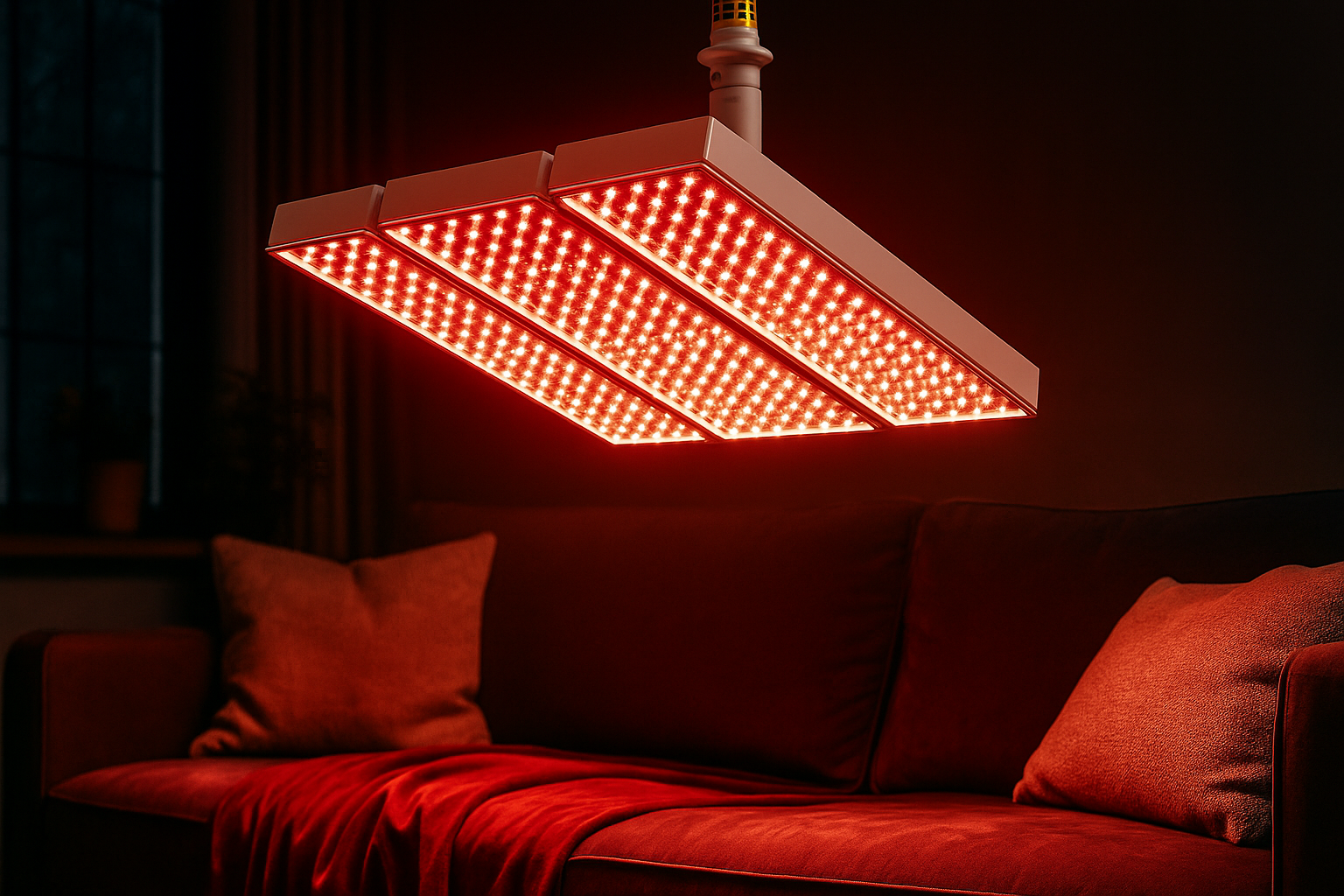
Joovv builds panel systems that you stand or sit in front of for a set session duration. The experience is simple: position yourself at the recommended distance, set a timer, and expose the target area. For general wellness users who want an easy, low-friction routine, that simplicity has real appeal.
Joovv's product line ranges from the portable Joovv Go (roughly $595) to large multi-panel configurations (Quad, Elite) that can run $3,000 to $8,000 for full-body coverage. The modular design lets buyers expand over time, which is a genuine advantage for users who want to grow a system.
Joovv uses red (660nm) and near-infrared (850nm) wavelengths — standard across the consumer red light therapy market. These are well-studied wavelengths with a strong general evidence base for skin health, mitochondrial function, and recovery. The question is not whether those wavelengths work in principle — it is whether a panel, used at distance, delivers a therapeutically meaningful dose to the specific tissue you are trying to treat.
For surface-level goals — skin tone, general circulation support, post-workout recovery when the soreness is muscle-wide rather than joint-specific — Joovv's panel approach is reasonable. For deeper tissue targets like arthritic joints, nerve pathways, or surgical repair sites, the delivery method is a genuine limitation.
✓ Joovv Strengths
- Easy whole-body exposure in a single session
- Simple, low-friction daily routine
- Scalable — start with one panel, add more
- Strong brand and community following
- Good for skin, general wellness, fitness recovery
✗ Joovv Limitations
- Not FDA cleared as a medical device for specific conditions
- Not HSA/FSA eligible
- Air gap reduces dose reaching deep tissue
- Full-body system costs significantly more than HealthLight Ultimate Body Kit
- Less clinical evidence for specific medical conditions
- Fixed panel — limited positional flexibility
HealthLight vs Joovv: Head-to-Head on the Factors That Actually Matter
Delivery Method: Contact vs Panel
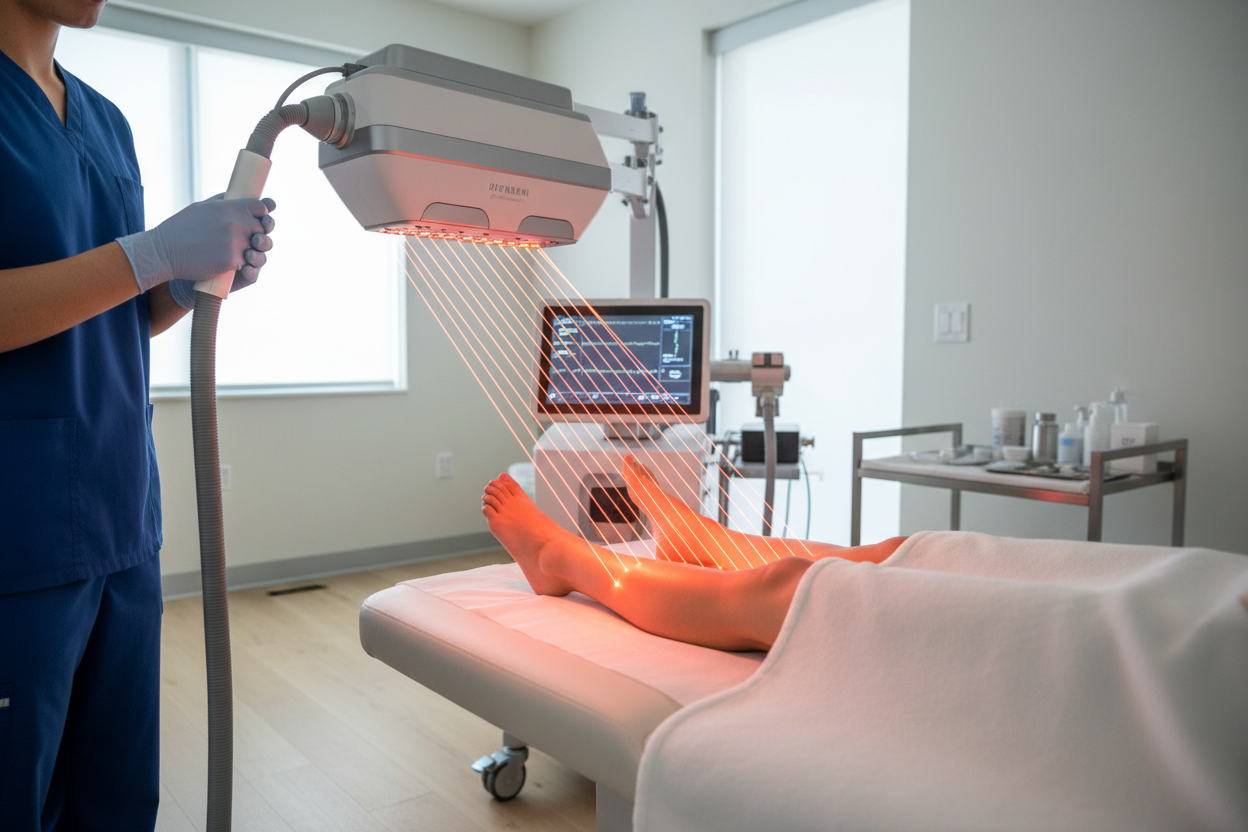
This is the core technical difference. Contact-based therapy like HealthLight delivers light with essentially no attenuation at the skin surface — there is no distance for the beam to lose intensity. Panel-based systems like Joovv deliver light across a recommended gap (typically 6–12 inches), which means a portion of the emitted power is lost before it even reaches the skin.
For surface goals (skin tone, minor surface muscle soreness), that gap matters less — the light reaches what it needs to. For deeper targets — a knee joint, a lumbar nerve root, a plantar fascia — the difference in delivered dose becomes more clinically significant. The research on photobiomodulation for deeper tissue structures was largely conducted with contact or near-contact devices. Extrapolating those results to panel systems used at distance requires a leap the evidence does not clearly support.
FDA Status: Medical Device vs Wellness Product
HealthLight holds 510(k) FDA clearance as a Class II medical device. Joovv is regulated as a general wellness device under FDA's 2019 wellness policy guidance — it does not hold 510(k) clearance for therapeutic indications.
That distinction is not just regulatory paperwork. It determines what manufacturers can say the device does, whether practitioners can prescribe it, and whether insurers or HSA/FSA administrators will reimburse it. If you are a clinician recommending a device to a patient, or a patient trying to use HSA/FSA funds, FDA clearance is directly relevant to you.
HSA and FSA Eligibility
HealthLight qualifies for HSA and FSA reimbursement precisely because of its FDA 510(k) clearance and its medical device status. This can be a significant financial advantage. Depending on your annual HSA or FSA contribution, you may be able to fund most or all of an individual HealthLight pad kit — or a meaningful portion of the Ultimate Body Kit — with pre-tax dollars. For a full breakdown of how to use HSA/FSA funds for red light therapy, see our guide: Is Red Light Therapy HSA/FSA Eligible?
Joovv is generally not reimbursable through HSA or FSA because it is classified as a general wellness device, not a medical device for a specific condition. Some users report partial reimbursement with a Letter of Medical Necessity from a prescribing physician, but this is not standard and varies by plan administrator.
Price: Entry Point vs Full System
Entry-level pricing is closer than it looks. Individual HealthLight pad kits start around $395; the Joovv Go portable starts around $595. But the comparison shifts dramatically at the full-body level.
The HealthLight Ultimate Body Kit — the comprehensive multi-pad system — is priced at approximately $1,103. A comparable full-body Joovv setup (enough panels to cover the torso, legs, and back in a reasonable session) runs $3,000 to $8,000 depending on configuration. For buyers comparing apples to apples on full-body coverage, HealthLight is substantially less expensive.
The best financial decision is rarely the cheapest device upfront. The #1 mistake I see buyers make is shopping by price first instead of evaluating short- and long-term value — like years of pain relief or the alternative cost of procedures like injections or surgery. Buy the right tool for the job once.
Evidence Base
Both systems operate in the photobiomodulation category, which has a substantial and growing body of clinical research. The general mechanisms are well-established: red and near-infrared wavelengths interact with photoreceptors in mitochondria, influencing cellular energy production, nitric oxide signaling, and oxidative stress pathways. Multiple systematic reviews and meta-analyses support the use of photobiomodulation for pain, wound healing, neuropathy, and arthritis when appropriate wavelength, dose, and delivery parameters are used.
The important qualifier is "when appropriate parameters are used." Most of the clinical evidence was generated with contact or near-contact devices delivering precise, measurable doses. HealthLight's device design aligns more closely with those research protocols. Joovv's panels have been studied less rigorously for specific medical conditions — the evidence basis for the wellness claims is more general.
For a detailed look at why contact delivery changes dose at tissue vs panels, read: Red Light Therapy Contact Pads vs Panels: Which Delivers More Light to Your Tissue?
Who Should Buy HealthLight
HealthLight is the right choice when your goal is clinical and specific. The strongest use cases:
Chronic pain and neuropathy. Peripheral neuropathy, diabetic neuropathy, and other nerve-related conditions benefit from targeted, consistent photobiomodulation delivered close to the affected nerve pathways. HealthLight's flexible pads can be positioned along the feet, calves, lower back, or other nerve-dense areas with precision that a panel cannot match.
Joint-specific arthritis. Knee arthritis, hip arthritis, hand and wrist involvement — conditions where the target is a specific joint — benefit from contact-based delivery that can be wrapped directly around or adjacent to the joint. The light reaches the capsule, synovium, and surrounding soft tissue more reliably than panel exposure at distance.
Post-surgical recovery. After procedures such as ACL repair, rotator cuff surgery, hip replacement, or spinal surgery, targeted photobiomodulation supports tissue healing as part of a broader recovery protocol. HealthLight's medical device clearance also makes it appropriate for supervised clinical use alongside physical therapy. (Always confirm timing and positioning with your surgeon before using any device near a surgical site.)
Clinicians and practitioners. Chiropractors, physical therapists, and other clinicians who want to offer in-office or home-use photobiomodulation need a device with proper regulatory standing. HealthLight's 510(k) clearance and clinical history make it appropriate for that setting.
HSA/FSA spenders. If you have accumulated HSA or FSA funds that need to be applied to qualifying medical devices, HealthLight is the right vehicle. Joovv is not reimbursable through those accounts under standard conditions.
Who Should Buy Joovv
Joovv is the right choice when your goal is general wellness and whole-body convenience. The strongest use cases:
Skin health and anti-aging. If your primary interest is skin tone, fine lines, collagen support, and overall skin appearance, a panel system gives you efficient full-face and full-body exposure that contact pads are not designed to replicate at scale. Joovv is well-positioned for this goal.
Fitness and athletic recovery. For active users who want to integrate red light therapy into a post-workout routine as a general recovery support — reducing broad-area muscle soreness after training — Joovv's panels are convenient and easy to build into a daily routine.
General wellness and biohacking. Users whose interest is broad mitochondrial support, circadian rhythm optimization, mood, and overall energy rather than a specific pain condition may find Joovv's convenience and scalability a good fit.
Buyers who are not clinical candidates. If you have no specific pain condition and no surgical recovery underway, the clinical precision of HealthLight may be more than your situation requires. Joovv can deliver meaningful general wellness benefits for users in that category.
HSA and FSA: The Financial Case for HealthLight
For buyers with HSA or FSA accounts, the financial math often tips the HealthLight vs Joovv comparison decisively.
An individual HSA account holder contributing the 2026 IRS limit of $4,300 (self-only) or $8,550 (family) has meaningful pre-tax dollars available for qualifying medical devices. HealthLight qualifies. Joovv does not under standard conditions.
That means a buyer using HSA funds to purchase the HealthLight Ultimate Body Kit is spending pre-tax dollars — effectively reducing the real cost by their marginal tax rate. For someone in a 22% or 24% federal bracket, the effective out-of-pocket cost of a $1,103 system is closer to $860–$880. A comparable full-body Joovv setup at $3,000–$4,000 is paid entirely with after-tax dollars and can carry no similar benefit.
If you are comparing the two systems and have an HSA or FSA, factor this in before making a decision. The price difference between the systems is larger than the sticker prices suggest once you account for tax treatment.
What the Clinical Evidence Says — In Plain Language
Photobiomodulation has one of the largest evidence bases of any physical modality in the recovery and pain management space. Systematic reviews — studies that pool and analyze multiple clinical trials — consistently find meaningful benefits for pain, neuropathy, wound healing, arthritis, and muscle recovery when appropriate wavelengths and doses are applied correctly.
The key phrase is "appropriate wavelengths and doses applied correctly." The bulk of the clinical research was conducted with contact or near-contact devices delivering precise, measurable irradiance to target tissue. That research directly supports the design philosophy behind HealthLight. Applying those results to panel systems used at recommended distance requires recognizing that delivery parameters differ.
What the evidence supports clearly:
Neuropathy and nerve pain. Multiple controlled trials and systematic reviews document clinically meaningful reductions in nerve pain symptoms — burning, tingling, and loss of sensation — following structured photobiomodulation treatment with appropriate contact-based devices. Effects are strongest with consistent, repeated sessions and proper positioning over affected nerve territories.
Arthritic joint pain. Meta-analyses of photobiomodulation for osteoarthritis and rheumatoid arthritis show consistent short-term pain reduction and functional improvement. The effect size is meaningful in clinical terms — comparable to other non-pharmacologic interventions for joint pain. Dosing and positioning matter significantly.
Wound and tissue healing. Photobiomodulation accelerates wound closure, reduces inflammation in damaged tissue, and supports collagen production. This is the best-established mechanism in the field, replicated across wound types and delivery methods.
Muscle recovery and soreness. Several meta-analyses find that pre- and post-exercise photobiomodulation reduces markers of muscle damage and perceived soreness. This is relevant for both panel and contact systems, though dosing protocols vary.
Skin health. Controlled studies show improvements in skin texture, fine lines, pigmentation, and collagen density following repeated red and near-infrared light exposure at appropriate parameters — most studies used contact or near-contact protocols, but panel systems also show skin-relevant results.
HealthLight vs Joovv: My Recommendation
If you have a condition to treat — choose HealthLight. I own and use the HealthLight General Pain Relief Kit myself, and I chose to carry HealthLight at Your Health Sanctuary after going directly to their management team. This is a serious medical company building devices that work clinically, not a consumer gadget with a wellness brand built around it. For neuropathy, chronic joint pain, arthritic conditions, post-surgical recovery, or any situation where you are trying to achieve a specific therapeutic outcome, HealthLight is the better-designed tool. It has FDA clearance, it has the clinical backing, it qualifies for HSA/FSA funds, and at the full-body level it is significantly less expensive than a comparable Joovv setup.
If your goal is general wellness and daily routine convenience — Joovv is a reasonable option. For fitness recovery, anti-aging skincare, and broad wellness support without a specific clinical need, Joovv's ease of use is a genuine advantage. Just go in with clear expectations: you are buying a wellness device, not a medical one, and the evidence basis for specific conditions is not the same.
The honest short version: most people shopping this comparison have a pain problem or a recovery challenge. That buyer should go with HealthLight every time.
Frequently Asked Questions
Is HealthLight better than Joovv for pain relief?
For targeted pain relief — neuropathy, joint pain, chronic back or neck pain, post-surgical recovery — HealthLight is the stronger choice. Its flexible contact pads deliver light directly to the treatment area without an air gap, its FDA 510(k) clearance covers specific pain indications, and the clinical evidence for contact-based photobiomodulation for pain is stronger than for panel-based systems. Joovv is better suited to general wellness and surface-level goals rather than specific therapeutic pain management.
Can I use my HSA or FSA to buy HealthLight?
Yes. HealthLight qualifies for HSA and FSA reimbursement because it holds FDA 510(k) clearance as a Class II medical device. Joovv does not qualify under standard HSA/FSA rules because it is classified as a general wellness device rather than a medical device. If you have HSA or FSA funds available, HealthLight is the appropriate purchase. For a complete guide, see Is Red Light Therapy HSA/FSA Eligible?
Is HealthLight FDA cleared?
Yes. HealthLight holds FDA 510(k) clearance as a Class II medical device, covering indications including temporary relief of minor muscle and joint pain, muscle spasm, local increase in circulation, and relaxation of muscle spasm. Joovv is regulated as a general wellness device under the FDA's wellness product guidance and does not hold 510(k) clearance for specific therapeutic indications.
What is the difference between HealthLight and Joovv wavelengths?
Both systems use red and near-infrared wavelengths that are well-established in photobiomodulation research. HealthLight uses red (630–670nm) and near-infrared (830–880nm); Joovv uses red (660nm) and near-infrared (850nm). The wavelength ranges are similar and both are effective in general terms. The more important variable is not the specific nanometer value — it is the delivery method. HealthLight's contact-based pads deliver those wavelengths with no attenuation to the skin surface, while Joovv's panels deliver them across a recommended air gap that reduces dose reaching deeper tissue.
How does the HealthLight Ultimate Body Kit compare to a full Joovv setup on price?
The HealthLight Ultimate Body Kit is approximately $1,103. A full-body Joovv setup providing equivalent coverage — multiple panels for torso, legs, and back — typically runs $3,000 to $8,000 depending on configuration. At the full-body level, HealthLight is substantially less expensive, and that gap widens further when you account for HSA/FSA eligibility: HealthLight can be purchased with pre-tax dollars, Joovv cannot.
Can I use HealthLight after surgery?
Photobiomodulation can be appropriate in a post-surgical recovery protocol, but only with your surgeon's or treating clinician's clearance — particularly regarding timing and positioning near the surgical site. HealthLight's FDA medical device status makes it appropriate for supervised clinical use in recovery settings. For early post-surgical swelling and pain management, cold compression and pneumatic compression therapy are typically prioritized first; photobiomodulation is generally incorporated at a later stage of healing. Always follow your care team's protocol.
Does Joovv have a return policy?
Joovv offers a 60-day home trial with returns accepted in original condition. HealthLight's return policy varies by retailer. At Your Health Sanctuary, we stand behind every product we carry and every manufacturer warranty 100% — reach out at (612) 360-2490 or via our site if you have questions about a purchase before committing.
Related Reading
- HealthLight Ultimate Body Kit Review: Complete Buyer's Guide
- Red Light Therapy Contact Pads vs Panels: Which Delivers More Light to Your Tissue?
- Is Red Light Therapy HSA/FSA Eligible? 2026 Answer
- Cold Laser vs Red Light Therapy: Clinical Differences That Actually Matter
Ready to Choose the Right System?
Shop HealthLight's medical-grade photobiomodulation systems — FDA cleared, HSA/FSA eligible, and backed by our 100% warranty guarantee. Questions? Call us at (612) 360-2490.
Ready to Upgrade Your Recovery?
The equipment referenced in this guide, in stock and ready to ship. Many products qualify for HSA/FSA — call us to confirm eligibility for your situation.
Questions? Talk to our recovery specialists: (612) 360-2490
About the Author — Justin Webster
Justin Webster is the owner of Your Health Sanctuary. Before founding his consulting company, he served as COO of a chain of 13 medical clinics, then spent his career helping build more than 20 additional niche medical clinics across the United States. Working alongside MDs, chiropractors and physical therapists introduced him to the clinical-grade equipment that practitioners actually prescribe. That background, combined with direct relationships with manufacturers including HealthLight and BIOFLEX, shapes how Your Health Sanctuary evaluates and recommends recovery technology. Justin personally owns and uses the HealthLight General Pain Relief Kit. Your Health Sanctuary sells primarily to medical professionals and clinicians, not consumer gadget buyers.