

Best Compression Boots for Lymphedema Management: The Complete 2026 Guide
Best Compression Boots for Lymphedema Management: What Actually Works in 2026
Finding the best compression boots for lymphedema management is one of the most impactful decisions you can make if you or a loved one is living with this chronic condition. Lymphedema — the buildup of protein-rich lymphatic fluid in limb tissue — affects an estimated 10 million Americans, and sequential pneumatic compression has emerged as one of the most clinically validated tools for daily management at home. But not all compression boots are built equally for lymphedema. In this guide, we break down what the clinical evidence actually says, what features matter most for lymphedema patients, and which systems deliver reliable results in 2026.
Why Pneumatic Compression Works for Lymphedema
Lymphedema occurs when the lymphatic system is damaged or blocked — most commonly after cancer surgery involving lymph node removal, radiation therapy, trauma, or chronic venous insufficiency. The lymphatic vessels can no longer efficiently transport fluid back to the bloodstream, causing progressive swelling, fibrosis, and infection risk.
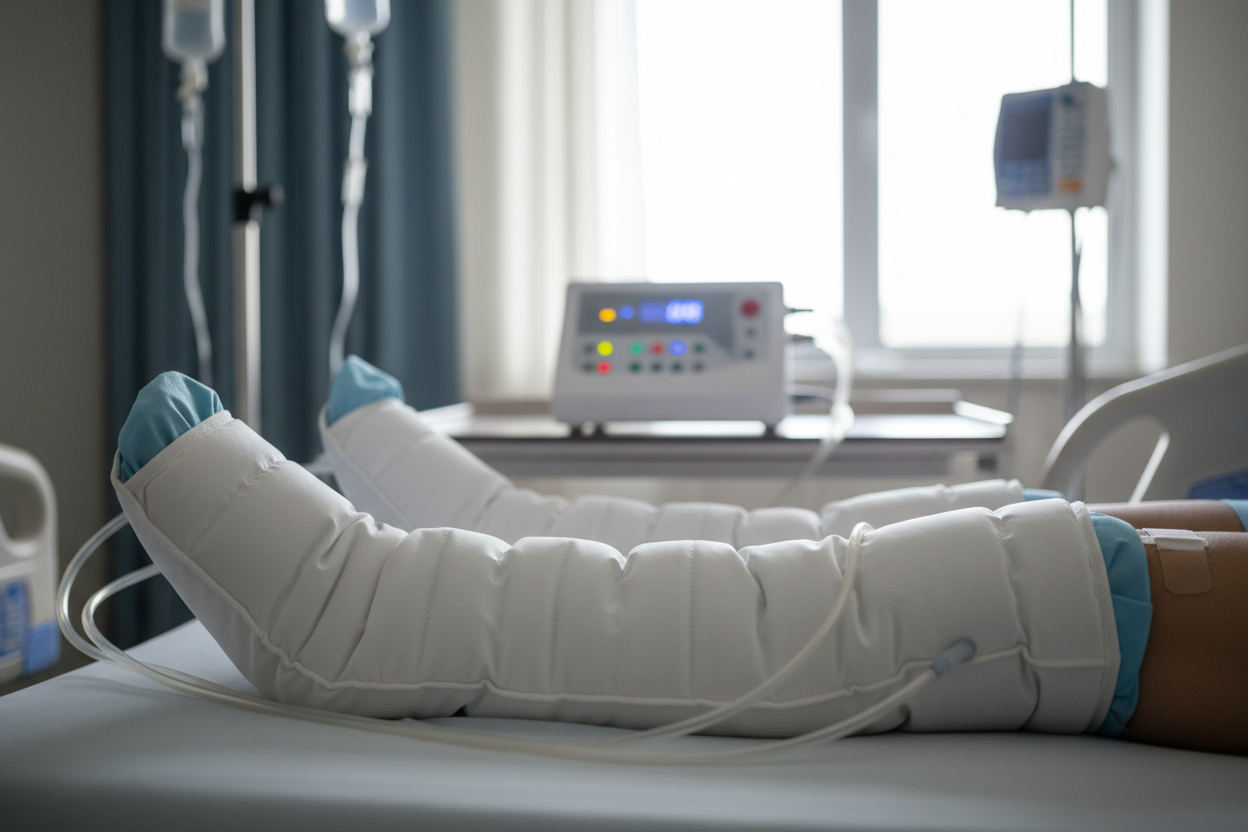
Sequential pneumatic compression (SPC) boots work by mechanically mimicking manual lymphatic drainage (MLD). Chambers in the device inflate in a wave pattern starting at the foot and moving upward toward the torso, propelling lymph fluid out of the congested extremity. A 2025 meta-analysis published in the Lymphatic Research and Biology Journal found that pneumatic compression reduced limb volume by an average of 34.7% over 12 weeks in patients with Stage I and Stage II lymphedema — a result comparable to intensive decongestive physiotherapy programs. For Stage II and III patients with hardening of tissues, SPC is now recommended as a core component of Complete Decongestive Therapy (CDT) maintenance.
What to Look For in Compression Boots for Lymphedema Management
Not every compression boot system is appropriate for lymphedema. Here are the features that actually matter for lymphedema patients specifically:
Sequential (not simultaneous) inflation. The boot must inflate in sequential zones from the foot upward — not all chambers at once. Simultaneous inflation can increase distal pressure without giving lymphatic fluid a direction to flow, potentially worsening congestion. All three systems reviewed below use true sequential inflation.
Adjustable zone pressure. Lymphedema patients often have uneven fluid distribution and may have areas of fibrosis or skin fragility. Systems that allow per-zone pressure customization let you reduce pressure over tender areas while maintaining therapeutic pressure in others.
Full-leg and hip coverage. Truncal and hip lymphedema is common, especially in breast cancer survivors and pelvic surgery patients. A system that covers only below the knee provides incomplete treatment. Full-body options that address the hip and lower trunk are strongly preferred by lymphedema therapists.
Consistent calibration. For long-term management, the device must maintain consistent pressure delivery session over session. Consumer-grade devices often show pressure drift over time. Clinical-grade systems are held to tighter tolerances.
Top Compression Boot Systems for Lymphedema Management in 2026
These three systems represent the best options available for lymphedema patients — ranging from premium athletic recovery to clinical-grade medical devices.
Normatec 3 Full Body System — The Normatec 3 uses Hyperice's proprietary ZoneBoost technology and biomimetic pulse compression to deliver true sequential inflation across seven overlapping zones covering the full leg, hip, and lower back. It is the most widely used pneumatic compression system among professional sports teams and rehabilitation facilities in the U.S. For lymphedema patients, the full-body coverage and the app-controlled zone pressure make it an excellent maintenance tool, especially for lower-extremity and truncal presentations. 45-minute sessions at 60–80 mmHg are well tolerated by most patients with Stage I and II lymphedema.
Rapid Reboot REGEN Complete Package — The REGEN system uses a 6-zone sequential mode and operates at 20–80 mmHg with a lightweight, portable control unit. It covers hip to foot in the complete package configuration, which is essential for lymphedema patients who need treatment above the knee. The REGEN's lighter compression at lower settings makes it a gentler option for patients with sensitive skin or early fibrotic changes. The portability is a genuine advantage for patients who travel or need to treat at the office.
Bio Compression SC-2008-DL — For patients with moderate-to-severe lymphedema, or those whose physician has prescribed a medical-grade device, the Bio Compression SC-2008-DL is the clinical standard. It is FDA-registered and is covered under Medicare HCPCS code E0651 when prescribed. The dual-limb capability allows simultaneous bilateral treatment, which is critical for bilateral lower-extremity lymphedema. Pressure range extends to 100 mmHg with 8-chamber sequential inflation. This is the device most commonly found in lymphedema therapy clinics and hospital outpatient settings.
Sequential vs. Gradient Compression: Which Is Better for Lymphedema?
Gradient compression garments provide constant, passive resistance to fluid accumulation — they prevent backflow between active treatment sessions. They do not actively pump fluid. Pneumatic sequential compression boots, by contrast, actively mobilize lymph fluid during treatment sessions. The two are complementary, not competing. Most lymphedema therapists recommend wearing compression garments during the day and using pneumatic boots for daily 30–60 minute treatment sessions as part of Phase II (maintenance) CDT. Neither replaces the other.
How to Use Compression Boots for Lymphedema Management: Best Practices
Proper technique matters as much as equipment selection. Before your first session, consult your certified lymphedema therapist (CLT) to confirm the appropriate pressure range and session length for your stage and presentation. Begin with the lowest effective pressure and work up gradually over the first two weeks. Position the limb elevated slightly (10–15 degrees) during treatment to support passive drainage. Perform diaphragmatic breathing during sessions — abdominal breathing creates pressure differentials that support lymphatic flow through the thoracic duct. After each session, apply your compression garment immediately before standing to prevent re-accumulation. Keep a treatment log noting limb circumference measurements once per week — this is the most reliable indicator of whether your protocol is working.
For patients with active infection, open wounds, congestive heart failure, deep vein thrombosis, or known cancer in the affected limb, pneumatic compression is contraindicated. Always obtain physician clearance before starting a home compression program.
For a comprehensive overview of how pneumatic compression technology works across all recovery applications, see our complete guide: Best Compression Boots for Recovery: The Complete 2026 Guide. For foundational information on compression boot technology, our original resource remains the most thorough reference: Compression Boots: The Complete Guide to Faster Recovery.
Frequently Asked Questions: Best Compression Boots for Lymphedema Management
What are the best compression boots for lymphedema management?
The best compression boots for lymphedema management use sequential pneumatic compression that mimics manual lymphatic drainage. The Normatec 3 Full Body System and the Rapid Reboot REGEN Complete are two of the most clinically effective systems for home use. For medical-grade sequential compression, the Bio Compression SC-2008-DL is the clinical standard and is widely covered by Medicare when prescribed.
Can compression boots replace manual lymphatic drainage?
Compression boots can closely replicate the mechanical effect of MLD, but they do not replace the full scope of hands-on therapy from a certified lymphedema therapist. Clinical studies show that pneumatic compression significantly reduces limb volume and improves quality of life as part of a complete CDT program.
How long should you use compression boots for lymphedema?
Most clinical protocols recommend 20–60 minute sessions, once or twice daily. National Lymphedema Network guidelines suggest 45–60 minutes for moderate-to-severe presentations. Your therapist may adjust timing based on your specific stage and response.
What pressure settings should I use?
Most clinicians recommend starting at 30–40 mmHg for new patients and adjusting based on comfort and response. Always consult your lymphedema therapist or physician before self-prescribing pressure settings, especially for Stage II or III presentations.
Are compression boots covered by insurance for lymphedema?
Yes. Medicare and many private insurers cover pneumatic compression devices for lymphedema when prescribed by a physician under CPT/HCPCS code E0651. The Bio Compression SC-2008-DL is FDA-registered and commonly covered. Contact your insurer with your physician's prescription and diagnosis code.
What is the difference between sequential and gradient compression?
Sequential (pneumatic) compression actively pumps fluid in a wave pattern from extremity to core — ideal for active treatment sessions. Gradient compression garments apply constant passive resistance to prevent fluid return between sessions. The two approaches are complementary and most CLTs recommend using both.
Can I use compression boots for lymphedema at home?
Yes. Home-use pneumatic compression is a core component of Phase II lymphedema self-management. Systems like the Normatec 3 and Rapid Reboot REGEN are designed for home use. Your therapist should train you on correct positioning and settings before you begin.
Ready to Upgrade Your Recovery?
The equipment referenced in this guide, in stock and ready to ship. Many products qualify for HSA/FSA — call us to confirm eligibility for your situation.
Questions? Talk to our recovery specialists: (612) 360-2490
Ready to Find Your Best Compression Boots for Lymphedema Management?
Your Health Sanctuary is an authorized dealer for the leading pneumatic compression systems used in lymphedema management. We carry both the professional-grade athletic systems and the clinical-standard medical devices — and our team can help you identify the right option for your stage, prescription, and insurance situation.
Normatec 3 Full Body System — Premium sequential compression with zone-specific control, full hip and leg coverage, and app integration. The choice for motivated self-managers at Stage I–II.
Rapid Reboot REGEN Complete Package — Portable, effective, and gentle. Excellent for patients who need a lighter-pressure option or require portability for travel and work.
Questions about which system is right for your lymphedema presentation? Call us at (612) 360-2490 or visit yourhealthsanctuary.com. We're here to help you manage lymphedema with the best tools available.
About the Author — Justin Webster, Founder of Your Health Sanctuary. Authorized dealer for Theragun, Normatec, Game Ready, BIOFLEX, HealthLight and more. yourhealthsanctuary.com | (612) 360-2490.