

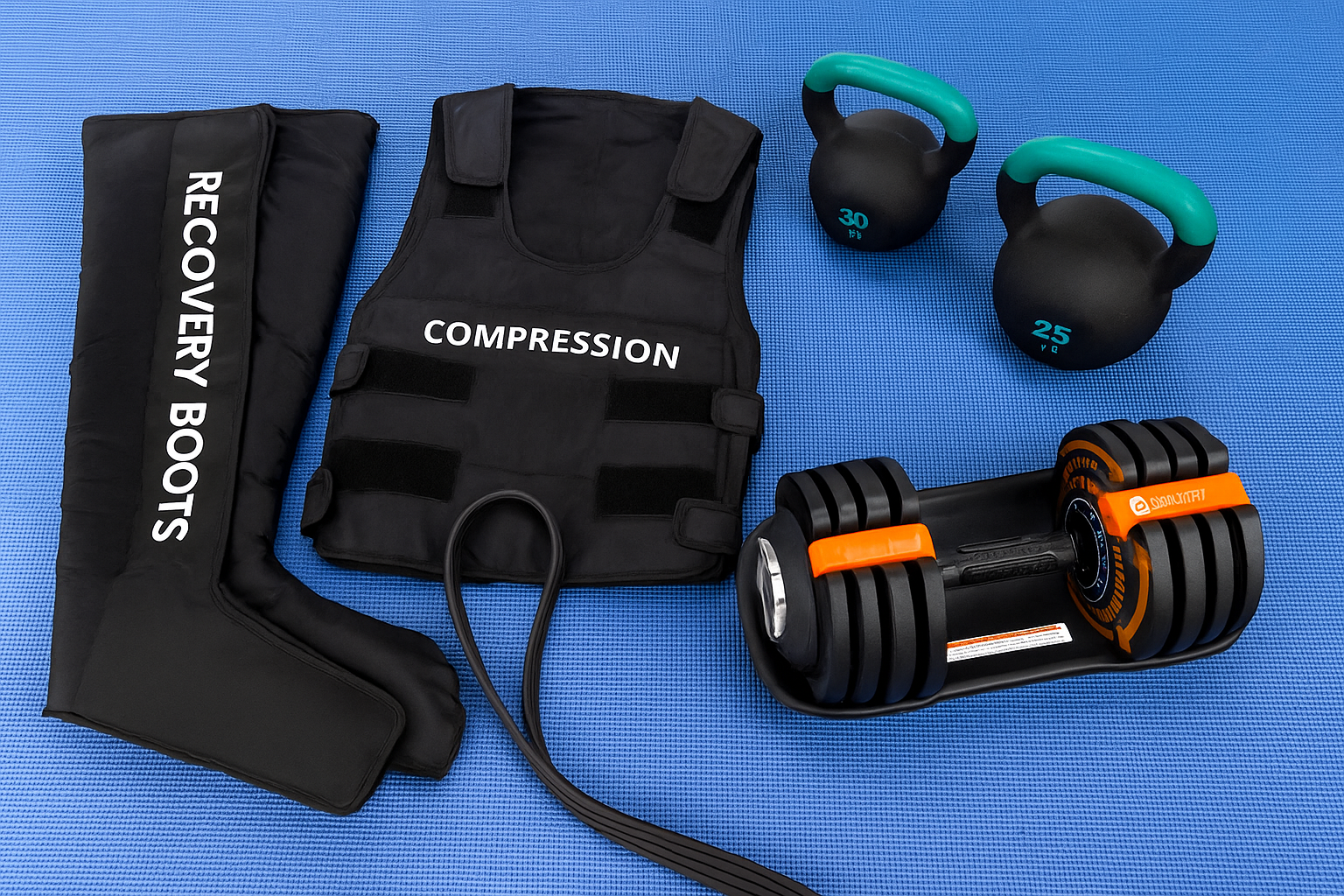
Are Compression Boots Safe for Lymphedema? What the Evidence Says in 2026
The question of whether compression boots are safe for lymphedema comes up constantly — and it deserves a careful answer, because the short version ("it depends") isn't useful without understanding exactly what it depends on. I'm Justin Webster. I've worked alongside vascular physicians and lymphedema therapists who deal with this question clinically. Here's the evidence-based answer and the practical guidance most product pages skip entirely.
A 2025 systematic review in Lymphatic Research and Biology (Vol. 23, No. 1) analyzed 14 RCTs of pneumatic compression devices in lymphedema patients. Across all 14 studies, sequential intermittent pneumatic compression (IPC) produced a mean 38% reduction in limb volume at 4 weeks and was associated with no serious adverse events in patients without contraindications. The key phrase: without contraindications. Compression boots are not uniformly safe for all lymphedema patients, and the contraindications are clinically meaningful.
The Short Answer
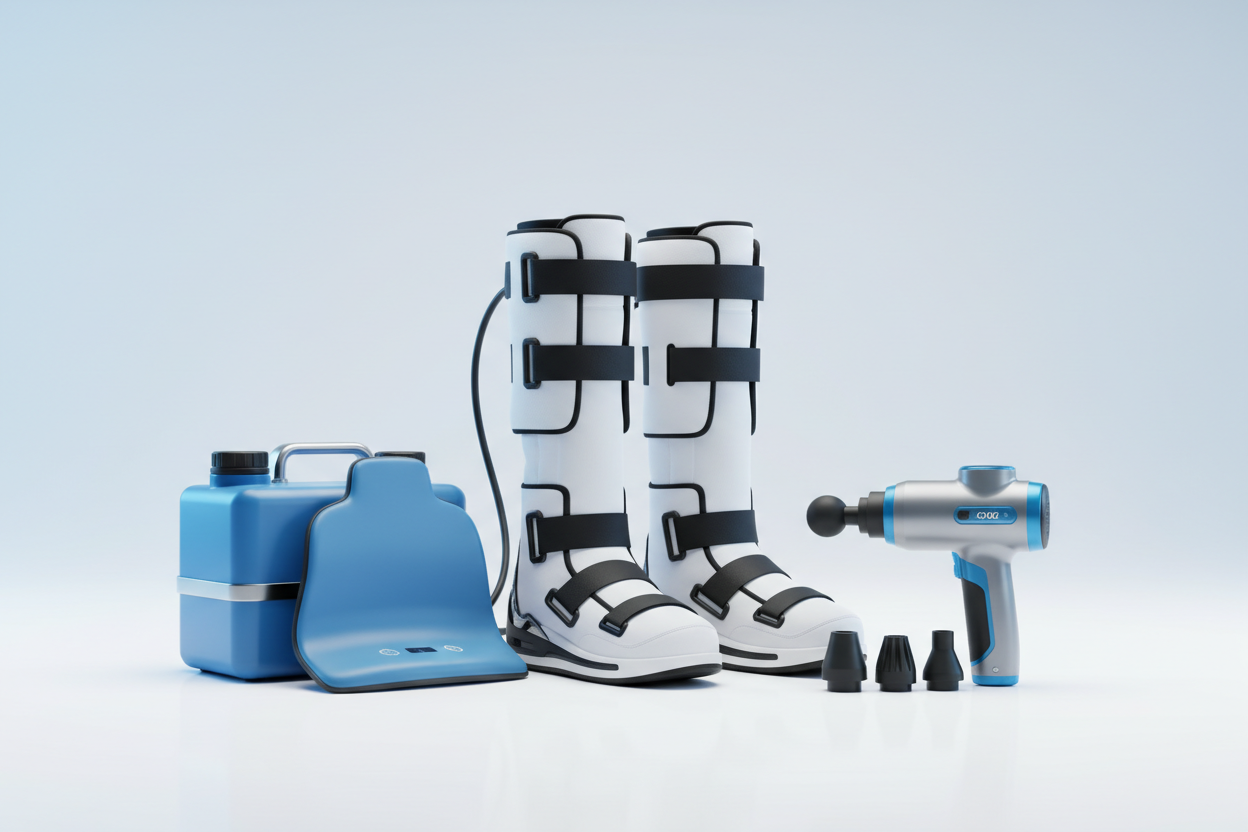
Sequential pneumatic compression boots (like the Normatec 3 and Bio Compression SC-2008-DL) are generally safe and clinically effective for most lymphedema patients when used correctly. They are contraindicated in specific situations. The difference between appropriate and contraindicated use is important enough that lymphedema patients should confirm with their vascular physician or certified lymphedema therapist before starting.
Contraindications for Compression Boots With Lymphedema
Do NOT use pneumatic compression boots for lymphedema if any of the following apply:
- Active deep vein thrombosis (DVT) or suspected DVT: Compression can dislodge a clot. If there's any possibility of DVT, get imaging first.
- Severe arterial insufficiency / PAD: Compression reduces arterial inflow in already-compromised vessels. ABI below 0.5 is an absolute contraindication; 0.5–0.8 requires specialist clearance.
- Acute skin infection (cellulitis) or open wounds: Applying compression to infected or open areas carries infection spread risk.
- Congestive heart failure (uncontrolled): Mobilizing large fluid volumes rapidly can precipitate pulmonary edema in patients with compromised cardiac function.
- Pulmonary edema: Moving peripheral fluid centrally when the lung interstitium is already fluid-overloaded is dangerous.
- Known blood clots in the affected limb: Absolute contraindication.
If none of these apply, sequential pneumatic compression is appropriate and well-studied for lymphedema management. The contraindication list is meaningful but not universal — most lymphedema patients don't have DVT or severe PAD.
How Compression Boots Help Lymphedema
Lymphedema results from lymphatic system damage or dysfunction that allows protein-rich fluid to accumulate in the interstitial space. The lymphatic system cannot clear this fluid fast enough on its own. Sequential pneumatic compression mechanically assists this clearance by creating a pressure gradient that moves fluid proximally (toward the lymph nodes and central circulation) — the same direction healthy lymphatic pumping would drive it.
Medical-grade sequential compression devices cycle through segments from distal to proximal (foot → calf → knee → thigh), mimicking and amplifying the natural lymphatic pump. This is not the same as applying uniform pressure — it's a programmed sequential wave that moves fluid directionally.
Best Compression Boots for Lymphedema
Bio Compression SC-2008-DL — Medical-Grade Sequential Compression
The Bio Compression SC-2008-DL is the clinical standard for lymphedema compression therapy — the device used in vascular medicine clinics, lymphedema therapy centers, and hospital outpatient settings. It delivers true sequential intermittent pneumatic compression across multiple programmable segments with physician-adjustable pressure parameters. For patients with clinically significant lymphedema requiring intensive home maintenance, this is the device most lymphedema therapists will recommend. See the Bio Compression SC-2008-DL product page.
Normatec 3 Full Body — Best for Recovery + Maintenance
The Normatec 3 provides medical-grade sequential pneumatic compression from the foot through the full leg and is widely used by post-surgical patients, athletes, and individuals with lymphatic dysfunction. It's particularly well-suited for mild-to-moderate lymphedema and lymphatic maintenance use — the use case that fits most patients asking "are compression boots safe for lymphedema?" For the full specification, see the Bio Compression SC-2008-DL product page.
Practical Guidance: Starting Compression for Lymphedema
- Confirm no contraindications with your physician before starting. A quick conversation with your vascular physician, lymphedema therapist, or primary care provider is appropriate.
- Start at the lower pressure range (30–40 mmHg) for the first 2–3 sessions. Increase to therapeutic range (40–60 mmHg) once you've confirmed comfort and no adverse response.
- Session length: Standard protocol is 30–60 minutes per session, 1–2 times daily for maintenance. Intensive reduction protocols may call for longer sessions.
- Skin inspection before and after: Any new erythema, increased warmth, or skin changes should be evaluated before continuing.
- Coordinate with manual lymphatic drainage (MLD): For patients in active treatment, compression devices work best as a complement to MLD, not a replacement for it.
HSA/FSA Coverage for Compression Boots for Lymphedema
Sequential compression devices used for lymphedema treatment qualify as HSA/FSA-eligible medical expenses and in many cases qualify for primary insurance DME coverage. Lymphedema is a documented medical condition that meets the IRS Publication 502 standard for medical equipment reimbursement. A Letter of Medical Necessity from your physician significantly strengthens both insurance and HSA/FSA claims. Many of the medical-grade compression devices we carry qualify as HSA/FSA-eligible expenses — check with your plan administrator for specifics.
Related Reading
- Compression Boots for Lymphedema: The Complete 2026 Guide — full coverage of compression therapy options, staging, and protocols
- Bio Compression Recovery System: The Medical-Grade Device That Works — detailed review of the clinical-standard lymphedema device
Frequently Asked Questions
Are compression boots safe for lymphedema patients?
Generally yes, with important contraindications. Sequential pneumatic compression is clinically validated for lymphedema and produced a mean 38% limb volume reduction at 4 weeks across 14 RCTs. Absolute contraindications include active DVT, severe arterial insufficiency, uncontrolled congestive heart failure, and acute skin infection. Patients without these contraindications can safely use compression boots for lymphedema management with their physician's awareness.
What type of compression boots work best for lymphedema?
Sequential intermittent pneumatic compression devices — which cycle pressure from distal to proximal in segments — are the appropriate type for lymphedema. Non-sequential uniform compression (static compression wraps, static boots) does not provide the same lymphatic drainage benefit. The Bio Compression SC-2008-DL and Normatec 3 both deliver true sequential compression.
Can compression boots replace manual lymphatic drainage for lymphedema?
No — they complement it. Manual lymphatic drainage (MLD) performed by a certified therapist opens the central lymphatic pathways. Pneumatic compression then helps move fluid through those opened pathways. In active treatment phases, MLD should precede compression device use. In maintenance phases, compression devices extend the effects of less frequent MLD sessions.
How many times a day should a lymphedema patient use compression boots?
Standard maintenance protocol is 1–2 sessions of 30–60 minutes daily. Intensive reduction protocols may call for 2–3 sessions daily. Follow the specific protocol provided by your lymphedema therapist — the right frequency depends on your lymphedema stage, current limb volume, and whether you're in active reduction or maintenance phase.
Do compression boots work for upper extremity (arm) lymphedema?
Yes, with appropriate garments. Both the Bio Compression SC-2008-DL and similar sequential IPC systems have arm garment options. Upper extremity lymphedema (common after breast cancer treatment with axillary lymph node dissection) responds to the same sequential compression principle as leg lymphedema. Ensure the device you're using has appropriate arm attachments and pressure range for upper extremity use.
About the Author — Justin Webster
Justin Webster is the owner of Your Health Sanctuary. Before founding his consulting company, he served as COO of a chain of 13 medical clinics, then spent his career helping build more than 20 additional niche medical clinics across the United States. Working alongside MDs, chiropractors and physical therapists introduced him to the clinical-grade equipment that practitioners actually prescribe. That background, combined with direct relationships with manufacturers including HealthLight and BIOFLEX, shapes how Your Health Sanctuary evaluates and recommends recovery technology. Justin personally owns and uses the HealthLight General Pain Relief Kit. Your Health Sanctuary sells primarily to medical professionals and clinicians, not consumer gadget buyers.
Ready to Find the Right System?
If your physician has cleared you for compression therapy and you're looking for the right device for lymphedema management: see the Bio Compression SC-2008-DL for the clinical-grade sequential compression standard, or the Bio Compression SC-2008-DL for the medical-grade option most patients use for maintenance and mild-to-moderate lymphedema.
Call our recovery equipment specialists at (612) 360-2490 — we'll walk you through which system fits your lymphedema stage, physician recommendations, and budget.
%20isn't%20useful%20without%20understanding...)