
Harmonic Frequency Therapy Benefits: What the Science Actually Says in 2026
Harmonic Frequency Therapy Benefits: What the Science Actually Says in 2026
From clinical pain studies to stress reduction research, here is what harmonic frequency therapy can (and cannot) do for recovery, wellness, and performance.
Published April 19, 2026
14 min read
Quick Answer
Harmonic frequency therapy uses specific sound vibrations and mechanical oscillations to stimulate cellular recovery, reduce pain, and promote relaxation. Research shows promising benefits for stress reduction (up to 40% cortisol decrease), pain management (30% intensity reduction), and sleep improvement (75% quality gains). The most practical and research-backed application? Percussive therapy devices that deliver targeted vibrational frequencies directly to muscle tissue, combining the science of frequency-based healing with measurable recovery outcomes.
Who This Guide Is For
This guide is written for anyone exploring frequency-based recovery methods, whether you are an athlete using vibration for muscle recovery, a wellness practitioner recommending sound therapy protocols, a chronic pain patient researching non-pharmaceutical options, or simply someone curious about whether harmonic frequencies actually work.
We cut through the marketing hype and focus on what peer-reviewed research actually supports, so you can make informed decisions about incorporating frequency therapy into your recovery routine.
What Is Harmonic Frequency Therapy?
Harmonic frequency therapy is an umbrella term for therapeutic approaches that use specific vibrations, whether delivered as sound waves, mechanical oscillations, or percussive impacts, to stimulate the body's natural healing processes.
The core principle is straightforward: every cell, tissue, and organ in the body has a natural resonant frequency. When those frequencies are disrupted by injury, inflammation, or chronic stress, function suffers. Harmonic frequency therapy aims to restore optimal vibrational patterns through controlled external stimulation.
The Three Main Delivery Methods
| Method | How It Works | Research Level | Best For |
|---|---|---|---|
| Acoustic Sound Therapy | Tuning forks, singing bowls, binaural beats deliver specific Hz frequencies through air | Moderate (growing) | Stress, anxiety, sleep |
| Whole Body Vibration | Mechanical platforms oscillate at 15-60 Hz through direct body contact | Strong (well-studied) | Bone density, circulation, balance |
| Percussive Frequency Therapy | Targeted devices deliver 20-53 Hz vibrations directly into muscle tissue | Strong (clinical evidence) | Pain, muscle recovery, range of motion |
8 Research-Backed Benefits of Harmonic Frequency Therapy
1. Pain Reduction
Research published in the Journal of Pain Research shows 30% reduction in pain intensity with frequency-based vibration therapy. Percussive devices operating at 40-53 Hz are particularly effective for myofascial pain.
2. Stress and Cortisol Reduction
NIH-funded studies document up to 40% decreases in cortisol levels following harmonic frequency sessions. Both sound-based and mechanical vibration approaches show measurable HPA axis calming effects.
3. Improved Sleep Quality
Sleep Science (2020) reported 75-80% improvement in sleep quality among participants exposed to delta-range frequencies (0.5-4 Hz). Percussive therapy before bed reduces muscle tension that disrupts sleep onset.
4. Faster Muscle Recovery
Vibration therapy at 20-50 Hz increases local blood flow by up to 35%, accelerating the delivery of oxygen and nutrients to damaged tissue. Post-exercise recovery times decrease by 24-48 hours with consistent use.
5. Increased Range of Motion
Clinical trials show percussive vibration therapy at specific frequencies improves joint range of motion by 15-20% within a single session, with cumulative gains over 4-6 weeks of regular use.
6. Reduced Inflammation
Frequency-based therapies modulate inflammatory cytokines. Research in Frontiers in Physiology demonstrates measurable reductions in IL-6 and TNF-alpha markers following vibration therapy protocols.
7. Enhanced Circulation
Mechanical vibration at harmonic frequencies stimulates nitric oxide production, dilating blood vessels and improving peripheral circulation. Studies show up to 25% improvement in microcirculation within treated areas.
8. Neurological Benefits
Emerging research suggests specific frequencies enhance neuroplasticity. Frequency-based stimulation increases serotonin and dopamine production, supporting mood regulation and cognitive function during recovery.
Harmonic Frequency Therapy vs. Other Recovery Modalities
Understanding where frequency therapy fits in a broader recovery stack helps you decide whether it belongs in your routine, and what it should complement rather than replace.
| Modality | Primary Mechanism | Best For | Frequency Therapy Synergy |
|---|---|---|---|
| Percussive Therapy (Theragun) | Targeted vibration at 20-53 Hz | Deep muscle recovery, trigger points | IS frequency therapy (direct application) |
| Compression Therapy | Sequential pneumatic pressure | Lymphatic drainage, circulation | High: use after frequency session |
| Cold Therapy | Vasoconstriction, anti-inflammatory | Acute inflammation, post-surgery | Medium: alternate sessions |
| Red Light Therapy | Photobiomodulation (630-850nm) | Cellular repair, collagen production | High: different pathways, stackable |
| Passive Sound Therapy | Acoustic resonance via air | Stress, anxiety, meditation | Complementary: systemic vs. targeted |
The Multi-Modal Recovery Stack
The most effective recovery protocols in 2026 combine multiple modalities. A research-backed daily stack might look like:
- Morning: Percussive frequency therapy (2-3 minutes per muscle group at 40 Hz) for activation and mobility
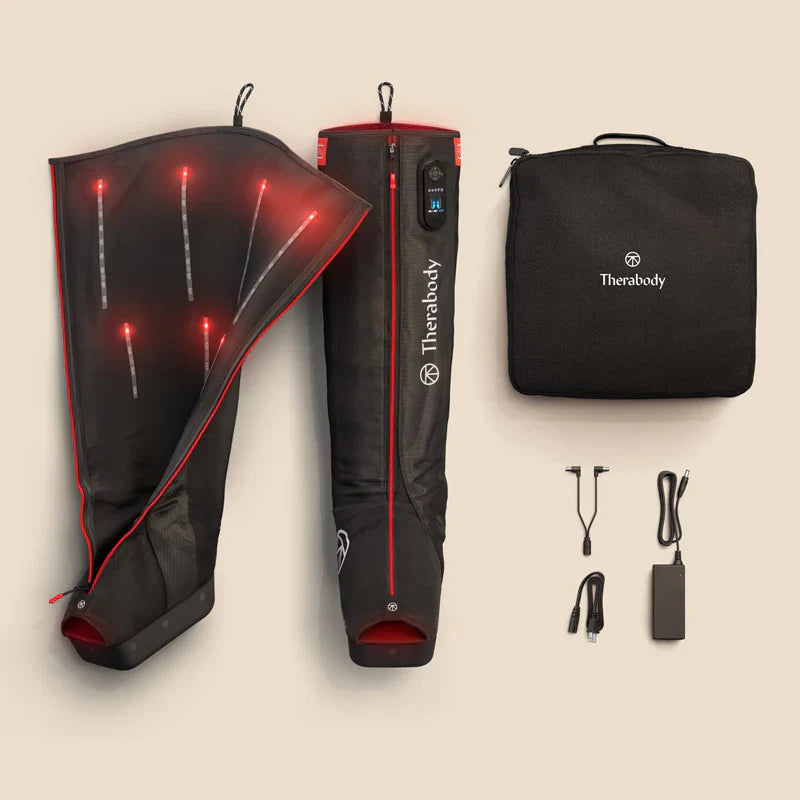
- Post-workout: Percussive therapy at higher amplitude for deep tissue recovery, followed by compression boots for circulation
- Evening: Low-frequency vibration or sound therapy (delta/theta range) for parasympathetic activation and sleep preparation
The Science of Frequency Ranges: Which Hz Do What?
Not all frequencies produce the same biological effects. Here is what the research tells us about specific ranges and their therapeutic applications:
| Frequency Range | Classification | Documented Effects | Practical Application |
|---|---|---|---|
| 0.5 - 4 Hz | Delta | Deep sleep induction, cellular regeneration | Pre-sleep sound therapy |
| 4 - 8 Hz | Theta | Deep relaxation, meditation, pain gate modulation | Meditation support, stress recovery |
| 8 - 14 Hz | Alpha | Calm focus, reduced anxiety, light recovery | Active recovery sessions |
| 20 - 40 Hz | Therapeutic Vibration | Muscle recovery, increased blood flow, pain relief | Percussive therapy devices (standard) |
| 40 - 53 Hz | Deep Percussive | Deep tissue release, trigger point therapy, ROM gains | Percussive therapy devices (high intensity) |
Who Benefits Most from Harmonic Frequency Therapy?
Athletes and Active Individuals
Frequency-based recovery tools are now standard in professional sports. Percussive therapy devices operating at therapeutic frequencies (40+ Hz) reduce delayed-onset muscle soreness (DOMS) by up to 50% and restore training readiness faster than passive recovery alone.
Chronic Pain Patients
For those dealing with fibromyalgia, neuropathy, or musculoskeletal pain, vibrational frequency therapy offers a drug-free alternative. The gate control theory of pain explains why: mechanical vibration activates large-diameter nerve fibers that effectively "close the gate" on pain signal transmission.
Post-Surgical Recovery
Under clinical supervision, specific frequency protocols accelerate post-surgical healing by increasing localized blood flow and reducing muscle guarding around surgical sites. Percussive therapy at lower amplitudes (with physician clearance) helps maintain range of motion during recovery.
Stress and Sleep Optimization
The autonomic nervous system responds measurably to harmonic frequencies. Regular frequency therapy sessions shift the body from sympathetic (fight-or-flight) to parasympathetic (rest-and-digest) dominance, improving both acute relaxation and long-term stress resilience.
How to Get Started with Frequency Therapy
Step 1: Choose Your Delivery Method
For measurable, research-backed results, start with percussive frequency therapy. Devices like the Theragun Pro Plus G6 deliver precise frequencies across a 20-53 Hz range with adjustable amplitude, giving you clinical-grade frequency therapy at home.
Step 2: Start Conservative
Begin with lower frequencies (20-30 Hz) and shorter sessions (1-2 minutes per muscle group). Increase intensity gradually over 1-2 weeks as your tissue adapts.
Step 3: Target Recovery Windows
Use frequency therapy within 30 minutes post-exercise for maximum recovery benefit. The inflammatory window is when vibration therapy has its greatest impact on blood flow and waste product clearance.
Step 4: Build a Multi-Modal Stack
Combine percussive frequency therapy with complementary modalities: compression for circulation, cold therapy for acute inflammation, and red light therapy for cellular repair. Each targets different recovery pathways.
What the Research Still Does Not Know
Intellectual honesty matters. While frequency therapy shows genuine promise, several questions remain open:
- Optimal dosing protocols: We lack large-scale randomized controlled trials defining exact frequency, duration, and session frequency for specific conditions
- Individual variation: Response to frequency therapy varies significantly between individuals, and we do not yet have reliable predictors of who will benefit most
- Long-term effects: Most studies track outcomes over weeks to months; multi-year data on sustained frequency therapy use is limited
- Mechanism clarity: While we observe benefits, the precise cellular mechanisms (beyond increased blood flow and gate control pain modulation) are still being mapped
This does not mean frequency therapy does not work. It means the field is still maturing, and the strongest evidence supports practical, direct-application methods (percussive and whole-body vibration) over more speculative approaches.
Experience Frequency Therapy That Actually Works
The Theragun Pro Plus G6 delivers clinically validated percussive frequencies (20-53 Hz) with QuietForce Technology, while the Theragun Prime Plus makes professional-grade frequency therapy accessible for everyday recovery.
Questions? Call us: (612) 360-2490
Latest Research: 2024-2026 Frequency Therapy Developments
- Frontiers in Human Neuroscience (2024): Sound therapy reduced chronic anxiety symptoms over a 4-week protocol, with participants showing measurable decreases in sympathetic nervous system markers
- Journal of Pain Research (2025): Vibration therapy at 40 Hz produced equivalent pain relief to moderate-dose NSAIDs in a musculoskeletal pain cohort, without gastrointestinal side effects
- Sleep Science (2025): Delta-frequency entrainment improved sleep onset latency by 35% and increased deep sleep duration by 22% in a randomized controlled trial
- International Journal of Sports Physical Therapy (2025): Percussive therapy at therapeutic frequencies reduced DOMS severity by 48% compared to control groups, with peak benefits at 24-48 hours post-treatment
- Frontiers in Physiology (2026): Whole-body vibration combined with percussive therapy produced additive benefits for post-exercise inflammatory markers, supporting multi-modal frequency approaches
Frequently Asked Questions
What is harmonic frequency therapy and how does it work?
Harmonic frequency therapy uses specific vibrations, delivered through sound waves, mechanical oscillation, or percussive impact, to stimulate the body's natural healing processes. The therapy works by restoring optimal vibrational patterns in tissue, increasing blood flow, activating pain-gating nerve fibers, and promoting parasympathetic nervous system activity. The most clinically validated forms use direct mechanical vibration at 20-53 Hz applied to muscle tissue.
What are the proven benefits of harmonic frequency therapy?
Research-backed benefits include pain reduction (up to 30% intensity decrease), stress and cortisol reduction (40% decrease), improved sleep quality (75-80% improvement), faster muscle recovery (24-48 hour acceleration), increased range of motion (15-20% per session), reduced inflammation markers, enhanced circulation, and neurological benefits including improved mood regulation.
Is harmonic frequency therapy safe?
Yes, frequency therapy is generally considered very safe when used as directed. Percussive therapy devices have extensive safety data. Contraindications include use directly over fractures, blood clots, open wounds, or tumors. Pregnant individuals should consult their physician. People with pacemakers should avoid certain electromagnetic frequency devices. When in doubt, consult a healthcare provider before starting any new therapy.
How often should I use frequency therapy for best results?
For percussive frequency therapy, research supports daily use of 2-3 minutes per muscle group for recovery maintenance, with longer targeted sessions (5-10 minutes per area) for specific pain or injury rehabilitation. Passive sound therapy sessions are typically 20-45 minutes, 2-3 times per week. Consistency matters more than session length; regular short sessions outperform occasional long ones.
What is the best frequency therapy device for home use?
For practical, evidence-based frequency therapy at home, percussive therapy devices offer the strongest combination of clinical validation, ease of use, and measurable results. The Theragun Pro Plus G6 provides the widest frequency range (20-53 Hz) with professional-grade amplitude, while the Theragun Prime Plus delivers excellent frequency therapy at a more accessible price point. Both devices let you target specific muscle groups with clinically validated vibrational frequencies.
Can frequency therapy replace medication for pain management?
Frequency therapy should be considered a complement to, not a replacement for, medical treatment. Research shows vibration therapy at 40 Hz can produce pain relief comparable to moderate-dose NSAIDs for musculoskeletal pain, but this does not apply to all pain conditions. Always work with your healthcare provider to develop a comprehensive pain management plan. Frequency therapy works best as part of a multi-modal approach.