Stretching Never Reached the Knot That Was Ruining My Back
I spent two years on the floor every morning with a foam roller. One deep tissue device finally hit the spot nothing else could.
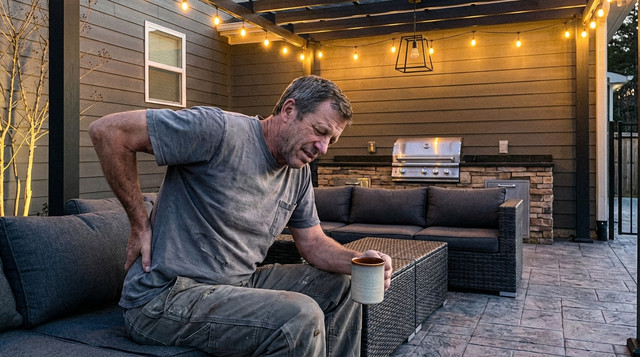
I want to tell you about the dumbest twenty minutes of my morning. Every single day for almost two years, I would roll out of bed at 5:45, get down on the living room floor before my kids were awake, and try to stretch the pain out of my back using whatever routine I'd found on YouTube the night before. Pigeon pose. Cat cow. That thing where you hug your knees to your chest and rock side to side like an overturned turtle.
None of it worked. Not once. The knot between my shoulder blades was still there when I stood up. The ache in my lower back was still waiting for me by lunchtime. And I kept doing it anyway because everyone I talked to said the same thing. Stretch more. Try yoga. Drink more water.
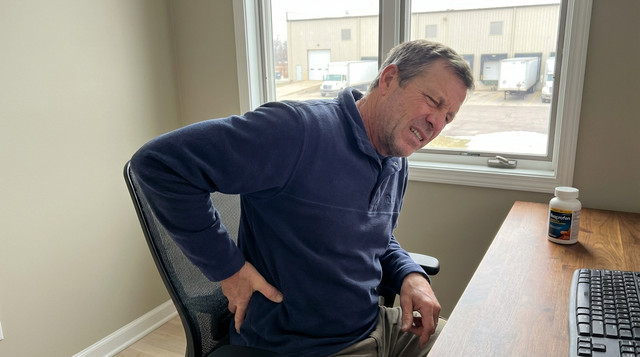
I'm 43 years old. I manage operations for a logistics company outside Minneapolis. I coach my son's hockey team. I used to run half marathons. And for the last two years, I've been the guy who winces when he stands up from his desk chair and keeps a bottle of ibuprofen in his top drawer like it's a dirty secret.
The 2:00 PM Seize That Made Me Feel Thirty Years Older
The pain wasn't sudden. It built over time, the way these things do. A little stiffness after a long meeting. Some tightness after walking the distribution floor in the afternoon. Then one day it just never went away.
By mid-afternoon every day, my lower back would lock up so bad that standing felt like a negotiation with my own body. I'd push up from my chair after lunch and just freeze for a second, waiting for everything to release. My feet throbbed from hours on concrete. And that knot, the one buried deep between my shoulder blades, it felt like someone had shoved a golf ball under my muscle and left it there permanently.
The worst part was the evenings. I'd get home at 6:30 and my 10-year-old would want to play street hockey in the driveway. And I'd say maybe tomorrow, buddy. Because I could barely stand upright. My wife would give me this look. Not angry. Concerned. Which was somehow worse.
Foam Rollers, Physical Therapy, and a Cheap Massage Gun That Broke in Three Months
Let me walk you through everything I tried. I bought a foam roller that's still sitting in my garage. I did six weeks of physical therapy at $40 a copay, twice a week. The PT helped while I was going, but the relief evaporated within days of stopping, and I couldn't keep taking two hours out of my workweek indefinitely.
I bought a $90 massage gun off Amazon because a guy at work said his was great. It buzzed against my skin like an angry electric toothbrush and didn't reach anything deeper than the surface. The motor burned out in three months. I tried heating pads, stretching apps, yoga videos. I spent over $600 that year on things that addressed the surface of the problem while the real knot just sat there, laughing at me.
That's what nobody tells you. When the pain is deep, surface solutions are a waste of time. Stretching loosens what's already loose. Rolling presses on what's already accessible. But the thing that's actually causing your misery is buried under layers of muscle that a foam roller will never reach.
A Link My Wife Texted Me While I Was Reaching for the Ibuprofen Again
My wife found it. She texted me a link one afternoon with a message that said "please just look at this before you take another pill." I was literally reaching into my desk drawer when the text came through.
I almost didn't click. I'd been burned by the cheap massage gun. I figured this was another gadget that would end up in the closet. But she'd read about the Theragun Pro Plus and something about it was different. 16mm amplitude. That number stuck out to me because the Amazon gun I'd bought was maybe 10mm, and it felt like nothing. The Pro Plus also had near-infrared LED light therapy, heat, vibration, and these interchangeable heads including a thumb attachment specifically designed for trigger points.
I'm a research guy. I spent two nights reading about percussive therapy depth and how deep tissue percussion at that amplitude actually breaks up adhesions that stretching can't reach. The science made sense. And they had a return policy, so I figured the worst case was I'd send it back.
First Week, and the Knot I'd Carried for Two Years Started Breaking Up
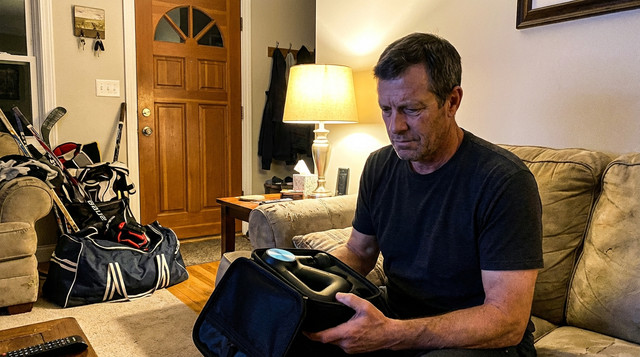
First session I pressed the thumb attachment into that spot between my shoulder blades and felt something I had never felt from any tool or therapy. It reached the knot. Actually reached it. Not buzzed around it, not warmed the area near it. It got into the muscle at the depth where the problem lived.
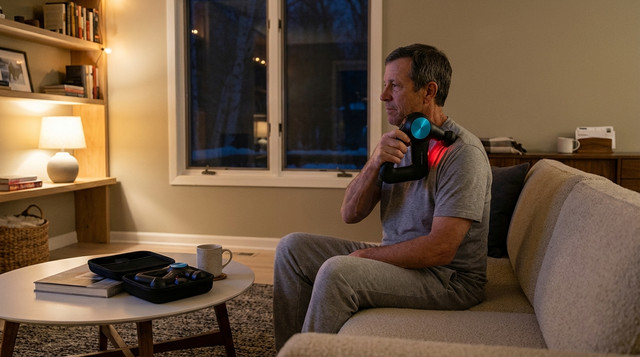
I used the wedge attachment on my shoulder blades for about eight minutes while sitting on the couch after the kids went to bed. I felt something release that had been locked for months.
The knot between my shoulders went from a golf ball to something more like a marble. I started using the heat therapy head on my lower back before bed. Mornings felt different. Not perfect, but different.
My lower back stopped seizing up after lunch. I actually stood up from my desk without that freeze and pause for the first time in over a year. The guided routines on the LCD screen made it stupid easy to know exactly what to do each night.
My son asked me to play street hockey. I said yes. We played for forty minutes. I paid for it a little the next morning but nothing like before. I used the Pro Plus that night and woke up fine.
I skated at hockey practice for the first time in months. The ibuprofen bottle in my desk drawer was still half full. I hadn't opened it in twelve days.

What Makes This Different From Every Other Massage Gun
The Theragun Pro Plus is not a massage gun the way I thought of massage guns. It's six therapies in one FDA-registered device. Deep tissue percussion at 16mm depth, near-infrared LED light therapy, vibration therapy, heat, cold (sold separately), and guided breathwork. Five interchangeable heads let you target exactly the spot that's causing problems. The thumb head for trigger points and the wedge for shoulder blades were the two that changed everything for me.
It has an LCD screen with guided routines so you don't have to guess what to do. A biometric sensor tracks your heart rate during breathwork sessions. And it connects to an app with a full library of recovery programs. I use it for 10 to 15 minutes after the kids go to bed, sitting on the couch. It replaced my foam roller, my heating pad, and my stretching routine. All of them. At once.
The $649 price made me hesitate. But I spent over $500 on PT copays in six weeks and that relief didn't last. This device pays for itself in a couple months compared to ongoing treatment, and I can use it every single day on my own schedule.
Where I Got Mine
If you're dealing with what I was dealing with, the deep ache that stretching doesn't reach and cheap massage guns just bounce off of, I honestly wish someone had told me about this sooner. I'm not a doctor or a physical therapist. I'm a 43-year-old dad who tried everything and finally found the thing that actually gets to the problem. This is the exact Theragun Pro Plus I use.
After everything I tried, Theragun Pro Plus G6 is what actually made a difference. I can't promise it'll work the same way for you, but I genuinely believe it's worth trying.

Last Saturday my son scored a goal at his game and I was on my feet cheering without even thinking about my back. That's a small thing to most people. To me it was everything. I don't wake up dreading the afternoon anymore. I don't open that desk drawer. And when my kids ask me to play, I just say yes.
That's all I wanted. To stop saying not right now. And I finally can.